
Produktbeschreibung
Heavy duty series roller chain – 08AH, 10AH, 12AH,16AH:
A. Our Services
1. Any of your kind inquiry roller chain would be replied within 24 hours.
2. Well-trained and experienced sales staffs will reply all your concerns in fluent English.
3. OEM services are available with us, our professional designer would make your private idea into being.
4. Protection of your sales area, ideas of design and all your private information.
5. Delivery by air mail or ship for your orders.
6. With years of manufacture and promotion experience in global market, brings you profit and great success!
B. Technique Parameter
C. Company show & Product process
D. FAQ
1. Sind Sie ein Hersteller oder ein Handelsunternehmen?
We are a factory founded in 1991 with trade team for international service.
2. Welche Zahlungsbedingungen verwenden Sie üblicherweise?
T/T 30% Anzahlung und 70% gegen Vorlage von Dokumenten, Western Union, L/C bei Sicht
3. what is your lead time for your goods?
Normally 45 days after confirmed order. 30 days could be available in low season for some items (during May to July), and 65 days during new year and hot season ( Jan to March).
4. Besuchen Sie irgendwelche Veranstaltungen?
We attend Hannover show in Germany, NMW in Austrilia, Canton fair, PTC, in China and many other special furniture shows.
5. Do you have any instant chat ?
| Verwendung: | Antriebskette |
|---|---|
| Material: | Kohlenstoffstahl |
| Oberflächenbehandlung: | Ölblüte |
| Besonderheit: | Hitzebeständig |
| Kettengröße: | 1/2" * 3/32" |
| Struktur: | Rollenkette |
| Anpassung: |
Verfügbar
| Kundenspezifische Anfrage |
|---|
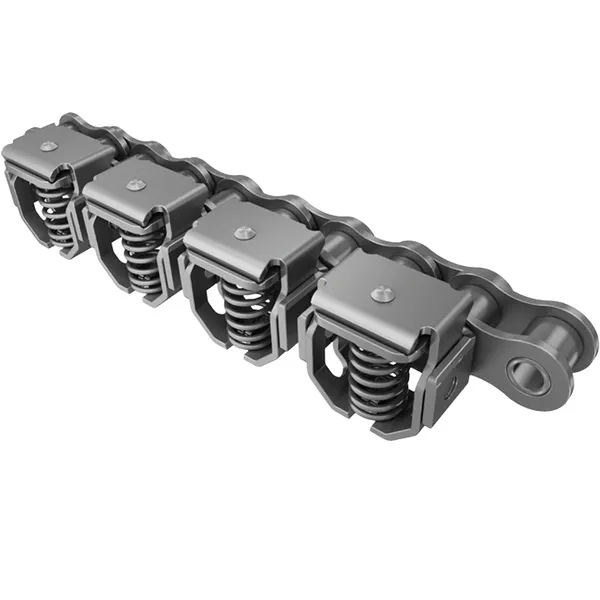
What are the benefits of using an overhead conveyor chain system?
Using an overhead conveyor chain system offers several benefits in various industrial applications. Here are some key advantages:
1. Space Optimization:
– Overhead conveyor chain systems utilize the vertical space, allowing efficient utilization of floor space. This is especially beneficial in facilities with limited floor area, as it enables efficient material handling and production flow without obstructing the work area.
2. Flexibility and Versatility:
– Overhead conveyor chains offer flexibility in routing and can be customized to fit the specific layout requirements of the facility. They can traverse different areas, including assembly lines, paint booths, storage areas, and more. The versatility of overhead systems allows for efficient and adaptable material movement.
3. Improved Safety:
– Overhead conveyor chains minimize ground-level obstructions, reducing the risk of tripping hazards and accidents. Operators and workers can safely navigate the work area without interference from the conveyor system.
4. Produktschutz:
– Overhead conveyor chains provide better protection for the products being transported. By keeping the products elevated and away from potential hazards on the floor, such as dust, debris, or spills, the risk of product damage or contamination is reduced.
5. Increased Efficiency:
– Overhead conveyor systems can enhance production efficiency by facilitating continuous material flow and reducing manual handling. They enable automated loading and unloading of materials, leading to faster processing times and improved overall productivity.
6. Easy Maintenance:
– Overhead conveyor chains are typically designed for easy maintenance. Components such as chains, trolleys, and drives can be accessed and serviced conveniently, minimizing downtime and maintenance costs.
7. Customization and Integration:
– Overhead conveyor chains can be tailored to meet specific application requirements, including load capacity, speed, and control systems. They can also be integrated with other automated systems, such as robotic workstations or sorting mechanisms, to further optimize the material handling process.
Overall, using an overhead conveyor chain system provides efficient material handling, maximizes space utilization, enhances safety, and improves productivity in industrial environments.
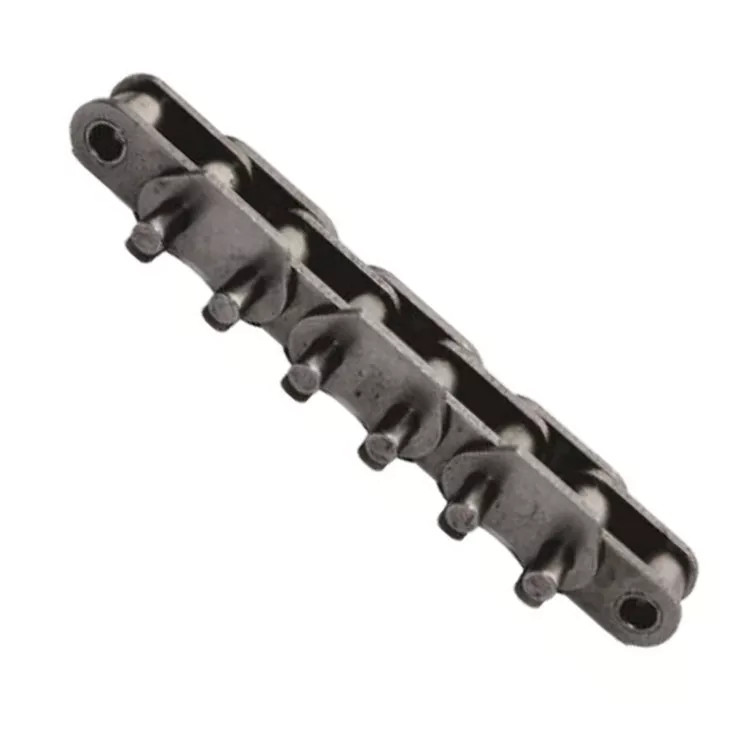
Wie lässt sich Korrosion in Förderketten verhindern?
Die Verhinderung von Korrosion an Förderketten ist unerlässlich, um deren Leistungsfähigkeit zu erhalten und ihre Lebensdauer zu verlängern. Hier sind einige wirksame Maßnahmen zur Korrosionsverhinderung:
1. Materialauswahl: Wählen Sie Förderketten aus korrosionsbeständigen Materialien wie Edelstahl, Kunststoff oder speziell für den Korrosionsschutz entwickelten Beschichtungen. Diese Materialien bieten im Vergleich zu herkömmlichen Stahlketten einen besseren Schutz vor Rost und Korrosion.
2. Richtige Schmierung: Schmieren Sie die Förderkette regelmäßig mit einem geeigneten Schmiermittel. Das Schmiermittel bildet eine Schutzschicht, die verhindert, dass Feuchtigkeit und Verunreinigungen die Metalloberfläche erreichen, und reduziert so das Korrosionsrisiko. Wählen Sie ein Schmiermittel, das Korrosionsschutz bietet und mit dem Kettenmaterial kompatibel ist.
3. Umgebungsbedingungen: Kontrollieren Sie die Betriebsumgebung, um die Einwirkung korrosiver Elemente zu minimieren. Setzen Sie Maßnahmen wie Feuchtigkeitskontrolle, ausreichende Belüftung und Schutz vor direktem Kontakt mit Wasser oder Chemikalien um. Erwägen Sie den Einsatz von Abdeckungen oder Gehäusen, um die Förderkette vor Umwelteinflüssen zu schützen, die die Korrosion beschleunigen können.
4. Oberflächenbehandlungen: Die Förderkette sollte mit korrosionsbeständigen Beschichtungen oder Behandlungen versehen werden. Diese Beschichtungen bilden eine zusätzliche Schutzschicht, die als Barriere gegen Feuchtigkeit und korrosive Substanzen wirkt. Beispiele für Oberflächenbehandlungen sind Verzinkung, Galvanisierung oder Epoxidbeschichtungen.
5. Regelmäßige Inspektion und Reinigung: Überprüfen Sie die Förderkette regelmäßig auf Anzeichen von Korrosion oder Beschädigung. Entfernen Sie umgehend angesammelten Schmutz, Ablagerungen oder korrosive Substanzen. Die Reinigung der Kette beugt der Ansammlung von Verunreinigungen vor, die die Korrosion beschleunigen können.
6. Vorbeugende Instandhaltung: Führen Sie ein vorbeugendes Instandhaltungsprogramm durch, das die regelmäßige Reinigung, Schmierung und Inspektion der Förderkette umfasst. Dieser proaktive Ansatz hilft, potenzielle Korrosionsprobleme frühzeitig zu erkennen und zu beheben und so Folgeschäden zu vermeiden.
7. Sachgerechte Lagerung: Lagern Sie die Förderketten bei Nichtgebrauch trocken und kontrolliert. Schützen Sie sie vor Feuchtigkeit, Nässe und korrosiven Substanzen. Verwenden Sie geeignete Lagermethoden, z. B. das Aufhängen der Ketten oder die Aufbewahrung in verschlossenen Behältern.
Durch die Einhaltung dieser vorbeugenden Maßnahmen lässt sich das Korrosionsrisiko in Förderketten deutlich reduzieren, wodurch deren optimale Leistung und Langlebigkeit gewährleistet werden.

What are the cost considerations when purchasing a conveyor chain?
When purchasing a conveyor chain, there are several cost considerations that need to be taken into account to ensure an optimal investment and operational efficiency.
1. Initial Cost: The initial cost of the conveyor chain includes the cost of the chain itself, as well as any additional components such as sprockets, attachments, and connecting links. It is important to compare prices from different suppliers and evaluate the overall value for the money.
2. Maintenance and Repair Costs: Consider the long-term maintenance and repair costs associated with the conveyor chain. Some chains may require more frequent lubrication or replacement of components, which can add to the overall operating expenses.
3. Service Life: The service life of the conveyor chain is an essential factor in determining its cost-effectiveness. Chains with longer service life may have a higher initial cost but can result in lower replacement and downtime costs in the long run.
4. Energy Efficiency: Energy consumption is an ongoing cost to consider. Conveyor chains that offer lower friction and efficient power transmission can contribute to energy savings and reduce operating expenses.
5. Maintenance Ease: Consider the ease of maintenance when selecting a conveyor chain. Chains that are easier to clean, inspect, and maintain can reduce labor costs and increase operational efficiency.
6. Compatibility and Integration: Ensure that the selected conveyor chain is compatible with the existing conveyor system or equipment. Retrofitting or modifying the system to accommodate a specific chain may incur additional costs.
7. Supplier Support and Warranty: Evaluate the level of technical support provided by the supplier and the warranty coverage offered for the conveyor chain. This can impact the overall cost of ownership and provide peace of mind in case of any unforeseen issues.
It is important to consider these factors holistically and make a cost-benefit analysis based on the specific requirements of the application. Choosing a conveyor chain that aligns with the budget, performance needs, and long-term cost considerations will help optimize the investment and ensure efficient material handling operations.


editor by CX 2023-08-21