Description du produit
Scraper conveyor chain
P152F51/45/45A/45C/47/45D/45E/45F, P2000F29/29A, P101.6F20, RO6205MF3, MR56, MR80, MR224, MR315, FVR40/63/90/112
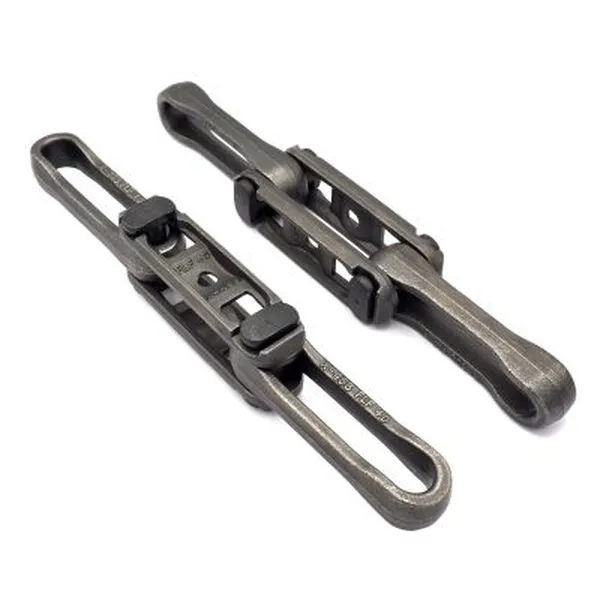
Forged chain , trolleys,carriers used on overhead conveyor production line.
Main products are Forge chain and trolley, welded link chain, Standard and non-standard stainless steel and carbon steel roller chain, Leaf chain, standard and non-standard conveyor chain, Scraper conveyor chain, Cranked link chain, double plus chain, double pitch transmission chain, plastic chain, sprockets and Other accessories.
Main products are Forge chain and trolley, welded link chain, Standard and non-standard stainless steel and carbon steel roller chain, Leaf chain, standard and non-standard conveyor chain, Scraper conveyor chain, Cranked link chain, double plus chain, double pitch transmission chain, plastic chain, sprockets and Other accessories.
The products can be combined to find the best possible solution for even the most demanding applications. Special solutions can also be developed for customers’ individual requirements.
Drop Forged Rivetless Chain, Drop Forged Chains, drop forged link,forged scraper chains.
1.Scraper chains P142,P142V,P142H,P200,P102,P250,P260
2.Detachable chain 51,52,55,57,62,74,78
3.Relevant overhead trolley&carriages&spare parts
4.as per your drawings or samples
| Drop forged detachable chains | X348,X458,X678,X698,F100,F160,P80,P100,P200 |
| CatterPilar Chains for | X348,X458,X678,X698 |
| Surface: | Self Colored, Zinc Plated,Blacken |
|---|---|
| Process: | Forging |
| Taper: | Convoyeur |
| Usage: | Conveyor System |
| Colis de transport : | Plywood Case. |
| Spécification: | ISO |
| Personnalisation : |
Disponible
| Demande personnalisée |
|---|
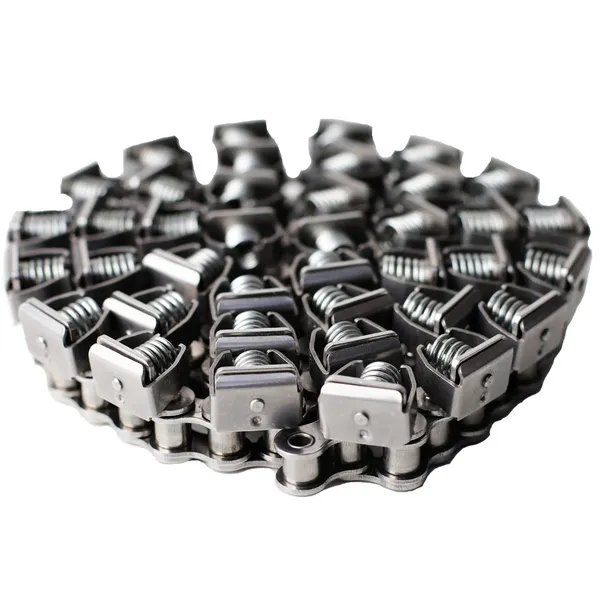
How do you calculate the maximum allowable tension in a conveyor chain?
The maximum allowable tension in a conveyor chain can be calculated using the following steps:
1. Determine the Chain Pitch:
– Measure the distance between the centers of two consecutive chain pins. This measurement is known as the chain pitch and is typically expressed in inches or millimeters.
2. Determine the Chain Speed:
– Determine the speed at which the conveyor chain will be operating. The chain speed is typically expressed in feet per minute or meters per second.
3. Calculate the Chain Pull:
– Determine the total weight or force that needs to be moved by the conveyor chain. This includes the weight of the conveyed material and any additional loads or forces acting on the chain.
4. Calculate the Required Tension:
– Use the following formula to calculate the required tension:
Tension = (Chain Pull × Chain Speed) / (Chain Pitch × Efficiency)
– The efficiency factor accounts for losses due to friction and other factors and is typically expressed as a decimal between 0 and 1.
5. Determine the Maximum Allowable Tension:
– The maximum allowable tension is determined by the manufacturer’s specifications for the conveyor chain. It is important to consult the manufacturer’s documentation or contact them directly to obtain the maximum allowable tension value.
6. Compare the Required Tension and Maximum Allowable Tension:
– Compare the calculated required tension with the maximum allowable tension. The required tension should be less than or equal to the maximum allowable tension to ensure safe and reliable operation of the conveyor chain.
By following these steps and considering the manufacturer’s specifications, you can accurately calculate the maximum allowable tension in a conveyor chain and ensure that it is within the safe operating limits.

Quels sont les avantages de l'utilisation d'une chaîne de convoyeur à rouleaux ?
Une chaîne de convoyeur à rouleaux offre plusieurs avantages pour la manutention et le transport de matériaux. En voici quelques-uns :
1. Transport efficace : Les convoyeurs à rouleaux sont conçus pour transporter efficacement et en douceur divers types de marchandises et de matériaux. Les rouleaux assurent un mouvement à faible friction, réduisant ainsi l’effort nécessaire au déplacement de la charge le long du convoyeur.
2. Polyvalence : Les chaînes de convoyeurs à rouleaux sont polyvalentes et peuvent traiter une large gamme de produits, des articles petits et légers aux charges lourdes et volumineuses. Elles sont couramment utilisées dans des secteurs tels que la fabrication, la distribution, la logistique et l’entreposage.
3. Durabilité : Les chaînes de convoyeurs à rouleaux sont généralement fabriquées à partir de matériaux robustes tels que l’acier, ce qui leur confère une excellente durabilité et une grande longévité. Elles peuvent supporter des charges importantes, une utilisation répétée et des environnements de travail difficiles.
4. Flexibilité : Les convoyeurs à rouleaux peuvent être configurés selon différentes configurations afin de s’adapter aux contraintes d’espace et aux flux de matières. Ils peuvent être droits, courbes, inclinés ou en pente pour optimiser la circulation des marchandises au sein de l’installation.
5. Accumulation facile : Les convoyeurs à rouleaux permettent une accumulation efficace des produits sans risque de dommages ni de blocage. L’espacement et la configuration des rouleaux peuvent être adaptés pour une accumulation et un déchargement contrôlés des articles le long de la ligne de convoyage.
6. Maintenance minimale : Un entretien et une lubrification appropriés permettent aux chaînes de convoyeurs à rouleaux de nécessiter une maintenance minimale. La conception de la chaîne et des rouleaux réduit l’accumulation de débris, facilitant ainsi leur nettoyage et leur entretien.
7. Fonctionnement fluide et silencieux : L’utilisation de rouleaux dans la chaîne du convoyeur assure un fonctionnement fluide et silencieux, réduisant ainsi le niveau sonore sur le lieu de travail. Il en résulte un environnement de travail plus confortable et plus productif.
8. Sécurité renforcée : Les chaînes de convoyeurs à rouleaux sont conçues dans un souci de sécurité. Elles peuvent être équipées de divers dispositifs de sécurité tels que des protections, des capteurs et des mécanismes d’arrêt d’urgence afin de garantir la sécurité des opérateurs et de prévenir les accidents.
L'utilisation d'une chaîne de convoyeur à rouleaux permet aux entreprises de bénéficier d'une efficacité accrue, d'une durabilité renforcée, d'une plus grande flexibilité dans la manutention des matériaux et d'une sécurité améliorée de leurs opérations.
How can you prevent conveyor chain failures?
Preventing conveyor chain failures is crucial for maintaining the efficiency and reliability of a conveyor system. Here are some key preventive measures:
- Regular Inspection and Maintenance: Implement a routine inspection and maintenance schedule to identify potential issues before they escalate. Regularly inspect the chain for signs of wear, such as elongation, link plate wear, and sprocket tooth wear. Address any visible damage or abnormalities promptly.
- Proper Lubrication: Apply the appropriate lubricant to the conveyor chain to minimize friction and reduce wear. Lubrication helps to prevent metal-to-metal contact, corrosion, and excessive heat generation. Follow the manufacturer’s recommendations for lubrication frequency and use lubricants suitable for the operating conditions.
- Tensioning: Maintain proper tension in the conveyor chain to ensure optimal performance and reduce the risk of failures. Both over-tensioning and under-tensioning can lead to premature wear or chain damage. Follow the manufacturer’s guidelines for tensioning and regularly check and adjust the tension as needed.
- Sprocket Maintenance: Inspect and maintain the sprockets that engage with the conveyor chain. Check for any signs of wear or damage on the sprocket teeth and replace them if necessary. Ensure proper alignment between the chain and sprockets to prevent excessive wear and chain skipping.
- Environmental Considerations: Take into account the environmental factors that can affect the conveyor chain’s performance. Protect the chain from exposure to moisture, corrosive substances, excessive heat, or abrasive materials. Implement appropriate safeguards, such as covers or enclosures, to minimize environmental impact on the chain.
- Proper Loading: Ensure that the conveyor chain is not subjected to excessive loads beyond its capacity. Overloading can lead to accelerated wear and chain failures. Adhere to the recommended load limits and guidelines provided by the chain manufacturer.
- Operator Training: Provide proper training to operators and maintenance personnel on the correct operation, maintenance, and safety procedures related to the conveyor chain system. Educate them on identifying potential issues, performing routine inspections, and reporting any abnormalities.
By implementing these preventive measures, you can significantly reduce the risk of conveyor chain failures and extend the lifespan of the chain. Regular monitoring and maintenance are essential to ensure the system operates smoothly and safely.


editor by CX 2023-10-12