
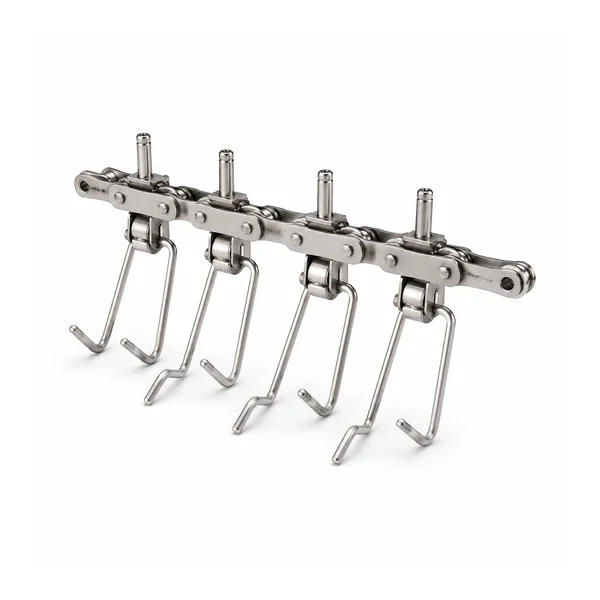
ST-SSC60SB Hot Dog Conveyor Chain
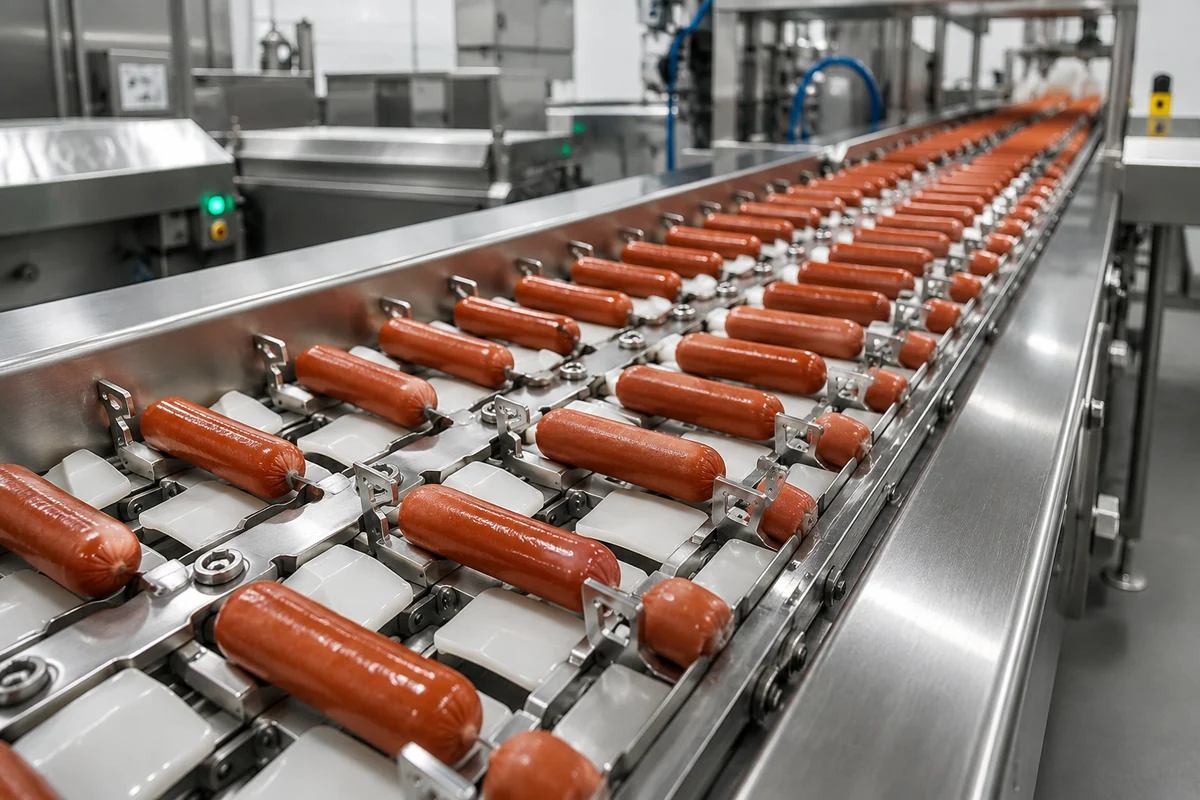
ST-SSC60SB conveyor chain for hot-dog and sausage lines with hanging hook geometry, 19.05 mm pitch and verified side-bow and hook dimensions.
ST-SSC60SB Hot Dog Conveyor Chain: geometry first, application second
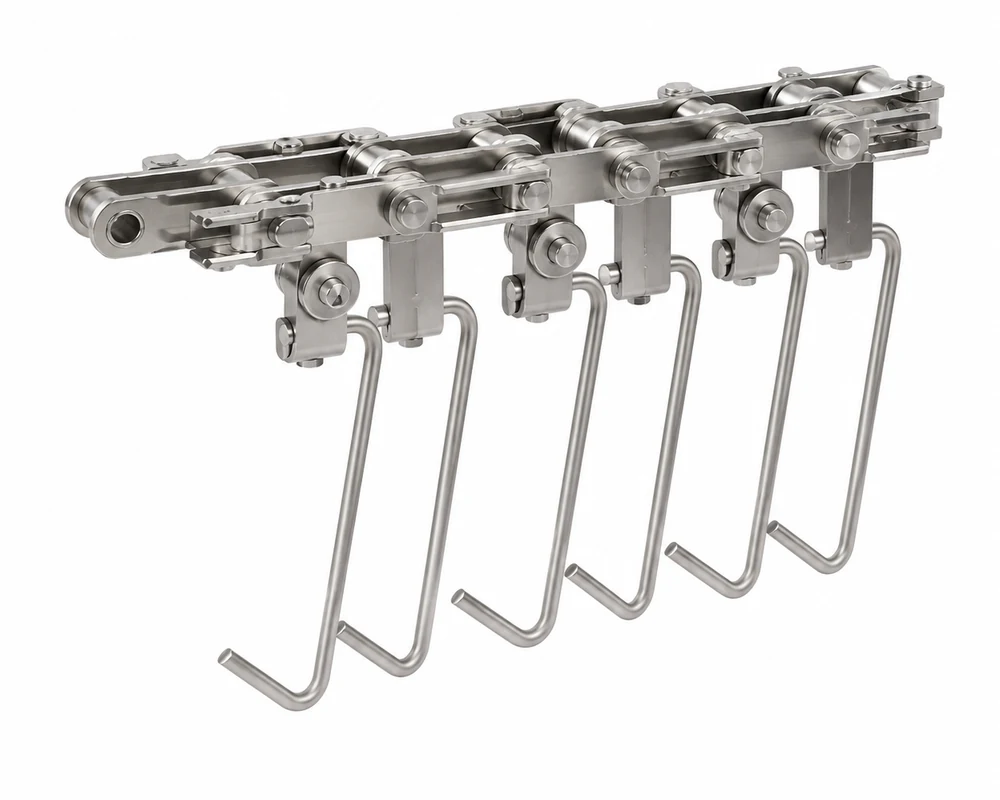
ST-SSC60SB is a specialized hanging conveyor chain for hot-dog or sausage processing. Its defining feature is the long suspended hook arrangement below the chain, so replacement accuracy depends on more than the roller-chain envelope. The hook size, side-bow radius, attachment location and vertical clearance through the machine are all part of the functional interface. The source drawing also marks a welded feature at the attachment zone. For procurement, the complete chain-and-hook assembly should therefore be treated as one part rather than sourcing a standard chain and improvising the hooks separately.
For buyers comparing alternatives, start with the verified dimensions below and then review the wider Food Conveyor Chains family. Verified dimensions are shown separately from verified catalogue dimensions from application questions that need confirmation on the RFQ.
For final release, keep the approved configuration, measured interface, quantity and application conditions together on the purchase record so receiving inspection and future repeat orders reference the same controlled basis.
Verified dimensions
Dimension key: P = pitch; L/Lc = pin length notation; d = pin diameter; D = roller diameter; h = plate height; b1 = inner width; T/t = plate thickness; <R = side-bow radius; d1×w×L = hook size.
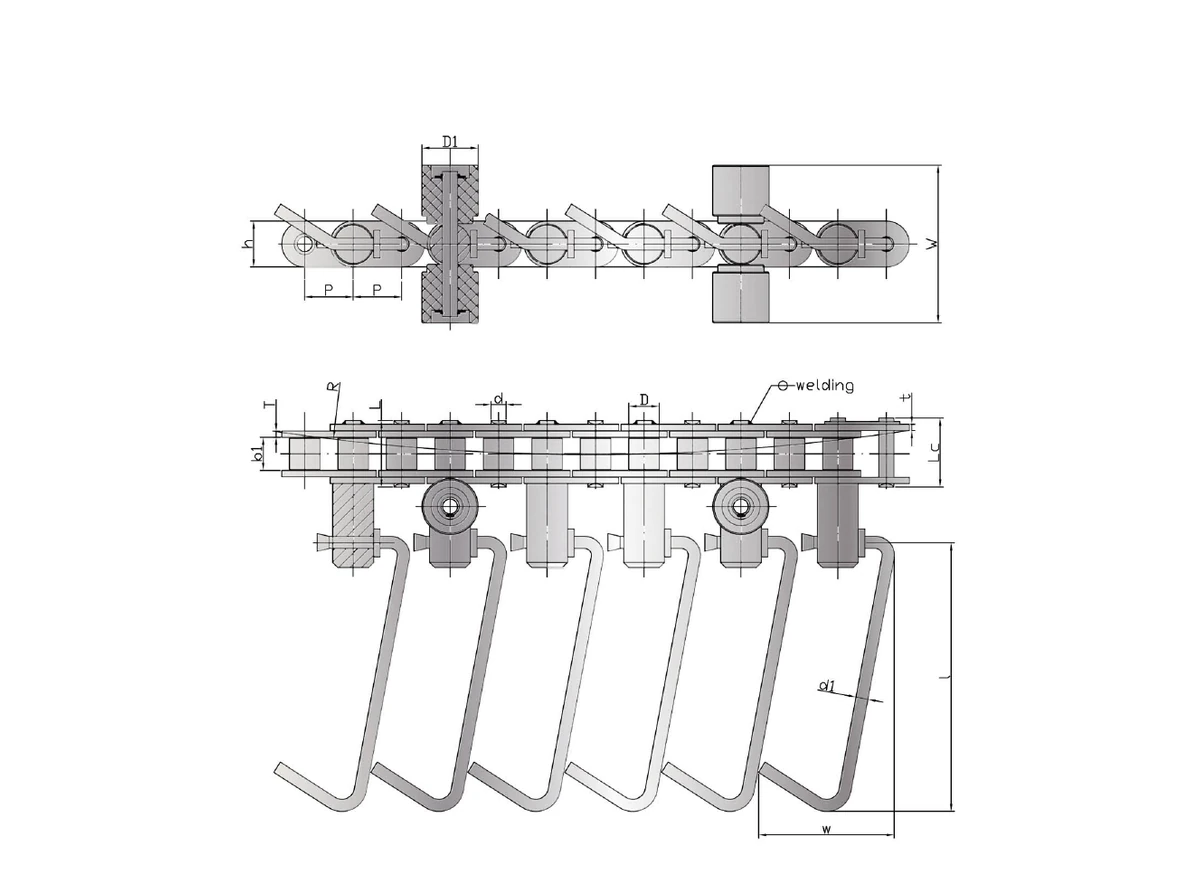
| नमूना | Pitch P (mm) | Pin Length L (mm) | Pin Diameter d (mm) | Roller Diameter D (mm) | Plate Height h (mm) | Inner Width b1 (mm) | Pin Length Lc (mm) | Plate Thickness T/t (mm) | Roller Size W×D1 | Side Bow Radius <R (mm) | Hook Size d1×w×L (mm) |
|---|---|---|---|---|---|---|---|---|---|---|---|
| ST-SSC60SB | 19.05 | 25.60 | 5.94 | 11.91 | 18.00 | 12.57 | 27.50 | 2.42 | 62 | 1500.00 | 4.7×53×108 |
How to specify the right configuration
Verify the 19.05 mm pitch and the 4.7×53×108 hook size from the existing line, then record the product spacing created by the installed attachment pattern. The catalogue gives a side-bow radius notation of less-than-R with a value of 1500.00 mm; treat this as source geometry to match, not as a general performance claim for every installation. Send photographs of the chain through the tightest curve, plus hanger orientation and sprocket details. If the process uses cooking, smoking, cooling or washdown zones, state those conditions separately for material and process review.
Include conveyor speed, total loop length, product mass and spacing, start/stop pattern, curves or inclines, temperature zones, sanitation method and the existing drive or sprocket arrangement. These operating details are intentionally requested rather than converted into unsupported catalogue ratings.
Design around the machine interface
Before finalizing a replacement, compare the component with the complete conveyor path. Small differences in guides, transfer height or sprocket engagement can determine whether an otherwise similar chain or belt runs freely.
The visible conveying element is only one part of the system. Guide rails, sprockets, support tracks, transfer plates, tensioning and sanitation access all influence service life and product handling. When replacing an existing conveyor component, send the mating-interface dimensions instead of asking for a visual match alone.
For a broader project checklist, see our food conveyor chain selection guide.
Installation and commissioning checks
Commissioning should focus on hanger clearance and synchronization. Rotate the empty chain through all curves and vertical transitions, checking that hooks do not strike frames, drip trays, guards or neighboring product. Then run a small batch at reduced speed and inspect product spacing at transfer and discharge points. Hook twist or a small attachment-angle error can create product collisions long before the chain shows abnormal noise, so visual tracking of the suspended load is essential.
Keep geometry stable through sanitation and wear
Cleaning access around hanging hooks can be more demanding than on a flat carrying chain. Remove residue from hook bends, attachment welds and the lower surfaces of the chain while keeping the hangers aligned. After sanitation, inspect the welded attachment region for cracking or deformation and compare neighboring hooks for consistent orientation. A hook that is bent a few degrees may still move through the conveyor but can change product spacing or contact adjacent products.
Inspection should compare a repeatable reference length rather than judging one joint by eye. Record the location of abnormal wear so it can be related to a specific guide, transfer or sprocket.

What to send for an accurate quotation
- Model or complete designation, if known.
- Required quantity and whether the request is sample, replacement or production supply.
- Measured pitch, key widths/diameters, attachment or mesh geometry and overall belt/chain width.
- Clear top, side, end and drive-interface photographs; include a scale reference.
- Operating speed, product/load description, temperature zones, cleaning method and environmental exposure.
- Sprocket or mating-component details and any drawing revision used by the machine builder.
Use the RFQ contact page to organize the information before submitting it through the global enquiry form in the footer.
Common engineering questions
What is the catalogued pitch?
ST-SSC60SB is listed with a 19.05 mm pitch.
What hook dimensions are shown?
The source table lists a hook size of 4.7×53×108 mm using the d1×w×L notation.
Why does side-bow geometry matter?
The chain must negotiate the machine path while keeping hanging products correctly spaced, so lateral articulation and guide geometry must be matched.
Should the hook attachment be checked separately?
Yes. The source drawing marks a welded attachment feature; inspect the attachment region and provide clear photos for replacement work.
What application data should be sent?
Provide product spacing, line speed, process temperature, washdown method, smallest curve, vertical clearances, sprocket details and required quantity.
A practical way to avoid a visually similar but mechanically wrong replacement
A replacement can match pitch and still fail because the roller, inner width, attachment height, top-plate envelope or cross-machine interface is different. Build a compact measurement sheet before contacting suppliers. If the old component is worn, take measurements from several less-damaged areas and note which values are estimated. Never silently round a measured value to a familiar nominal size; keep the measured value and the proposed nominal value as separate fields until the match is confirmed.
The specification table above is catalogue evidence for the listed model or configuration. Conveyor speed, support spacing, curve radius, product temperature and cleaning chemistry belong to the machine application and must be confirmed for the project. Keeping these two data sets separate prevents a common procurement error: treating a catalogue geometry value as a performance guarantee for a different conveyor layout.
Before production quantity is released, compare the proposed chain or belt with the sprocket, guide and transfer geometry. A marked-up drawing or a first-article sample is more useful than a product photo when the machine has special guards, side rails or attachments. The goal is an interface that can be inspected objectively during incoming inspection and commissioning.
Keep ST-SSC60SB Hot Dog Conveyor Chain traceable from RFQ to incoming inspection
Before placing a production order, convert the agreed configuration into a short acceptance sheet. Put the exact model or designation at the top, followed by the dimensions that control fit on the machine. Attach the approved drawing or marked reference image and identify any dimension that was taken from a worn sample rather than a controlled source. This distinction is important because a supplier should not be asked to reproduce wear simply because the old part was the only sample available.
For repeat orders, keep the same stable item reference and note any deliberate revision. If a later machine modification changes a guide, sprocket, support rail or transfer, update the interface record rather than silently changing the chain or belt. This creates a useful history for procurement and maintenance teams and reduces the chance that two visually similar but mechanically different versions are mixed in stores.
Check the machine before blaming the replacement component
A conveyor component can show accelerated wear even when its manufacturing dimensions are correct. Inspect the mating sprocket, guide and transfer surfaces for burrs, hooks, steps, side pressure and localized contamination. Compare left and right sides of the machine and mark any position where the chain or belt changes direction. If the old component has a polished band or bent attachment that repeats at the same location, document that point before the old loop is removed.
After installation, create a controlled low-speed baseline. Listen for repeating noise, watch the same marked joint through the drive and return, and confirm that product transfer is stable before increasing speed. If the machine uses take-up adjustment, record its final position. A short baseline record makes later maintenance more objective because the team can compare current condition with the state immediately after commissioning.
These checks also help quotation quality. When the supplier receives clear evidence about fit, wear location and operating duty, the response can focus on the relevant geometry or process question instead of asking the buyer to choose from a long list of generic options.