Deskripsi Produk
Short Pitch Precision Roller Chains
A. Our Services:
1. Any of your kind inquiry about chain would be replied within 24 hours.
2. Well-trained and experienced sales staffs will reply all your concerns in fluent English.
3. OEM services are available with us, our professional designer would make your private idea into being.
4. Protection of your sales area, ideas of design and all your private information.
5. Delivery by air mail or ship for your orders.
6. With years of manufacture and promotion experience in global market, brings you profit and great success!
B.Product Description:
| Style: | Simplex Roller Chains, Duplex Roller Chains, Triplex Roller Chains, Multiple Roller Chains |
| Chain No.: (ANSI/ISO) | 03C, 04C, 06C, 08A, 10A, 12A-~ 48A |
| Chain No.: ( ANSI ) | 15, 25,35,41,40,50 ~ 240 |
| Melempar: | 4.7625 mm ~ 76.200 mm |
C.Company show & Product Process
D. Packaging & Certificate
| Rincian Kemasan: | Chain+Plastic Bag+Neutral Box+Wooden case+Big Carton+Steel Pallets |
| Delivery Detail: | five weeks |
E. FAQ:
1. Apakah Anda perusahaan manufaktur atau perusahaan perdagangan?
We are a factory founded in 1991 with trade team for international service.
2. Metode pembayaran apa yang biasanya Anda gunakan?
T/T 30% deposit and 70% against document, Western Union, L/C at sight
3. what is your lead time for your goods?
Normally 45 days after confirmed order. 30 days could be available in low season for some items (during May to July), and 65 days during new year and hot season ( Jan to March).
4. Apakah Anda menghadiri pertunjukan apa pun?
We attend Hannover show in Germany, NMW in Austrilia, Canton fair, PTC, in China and many other special furniture shows.
5. Do you have any instant chat ?
| Penggunaan: | Conveyor Chain |
|---|---|
| Bahan: | Alloy/Carbon Steel |
| Perlakuan Permukaan: | Electroplating |
| Fitur: | Tahan Panas |
| Ukuran Rantai: | 1/2"*11/128" |
| Struktur: | Rantai Rol |
| Kustomisasi: |
Tersedia
| Permintaan Khusus |
|---|
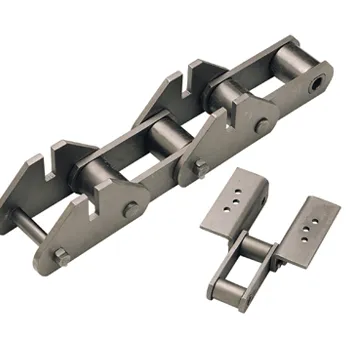
Can a conveyor chain be used in overhead conveyor systems?
Yes, a conveyor chain can be used in overhead conveyor systems. Overhead conveyor systems are designed to move materials, products, or components along an elevated path, typically in manufacturing or distribution facilities.
Conveyor chains used in overhead conveyor systems are specially designed to handle the weight and load requirements of the application. They are typically made from durable materials such as steel or stainless steel to ensure strength and longevity.
Here are some key considerations when using a conveyor chain in overhead conveyor systems:
1. Load Capacity:
– Ensure that the conveyor chain has sufficient load capacity to handle the weight of the conveyed items. The load capacity should be determined based on the maximum anticipated load and any potential dynamic forces.
2. Chain Type and Design:
– Select a conveyor chain that is suitable for overhead applications, such as an overhead conveyor chain or an inverted tooth chain. These chains are specifically designed to handle the unique requirements of overhead conveyance.
3. Lubrication:
– Proper lubrication is crucial for the smooth operation of the conveyor chain in an overhead system. Consider using lubricants that are suitable for overhead applications and ensure regular lubrication to minimize friction and wear.
4. Safety Measures:
– Implement appropriate safety measures to prevent accidents and ensure worker safety. This may include installing safety guards, emergency stop systems, and implementing regular maintenance and inspection routines.
It is important to consult with conveyor system manufacturers or experts who specialize in overhead conveyor systems to ensure the conveyor chain is selected and installed correctly for the specific application requirements.
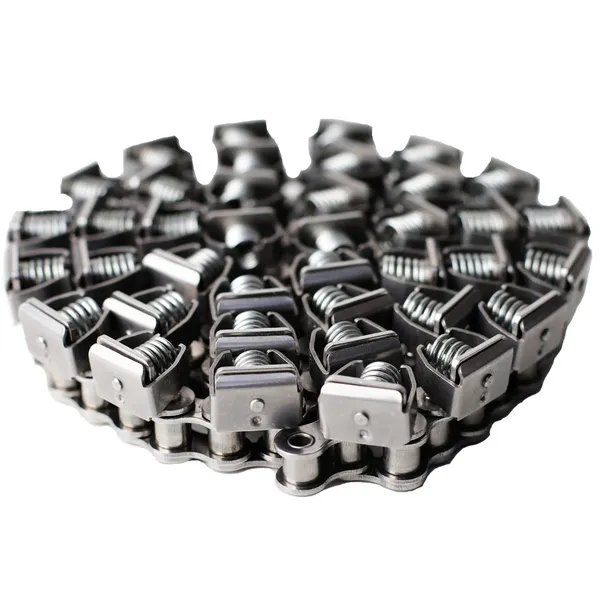
Bagaimana cara menghitung kebutuhan daya untuk rantai konveyor?
Perhitungan kebutuhan daya untuk rantai konveyor melibatkan pertimbangan berbagai faktor. Berikut proses langkah demi langkahnya:
1. Tentukan berat total yang akan diangkut: Ukur atau perkirakan berat total material atau produk yang akan diangkut oleh rantai konveyor. Ini termasuk berat produk itu sendiri, kemasan apa pun, dan muatan tambahan.
2. Tentukan kecepatan konveyor: Tentukan kecepatan yang diinginkan agar rantai konveyor beroperasi. Kecepatan ini biasanya diukur dalam kaki per menit (FPM) atau meter per detik (m/s).
3. Hitung kapasitas yang dibutuhkan: Kalikan berat total dengan kecepatan yang diinginkan untuk menentukan kapasitas sistem konveyor yang dibutuhkan. Ini akan memberi Anda berat per satuan waktu (misalnya, pon per menit atau kilogram per jam).
4. Pertimbangkan faktor desain konveyor: Perhatikan berbagai faktor desain seperti jenis dan jarak antar mata rantai konveyor, koefisien gesekan antara rantai dan komponen konveyor, serta sudut kemiringan atau penurunan sistem konveyor. Faktor-faktor ini memengaruhi kebutuhan daya.
5. Tentukan daya yang dibutuhkan: Gunakan rumus berikut untuk menghitung kebutuhan daya:
Daya (dalam tenaga kuda) = (Kapasitas × Faktor Gesekan) ÷ (33.000 × Efisiensi)
Di mana:
– Kapasitas adalah berat per satuan waktu (dari langkah 3)
– Faktor Gesekan adalah rasio tegangan rantai terhadap berat rantai, dengan mempertimbangkan faktor desain.
– 33.000 adalah faktor konversi untuk mengubah satuan menjadi tenaga kuda.
– Efisiensi adalah efisiensi keseluruhan sistem konveyor, biasanya dinyatakan sebagai nilai desimal (misalnya, 0,95 untuk efisiensi 95%)
6. Pilih motor yang sesuai: Berdasarkan kebutuhan daya yang telah dihitung, pilih motor yang dapat memberikan daya yang diperlukan untuk menggerakkan rantai konveyor. Pertimbangkan faktor-faktor seperti jenis motor, efisiensi motor, dan kapasitas beban berlebih.
Penting untuk dicatat bahwa kebutuhan daya dapat bervariasi tergantung pada desain sistem konveyor dan kondisi operasi tertentu. Konsultasi dengan insinyur yang berkualifikasi atau produsen konveyor disarankan untuk memastikan perhitungan yang akurat dan pemilihan motor yang tepat.

What are the main components of a conveyor chain?
The main components of a conveyor chain include:
- Chain Links: Chain links are the individual components that make up the conveyor chain. They are typically made of metal and are connected to form a continuous loop. The design and configuration of the chain links can vary depending on the specific application and load requirements.
- Pins: Pins are the cylindrical components that hold the chain links together. They are inserted through the end of each chain link to create a solid connection. Pins are usually made of hardened steel to withstand the forces and friction within the conveyor system.
- Sprockets: Sprockets are toothed wheels that engage with the chain links and provide the driving force to move the conveyor chain. They are typically made of durable materials such as steel or plastic and are designed to match the pitch and profile of the conveyor chain. Sprockets come in various sizes and configurations depending on the desired speed and load capacity of the conveyor system.
- Guide Rails: Guide rails are stationary components installed along the conveyor path to guide and support the movement of the conveyor chain. They help maintain proper alignment and prevent the chain from derailing or deviating from its intended path.
- Tensioners: Tensioners are devices used to maintain the proper tension in the conveyor chain. They ensure that the chain remains taut and engaged with the sprockets, preventing slack or excessive sagging. Tensioners can be adjusted to accommodate variations in chain length and to compensate for wear over time.
- Attachments and Accessories: Depending on the specific application, conveyor chains may include various attachments and accessories. These can include cleats, flights, buckets, or other devices that aid in the movement and handling of specific types of materials. These attachments are typically secured to the chain links at specific intervals or locations.
The combination of these components creates a robust and reliable conveyor chain system capable of efficiently transporting materials in a wide range of industrial applications.


editor by CX 2023-08-30