This guide explains frozen food conveyor chain selection for engineers, maintenance teams and industrial buyers. Selection should be based on the current frozen-food conveyor chain, its mating conveyor hardware and the duty the machine actually performs. The four checkpoints used here are sff-ss38.1 geometry, inner vs outer ring, shell interface and icing and washdown.
- Sff-Ss38.1 Geometry
- Inner Vs Outer Ring
- Shell Interface
- Icing And Washdown
1. Define what sff-ss38.1 geometry controls in this conveyor
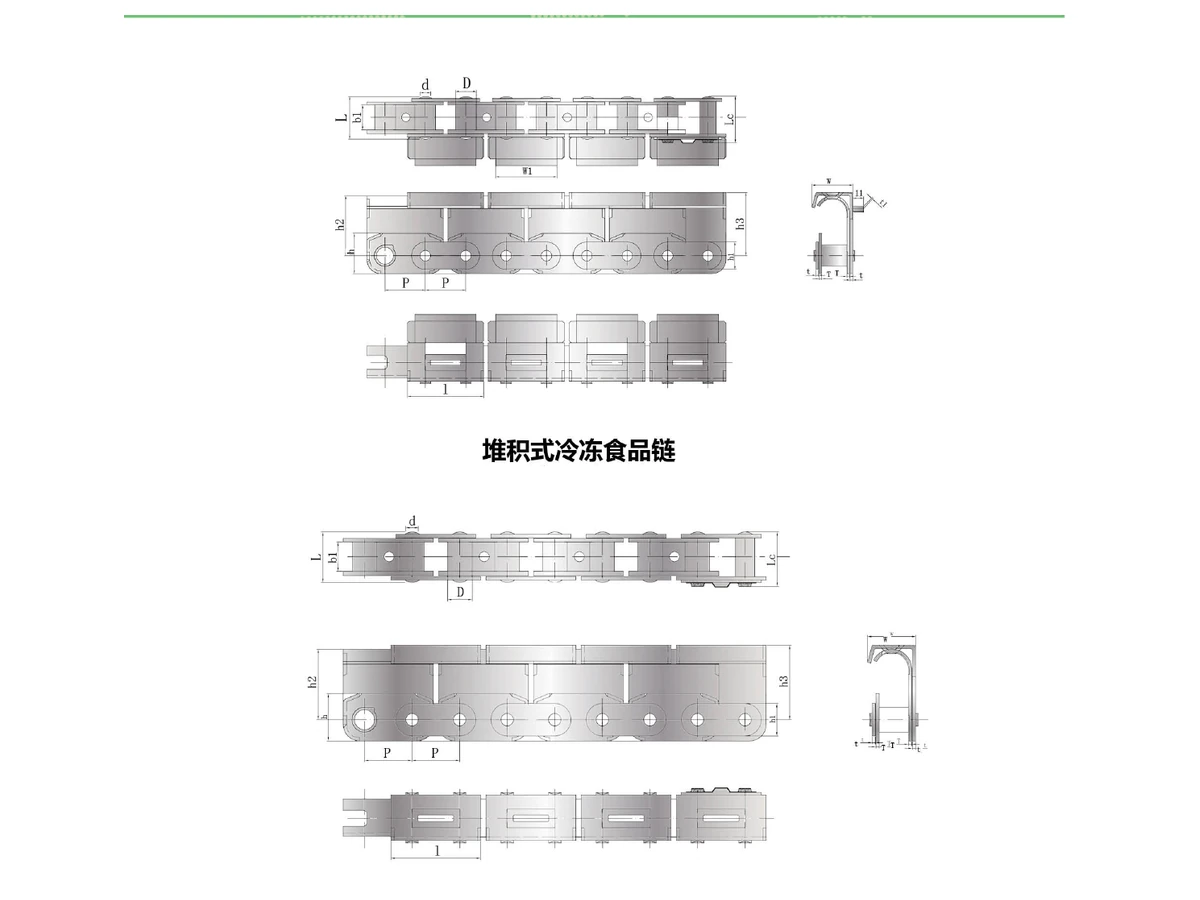
For Selecting Conveyor Chain for Frozen Food Production Lines, begin with sff-ss38.1 geometry because it establishes the first mechanical boundary for the frozen-food conveyor chain. Record the feature while the component is still installed, then relate it to shell-type carriers, chain articulation, guides and transfers. A dimension has more value when its mating surface and running direction are visible.
Measure more than one repeat when the feature is periodic. On a chain this may mean several pitches; on a wire belt it may mean several rod or mesh repeats. If the part is worn, record the range rather than turning one service-worn measurement into an assumed nominal value. Photograph any polished contact or deformation that indicates how the interface has been carrying load.
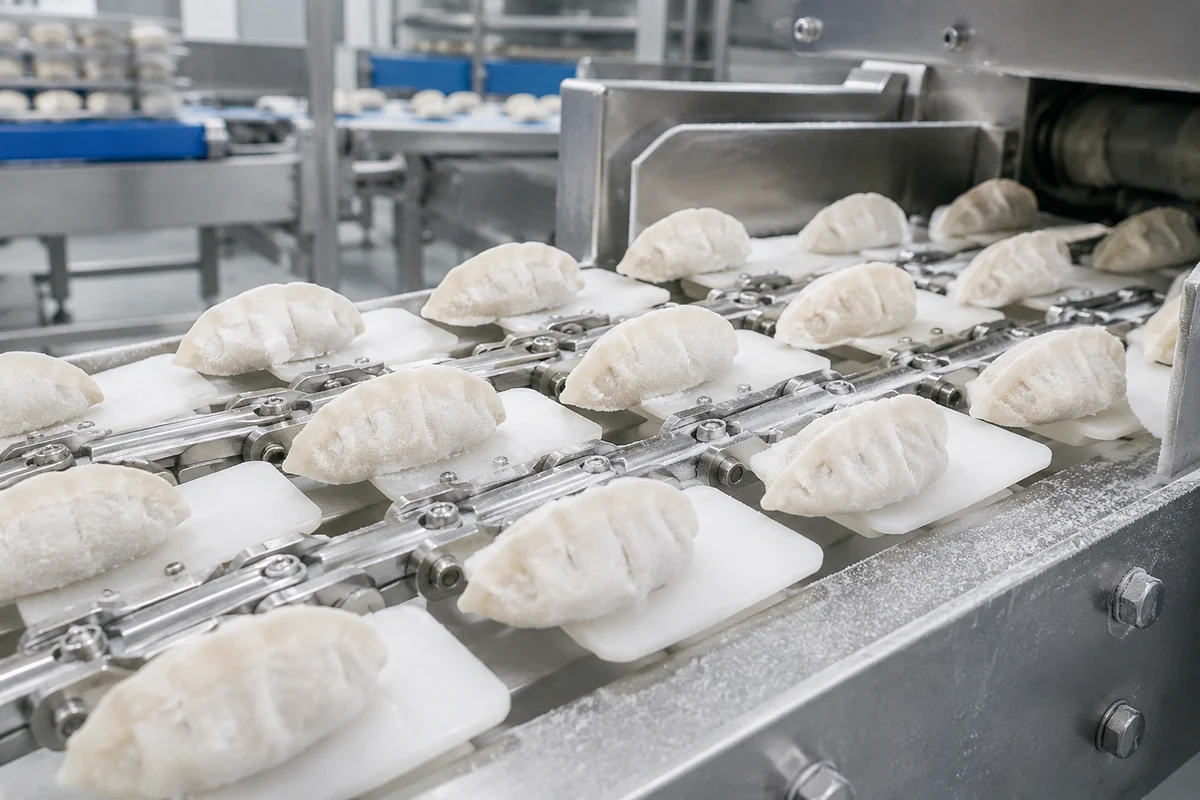
2. Measure inner vs outer ring so another engineer can reproduce the result
Inner Vs Outer Ring should be measured with the same datum and method each time. Note whether the measurement was taken in a straight carrying section, at a curve, at the drive or on a removed bench sample. That context matters because service wear and articulation can change what the measuring tool sees.
For this frozen-food conveyor chain, cross-check inner vs outer ring against sff-ss38.1 geometry and the surrounding shell-type carriers, chain articulation, guides and transfers. If those features disagree with the machine drawing, treat the as-built machine as a separate record and identify the difference before purchasing a replacement. An old part number cannot explain a guide, transfer or sprocket that has been modified.
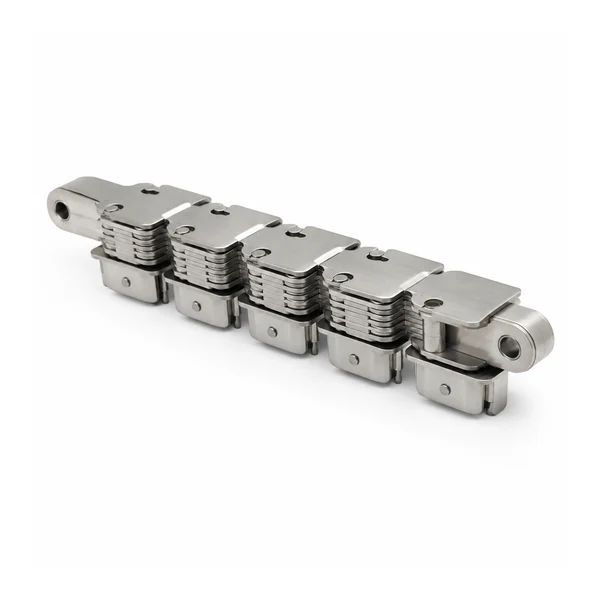
3. Connect shell interface to the mating drive, guide and support system
The practical question is not whether shell interface looks correct on the component; it is whether it matches the current drive, guide and support arrangement. Inspect the entry to the drive, transitions between supports, both conveyor edges and the return path. On a side-flexing chain, include the tightest curve. On a belt, include the transfer and edge guidance.
Look for asymmetric wear. A shiny track on one side, a bent cross rod at a repeating interval or a hook that contacts only one return guide can identify a machine alignment problem. Correcting the interface before fitting the new component prevents the replacement from inheriting the same damage pattern.
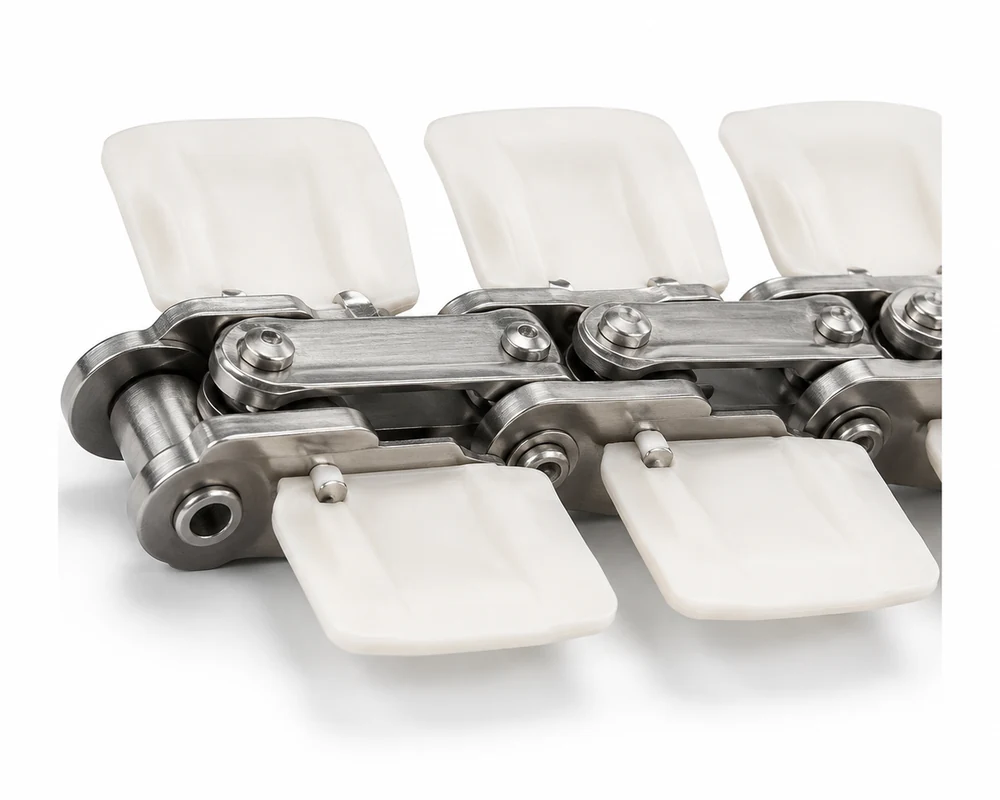
4. Treat icing and washdown as an operating condition, not a guessed rating
Icing And Washdown should be described together with product size and spacing, line speed, starts and stops, curves or inclines, process zones and sanitation. Those conditions explain how the frozen-food conveyor chain is used. They should not be converted into a universal product rating unless the relevant specification actually provides one.
When the process has changed since the last purchase, say so explicitly. A new package size, denser product spacing or altered transfer can change support and clearance requirements even though the original component designation is unchanged. For maintenance troubleshooting, record whether the symptom began before or after that process change.
5. Read wear and motion as evidence for frozen food conveyor chain selection
For Selecting Conveyor Chain for Frozen Food Production Lines, inspect the machine for changes in shell clearance, cold-zone transitions, product stability and guide support. Mark one joint, carrier or mesh row and follow it through the complete path at low speed. If the symptom follows the marked component everywhere, the component deserves closer inspection. If the symptom appears only at one location, investigate the local guide, sprocket, support or transfer first.
Document wear before cleaning or disassembly removes the evidence. Note where residue accumulates, which side is polished, whether a pin or rod has shifted, and whether the product moves or marks at the same location. This condition record is useful when comparing a new sample because it gives the supplier and maintenance team a common reference.
6. Commission the frozen-food conveyor chain in controlled steps
Before installation, clean the conveyor and inspect the mating parts. Check sprocket teeth, guide edges, supports, transfer plates, shafts and return rollers for damage or steps. Install without forcing the component sideways or using take-up to hide a dimensional conflict. Where manual rotation is practical, move the system through the critical interface before applying power.
Run empty at the lowest practical speed and observe the complete loop. Then introduce representative product spacing and repeat the observation. For frozen food conveyor chain selection, pay special attention to sff-ss38.1 geometry, inner vs outer ring, shell interface and icing and washdown. Record the accepted guide or take-up condition so later service inspections can compare against a known baseline.
7. Include cleaning and inspection access in the mechanical decision
Food conveyors must remain inspectable after routine cleaning. For the frozen-food conveyor chain, identify joints, wire intersections, carrier recesses, hook interfaces or guide channels where product residue can remain. Cleaning should remove residue without levering plates, bending wire or changing guide alignment. The required cleaning method must also be compatible with the specified component and the non-metallic parts around it.
After cleaning, inspect the same mechanical checkpoints used during commissioning. A stiff joint, displaced guide, deformed edge or changed hook position can be easier to see after residue is removed. If lubrication is used, record the actual system rather than assuming one method applies to every food conveyor.
8. Convert the inspection into a concise RFQ
| RFQ block | Information for frozen food conveyor chain selection |
|---|---|
| Sff-Ss38.1 Geometry | Measure and photograph sff-ss38.1 geometry with its machine datum. |
| Inner Vs Outer Ring | Record inner vs outer ring over enough repeats to reveal wear or variation. |
| Shell Interface | Show how shell interface mates with the drive, guide, carrier or support. |
| Icing And Washdown | Describe icing and washdown together with product, speed, process and sanitation. |
| Commercial plan | State sample quantity, production quantity by model, and any mandatory material or process requirement. |
Keep each model on its own technical line even when several lines are combined commercially. Label photographs and samples to the same line item. If a dimension comes from a worn part, say so; if a material grade is mandatory, state the requirement; if a rating is unknown, leave it as a review question.
9. Common mistakes when working on frozen food conveyor chain selection
Two components can share a similar silhouette while using different pitch, width, attachment, edge or drive geometry.
A single service-worn joint or mesh opening can hide elongation or deformation. Use multiple repeats where possible.
Damaged guides, sprockets, supports or transfers can reproduce the same failure on a new component.
Operating conditions explain the application; they do not change what was actually measured on the component.
10. Frequently asked questions about frozen food conveyor chain selection
What is the first check for frozen food conveyor chain selection?
Start with sff-ss38.1 geometry and photograph how it relates to the current frozen-food conveyor chain interface.
Why should inner vs outer ring be measured over several repeats?
Multiple repeats make service wear or local deformation easier to distinguish from the intended geometry.
How does shell interface affect the decision?
It must be checked against the mating drive, guide, support or product-carrying interface rather than considered in isolation.
What should be stated about icing and washdown?
Describe it as an operating condition together with product, speed, process exposure and sanitation.
When is a sample helpful?
A short sample is useful when the geometry is difficult to capture reliably in photographs or when the original designation is missing.
11. A four-step selection workflow for Selecting Conveyor Chain for Frozen Food Production Lines
Step 1 — Identify: define the frozen-food conveyor chain and machine position, then confirm running direction. Step 2 — Measure: record sff-ss38.1 geometry and inner vs outer ring using repeatable datums. Step 3 — Interface: verify shell interface against the current drive, guide, support and transfer arrangement. Step 4 — Duty: describe icing and washdown and the operating conditions that can affect product handling and maintenance.
If the four steps point to one configuration, define sample or first-article acceptance dimensions before production quantity. If they conflict, resolve the machine interface before changing the component specification. A small controlled trial is more informative than forcing a component to fit and then troubleshooting the consequences at production speed.
12. Build a repeat-order record for frozen food conveyor chain selection
Keep the accepted designation, critical dimensions, current machine photographs, commissioning result and the machine position together. When maintenance finds new wear, add photographs at the same locations. When the machine is modified, update the interface record at the same time. This makes the next replacement enquiry a comparison against an accepted baseline rather than a new identification exercise.
For related information, see the food conveyor product range, the chain selection guide and the RFQ checklist. When you are ready to quote, use the form at the bottom of this page.
13. Engineering notes specific to Selecting Conveyor Chain for Frozen Food Production Lines
Do not treat sff-ss38.1 geometry, inner vs outer ring, shell interface and icing and washdown as four independent checklist boxes. They interact through the machine. A change in one measured feature can alter guide clearance, drive engagement or product position elsewhere in the loop. For that reason, photographs should show both the component and the surrounding conveyor hardware, with a scale or known reference where practical.
When a replacement has to be produced before an unworn original is available, distinguish what is known from what is estimated. Use the current drawing, several measured repeats and machine datums to narrow the geometry. If uncertainty remains around an interface that is difficult to adjust on the machine, make that interface part of sample approval. For frozen food conveyor chain selection, this is safer than compensating during installation with guide movement or excessive take-up.
Maintenance teams can improve future purchasing by keeping one removed but identifiable sample after a successful replacement. Mark running direction and the equipment position. The sample does not replace a drawing, but it can confirm formed features, edge details and articulation that are hard to describe in an email. Pair it with the latest dimensional record rather than an undocumented historical sample.
Finally, define who owns the acceptance decision. Purchasing can confirm quantity and commercial requirements; maintenance can confirm machine condition; engineering can approve the geometry and any changed interface. Bringing those observations together before production release reduces the risk that one department assumes another has already checked shell interface or the surrounding conveyor path.
14. Field worksheet for frozen food conveyor chain selection
Use one worksheet for the machine and keep it with the accepted component record. Start with a line for sff-ss38.1 geometry: write the measured value or observed configuration, the measurement datum, and whether the feature is unworn, worn or estimated from a drawing. Add a second line for inner vs outer ring and record enough repeats to show variation rather than a single isolated number. This gives the supplier a traceable basis for comparison without pretending that service wear is a nominal dimension.
The next block should describe shell interface at the mating conveyor. Photograph the drive, guide, support or transfer that controls this feature and include a scale where possible. If the machine has been modified, label the modification. A useful photograph should answer where the part sits, which way it moves, what supports it and which fixed surfaces limit clearance.
Keep icing and washdown in an operating-duty block. Record the product, spacing, speed, starts and stops, curve or incline, process zone and sanitation method that are relevant to Selecting Conveyor Chain for Frozen Food Production Lines. If the current component has a recurring symptom, add when it appears: continuously, once per revolution, only under product load, only after cleaning, or only at one machine position. The timing often directs the next mechanical inspection.
Before commissioning, define the acceptance check. Decide which dimensions will be measured on receipt, which visible features must match the approved configuration and what low-speed test will be used. During the test, use a marked joint, hook, carrier or mesh row and follow it through the complete path. Record any contact, lift, skew, noise or product-position change and the machine location where it occurs.
After acceptance, keep the worksheet, approved photographs and any sample reference with the purchase record. The next enquiry can then compare the current conveyor with the accepted baseline instead of starting from memory. If the machine, product format or cleaning process changes, update the worksheet at the same time so future replacements are checked against the machine that actually exists.
15. Record the approved setup for Selecting Conveyor Chain for Frozen Food Production Lines
When the technical comparison is finished, summarize the decision in a short technical record. State the selected component or configuration, the machine position, the dimensions that were checked, the operating conditions used for the review and any point that still requires confirmation during sample testing. This prevents a later buyer or maintenance technician from seeing only a part number without the context that made it acceptable.
Keep changes visible. If a guide is moved, a sprocket is replaced, the product spacing changes or a transfer is rebuilt, update the technical record. For frozen food conveyor chain selection, the most reliable repeat order is one that can be compared with the same machine datums and commissioning observations used the first time.