
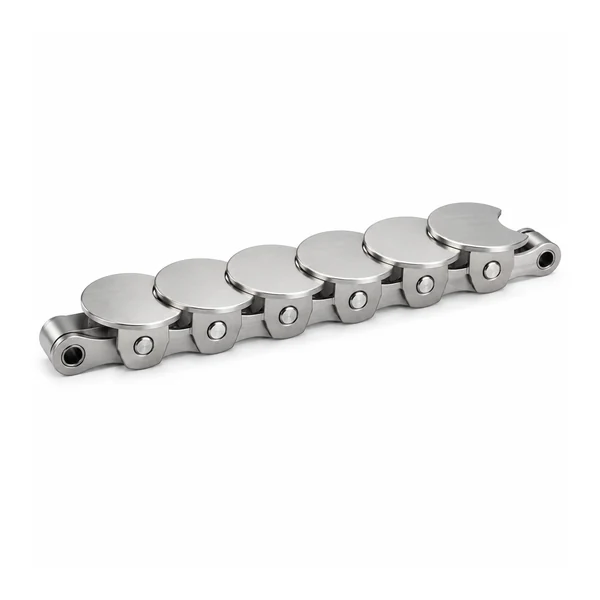
SSSC76.2A Sushi Conveyor Chain
SSSC76.2A stainless steel sushi conveyor chain with pitch, top-plate and chain-width dimensions for rotary restaurant conveyor replacement and OEM projects.
SSSC76.2A Sushi Conveyor Chain
This stainless steel sushi conveyor chain is built around a dedicated crescent-shaped top plate rather than a generic flat plastic module. The top plate creates a continuous carrying surface around curves while the central chain body supplies pitch control and articulation. For replacement work, the buyer should treat pitch, top-plate width, chain width and the interface to the guide track as one geometry set; matching only the nominal model name is not enough when the restaurant conveyor or guide rail has been modified. The series specification identifies the material family as 300, 400 and 600 series stainless steel. A quotation should therefore state the required material series or the existing material if known, together with photographs of the installed track and return path.
For replacement work, treat the crescent top plate, central chain body, guide track and drive sprocket as one interface. The part should be compared with the conveyor that exists today, including any guide, carrier or sprocket modifications made after the original machine was commissioned.
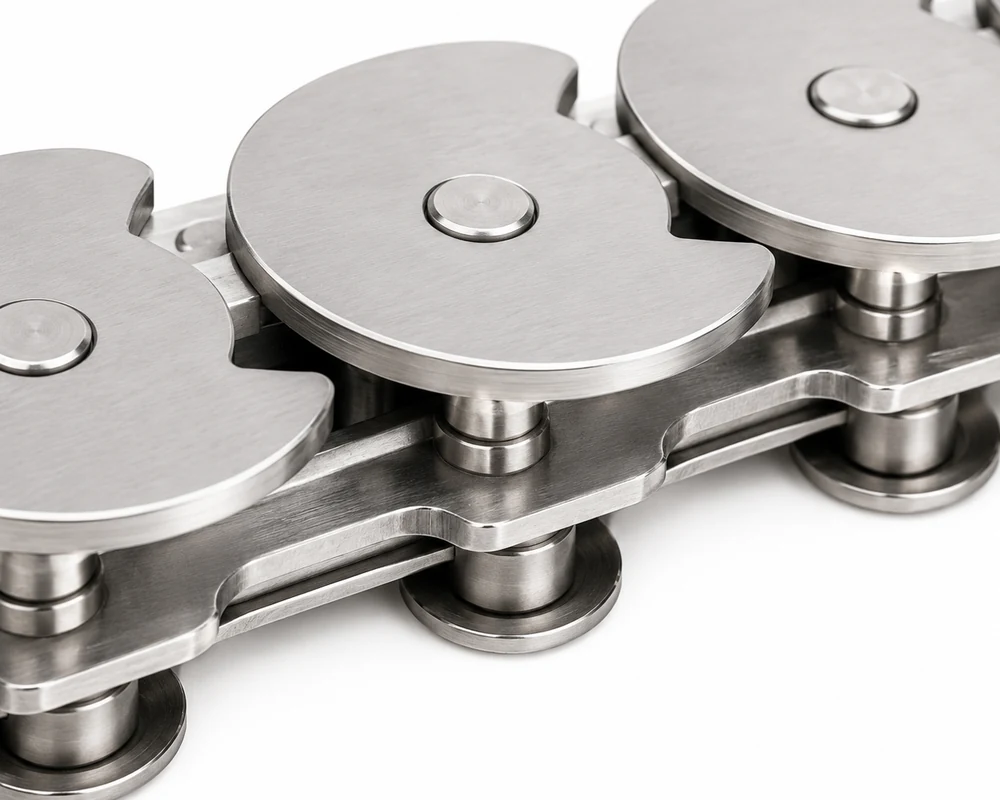
Check the features that control fit and motion
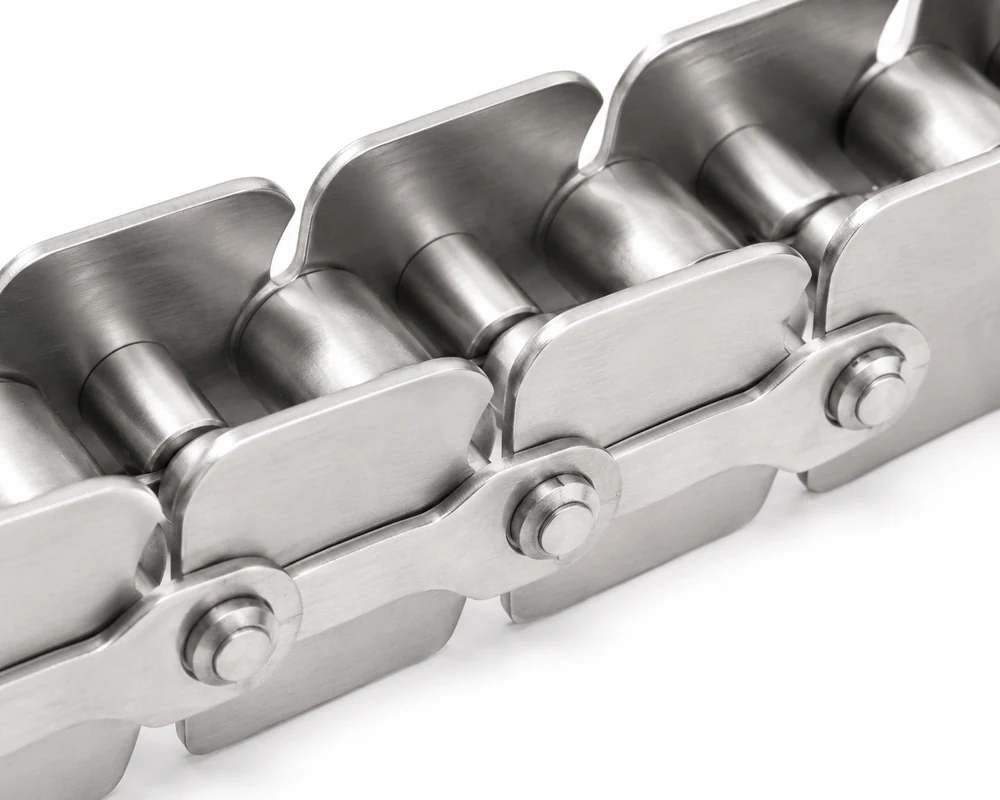
The key review points are curve clearance, return-path support and sprocket engagement. Measure several repeating features where possible instead of relying on one worn joint, rod or attachment. Photograph the component while it is still installed so running direction, guide contact and drive engagement are visible.
Selection starts with two measurements that are easy to verify on an installed line: center-to-center pitch and the effective top-plate width. Measure several pitches over a straight section to reduce single-joint error, then verify the overall chain width and roller diameter. Also record the smallest curve radius in the conveyor, the plate support arrangement, direction of travel and whether plates must pass under covers, dish guides or transfer points. If an existing chain runs quietly on the straight but binds in curves, the problem may be guide geometry, side clearance or accumulated pitch error rather than nominal pitch alone. For OEM projects, send a section drawing of the track and the mating sprocket before production approval.
When dimensions are uncertain, label them as measured from a worn sample rather than rounding them into an assumed nominal value. This makes it easier to distinguish a true dimensional conflict from normal service wear during technical review.
Technical drawing and specification
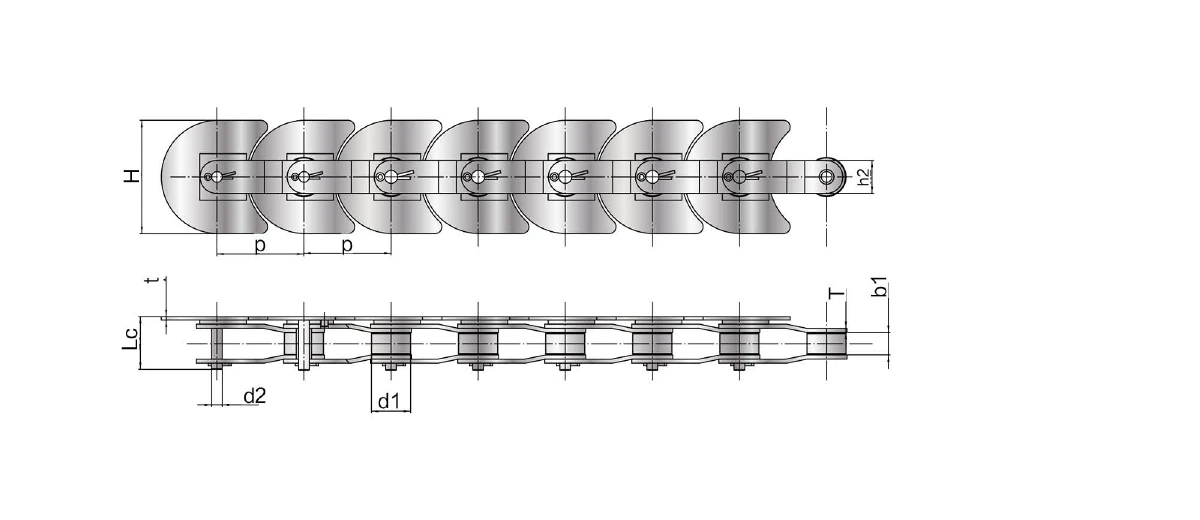
Dimension key: P = pitch; d1 = roller diameter; b1 = width between inner plates; d2 = pin diameter; H = top plate width; h2 = inner plate height; T = plate thickness; t = top plate thickness; Lc = chain width.
| Model | Pitch P (mm) | Roller Diameter d1 (mm) | Width Between Inner Plates b1 (mm) | Pin Diameter d2 (mm) | Top Plate Width H (mm) | Inner Plate Height h2 (mm) | Plate Thickness T (mm) | Top Plate Thickness t (mm) | Chain Width Lc (mm) |
|---|---|---|---|---|---|---|---|---|---|
| SSSC76.2A | 76.20 | 49.50 | 19.00 | 7.92 | 175.00 | 22.00 | 2.50 | 3.00 | 42.50 |
The table reproduces the available model/configuration data for this product page. Values not listed here should be confirmed from the project drawing, current component or machine interface rather than inferred from another series.
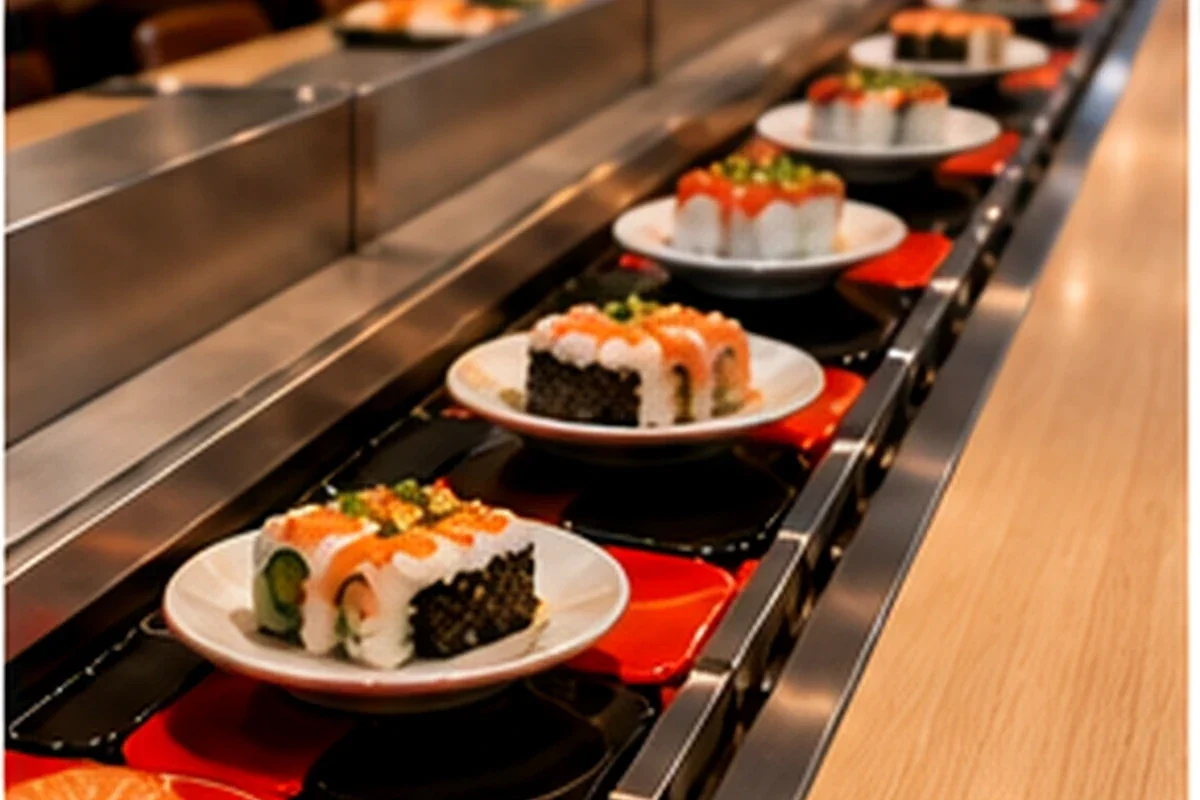
Evaluate the component inside the complete conveyor path
SSSC76.2A Sushi Conveyor Chain is considered for rotary sushi and plate-conveyor systems. In addition to the component dimensions, state the product being conveyed, spacing, line speed, starts and stops, curve or incline conditions, process zones and sanitation method. These operating inputs help identify the interfaces that deserve extra attention during approval.
Inspect the drive, supports, transfer points and return path for wear or modification. If damage repeats at one machine position, correct that interface before judging a new chain or belt. A replacement component cannot compensate for a burr, misaligned guide, damaged sprocket or unsupported transfer.
Where the project is considering a different conveying architecture, compare the complete machine interface rather than making a visual substitution. A related reference on tabletop conveyor chain architectures can help frame the architecture comparison; final suitability still depends on the actual conveyor.
Commission at low speed before normal production
During installation, clean the track and return rail before laying in the new chain, then verify that the chain can articulate freely through the tightest curve without forcing the top plates against fixed guides. Sprocket engagement should be checked by hand over several revolutions before powered commissioning. Initial testing should be performed empty, followed by representative dish loads distributed around the loop. Watch for localized lift, plate-to-guide contact, cyclic noise and changes in chain tension as the loop moves through transitions. These observations are more useful than simply checking that the conveyor can run at full speed.
After the initial empty run, compare the same observation points under representative load. Record any change in lateral position, articulation, transfer impact, noise or take-up position. A short, repeatable commissioning record makes it easier to separate normal bedding-in from a machine-interface problem that requires correction before routine production.
Clean and inspect sprockets, guides, supports and transfers before installing the new component.
Confirm running direction, lateral position and engagement without forcing the component into the track.
Follow a marked joint or belt row through the complete loop at the lowest practical speed.
Introduce representative loading and recheck transfer, curve, tracking and return-path behavior.
Keep the carrying surface and articulation points observable
For food-service duty, cleaning access is part of the mechanical design. Remove product debris from the plate interfaces and guide path without levering the plates sideways. Use cleaning chemistry that is compatible with the specified stainless steel and any non-metallic guide components in the conveyor. After washdown, inspect the pin and roller zones for trapped residue, confirm that guide clearances have not been disturbed, and run the line slowly to detect a plate that was reinstalled out of alignment. Lubrication practice depends on the complete conveyor design and food-contact zone; the RFQ should therefore state whether the existing system is dry-running, centrally lubricated or manually lubricated rather than assuming a universal method.
Record any recurring edge wear, polished guide contact, deformed attachment, pin movement, hook misalignment or mesh distortion. A dated photograph at the same inspection points makes trend changes easier to recognize than an isolated end-of-life inspection.
Freeze the dimensions and checks that matter for repeat orders
After the first acceptable sample or production batch is confirmed, retain the model/designation, current dimension record, approved photographs and the machine position where the component is used. For SSSC76.2A Sushi Conveyor Chain, include the features that control curve clearance, return-path support and sprocket engagement. If the conveyor is modified later, update the interface record instead of assuming the historical part number still describes the machine.
For a new enquiry, keep each model as a separate technical line even if several models are combined commercially. State sample quantity and production quantity separately. If a particular material, surface condition or special process is mandatory, identify it as a requirement so it can be reviewed against process minimums.
Questions to close before production approval
Confirm crescent top plate, central chain body, guide track and drive sprocket against the current machine. Record where the part is supported, guided and driven, and identify any feature that has been repaired or modified.
Describe product footprint, spacing, orientation and transfer points for rotary sushi and plate-conveyor systems. Note curves, inclines or hanging sections that change the clearance requirement.
Photograph recurring wear and identify the machine position where it occurs. Check curve clearance, return-path support and sprocket engagement before deciding that the old component itself caused the problem.
For incoming inspection, select dimensions that can be measured consistently and tie them to the drawing or approved sample. Do not use appearance alone as the acceptance criterion when two configurations share a similar overall form. For commissioning, document the low-speed result before normal production so later maintenance has a baseline for comparison.
When ordering repeat quantities, state whether the machine, product format or cleaning process has changed since the previous batch. A small change to guides, transfers or product spacing can alter which interface controls performance even when the nominal component model remains the same.
Confirm SSSC76.2A Sushi Conveyor Chain against the current conveyor before production quantity
A dimensional table identifies the listed product, but replacement approval should also compare the crescent top plate, central chain body, guide track and drive sprocket with the machine that will receive the part. For SSSC76.2A Sushi Conveyor Chain, record curve clearance, plate overlap, chain width and sprocket engagement using the same datums that will be used for incoming inspection. If an old component is worn, measure several repeats and photograph the least-damaged reference area rather than selecting one convenient value.
Photographs should show more than the loose component. Include the drive and return path, both conveyor edges, the tightest transition, and any location where wear repeats. Add one overall machine view so the running direction and product path are unambiguous. When a guide, sprocket, support or transfer has been repaired, note that change because the current as-built interface is the one the replacement must fit.
For sample approval, agree on the critical dimensions and visible configuration before the sample is produced. During low-speed testing, follow one marked joint, carrier or belt row through a complete revolution and note any rubbing, lift, skew, cyclic noise or product-position change. If the symptom appears at one fixed machine location, inspect the surrounding hardware before changing the component specification.
For repeat orders, retain the accepted model, dimension record and machine position together. This reduces ambiguity when the same facility uses similar components on several lines. If the product format, line layout or cleaning process changes, include that change in the next enquiry even when the component designation is unchanged.
SSSC76.2A Sushi Conveyor Chain FAQ
Are SSSC76.2A, SSSC76.2B and SSSC100 interchangeable?
No. They differ in pitch and/or top-plate and chain-width dimensions. Confirm the full dimension set and track interface before substitution.
What should I measure on an old sushi chain?
Measure multiple pitches, roller diameter, inner width, pin diameter, top-plate width and overall chain width, then photograph the curve and sprocket engagement.
Is the top plate a plastic attachment?
The series specification depicts this sushi chain as a stainless steel chain with a crescent-shaped metal top plate. Do not substitute a generic plastic tabletop chain without checking the complete conveyor design.
Can you quote from a sample or drawing?
Yes. A physical sample, dimensional drawing or clear photographs with measured reference dimensions make replacement identification more reliable.
What operating details help with selection?
Share conveyor speed, loop length, smallest curve radius, dish or carrier load, cleaning method, guide material and current sprocket information.
Check measurable features before production release
Use reproducible dimensions and current machine photographs for incoming inspection and replacement approval.

Include the current conveyor path and operating conditions when the project is a replacement or retrofit.