Produktbeschreibung
chain of a scraper conveyor
Introduction
Horizontal scraper chain conveyor is bulk material conveying equipment, which consists of head section with driving device, middle casing, tail section, tension device, as well as scraper chains. MS buried scraper conveyor is widely used in cement plant, coal, metallurgy, mining, light, construction, chemical, grain, power industries etc.
Advantages and Features
1.Totally enclosed structure, without pollution, environmental friendly.
2.Simple structure, convenient installation and maintenance.
3.Horizontal or slightly inclined transport, angle can be from 0° to 30°.
4.Multiple material feeding point and discharging point according to requirement.
5. Trough width can be 160-500mm to meet different material types and capacity.
6. Kinds of scraper chain, to meet different types of material.
7. Conveying distance is up to 80m with material temperature lower than 120ºC.
8. With screw take-up device, can take-up itself automatically, to avoid chain take off.
9. Reducer motor brand can be can be domestic or imported: Tailong,SEW,Siemens etc.
10.Can be disassemble into several sections, save space during transportation.
Technical Parameter:
| Scraper Conveyor Technical Performance | ||||||
| Typ | MS16 | MS20 | MS25 | MS32 | MS40 | |
| Trough Width | 160 | 200 | 250 | 320 | 400 | |
| Allowed Material Density Range | 0.2-2.5t/m³ | |||||
| Max.Conveying Distance | 120m | |||||
| Conveying Capacity | speed m/s | 0.16 | 0.16 | 0.16 | 0.16 | 0.16 |
| capacity m³/h | 15 | 23 | 36 | 59 | 83 | |
| speed m/s | 0.2 | 0.2 | 0.2 | 0.2 | 0.2 | |
| capacity m³/h | 18 | 29 | 45 | 74 | 104 | |
| speed m/s | 0.25 | 0.25 | 0.25 | 0.25 | 0.25 | |
| capacity m³/h | 23 | 36 | 56 | 92 | 130 | |
| speed m/s | 0.32 | 0.32 | 0.32 | 0.32 | 0.32 | |
| capacity m³/h | 29 | 46 | 72 | 118 | 166 | |
Selection Conditions
| ♦Material to be processed: _____ | ♦Max. granule size of the feeding material: ____mm |
| ♦Handling capacity (Ps. It means the total | ♦Percentage of Max. granule in material:_________% |
| material capacity feeding from the inlet): _____t/h | ♦Upstream equipment (Ps. It means what kind of |
| ♦Bulk Density: _____t/m3 | equipment is used to feed the material): _____ |
| ♦Conveying distance(distance between | ♦Downstream equipment (Ps. It means what kind of |
| inlet and outlet):__________m | equipment is used to discharge the material): _____ |
| ♦Material size:____mm | ♦Installation form is horizontal or inclined : ________; |
| ♦Material temperature: _______ ºC | If it is inclined,what is the inclined degree________° |
| ♦Water content:____% | ♦Working power supply: _____V ______HZ |
| ♦Material is corrosive or not: ____ (Ps. Yes or No) |
We mainly provide the following equipments :
| Vibrating Screen | Rotary vibrating screen |
| Ultrasonic vibrating screen | |
| Gyratory screen | |
| Trommel screen | |
| Linear vibrating screen | |
| Circular vibrating screen | |
| Dewatering screen | |
| Vibrating feeder | |
| Bandförderer | Belt conveyor |
| Sidewall belt conveyor | |
| Portable belt conveyor | |
| Shuttle conveyor | |
| Tripper | |
| Bucket Elevator | Efficient bucket elevator |
| Belt bucket elevator | |
| Ring chain bucket elevator | |
| Plate chain bucket elevator | |
| Cement bucket elevator | |
| Silo bucket elevator | |
| Screw Conveyor | U-type screw conveyor |
| Cement screw conveyor | |
| Pipe screw conveyor | |
| Scraper Conveyor | Horizontal scraper chain conveyor |
| Incline scraper chain conveyor | |
| Grain scraper chain conveyor |
/* 22. Januar 2571 19:08:37 */!function(){function s(e,r){var a,o={};try{e&&e.split(“,”).forEach(function(e,t){e&&(a=e.match(/(.*?):(.*)$/))&&1
| Struktur: | Kettenförderer |
|---|---|
| Material: | Carbon Steel |
| Material Feature: | Oil Resistant, Heat Resistant, Fire Resistant |
| Anwendung: | Chemical Industry, Grain Transport, Mining Transport, Power Plant |
| Zustand: | Neu |
| Motor Brand Can Be Domestic or Imported: | Yutong, ABB, Siemens, Weg etc; |
| Proben: |
US$ 9900/Set
1 Set(Min.Order) | |
|---|
| Anpassung: |
Verfügbar
| Kundenspezifische Anfrage |
|---|
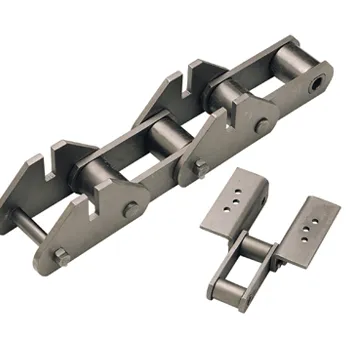
Can a conveyor chain be used in overhead conveyor systems?
Yes, a conveyor chain can be used in overhead conveyor systems. Overhead conveyor systems are designed to move materials, products, or components along an elevated path, typically in manufacturing or distribution facilities.
Conveyor chains used in overhead conveyor systems are specially designed to handle the weight and load requirements of the application. They are typically made from durable materials such as steel or stainless steel to ensure strength and longevity.
Here are some key considerations when using a conveyor chain in overhead conveyor systems:
1. Load Capacity:
– Ensure that the conveyor chain has sufficient load capacity to handle the weight of the conveyed items. The load capacity should be determined based on the maximum anticipated load and any potential dynamic forces.
2. Chain Type and Design:
– Select a conveyor chain that is suitable for overhead applications, such as an overhead conveyor chain or an inverted tooth chain. These chains are specifically designed to handle the unique requirements of overhead conveyance.
3. Lubrication:
– Proper lubrication is crucial for the smooth operation of the conveyor chain in an overhead system. Consider using lubricants that are suitable for overhead applications and ensure regular lubrication to minimize friction and wear.
4. Safety Measures:
– Implement appropriate safety measures to prevent accidents and ensure worker safety. This may include installing safety guards, emergency stop systems, and implementing regular maintenance and inspection routines.
It is important to consult with conveyor system manufacturers or experts who specialize in overhead conveyor systems to ensure the conveyor chain is selected and installed correctly for the specific application requirements.

Kann eine Förderkette auch für Schwerlastanwendungen eingesetzt werden?
Ja, Förderketten eignen sich auch für anspruchsvolle Anwendungen. Sie sind speziell für den Transport schwerer Lasten und einen zuverlässigen Gütertransport in industriellen Umgebungen ausgelegt.
Folgende Faktoren machen Förderketten für Schwerlastanwendungen geeignet:
1. Robuste Konstruktion: Förderketten werden typischerweise aus hochfesten Werkstoffen wie legiertem Stahl, Edelstahl oder gehärtetem Kohlenstoffstahl gefertigt. Diese Werkstoffe bieten eine ausgezeichnete Haltbarkeit und widerstehen den hohen Belastungen und rauen Betriebsbedingungen, die in Schwerlastanwendungen üblicherweise auftreten.
2. Hohe Tragfähigkeit: Förderketten sind für den Transport hoher Lasten ausgelegt, darunter schwere Produkte, Schüttgüter oder große Bauteile. Die Ketten sind mit geeigneter Teilung, Gliederabmessungen und Festigkeit konstruiert, um einen zuverlässigen Transport schwerer Güter zu gewährleisten.
3. Dauerfestigkeit: Förderketten sind so konstruiert, dass sie der durch den Dauerbetrieb unter hohen Lasten verursachten Belastung und Ermüdung standhalten. Sie werden speziellen Wärmebehandlungen und Oberflächenhärtungsverfahren unterzogen, um ihre Beständigkeit gegen Verschleiß, Ermüdung und Verformung zu verbessern.
4. Anpassungsmöglichkeiten: Förderketten lassen sich individuell an die spezifischen Anforderungen von Schwerlastanwendungen anpassen. Dies umfasst die Auswahl des geeigneten Kettentyps, der Teilung, der Befestigungskonstruktion und der Oberflächenbeschichtung für verbesserte Leistung und Langlebigkeit.
5. Kompatibilität mit Schwerlastanlagen: Förderketten sind so konzipiert, dass sie sich nahtlos in Schwerlastfördersysteme mit großen Motoren, Antrieben und Tragkonstruktionen integrieren lassen. Dies gewährleistet eine optimale Kraftübertragung und einen reibungslosen Betrieb auch unter anspruchsvollen Bedingungen.
6. Sicherheitsmerkmale: Förderketten für Schwerlastanwendungen verfügen häufig über Sicherheitsmerkmale wie Überlastschutz, Not-Aus-Schalter und Überwachungssysteme, um die Sicherheit der Bediener zu gewährleisten und Schäden an der Ausrüstung zu verhindern.
Für die Auswahl der passenden Förderkette und Systemkomponenten für die jeweilige Schwerlastanwendung ist es wichtig, einen qualifizierten Ingenieur oder Förderanlagenhersteller zu konsultieren. Diese können Sie hinsichtlich Kettenauswahl, Systemauslegung und Wartungspraktiken beraten, um optimale Leistung und Zuverlässigkeit zu gewährleisten.
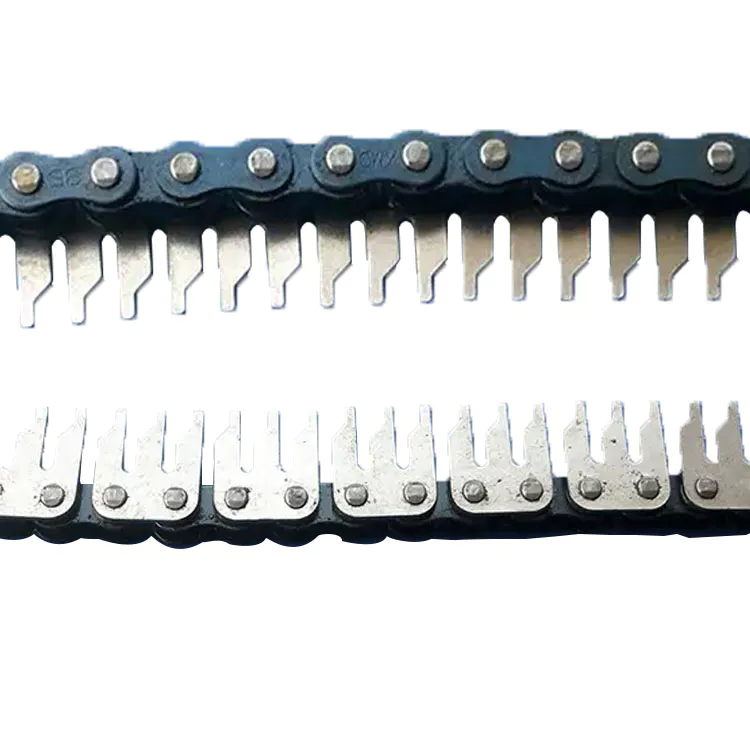
How do you troubleshoot common issues with conveyor chains?
Troubleshooting common issues with conveyor chains involves identifying the problem and taking appropriate steps to resolve it. Here are some common issues and troubleshooting approaches:
- Chain Slippage: If the chain is slipping or not engaging properly with the sprockets, check for proper tensioning, alignment, and lubrication. Adjust the tension if necessary and ensure the chain is properly aligned with the sprockets.
- Chain Jamming: If the chain is frequently jamming or getting stuck, inspect the conveyor for any obstructions or foreign objects that may be causing the issue. Clear any debris or blockages and ensure the chain’s path is clear.
- Excessive Noise: If the chain is making loud or unusual noises, check for proper lubrication. Insufficient lubrication can cause increased friction and noise. Apply the appropriate lubricant according to the manufacturer’s recommendations.
- Chain Breakage: If the chain is breaking frequently, inspect for any damaged or worn-out components. Replace any broken or worn links, pins, or attachments. Also, check for proper tensioning and alignment, as excessive tension or misalignment can lead to chain breakage.
- Chain Wear: If the chain shows signs of wear, such as elongation or corrosion, consider replacing it. Excessive wear can affect the performance and lifespan of the chain. Regularly inspect and measure the chain for wear and replace it when necessary.
It’s important to follow proper maintenance practices, including regular inspection, lubrication, and tensioning, to prevent and address common issues with conveyor chains. Consult the manufacturer’s guidelines and seek professional assistance if needed.


editor by CX 2024-04-03