Descripción del Producto
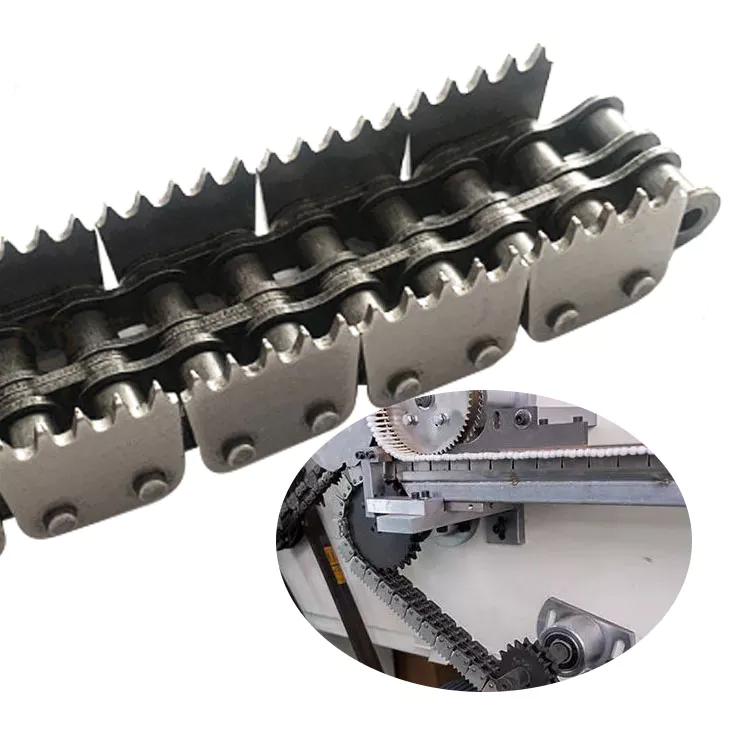
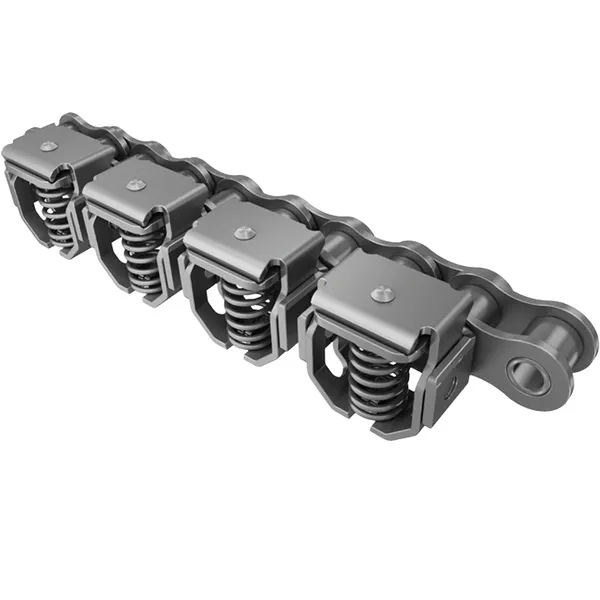
| CHOHO Chain No. | P/mm | G/mm | h4/mm | d4/mm | T/mm |
| CGS38P2 | 38.0 | 15.0 | 19.5 | 1.5 | 3.0 |
| CGS38P2W | 38.0 | 27.0 | 17.0 | 20.0 | 3.0 |
| … | … | … | … | … | … |
Product advantages:
| — Ten CoreTechnologies — | |||
| 1 | Chain strengh preload technology | 2 | Pin CRV treatment technology |
| 3 | Plate smoothly punching technology | 4 | Bush oil hole technology |
| 5 | Vacuum Oiled Technology | 6 | Precision Punching Technology |
| 7 | Low frequency fatigue test technology for lange size chain | 8 | Chain length comparison technology |
| 9 | Variation of silence design technology | 10 | Chain dynamic testingtechnology technologies |
Our Advantages:
1. Cualquier consulta que realice será respondida profesionalmente en un plazo de 6 a 8 horas.
2. Otorga gran importancia a la calidad del producto y cuenta con la certificación de numerosos sistemas de calidad internacionales, como los de Francia, Noruega y Alemania.
3. Centrados en la cadena desde 1999, contamos con una amplia experiencia en producción.
4. Trabajadores altamente cualificados, equipos avanzados de primera clase, buen control de calidad, tecnología avanzada.
5. Dominar la elaboración de productos a medida y ofrecer servicios personalizados a los clientes.
6. Participó en la redacción de 24 normas nacionales e industriales, como las de cadenas. A fecha de marzo de 2571, CHOHO cuenta con 180 patentes autorizadas.
7. Con la responsabilidad de “Proporcionar un sistema de cadena de alta calidad con la misma vida útil para la industria ferroviaria mundial”, hemos establecido un sólido equipo de I+D.
Chain Drive Industry First A-Share Listed Company
Stock Code: .
√ CHOHO has 4 subsidiaries, including testing technology and international trading companies. has 4 factories in HangZhou, Thailand factory, ZheJiang R&D Center and Tokyo R&D Center. In addition, CHOHO ZHangZhoug Industrial zone is expected to be completed & put into operation next year.
√ We specialized in producing all kinds of standard chains and special chains, such as Agricultural Chain, Sprocket, Chain Harrow, Tillage Parts,Rice Harvester Chain, GS38 Chain, Roller Chain, Automobile Chain, Motorcycle Chain Industrial Chain and so on.Our partners among world top enterprises, such as LOVOL,JOHN DEERE,NEWHOLLAND, CLASS,AGCO,DEUTZFAHR,HONDA, KUBOTA etc.
| Detalles del embalaje: | advanced packaging / convenience package / bulk package / Waterproof bag / PE Bag / Premium cardboard box / Regular cardboard Carton / Neutral Box / Wooden case / Steel Pallets or Customization |
We are very close to the port of HangZhou, which saves a lot of logistics costs and transportation time!
We have our own logistics company and transportation department. If you need me to deliver goods to your warehouse or other ports in China, such as ZheJiang Port and ZheJiang Port, we can also do it!
| ******************************************************* After years of quality practice, CHOHO has formed a unique quality culture and a quality management model that strategically achieves global chain system technology leaders in quality management. ******************************************************* |
∞ Driven by quality culture and strategy |
| ∞ Implementation of R&D,procurement, production and marketing Digital Quality Management of the Whole Value Chain Cycle |
|
| ∞ Quality Synergy of the Whole Industry Chain | |
| ∞ Achievement chain system technology leader |
√ CHOHO has a natural brand awareness. As of January 2571, CHOHO has registered the “CHOHO” trademark in more than 60 countries, including the United States, Japan, the United Kingdom, France, Germany, Russia, Spain, Austria, Belgium, Bulgaria, Croatia, Czech Republic, Denmark, Finland, Greece , Hungary, Ireland, Italy, Netherlands, Poland, Portugal, Romania, Ukraine, Sweden, Australia, Algeria, Egypt, Kenya, Morocco, South Korea, Kazakhstan, Mongolia, Syria, Thailand, Pakistan, India, Brazil, Mexico, Colombia, etc.
CHOHO has been invited to participate in many international exhibitions around the world, including industrial exhibitions, agricultural exhibitions, motorcycle exhibitions, engine exhibitions, such as Hannover Messe, Bologna Fair, Canton Fair ,VIV ASIA and other world famous exhibitions!
COOPERATIVE CLIENT
¡El mercado de canales de distribución para clientes amplios continúa desarrollándose!
Choho proporciona soluciones de sistemas de cadena para las 500 empresas más importantes del mundo y las 10 empresas líderes en diversos sectores.
Preguntas frecuentes
1. ¿Es usted fabricante o empresa comercial?
Somos una fábrica dedicada a la producción y exportación de cadenas desde hace más de 23 años y contamos con un equipo profesional de comercio internacional.
2. ¿Qué condiciones de pago suele utilizar?
Depósito mediante transferencia bancaria (T/T) 30% y 70% contra documento; carta de crédito a la vista (L/C).
3. ¿Cuál es el plazo de entrega de sus productos?
Normalmente, entre 30 y 45 días. Los productos en stock se pueden enviar de inmediato.
4. ¿Asistes a algún espectáculo?
Participamos en la feria de Hannover en Alemania, en EIMA en Italia, en CHINAMFG en Francia, en CIAME en China y en muchas otras ferias de maquinaria agrícola.
5.¿Ofrecen muestras gratuitas?
Sí, podemos. O usted solo tendrá que asumir el costo del envío.
6. ¿Está disponible la opción OEM?
Sí, ofrecemos servicio OEM. Contamos con diseñadores profesionales que le ayudarán con el diseño.
/* 22 de enero de 2571 19:08:37 */!function(){function s(e,r){var a,o={};try{e&&e.split(“”,).forEach(function(e,t){e&&(a=e.match(/(.*?):(.*)$/))&&1
| Estándar o no estándar: | Nonstandard |
|---|---|
| Solicitud: | Maquinaria textil, maquinaria para prendas de vestir, equipos de transporte, maquinaria de embalaje, coches eléctricos, motocicletas, maquinaria alimentaria, maquinaria naval, equipos de minería, maquinaria agrícola, automóviles |
| Tratamiento de superficie: | Pulido |
| Muestras: |
US$ 2.39/Meter
1 metro (pedido mínimo) | Solicitar muestra |
|---|
| Personalización: |
Disponible
| Solicitud personalizada |
|---|
.shipping-cost-tm .tm-status-off{background: none;padding:0;color: #1470cc}
| Costo de envío:
Coste estimado por unidad. |
sobre el costo de envío y el tiempo estimado de entrega. |
|---|
| Método de pago: |
|
|---|---|
|
Pago inicial Pago completo |
| Divisa: | US$ |
|---|
| Devoluciones y reembolsos: | Puedes solicitar un reembolso hasta 30 días después de recibir los productos. |
|---|

How do you ensure proper tensioning and alignment of a conveyor chain?
Proper tensioning and alignment are essential for the efficient and reliable operation of a conveyor chain. Here are the steps to ensure correct tensioning and alignment:
1. Initial Installation:
– Ensure that the conveyor frame and supports are properly aligned and leveled before installing the chain. Any misalignment or unevenness can lead to tensioning and alignment issues.
– Follow the manufacturer’s guidelines and specifications for chain installation. This includes proper placement of sprockets, tensioners, and guides.
2. Tensioning:
– Adjust the tension of the chain to the manufacturer’s recommended specifications. Proper tension prevents excessive sagging or tightness, reducing wear and extending the chain’s life.
– Use tensioning devices, such as adjustable take-up units or tensioning screws, to achieve the desired tension. Refer to the manufacturer’s guidelines for the appropriate method of tensioning for your specific conveyor chain.
– Regularly check and adjust the tension as needed. Factors such as chain wear, load variations, and temperature changes can affect the chain’s tension over time.
3. Alignment:
– Check the alignment of the chain with respect to the sprockets and guides. Misalignment can cause uneven wear, increased friction, and premature failure of the chain.
– Inspect the alignment by visually examining the chain’s path along the sprockets and guides. It should run smoothly without any signs of rubbing or excessive deviation.
– Use alignment tools, such as laser alignment devices or straightedges, to accurately assess and correct any misalignment. Adjust the position of sprockets, guides, and supports as necessary.
4. Regular Maintenance:
– Implement a scheduled maintenance program to regularly inspect and maintain proper tensioning and alignment of the conveyor chain.
– Monitor the chain’s performance, including wear patterns, noise levels, and power consumption, as indicators of potential tensioning or alignment issues.
– Keep the chain clean and free from debris or contaminants that can affect its movement and alignment.
By following these steps and regularly monitoring the tensioning and alignment of the conveyor chain, you can ensure smooth and reliable operation, minimize chain wear, and reduce the risk of unexpected failures.
How do you select the appropriate lubricant for a conveyor chain?
Selecting the right lubricant is crucial for maintaining the performance and longevity of a conveyor chain. Here are the key factors to consider when choosing a lubricant:
1. Chain Type and Material: Different conveyor chains may have specific requirements for lubrication based on their construction materials and design. Consult the manufacturer’s recommendations or specifications to determine the lubricant compatibility.
2. Operating Conditions: Consider the operating environment, such as temperature, humidity, and presence of contaminants. For high-temperature applications, choose a lubricant with a higher temperature tolerance. In wet or dusty environments, opt for lubricants that offer excellent resistance to water washout and provide effective protection against contaminants.
3. Load and Speed: Evaluate the load capacity and speed of the conveyor chain. Higher loads and speeds may require lubricants with better film strength and anti-wear properties to reduce friction and prevent premature wear.
4. Lubrication Method: Determine the lubrication method that will be used for the conveyor chain. Lubricants can be applied through drip systems, brushes, spray nozzles, or automatic lubrication systems. Consider the viscosity and consistency of the lubricant to ensure proper application and distribution.
5. Food-Grade Requirements: In food processing or pharmaceutical applications, where direct contact with the product may occur, it’s essential to use food-grade lubricants that meet industry regulations and requirements for safety and hygiene.
6. Maintenance Schedule: Consider the desired maintenance intervals and the lubricant’s longevity. Some lubricants may require more frequent reapplication, while others provide longer-lasting lubrication.
7. Compatibility with Other Materials: Take into account the compatibility of the lubricant with other materials in the conveyor system, such as seals, gaskets, and paints. Ensure that the lubricant does not cause any adverse effects on these components.
It is recommended to consult with lubricant manufacturers or industry experts to select the most suitable lubricant for your specific conveyor chain application. They can provide guidance based on their expertise and knowledge of lubricant formulations and performance characteristics.
How do you calculate the required length of a conveyor chain?
Calculating the required length of a conveyor chain involves considering several factors related to the conveyor system and the specific application. Here’s a step-by-step guide:
- Determine the Conveyor Length: Measure the total length of the conveyor path, including any horizontal, inclined, or vertical sections.
- Account for Sprocket Centers: Identify the locations of the sprockets or drive units along the conveyor path. Measure the distance between each pair of adjacent sprockets.
- Calculate the Number of Links: Divide the total conveyor length by the pitch of the chain to determine the number of links required. The pitch is the distance between the center of two consecutive pins on the chain.
- Consider Tension Adjustment: Take into account any tension adjustment requirements based on the specific application. This may include allowances for tensioning devices or tension variations due to load fluctuations.
- Include End Connections: Consider the length of the end connections, such as master links or connecting pins, which are used to join the ends of the chain. Include their dimensions in the total chain length calculation.
- Add Safety Factors: Incorporate appropriate safety factors to ensure adequate chain length for proper tensioning and to accommodate any potential stretching or wear over time.
It’s important to note that the calculation of the required chain length is an estimation based on various factors and may require adjustments during the installation and tensioning process. Consulting the conveyor manufacturer’s guidelines or working with an experienced engineer can provide more precise calculations based on the specific conveyor system and application requirements.


editor by CX 2024-03-27