
Descripción del Producto
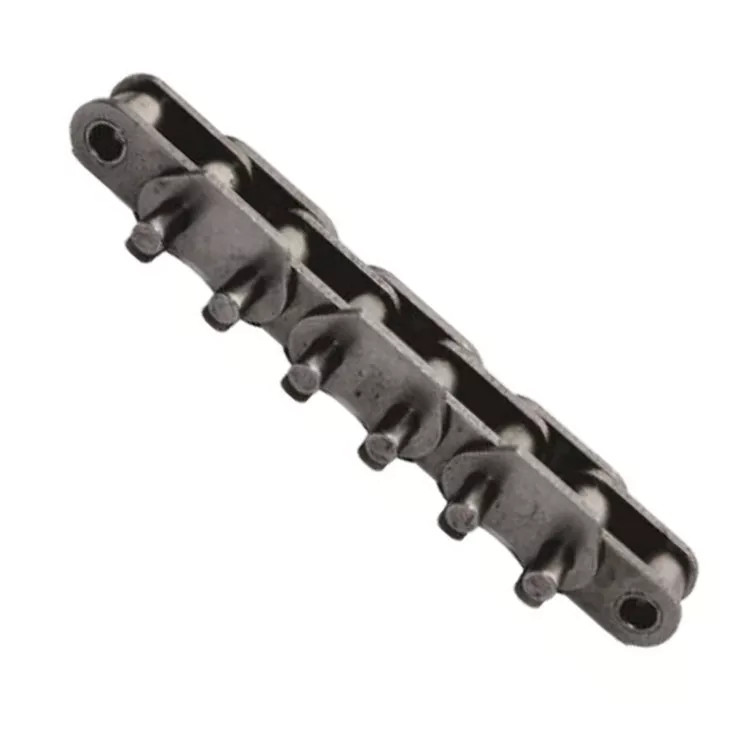
We offer a full and compete line of high-quality roller chain attachments.
| ISO NO. |
ANSI NO. |
PITCH | PLATE | DIMENSION | |||||
| PAG | T | G | H | f | F | d3min | h | ||
| mm | mm | mm | mm | mm | mm | mm | mm | ||
| C208A | C2040 | 25.40 | 1.50 | 19.10 | 9.52 | 25.40 | 37.70 | 3.33 | 9.12 |
| C208AL | C2042 | ||||||||
| C210A | C2050 | 31.75 | 2.00 | 23.80 | 11.91 | 31.75 | 48.00 | 5.08 | 11.13 |
| C210AL | C2052 | ||||||||
| C212A | C2060 | 38.10 | 2.35 | 28.60 | 14.27 | 42.90 | 67.80 | 5.08 | 14.68 |
| C212AL | C2062 | ||||||||
| C216A | C2080 | 50.80 | 3.20 | 38.10 | 19.05 | 55.60 | 87.80 | 6.63 | 19.05 |
| C216AL | C2082 | ||||||||
| C220A | C2100 | 63.50 | 4.00 | 47.60 | 23.83 | 66.60 | 107.50 | 8.20 | 23.42 |
| C220AL | C2102 | ||||||||
| C224A | C2120 | 76.20 | 4.70 | 57.20 | 28.58 | 79.30 | 121.40 | 9.80 | 27.79 |
| C224AL | C2122 | ||||||||
| C232A | C2160 | 101.60 | 6.40 | 76.20 | 38.10 | 104.70 | 151.60 | 13.11 | 36.53 |
| C232AL | C2162 | ||||||||
| Uso: | Transmission Chain, Conveyor Chain, Attachments |
|---|---|
| Material: | Acero aleado/al carbono |
| Tratamiento de superficie: | Pulido |
| Característica: | Resistente al calor |
| Tamaño de la cadena: | 1"*2 1/2" |
| Estructura: | Stamping |
| Muestras: |
US$ 1/Pcs
1 Pcs(Min.Order) | |
|---|
| Personalización: |
Disponible
| Solicitud personalizada |
|---|
¿Cómo influye una cadena transportadora en la eficiencia energética de un sistema?
Una cadena transportadora desempeña un papel fundamental en la eficiencia energética de un sistema de transporte. A continuación, se describen las formas en que influye en dicha eficiencia:
1. Menor consumo de energía:
Una cadena transportadora bien diseñada con baja fricción puede minimizar el consumo de energía. Al reducir la resistencia por fricción entre la cadena y los componentes del transportador, se requiere menos energía para mover la cadena y transportar los materiales a lo largo del sistema.
2. Transmisión de potencia eficiente:
El diseño y la construcción de una cadena transportadora contribuyen a una transmisión de potencia eficiente. Las cadenas con paso, diámetro de rodillo y perfil de dientes de piñón optimizados garantizan una transferencia de potencia suave y eficaz, minimizando las pérdidas de energía durante el funcionamiento.
3. Tensado adecuado de la cadena:
Mantener la tensión adecuada de la cadena es fundamental para la eficiencia energética. Una cadena con la tensión correcta garantiza un contacto óptimo entre la cadena y los piñones, minimizando el deslizamiento y la pérdida de potencia. Las inspecciones y ajustes periódicos de la tensión de la cadena ayudan a maximizar la eficiencia energética.
4. Alineación y seguimiento:
La correcta alineación y el seguimiento de la cadena transportadora son esenciales para la eficiencia energética. Las cadenas desalineadas o con un seguimiento deficiente pueden aumentar la fricción, lo que conlleva un mayor consumo de energía. El control y ajuste periódicos de la alineación de la cadena garantizan un funcionamiento fluido y eficiente.
5. Mantenimiento regular:
El mantenimiento rutinario de la cadena transportadora, que incluye lubricación, limpieza e inspección, contribuye a mantener un rendimiento óptimo y una alta eficiencia energética. Una lubricación adecuada reduce la fricción y el desgaste, minimizando las pérdidas de potencia y prolongando la vida útil de la cadena.
6. Optimización del diseño del sistema:
Considerar la eficiencia energética durante la fase de diseño de un sistema de transporte puede tener un impacto significativo en su eficiencia general. La selección adecuada de los componentes de la cadena transportadora, como materiales de baja fricción y sistemas de accionamiento eficientes, puede ayudar a minimizar el consumo de energía y mejorar la eficiencia energética del sistema.
Mediante la aplicación de estas prácticas y la utilización de tecnologías de cadenas transportadoras de bajo consumo energético, las empresas pueden reducir los costes energéticos, minimizar el impacto ambiental y mejorar la sostenibilidad general de sus operaciones.
What are the benefits of using a modular conveyor chain system?
A modular conveyor chain system offers several benefits in terms of flexibility, efficiency, and ease of maintenance. Here are some key advantages:
1. Versatility: Modular conveyor chains are designed with interlocking modules that can be easily connected and disconnected. This allows for flexibility in configuring the conveyor system according to specific layout requirements, production needs, or space limitations. Modules can be added, removed, or repositioned to accommodate changing production processes or product variations.
2. Customizability: The modular design of the conveyor chain system enables customization to meet specific application requirements. Different types of modules are available, including straight sections, curves, inclines, declines, merges, and diverters. Accessories such as side guides, cleats, or product hold-downs can be easily integrated into the system.
3. Quick Installation and Modification: Modular conveyor chains are designed for easy installation and modification. With their snap-in or snap-on connections, modules can be rapidly assembled or disassembled, reducing downtime during system setup or reconfiguration. This feature also facilitates maintenance, repairs, or future expansions.
4. Enhanced Efficiency: The modularity of the conveyor chain system allows for efficient material handling and optimized workflow. The smooth transfer between modules minimizes product jams or misalignments, ensuring a continuous and consistent flow of materials. The ability to incorporate curves or inclines in the system enables efficient use of floor space and facilitates the movement of products through different elevations.
5. Easy Maintenance: Modular conveyor chain systems are designed for ease of maintenance. Individual modules can be easily accessed and replaced without disassembling the entire system. This reduces maintenance time and costs. Additionally, the open structure of the modules allows for easy cleaning, debris removal, and inspection.
6. Durability and Reliability: Modular conveyor chains are typically made from high-quality materials such as plastic or stainless steel, ensuring durability and long-lasting performance. They are resistant to wear, corrosion, and chemical damage, making them suitable for various industrial environments. The interlocking design provides stability and prevents chain slippage during operation.
7. Safety Features: Modular conveyor chain systems can incorporate safety features such as emergency stop buttons, safety guarding, or sensors for detecting blockages or excessive loads. These features help maintain a safe working environment for operators and protect the integrity of the products being transported.
Overall, a modular conveyor chain system offers versatility, customizability, efficiency, and ease of maintenance. It is a reliable solution for material handling in industries such as manufacturing, packaging, distribution, and logistics.

What are the cost considerations when purchasing a conveyor chain?
When purchasing a conveyor chain, there are several cost considerations that need to be taken into account to ensure an optimal investment and operational efficiency.
1. Initial Cost: The initial cost of the conveyor chain includes the cost of the chain itself, as well as any additional components such as sprockets, attachments, and connecting links. It is important to compare prices from different suppliers and evaluate the overall value for the money.
2. Maintenance and Repair Costs: Consider the long-term maintenance and repair costs associated with the conveyor chain. Some chains may require more frequent lubrication or replacement of components, which can add to the overall operating expenses.
3. Service Life: The service life of the conveyor chain is an essential factor in determining its cost-effectiveness. Chains with longer service life may have a higher initial cost but can result in lower replacement and downtime costs in the long run.
4. Energy Efficiency: Energy consumption is an ongoing cost to consider. Conveyor chains that offer lower friction and efficient power transmission can contribute to energy savings and reduce operating expenses.
5. Maintenance Ease: Consider the ease of maintenance when selecting a conveyor chain. Chains that are easier to clean, inspect, and maintain can reduce labor costs and increase operational efficiency.
6. Compatibility and Integration: Ensure that the selected conveyor chain is compatible with the existing conveyor system or equipment. Retrofitting or modifying the system to accommodate a specific chain may incur additional costs.
7. Supplier Support and Warranty: Evaluate the level of technical support provided by the supplier and the warranty coverage offered for the conveyor chain. This can impact the overall cost of ownership and provide peace of mind in case of any unforeseen issues.
It is important to consider these factors holistically and make a cost-benefit analysis based on the specific requirements of the application. Choosing a conveyor chain that aligns with the budget, performance needs, and long-term cost considerations will help optimize the investment and ensure efficient material handling operations.


editor by CX 2023-09-05