
Description du produit
Photos détaillées
Paramètres du produit
| Taper | Heavy-duty mine flatbed truck coupling device | Light-duty mining flatbed truck connecting device | ||
| Modèle | BRLJφ130-60/DK | BRLJφ130-60/SK | BRLJφ90-35/DK | BRLJφ90-35/SK |
| BRLJφ130-60/DMK | BRLJφ130-60/SMK | |||
| BRLJφ130-60/DMK-01 | ||||
| Connection head diameter | 130mm | 90mm | ||
| Connecting rod diameter | 60mm | 35mm | ||
| Center distance | 500-3000mm(Support customization) | 500-750mm | ||
| Rated traction force | 140KN | 67KN | ||
| Breaking load | ≥1400KN | ≥670KN | ||
| Applicable slope | ≤12° | ≤24° | ≤12° | ≤24° |
Description du produit
The hard coupling device for mine flatbed trucks can adapt to complex and variable transportation conditions in underground tunnels, such as uphill, downhill, and turns. It overcomes the problem of collisions between vehicles caused by soft couplings in multi-vehicle transportation, and solves the disadvantages of front lifting, rear compression, and accidents due to deviation during uphill, downhill, and turning when using ordinary hard couplings. It adopts a special universal joint structure and processing technology, with complete specifications and 2 forms: single-headed and double- headed, with concave and convex structures. It can meet the use of various types of mining vehicles within a slope range of 0- ±24°. It has advantages such as high pulling force (1.75 times that of ordinary three-link rings), strong flexibility,wide range of applications, safety, practicality, and reliability.
Certifications
Profil de l'entreprise
FAQ
Q: Are you trading company or manufacturer ?
A:Yes, We are factory, all machine is made by ourself and we can provide customize service according to your requirement.
Q: Is there any installation direction after we received the machine.
A:
1.The machine will have 1 year warranty.
2. Send the product catalog and instruction manual.
3. If you have any question PLS contact us online or send us email, we promise we will give you a reply at the first time!
4. Personal call or visit are warmly welcome.
Sale of services:
1. We promise honest and fair, it’s our pleasure to serve you as your purchasing consultant.
2. We guarantee punctuality, quality and quantities strictly implement the terms of contract.
/* 22 janvier 2571 19:08:37 */!function(){function s(e,r){var a,o={};try{e&&e.split(“,”).forEach(function(e,t){e&&(a=e.match(/(.*?):(.*)$/))&&1
| After-sales Service: | 1 an |
|---|---|
| Garantie: | 1 an |
| Finish: | Black Painted |
| Structure: | Welded |
| Function: | Mining Car Connection |
| Personnalisé : | Customizable |
| Personnalisation : |
Disponible
| Demande personnalisée |
|---|

Can a conveyor chain be used in extreme temperature environments?
Yes, conveyor chains can be designed and manufactured to withstand extreme temperature environments. The suitability of a conveyor chain for high or low-temperature applications depends on the material composition and construction of the chain.
1. High-Temperature Environments: For applications involving high temperatures, conveyor chains made of heat-resistant materials such as stainless steel or special alloys are commonly used. These chains can withstand elevated temperatures without significant deformation or loss of strength. They are designed to resist oxidation, corrosion, and thermal expansion, ensuring reliable performance in hot environments.
2. Low-Temperature Environments: Similarly, conveyor chains can also be engineered for low-temperature applications. In cold environments, chains made of materials that remain ductile and strong at low temperatures are utilized. These chains are designed to withstand the effects of cold temperatures without becoming brittle or losing their mechanical properties.
It’s important to consult with conveyor chain manufacturers or experts who specialize in extreme temperature applications to select the most suitable chain material and design. They can provide guidance on factors such as material selection, lubrication, and operational considerations to ensure the conveyor chain performs effectively and reliably in extreme temperature environments.
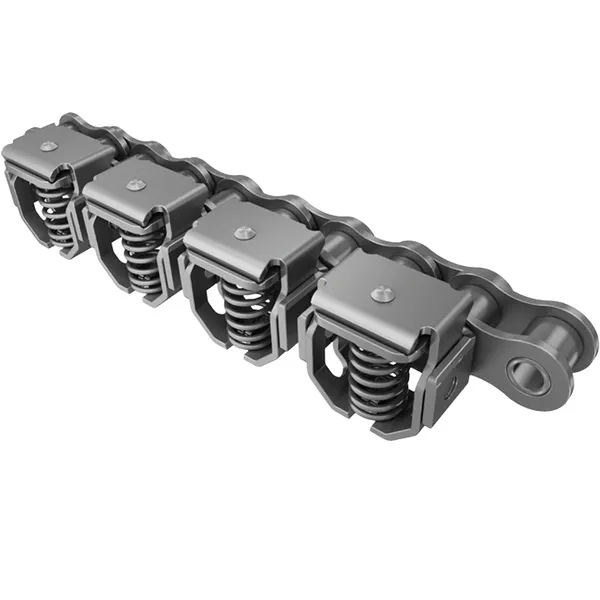
What are the best practices for storing and handling conveyor chains?
Proper storage and handling of conveyor chains are essential to maintain their performance, prevent damage, and prolong their lifespan. Here are some best practices to consider:
1. Clean and dry storage area: Store conveyor chains in a clean and dry environment to prevent the accumulation of dirt, dust, moisture, or contaminants that can affect their performance and cause corrosion.
2. Adequate support: Ensure that the stored conveyor chains are properly supported to prevent excessive bending or deformation. Use pallets, racks, or designated storage containers that can accommodate the weight and length of the chains.
3. Avoid excessive heat or cold: Conveyor chains should be stored in an area with a moderate temperature range to avoid extreme heat or cold that can affect the material properties or lubrication of the chains.
4. Protection against impacts and vibrations: Protect the stored chains from impacts or excessive vibrations that can cause damage or deformation. Use suitable packaging or covers to shield the chains from any potential physical damage.
5. Lubrication: Apply a thin layer of appropriate lubricant to the chains before storage to prevent corrosion and maintain their smooth operation. Follow the manufacturer’s recommendations for lubrication type and quantity.
6. Regular inspections: Periodically inspect the stored conveyor chains to ensure there are no signs of damage, corrosion, or deformation. If any issues are identified, take appropriate actions such as cleaning, lubricating, or replacing the chains.
7. Proper handling techniques: When handling conveyor chains, use appropriate lifting equipment or tools to avoid excessive strain or bending. Avoid dragging or dropping the chains, as this can cause damage to the chain links or attachments.
8. Training and awareness: Provide training to personnel involved in handling and storing conveyor chains to ensure they understand the proper procedures and best practices. Promote awareness of the importance of careful handling and storage to prevent accidents and maintain chain integrity.
By following these best practices, you can ensure the longevity and reliable performance of your conveyor chains, reducing the risk of downtime and costly repairs.
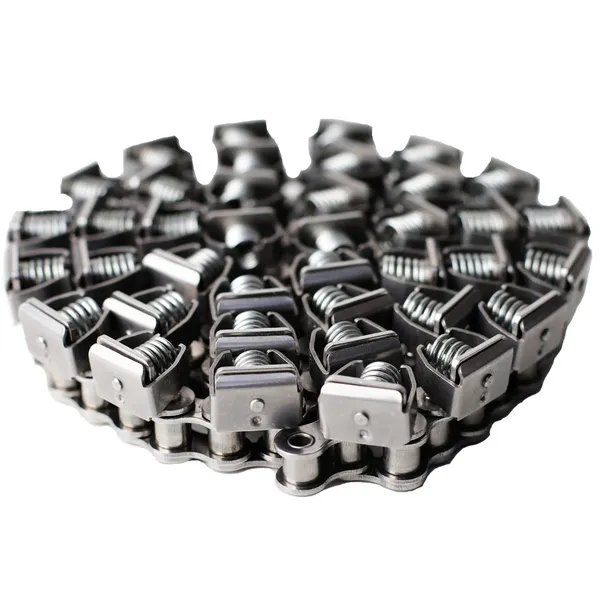
Quelle est la capacité de charge d'une chaîne de convoyeur ?
La capacité de charge d'une chaîne de convoyeur dépend de divers facteurs, notamment sa conception, son matériau, ses dimensions et les conditions de fonctionnement. Il est essentiel de prendre en compte les exigences spécifiques de l'application pour déterminer cette capacité de charge. Voici quelques facteurs clés à considérer :
- Conception de la chaîne : Les chaînes de convoyage présentent des capacités de charge variables selon leur type. Leur conception dépend notamment du type de maillons, de leur configuration et de la présence d'accessoires ou de rouleaux.
- Matériel: Le matériau utilisé pour la fabrication de la chaîne de convoyeur influe considérablement sur sa capacité de charge. Les matériaux courants comprennent l'acier, l'acier inoxydable et le plastique. Les chaînes en acier sont généralement plus robustes et supportent des charges plus importantes.
- Taille de la chaîne : La taille de la chaîne du convoyeur, notamment son pas et sa largeur, influe sur sa capacité de charge. Les chaînes plus larges, avec des maillons plus larges, ont généralement une capacité de charge plus élevée.
- Conditions de fonctionnement : Des facteurs tels que la vitesse du convoyeur, le type et le poids des matériaux transportés, et les conditions environnementales (température, humidité, etc.) peuvent avoir un impact sur la capacité de charge de la chaîne.
- Spécifications du fabricant : Il est essentiel de consulter les spécifications et les recommandations du fabricant concernant la chaîne de convoyeur utilisée. Les fabricants fournissent généralement des tableaux ou des abaques de capacité de charge en fonction de la conception de leurs chaînes.
La capacité de charge d'une chaîne de convoyeur est généralement spécifiée en termes de charge de travail maximale admissible ou de résistance à la rupture. Ces valeurs sont déterminées par des essais rigoureux et des calculs d'ingénierie. Pour garantir un fonctionnement sûr et efficace, il est essentiel de choisir une chaîne de convoyeur dont la capacité de charge est adaptée à l'application prévue. Un dépassement de la capacité de charge recommandée peut entraîner une usure prématurée, une rupture de la chaîne et des risques potentiels pour la sécurité.


editor by CX 2024-05-02