Descrizione del prodotto
Descrizione del prodotto
Free Flow Chian
BS25
| Chain Number | model | Pece | Roller Dia. (D) | Roller Dia.(d) | Weight(kg/m) |
| BS25-C206B | SKVR25-1905 | 19.05 | 18.3 | 11.91 | 0.52 |
| BS25-C208A | SKVR25-2540 | 25.4 | 24.6 | 15.88 | 0.79 |
| BS25-C212A | SKVR25-3810 | 38.1 | 36.6 | 22.23 | 2.19 |
BS30
| Chain Number | model | Pece | Roller Dia. (D) | Roller Dia.(d) | Weight(kg/m) |
| BS30-C212A | SKVR30-3810 | 38.1 | 38 | 18 | 2.14 |
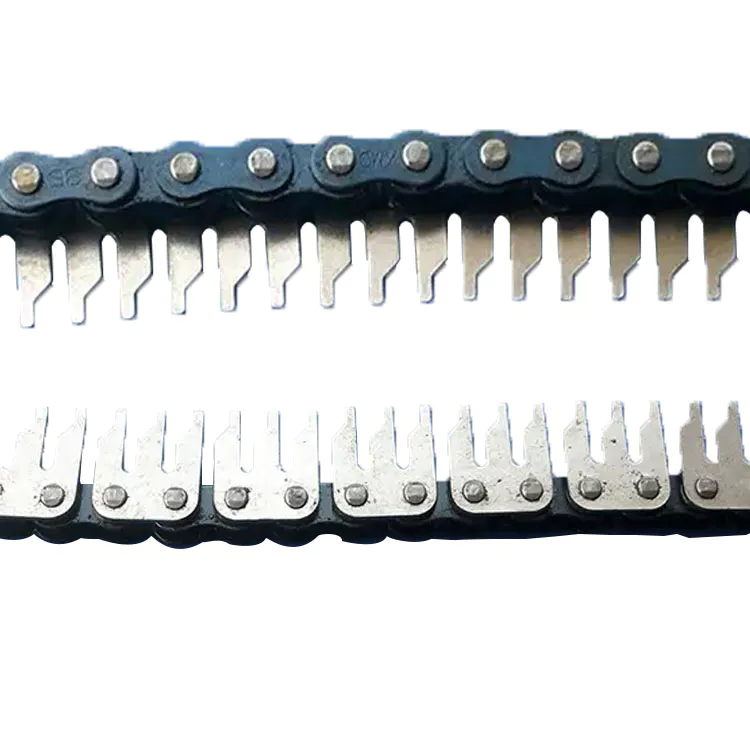
Free flow chian, also called plus speed chain, accumulation chain, Differential chain.
Free flow chian, also called plus speed chain, accumulation chain, Differential chain.
It is a popular chain used in pallet/tray conveyor system.
Free flow chian, also called plus speed chain, accumulation chain, Differential chain.
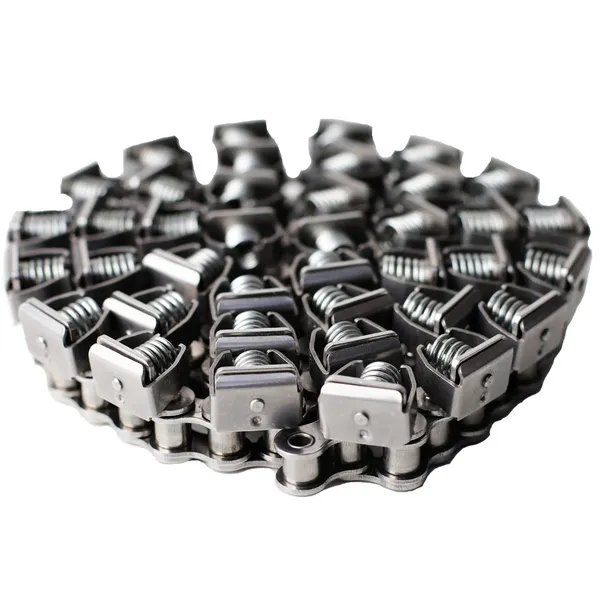
Free flow chain is 1 of the major products of Seikonveyor. Its production is finished in automatic factory. In every month CHINAMFG factory supplys over 500000 CHINAMFG free flow chain to the market. Include different materials types: Nylon, steel, stainless steel. and different color: black, blue, brown. Our free flow chain is widely used in automatic conveyor system, especially for different kinds of assembly lines
BS25 free flow chain production view
Free flow chian, also called plus speed chain, accumulation chain, Differential chain.
BS30 free flow chain production view
Free flow chian, also called plus speed chain, accumulation chain, Differential chain.
We pick perfect rollers to assemble the free flow chain, to ensure the chain run smooth
Free flow chian, also called plus speed chain, accumulation chain, Differential chain.
Bulk production makes our free flow chain with competitive price in the martke.
Free flow chian, also called plus speed chain, accumulation chain, Differential chain.
For bulk order, we provide plywood crate package to protect it from damage during transportation.
| Materiale: | Plastic |
|---|---|
| Struttura: | Roller Chain |
| Trattamento superficiale: | Galvanostegia |
| Caratteristica: | Fire Resistant, Oil Resistant, Heat Resistant |
| Chain 3: | 3 Speed Chain |
| Chain 2: | Speed Chain |
| Esempi: |
US$ 20/Meter
1 metro (ordine minimo) | |
|---|
| Personalizzazione: |
Disponibile
| Richiesta personalizzata |
|---|

Can a conveyor chain be used in high-speed applications?
Yes, a conveyor chain can be used in high-speed applications depending on the design and specifications of the chain and the conveyor system. However, there are certain factors to consider when using a conveyor chain in high-speed applications:
1. Chain Design: The design of the conveyor chain should be capable of handling high speeds without compromising safety or performance. Specialized high-speed chains are available that are specifically engineered to withstand the demands of high-speed applications.
2. Material Selection: The material used in the construction of the conveyor chain should have high strength and durability to withstand the forces and stresses at high speeds. Common materials for high-speed conveyor chains include alloy steels, stainless steel, and special polymers.
3. Lubrication: Proper lubrication is crucial in high-speed applications to reduce friction, heat, and wear. Lubricants specifically designed for high-speed conveyor chains should be used to ensure smooth operation and extend the chain’s lifespan.
4. Tensioning and Alignment: Accurate tensioning and alignment of the conveyor chain are critical for high-speed applications. Proper tensioning helps to maintain the chain’s stability and prevent excessive vibrations or elongation, which can lead to chain failure or premature wear.
5. Safety Considerations: High-speed applications require additional safety measures to protect personnel and equipment. Proper guarding, emergency stop systems, and regular maintenance inspections are essential to ensure safe operation.
It’s important to consult the conveyor chain manufacturer or an engineering professional to determine the suitability of a specific chain for high-speed applications. They can provide guidance on selecting the appropriate chain design, material, lubrication, and maintenance practices to ensure reliable and efficient operation at high speeds.
What are the advantages of using a plastic conveyor chain?
Plastic conveyor chains offer several advantages over traditional metal chains. Here are some of the key advantages:
1. Corrosion Resistance: Plastic chains are highly resistant to corrosion, making them ideal for applications in humid or corrosive environments. They do not rust or deteriorate when exposed to moisture or chemicals.
2. Lightweight: Plastic chains are significantly lighter than metal chains, making them easier to handle and install. Their lightweight nature reduces the overall weight of the conveyor system and can result in energy savings during operation.
3. Low Noise Operation: Plastic chains generate less noise compared to metal chains, leading to a quieter working environment. This can be particularly beneficial in industries where noise reduction is important, such as food processing or packaging.
4. Reduced Friction and Wear: Plastic chains have self-lubricating properties, which reduce friction and wear. This results in lower maintenance requirements and longer chain life. The smooth surface of plastic chains also minimizes the risk of product damage during transportation.
5. Flexibility and Modularity: Plastic chains can be easily customized and designed to fit specific conveyor system requirements. They offer flexibility in terms of length, width, and configuration. Additionally, plastic chains are often modular, allowing for easy replacement of damaged or worn-out sections without replacing the entire chain.
6. Cost-Effective: Plastic conveyor chains are generally more cost-effective compared to metal chains. They are often less expensive to manufacture and offer a longer lifespan with minimal maintenance requirements, resulting in lower overall costs.
7. Chemical Resistance: Plastic chains are resistant to a wide range of chemicals, making them suitable for applications where exposure to aggressive substances is a concern. They can withstand contact with oils, acids, alkalis, and various cleaning agents.
Overall, the advantages of using a plastic conveyor chain include corrosion resistance, lightweight design, low noise operation, reduced friction and wear, flexibility, cost-effectiveness, and chemical resistance. These benefits make plastic chains a popular choice in various industries, including food processing, packaging, pharmaceuticals, and logistics.
Che cos'è una catena di trasporto e come funziona?
Una catena per trasportatori è un tipo di catena meccanica specificamente progettata per l'uso nei sistemi di trasporto. È composta da una serie di maglie interconnesse che formano un anello continuo. Le maglie sono in genere realizzate in metallo e sono unite tra loro tramite perni o altri elementi di collegamento.
Le catene di trasporto funzionano trasferendo potenza e movimento dal meccanismo di azionamento, come un motore o una ruota dentata, al sistema di trasporto per spostare materiali o prodotti lungo un percorso predeterminato. La catena è posizionata su un binario o su guide e, muovendosi, trasporta il carico che le viene applicato.
Il funzionamento di una catena di trasporto prevede le seguenti fasi:
- Trasmissione di potenza:
Il meccanismo di azionamento trasferisce la potenza rotazionale alla catena del trasportatore, in genere tramite un motore e delle ruote dentate. Il motore fornisce la coppia necessaria per azionare la catena.
- Trazione e movimento:
Quando il meccanismo di azionamento fa ruotare le ruote dentate, i denti di queste si innestano con le maglie della catena del trasportatore. Questa interazione crea trazione, facendo muovere la catena lungo il percorso desiderato.
- Capacità di carico:
Il carico da trasportare viene posizionato sulla catena del nastro trasportatore. Il carico può essere costituito da prodotti, materiali o altri oggetti. Man mano che la catena si muove, trasporta il carico lungo il sistema di trasporto, consentendo un trasporto o una movimentazione efficienti.
- Supporto e assistenza:
La catena del trasportatore è supportata e guidata da diversi componenti, come rotaie di guida, rulli o strisce di usura. Questi componenti garantiscono il corretto allineamento e il movimento fluido della catena lungo il sistema di trasporto.
Le catene di trasporto sono comunemente utilizzate in settori quali la produzione, la logistica, l'imballaggio e la movimentazione dei materiali. Offrono un metodo affidabile ed efficiente per spostare prodotti o materiali in modo controllato e automatizzato.


editor by CX 2023-10-10