
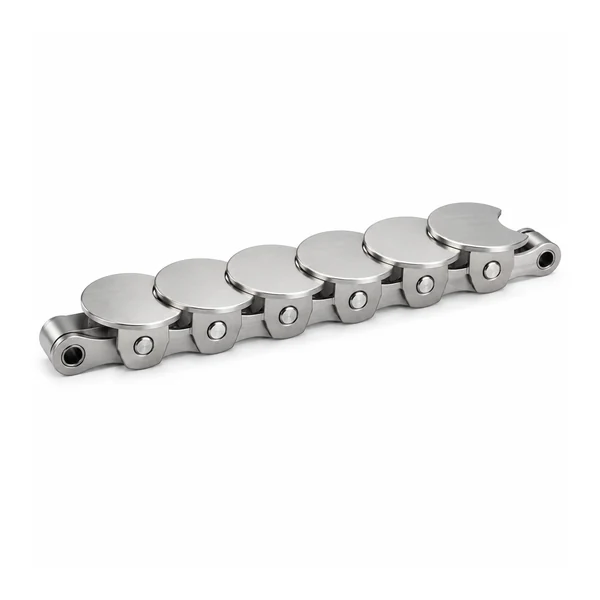
SSSC76.2B Sushi Conveyor Chain
This stainless steel sushi conveyor chain is built around a dedicated crescent-shaped top plate rather than a generic flat plastic module. The top plate creates a continuous carrying surface around curves while the central chain body supplies pitch control and articulation. For replacement work, the buyer should treat pitch, top-plate width, chain width and the interface to the guide track as one geometry set; matching only the nominal model name is not enough when the restaurant conveyor or guide rail has been modified. The series specification identifies the material family as 300, 400 and 600 series stainless steel. A quotation should therefore state the required material series or the existing material if known, together with photographs of the installed track and return path.
For replacement work, treat the crescent top plate, central chain body, guide track and drive sprocket as one interface. The part should be compared with the conveyor that exists today, including any guide, carrier or sprocket modifications made after the original machine was commissioned.
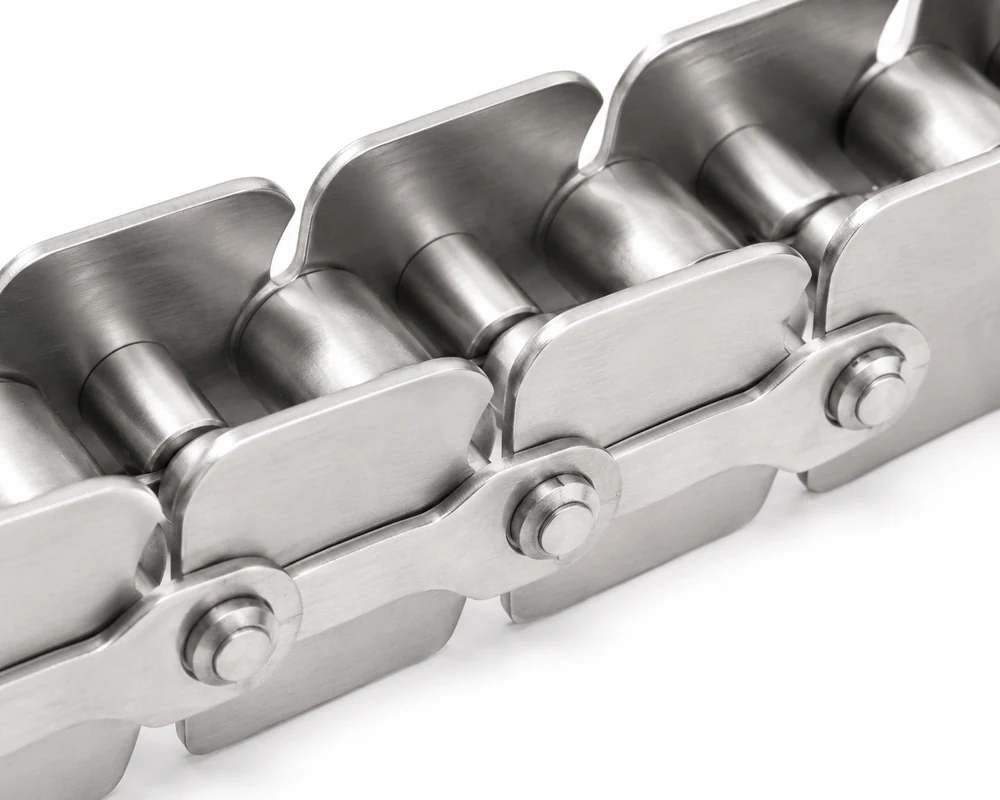
フィット感と動きを制御する機能を確認してください
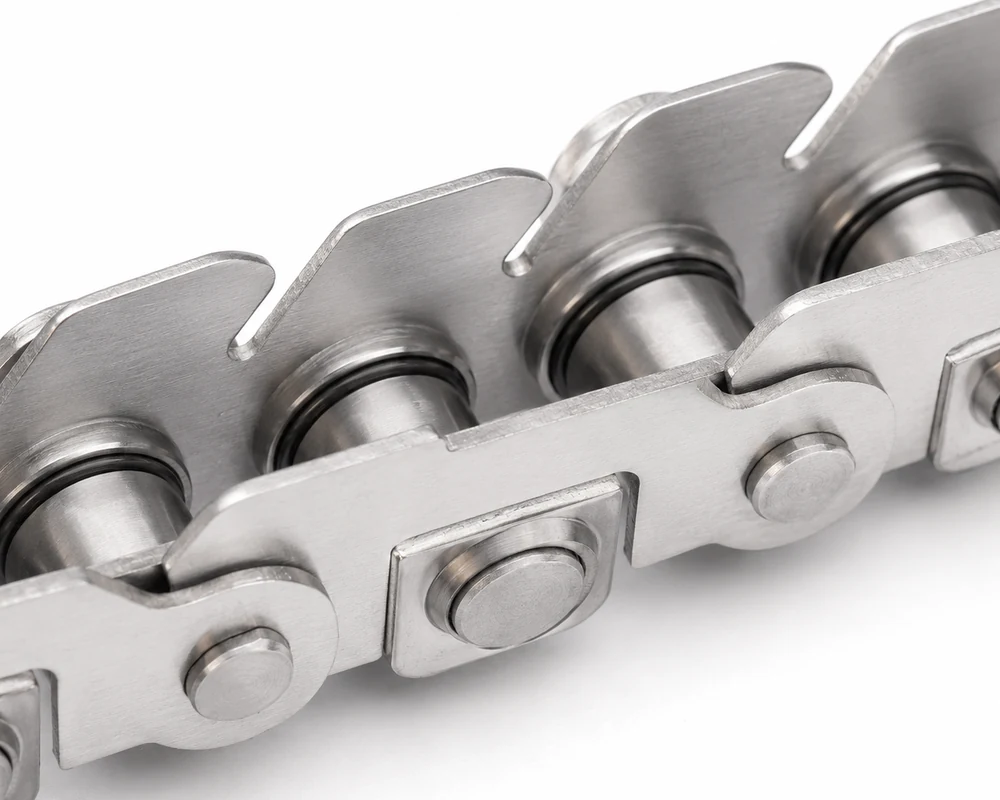
The key review points are curve clearance, return-path support and sprocket engagement. Measure several repeating features where possible instead of relying on one worn joint, rod or attachment. Photograph the component while it is still installed so running direction, guide contact and drive engagement are visible.
Selection starts with two measurements that are easy to verify on an installed line: center-to-center pitch and the effective top-plate width. Measure several pitches over a straight section to reduce single-joint error, then verify the overall chain width and roller diameter. Also record the smallest curve radius in the conveyor, the plate support arrangement, direction of travel and whether plates must pass under covers, dish guides or transfer points. If an existing chain runs quietly on the straight but binds in curves, the problem may be guide geometry, side clearance or accumulated pitch error rather than nominal pitch alone. For OEM projects, send a section drawing of the track and the mating sprocket before production approval.
寸法が不明確な場合は、仮定の公称値に丸めるのではなく、摩耗したサンプルから測定した値であることを明記してください。これにより、技術レビュー時に、実際の寸法の不一致と通常の使用による摩耗を容易に区別できます。
技術図面および仕様書
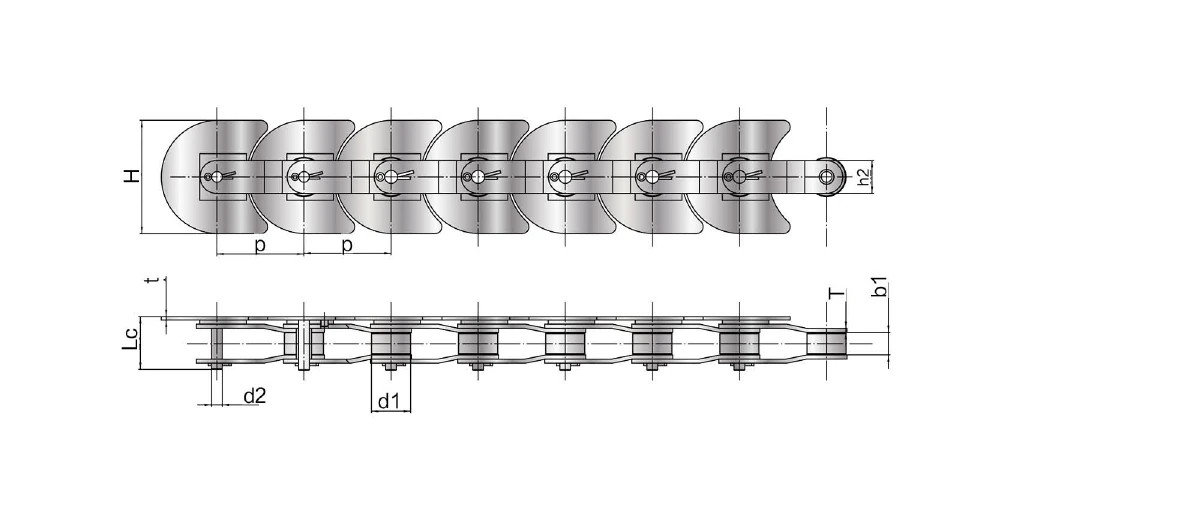
寸法凡例: P = pitch; d1 = roller diameter; b1 = width between inner plates; d2 = pin diameter; H = top plate width; h2 = inner plate height; T = plate thickness; t = top plate thickness; Lc = chain width.
| モデル | ピッチP(mm) | Roller Diameter d1 (mm) | Width Between Inner Plates b1 (mm) | Pin Diameter d2 (mm) | Top Plate Width H (mm) | Inner Plate Height h2 (mm) | Plate Thickness T (mm) | Top Plate Thickness t (mm) | Chain Width Lc (mm) |
|---|---|---|---|---|---|---|---|---|---|
| SSSC76.2B | 76.20 | 49.50 | 19.00 | 7.92 | 112.00 | 22.00 | 2.50 | 2.50 | 42.00 |
この表は、この製品ページで利用可能なモデル/構成データを示しています。ここに記載されていない値は、他のシリーズから推測するのではなく、プロジェクト図面、現在のコンポーネント、またはマシンインターフェースから確認してください。
コンベア経路全体内のコンポーネントを評価する
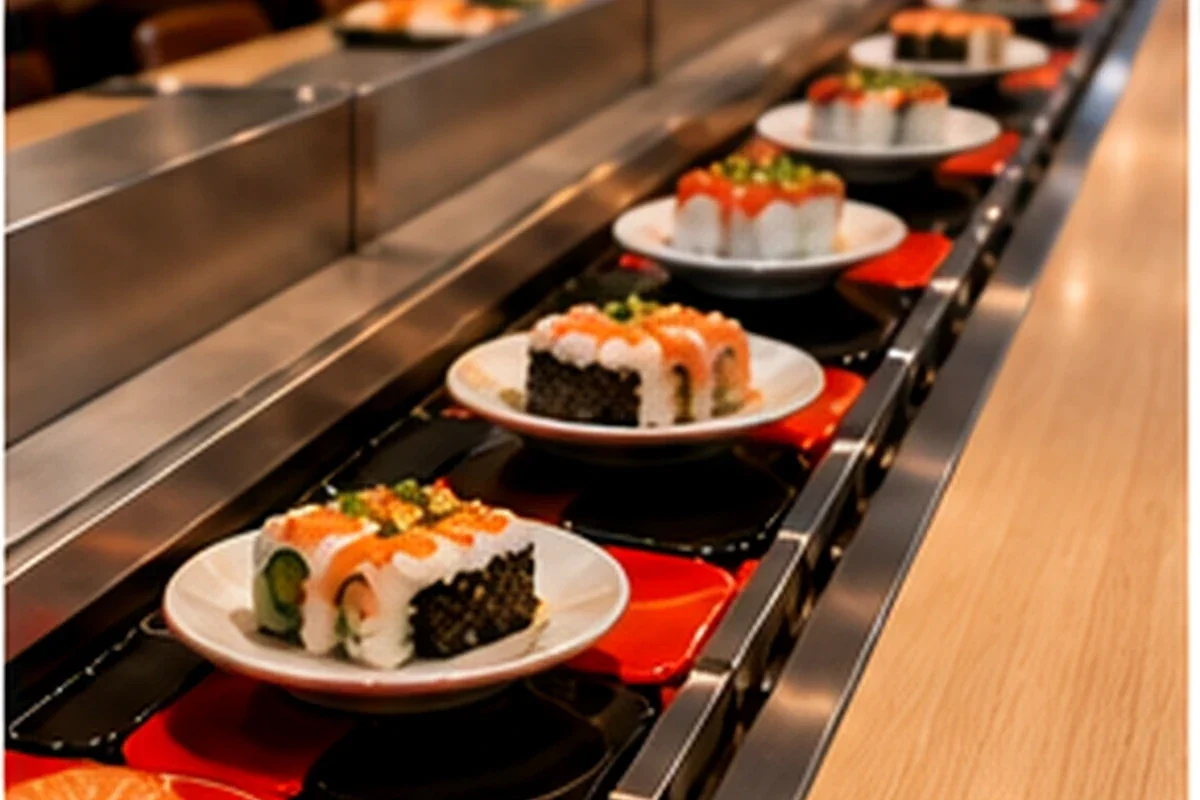
SSSC76.2B Sushi Conveyor Chain is considered for rotary sushi and plate-conveyor systems. In addition to the component dimensions, state the product being conveyed, spacing, line speed, starts and stops, curve or incline conditions, process zones and sanitation method. These operating inputs help identify the interfaces that deserve extra attention during approval.
駆動部、支持部、搬送ポイント、および戻り経路に摩耗や損傷がないか点検してください。損傷が機械の特定の位置で繰り返し発生する場合は、新しいチェーンやベルトの交換を検討する前に、その箇所を修正してください。交換部品では、バリ、ガイドのずれ、スプロケットの損傷、または支持されていない搬送部を補うことはできません。
通常生産前に低速で試運転を行う
During installation, clean the track and return rail before laying in the new chain, then verify that the chain can articulate freely through the tightest curve without forcing the top plates against fixed guides. Sprocket engagement should be checked by hand over several revolutions before powered commissioning. Initial testing should be performed empty, followed by representative dish loads distributed around the loop. Watch for localized lift, plate-to-guide contact, cyclic noise and changes in chain tension as the loop moves through transitions. These observations are more useful than simply checking that the conveyor can run at full speed.
最初の空運転後、代表的な負荷をかけた状態で同じ観察ポイントを比較してください。横方向の位置、関節の動き、伝達時の衝撃、騒音、またはテイクアップ位置の変化を記録してください。短く再現性のある試運転記録があれば、通常の慣らし運転と、日常的な生産前に修正が必要な機械インターフェースの問題を容易に区別できます。
新しい部品を取り付ける前に、スプロケット、ガイド、サポート、トランスファーを清掃し、点検してください。
部品を無理にトラックに押し込まずに、走行方向、横方向の位置、および係合状態を確認してください。
印の付いたジョイントまたはベルト列に沿って、可能な限り最低の速度でループ全体を一周します。
代表的な負荷を導入し、転送、曲線、追跡、およびリターンパスの挙動を再確認します。
持ち運び面と関節部を視認できる状態にしておく
For food-service duty, cleaning access is part of the mechanical design. Remove product debris from the plate interfaces and guide path without levering the plates sideways. Use cleaning chemistry that is compatible with the specified stainless steel and any non-metallic guide components in the conveyor. After washdown, inspect the pin and roller zones for trapped residue, confirm that guide clearances have not been disturbed, and run the line slowly to detect a plate that was reinstalled out of alignment. Lubrication practice depends on the complete conveyor design and food-contact zone; the RFQ should therefore state whether the existing system is dry-running, centrally lubricated or manually lubricated rather than assuming a universal method.
繰り返し発生するエッジの摩耗、研磨されたガイド接触、アタッチメントの変形、ピンの動き、フックのずれ、メッシュの歪みなどを記録してください。同じ検査箇所で日付入りの写真を撮影しておくと、単発的な寿命末期検査よりも傾向の変化を把握しやすくなります。
リピート注文で重要な寸法とチェック項目を固定する
After the first acceptable sample or production batch is confirmed, retain the model/designation, current dimension record, approved photographs and the machine position where the component is used. For SSSC76.2B Sushi Conveyor Chain, include the features that control curve clearance, return-path support and sprocket engagement. If the conveyor is modified later, update the interface record instead of assuming the historical part number still describes the machine.
新規のお問い合わせの場合、複数のモデルが商業的に統合されている場合でも、各モデルを個別の技術ラインとして扱ってください。サンプル数量と生産数量は別々に記載してください。特定の材料、表面状態、または特殊工程が必須の場合は、工程の最小値と照らし合わせて確認できるよう、要件として明記してください。
制作承認前に解決すべき質問事項
Confirm crescent top plate, central chain body, guide track and drive sprocket against the current machine. Record where the part is supported, guided and driven, and identify any feature that has been repaired or modified.
Describe product footprint, spacing, orientation and transfer points for rotary sushi and plate-conveyor systems. Note curves, inclines or hanging sections that change the clearance requirement.
Photograph recurring wear and identify the machine position where it occurs. Check curve clearance, return-path support and sprocket engagement before deciding that the old component itself caused the problem.
受入検査では、一貫して測定可能な寸法を選択し、図面または承認済みのサンプルと照合してください。2つの構成が類似した全体形状を共有している場合、外観のみを合否判定基準として使用しないでください。試運転では、通常の生産を開始する前に低速での結果を文書化し、後のメンテナンスで比較するための基準値として活用してください。
繰り返し注文される場合は、前回のロット以降、機械、製品フォーマット、または洗浄プロセスに変更があったかどうかをお知らせください。ガイド、搬送装置、または製品間隔にわずかな変更を加えるだけで、公称部品モデルが同じであっても、どのインターフェースが性能を制御するかが変わる可能性があります。
Confirm SSSC76.2B Sushi Conveyor Chain against the current conveyor before production quantity
A dimensional table identifies the listed product, but replacement approval should also compare the crescent top plate, central chain body, guide track and drive sprocket with the machine that will receive the part. For SSSC76.2B Sushi Conveyor Chain, record curve clearance, plate overlap, chain width and sprocket engagement using the same datums that will be used for incoming inspection. If an old component is worn, measure several repeats and photograph the least-damaged reference area rather than selecting one convenient value.
写真は、緩んだ部品だけでなく、駆動経路と戻り経路、コンベアの両端、最も狭い移行部、および摩耗が繰り返される箇所を含めてください。機械全体の様子を写した写真も追加し、動作方向と製品経路が明確にわかるようにしてください。ガイド、スプロケット、サポート、またはトランスファーが修理された場合は、その変更点を明記してください。交換部品は、現在の製造時のインターフェースに適合させる必要があるためです。
サンプル承認にあたっては、サンプル製造前に重要な寸法と目視可能な構成について合意してください。低速テスト中は、マークされたジョイント、キャリア、またはベルト列を1回転させて、摩擦、浮き上がり、傾き、周期的な異音、または製品位置の変化がないか確認してください。症状が機械の特定の箇所で発生する場合は、部品仕様を変更する前に、周囲のハードウェアを点検してください。
リピート注文の場合は、承認済みのモデル、寸法記録、および機械位置をまとめて保管してください。これにより、同じ工場で複数のラインで類似の部品を使用する場合の曖昧さを軽減できます。製品のフォーマット、ラインレイアウト、または洗浄プロセスが変更された場合は、部品の名称が変更されていなくても、次回の問い合わせ時にその変更内容を記載してください。
SSSC76.2B Sushi Conveyor Chain FAQ
Are SSSC76.2A, SSSC76.2B and SSSC100 interchangeable?
No. They differ in pitch and/or top-plate and chain-width dimensions. Confirm the full dimension set and track interface before substitution.
What should I measure on an old sushi chain?
Measure multiple pitches, roller diameter, inner width, pin diameter, top-plate width and overall chain width, then photograph the curve and sprocket engagement.
Is the top plate a plastic attachment?
The series specification depicts this sushi chain as a stainless steel chain with a crescent-shaped metal top plate. Do not substitute a generic plastic tabletop chain without checking the complete conveyor design.
Can you quote from a sample or drawing?
Yes. A physical sample, dimensional drawing or clear photographs with measured reference dimensions make replacement identification more reliable.
What operating details help with selection?
Share conveyor speed, loop length, smallest curve radius, dish or carrier load, cleaning method, guide material and current sprocket information.
製品リリース前に測定可能な機能を確認する
受入検査および交換承認には、再現可能な寸法と最新の機械写真を使用してください。

プロジェクトが交換または改修の場合は、現在のコンベア経路と運転条件を含めてください。