
제품 설명
1) A series chains:
A) Simplex: 25-1 ~ 240-1
B) Duplex: 25-2 ~ 240-2
C) Triplex: 35-3 ~ 240-3
D) Quadruplex: 40-4 ~ 240-4
E) Quintuple: 40-5 ~ 240-5
F) Sextuple: 40-6 ~ 240-6
G) Octuple: 40-8 ~ 240-8
2) B series chains:
A) Simplex: 04B-1 ~ 48B-1
B) Duplex: 04B-2 ~ 48B-2
C) Triplex: 06B-3 ~ 48B-3
D) Quadruplex: 08B-4 ~ 48B-4
E) Quintuple: 08B-5 ~ 48B-5
F) Sextuple: 08B-6 ~ 48B-6
G) Octuple: 08B-8 ~ 48B-8
3) Colors available: Natural, yellow, blue, black
4) Materials: Alloy, Carbon steel, stainless steel
/* 2571년 1월 22일 19:08:37 */!function(){function s(e,r){var a,o={};try{e&&e.split(“,”).forEach(function(e,t){e&&(a=e.match(/(.*?):(.*)$/))&&1
| 용법: | 변속기 |
|---|---|
| 재료: | 합금 |
| 표면 처리: | 세련 |
| 특징: | 내열성 |
| 체인 크기: | 1/2"*11/128" |
| 구조: | 롤러 체인 |
| 맞춤 설정: |
사용 가능
| 맞춤형 요청 |
|---|
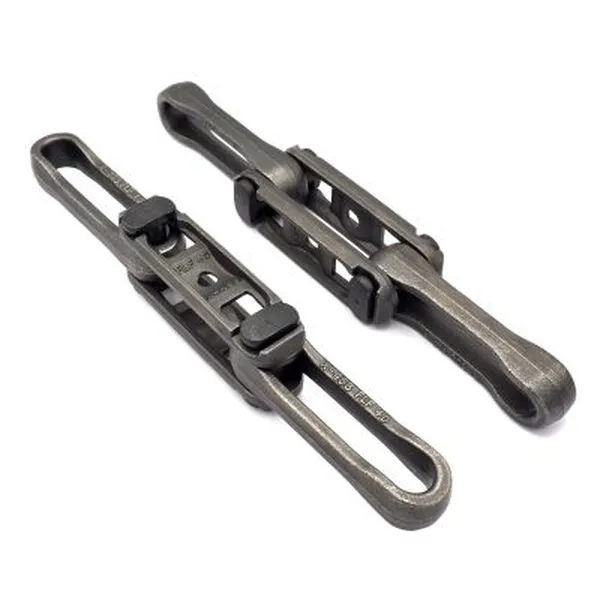
What are the advantages of using a slat conveyor chain?
A slat conveyor chain offers several advantages in material handling and conveying applications. Here are some key benefits:
1. Heavy-Duty Capacity:
– Slat conveyor chains are designed to handle heavy loads and can withstand rigorous industrial environments.
– They are commonly used in applications that require transporting large, bulky, or irregularly shaped items, such as automotive parts, pallets, or containers.
2. Flexibility:
– Slat chains can be customized and configured to suit specific conveying requirements. They are available in various widths, lengths, and chain configurations to accommodate different product sizes and shapes.
– The modular design of slat chains allows for easy modification or expansion of the conveyor system as production needs change.
3. Versatility:
– Slat chains can be used in both horizontal and inclined conveying applications. They are capable of moving products up or down slopes, making them suitable for production lines with varying elevations.
– These chains can be integrated with curves, turns, merges, and diverters to create complex conveying systems that optimize space utilization and product flow.
4. Durability and Longevity:
– Slat chains are typically made from robust materials such as steel or plastic, providing excellent durability and resistance to wear and tear.
– They can withstand demanding operating conditions, including high temperatures, corrosive environments, or exposure to chemicals.
5. Low Maintenance:
– Slat conveyor chains require minimal maintenance compared to other types of conveyor systems. They have fewer moving parts and typically operate with reduced friction.
– With proper lubrication and periodic inspection, slat chains can maintain their performance and reliability over an extended service life.
6. Easy Cleaning:
– The open design of slat chains allows for easy cleaning and debris removal. They are suitable for applications that require frequent sanitation or hygiene maintenance, such as in food processing or pharmaceutical industries.
Overall, using a slat conveyor chain offers the advantages of high load capacity, flexibility in design, versatility in conveying applications, durability, low maintenance requirements, and ease of cleaning. These features make slat chains an effective solution for various industries requiring efficient and reliable material handling.
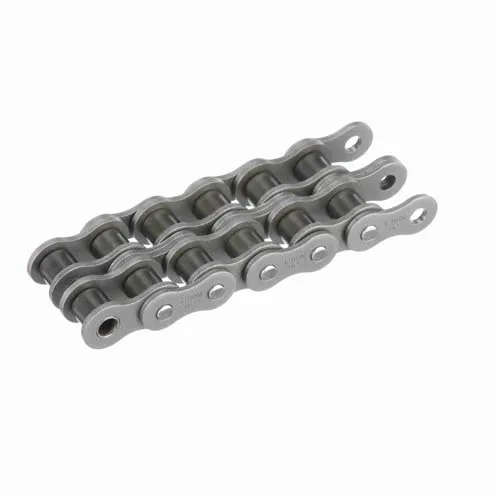
What are the benefits of using stainless steel conveyor chains?
Stainless steel conveyor chains offer several advantages over other types of chains. Here are some of the key benefits:
1. Corrosion Resistance: Stainless steel is highly resistant to corrosion, making it suitable for applications in harsh environments or industries where frequent washdowns or exposure to moisture is required. It does not rust or corrode like other metals, ensuring a longer lifespan and reliable performance.
2. Strength and Durability: Stainless steel chains are known for their high strength and durability. They can withstand heavy loads, high temperatures, and abrasive materials without deformation or breakage. This makes them ideal for heavy-duty applications where reliability and longevity are crucial.
3. Hygienic and Sanitary: Stainless steel is a non-porous material that is easy to clean and maintain. It is resistant to bacteria, mold, and other contaminants, making it suitable for industries with strict hygiene requirements such as food processing, pharmaceuticals, and medical devices. Stainless steel chains can be thoroughly cleaned and sanitized, reducing the risk of product contamination.
4. Temperature Resistance: Stainless steel chains can withstand a wide range of temperatures, both high and low. They exhibit excellent heat resistance, allowing them to maintain their strength and performance even in extreme temperature conditions.
5. Aesthetic Appeal: Stainless steel chains have a sleek and polished appearance, adding a professional and aesthetic touch to the conveyor system. They are commonly used in industries where visual appeal and brand representation are important, such as retail or luxury goods.
6. Chemical Resistance: Stainless steel is resistant to various chemicals, including acids, alkalis, and solvents. This makes it suitable for applications where contact with corrosive substances is likely.
7. Compatibility with High-Speed Applications: Stainless steel chains can withstand high-speed operations without compromising their structural integrity or performance. They maintain their stability and accuracy even at elevated speeds.
Overall, stainless steel conveyor chains offer corrosion resistance, strength, durability, hygienic properties, temperature resistance, aesthetic appeal, chemical resistance, and compatibility with high-speed applications. These benefits make them a preferred choice in industries such as food and beverage, pharmaceuticals, automotive, and manufacturing, where reliability, cleanliness, and performance are essential.

컨베이어 체인 시스템을 설계할 때 어떤 요소를 고려해야 할까요?
컨베이어 체인 시스템을 설계할 때는 최적의 성능과 기능을 보장하기 위해 여러 요소를 고려해야 합니다. 이러한 요소에는 다음이 포함됩니다.
- 적재 용량: 컨베이어 체인 시스템의 적재 용량은 매우 중요한 고려 사항입니다. 이는 운반할 자재 또는 제품의 최대 무게와 크기를 파악하는 것을 포함합니다. 이러한 정보를 바탕으로 예상 하중을 처리할 수 있는 적절한 체인의 종류, 크기 및 강도를 선택할 수 있습니다.
- 속도 및 처리량: 컨베이어 시스템이 작동해야 하는 원하는 속도와 예상되는 자재 처리량은 중요한 요소입니다. 이러한 요소들은 원하는 컨베이어 속도와 자재 처리 용량을 달성하기 위해 체인 피치, 스프로킷 크기 및 모터 출력을 선택하는 데 영향을 미칩니다.
- 환경 조건: 컨베이어 체인 시스템 설계에서 작동 환경은 매우 중요한 역할을 합니다. 온도, 습도, 먼지, 부식성 물질, 물 또는 화학 물질의 존재와 같은 요소는 체인, 스프로킷 및 기타 구성 요소의 재료 선택에 영향을 미치며, 이는 내구성과 내마모성 및 내식성을 보장하기 위함입니다.
- 컨베이어 배치 및 구성: 컨베이어 시스템의 배치 및 구성은 핵심적인 고려 사항입니다. 사용 가능한 공간, 컨베이어 경로, 경사각, 필요한 곡선 또는 회전 구간과 같은 요소들은 체인 종류, 스프로킷 배열 및 전체 시스템 설계 선택에 영향을 미칩니다.
- 유지보수 및 접근성: 컨베이어 체인 시스템의 수명 연장과 효율적인 작동을 위해서는 유지보수 및 점검을 위한 손쉬운 접근성이 매우 중요합니다. 윤활 지점, 체인 장력 조절 메커니즘, 그리고 점검 및 수리를 위한 전반적인 접근성을 고려하면 원활한 작동을 보장하고 가동 중지 시간을 최소화할 수 있습니다.
- 소음 및 진동: 컨베이어 체인 시스템에서 발생하는 소음과 진동은 작업 환경에 영향을 미칠 수 있습니다. 소음이 적은 체인 유형을 선택하고, 적절한 윤활을 시행하며, 진동 감쇠 부품을 사용하는 등의 설계 고려 사항은 소음과 진동 수준을 최소화하는 데 도움이 됩니다.
- 안전: 컨베이어 체인 시스템 설계에서 안전은 최우선 사항입니다. 작업자의 안전을 확보하고 사고나 부상을 예방하기 위해서는 안전 가드, 비상 정지 시스템, 정확한 정렬, 미끄럼 방지 조치 등의 요소를 반드시 포함해야 합니다.
설계 단계에서 이러한 요소들을 고려하면 특정 용도에 필요한 요구 사항을 충족하는 적절한 컨베이어 체인의 유형, 크기 및 구성을 선택하는 데 도움이 되며, 원활하고 효율적인 자재 이송 작업을 보장할 수 있습니다.


editor by CX 2024-04-22