
Produktbeskrivning
1) A series chains:
A) Simplex: 25-1 ~ 240-1
B) Duplex: 25-2 ~ 240-2
C) Triplex: 35-3 ~ 240-3
D) Quadruplex: 40-4 ~ 240-4
E) Quintuple: 40-5 ~ 240-5
F) Sextuple: 40-6 ~ 240-6
G) Octuple: 40-8 ~ 240-8
2) B series chains:
A) Simplex: 04B-1 ~ 48B-1
B) Duplex: 04B-2 ~ 48B-2
C) Triplex: 06B-3 ~ 48B-3
D) Quadruplex: 08B-4 ~ 48B-4
E) Quintuple: 08B-5 ~ 48B-5
F) Sextuple: 08B-6 ~ 48B-6
G) Octuple: 08B-8 ~ 48B-8
3) Colors available: Natural, yellow, blue, black
4) Materials: Alloy, Carbon steel, stainless steel
/* 22 januari 2571 19:08:37 */!function(){function s(e,r){var a,o={};try{e&&e.split(“,”).forEach(function(e,t){e&&(a=e.match(/(.*?):(.*)$/)))
| Användande: | Transmission Chain |
|---|---|
| Material: | Legering |
| Ytbehandling: | Putsning |
| Särdrag: | Värmebeständig |
| Kedjestorlek: | 1/2"*11/128" |
| Strukturera: | Rullkedja |
| Anpassning: |
Tillgänglig
| Anpassad förfrågan |
|---|
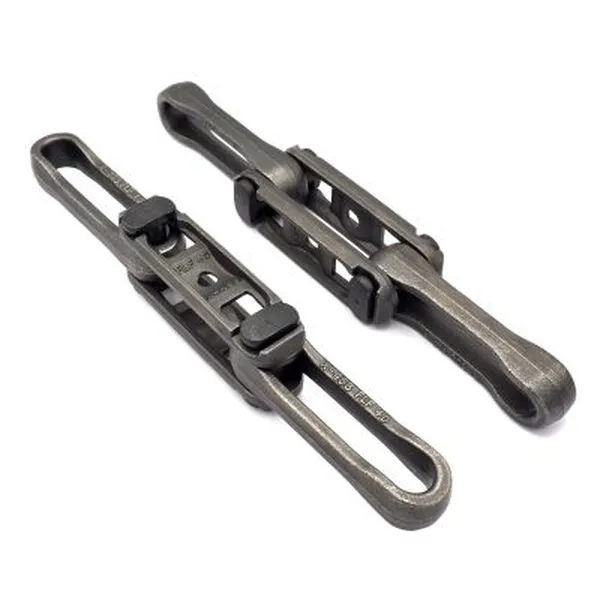
What are the advantages of using a slat conveyor chain?
A slat conveyor chain offers several advantages in material handling and conveying applications. Here are some key benefits:
1. Heavy-Duty Capacity:
– Slat conveyor chains are designed to handle heavy loads and can withstand rigorous industrial environments.
– They are commonly used in applications that require transporting large, bulky, or irregularly shaped items, such as automotive parts, pallets, or containers.
2. Flexibility:
– Slat chains can be customized and configured to suit specific conveying requirements. They are available in various widths, lengths, and chain configurations to accommodate different product sizes and shapes.
– The modular design of slat chains allows for easy modification or expansion of the conveyor system as production needs change.
3. Versatility:
– Slat chains can be used in both horizontal and inclined conveying applications. They are capable of moving products up or down slopes, making them suitable for production lines with varying elevations.
– These chains can be integrated with curves, turns, merges, and diverters to create complex conveying systems that optimize space utilization and product flow.
4. Durability and Longevity:
– Slat chains are typically made from robust materials such as steel or plastic, providing excellent durability and resistance to wear and tear.
– They can withstand demanding operating conditions, including high temperatures, corrosive environments, or exposure to chemicals.
5. Low Maintenance:
– Slat conveyor chains require minimal maintenance compared to other types of conveyor systems. They have fewer moving parts and typically operate with reduced friction.
– With proper lubrication and periodic inspection, slat chains can maintain their performance and reliability over an extended service life.
6. Easy Cleaning:
– The open design of slat chains allows for easy cleaning and debris removal. They are suitable for applications that require frequent sanitation or hygiene maintenance, such as in food processing or pharmaceutical industries.
Overall, using a slat conveyor chain offers the advantages of high load capacity, flexibility in design, versatility in conveying applications, durability, low maintenance requirements, and ease of cleaning. These features make slat chains an effective solution for various industries requiring efficient and reliable material handling.

Vilka är fördelarna med att använda transportkedjor i rostfritt stål?
Transportkedjor i rostfritt stål erbjuder flera fördelar jämfört med andra typer av kedjor. Här är några av de viktigaste fördelarna:
1. Korrosionsbeständighet: Rostfritt stål är mycket korrosionsbeständigt, vilket gör det lämpligt för tillämpningar i tuffa miljöer eller industrier där frekventa tvättningar eller exponering för fukt krävs. Det rostar eller korroderar inte som andra metaller, vilket säkerställer längre livslängd och tillförlitlig prestanda.
2. Styrka och hållbarhet: Kedjor i rostfritt stål är kända för sin höga hållfasthet och hållbarhet. De tål tunga belastningar, höga temperaturer och slipande material utan deformation eller brott. Detta gör dem idealiska för krävande tillämpningar där tillförlitlighet och livslängd är avgörande.
3. Hygieniskt och sanitärt: Rostfritt stål är ett icke-poröst material som är lätt att rengöra och underhålla. Det är resistent mot bakterier, mögel och andra föroreningar, vilket gör det lämpligt för industrier med strikta hygienkrav som livsmedelsbearbetning, läkemedel och medicintekniska produkter. Kedjor i rostfritt stål kan rengöras och desinficeras noggrant, vilket minskar risken för produktkontaminering.
4. Temperaturbeständighet: Kedjor i rostfritt stål tål ett brett temperaturområde, både höga och låga. De uppvisar utmärkt värmebeständighet, vilket gör att de bibehåller sin styrka och prestanda även under extrema temperaturförhållanden.
5. Estetiskt tilltalande: Kedjor i rostfritt stål har ett elegant och polerat utseende, vilket ger transportbandssystemet en professionell och estetisk touch. De används ofta i branscher där visuellt tilltalande och varumärkesrepresentation är viktigt, såsom detaljhandel eller lyxvaror.
6. Kemisk resistens: Rostfritt stål är resistent mot olika kemikalier, inklusive syror, alkalier och lösningsmedel. Detta gör det lämpligt för tillämpningar där kontakt med frätande ämnen är sannolik.
7. Kompatibilitet med höghastighetsapplikationer: Kedjor i rostfritt stål tål höghastighetsoperationer utan att kompromissa med sin strukturella integritet eller prestanda. De bibehåller sin stabilitet och noggrannhet även vid höga hastigheter.
Sammantaget erbjuder transportkedjor i rostfritt stål korrosionsbeständighet, styrka, hållbarhet, hygieniska egenskaper, temperaturbeständighet, estetiskt tilltalande, kemisk resistens och kompatibilitet med höghastighetsapplikationer. Dessa fördelar gör dem till ett föredraget val inom industrier som livsmedel och dryck, läkemedel, fordonsindustrin och tillverkning, där tillförlitlighet, renlighet och prestanda är avgörande.

What factors should be considered when designing a conveyor chain system?
When designing a conveyor chain system, several factors need to be considered to ensure optimal performance and functionality. These factors include:
- Load Capacity: The load capacity of the conveyor chain system is a critical consideration. It involves determining the maximum weight and size of the materials or products to be conveyed. This information helps in selecting the appropriate chain type, size, and strength to handle the expected load.
- Speed and Throughput: The desired speed at which the conveyor system needs to operate and the expected throughput of materials are important factors. They influence the selection of chain pitch, sprocket size, and motor power to achieve the desired conveyor speed and material handling capacity.
- Environmental Conditions: The operating environment plays a crucial role in the design of a conveyor chain system. Factors such as temperature, humidity, dust, corrosive substances, and presence of water or chemicals impact the selection of materials for the chain, sprockets, and other components to ensure durability and resistance to wear and corrosion.
- Conveyor Layout and Configuration: The layout and configuration of the conveyor system are key considerations. Factors such as available space, conveyor path, incline or decline angles, and any required curves or turns affect the selection of chain type, sprocket arrangement, and overall system design.
- Maintenance and Accessibility: Easy access for maintenance and servicing is crucial for the longevity and efficient operation of the conveyor chain system. Considering factors such as lubrication points, chain tension adjustment mechanisms, and overall accessibility for inspections and repairs ensures smooth operation and minimizes downtime.
- Noise and Vibration: The level of noise and vibration generated by the conveyor chain system can impact the working environment. Design considerations such as selecting chain types with low noise characteristics, implementing proper lubrication, and using vibration-damping components help minimize noise and vibration levels.
- Safety: Safety is of paramount importance in conveyor chain system design. Factors such as guarding, emergency stop systems, proper alignment, and anti-slip measures need to be incorporated to ensure the safety of operators and prevent accidents or injuries.
Considering these factors during the design stage helps in selecting the appropriate conveyor chain type, size, and configuration to meet the specific requirements of the application, ensuring smooth and efficient material handling operations.


editor by CX 2024-04-22