Frozen Food Conveyor Chain Applications
This guide addresses stored frozen-food carrying and transfer lines. The starting point is the frozen-food conveyor chain with shell-type carrying geometry, but a reliable replacement decision also has to include the parts that guide, support and drive it. A visually similar component can behave differently when the machine interface is different.
Before requesting a quotation, photograph the complete conveyor while the component is still installed. Mark running direction and the location of any recurring wear. Then record the dimensions and operating details that another engineer would need to reproduce the fit.
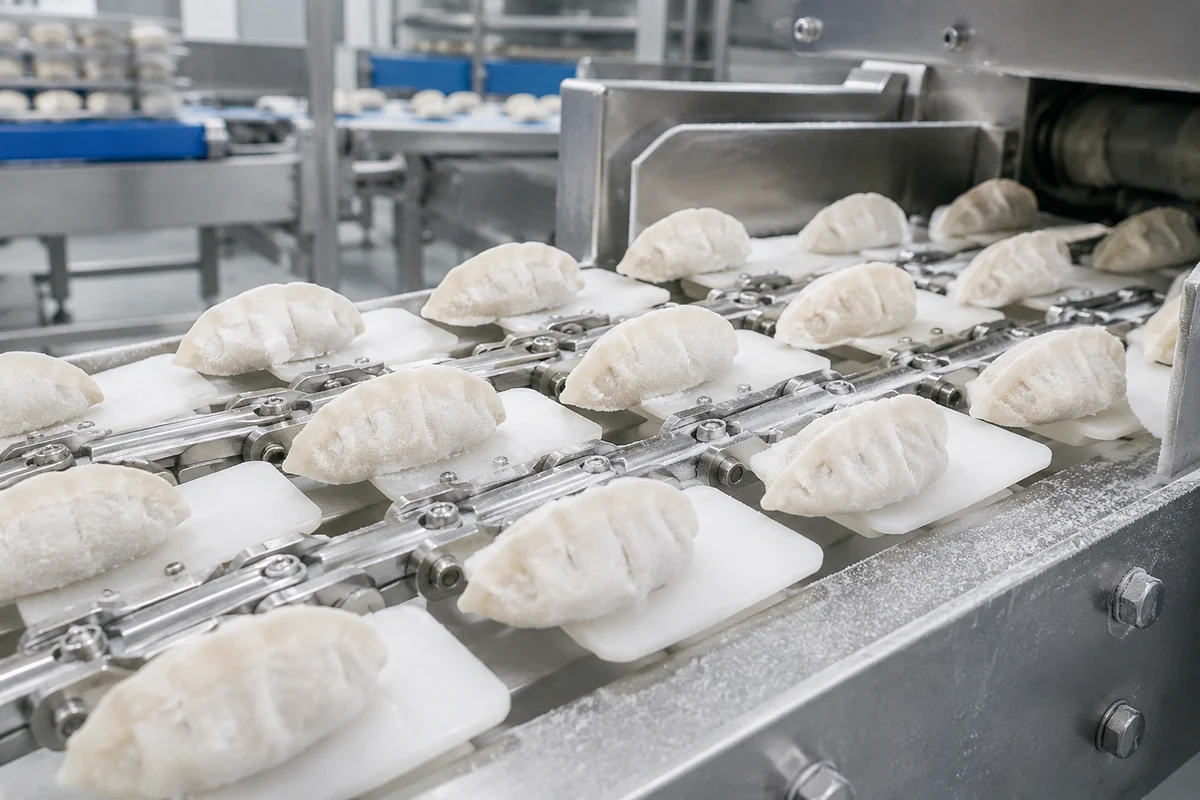
Map the component to the parts that control its motion
For stored frozen-food carrying and transfer lines, review shell clearance, repeating spacing, guide support, transfer height and sprocket engagement. Measure several repeating features where possible and note whether a dimension comes from an unworn reference, a current drawing or a worn component. If the old part has elongated, bent or polished in service, one measurement can disguise the original geometry.
Record this interface clearly and photograph how it mates with the current conveyor.
Record this interface clearly and photograph how it mates with the current conveyor.
Record this interface clearly and photograph how it mates with the current conveyor.
Record this interface clearly and photograph how it mates with the current conveyor.
For curved or returning paths, follow one marked joint or belt row through the complete loop. For hanging or carrier systems, also check overhead and transfer clearance. For open wire belts, inspect both edges and the cross-machine alignment of rods or links.
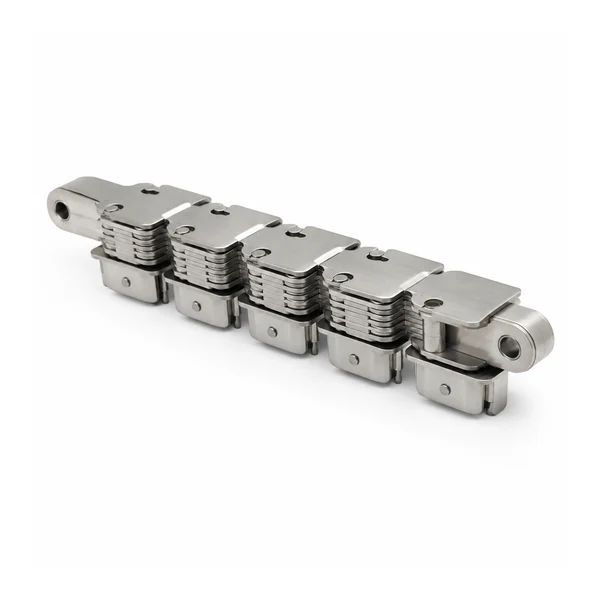
Describe the conditions that the dimensional table cannot show
State product footprint, cold-zone transitions, line speed, condensation exposure and sanitation method. These values describe the machine duty and should be reviewed together with the dimensional match. They are especially useful when an OEM machine has been modified, the product format has changed or a previous replacement developed wear faster than expected.
For food equipment, cleaning access belongs in the same review as mechanical fit. Note whether the component runs dry or receives lubrication, how debris leaves the carrying surface, where rinse water can collect and which areas cannot be inspected without removing guards.
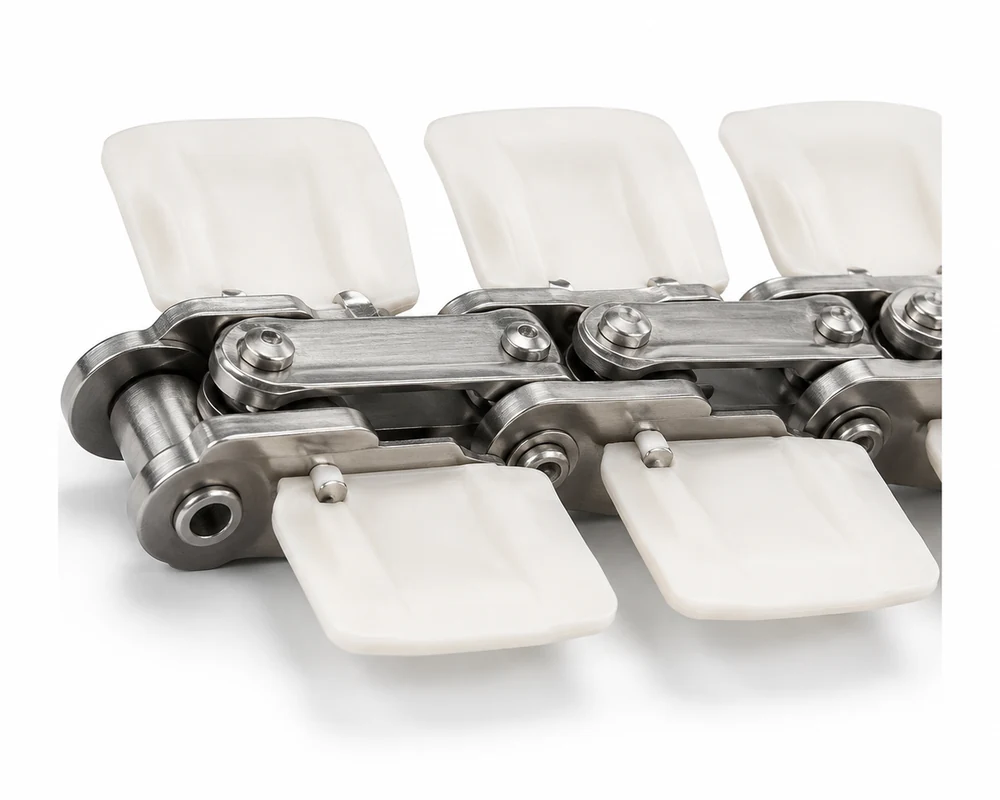
Use the wear pattern to decide what to inspect next
Typical warning signs in this application include shell interference, side contact, product instability, localized stiff articulation and recurring transfer impact. A repeated mark at one fixed machine position usually deserves an interface inspection before the component is blamed. Compare both conveyor sides, check the drive and inspect transfers for steps, burrs or accumulated debris.
If possible, keep a short section of the removed component and label its running direction and machine position. That reference can be compared with the new part during incoming inspection and with future service wear.
Check fit in stages instead of going directly to production speed
Remove debris and confirm that guides, sprockets, supports, shafts and transfers are serviceable.
Where practical, move the component through the critical interface without forcing it.
Use the lowest practical speed and observe a marked joint or row through the complete path.
Recheck clearance, tracking, transfer behavior and product position under normal spacing.
Record the final guide or take-up condition and photograph critical transfers after acceptance. Those records become the baseline for future maintenance.
Separate identification, geometry, duty and quantity
| RFQ block | What to include |
|---|---|
| Identification | Model/designation when known, equipment function, running direction and machine position |
| Geometry | shell clearance, repeating spacing, guide support, transfer height and sprocket engagement |
| Operating duty | product footprint, cold-zone transitions, line speed, condensation exposure and sanitation method |
| Commercial plan | Sample quantity, production quantity by model, and any mandatory material or special-process requirement |
Do not fill an unknown value with a convenient assumption. A measured worn value can be labeled as such; a missing material grade can be stated as a requirement for review; and a performance rating that is not listed should remain a project question.
Make repeat orders easier to verify
After a configuration is accepted, retain the exact designation, the dimensions used for incoming inspection, current machine photographs and the critical commissioning observations. If the machine is modified, update the interface record at the same time. This prevents a historical part number from being used as the only reference when the guide, transfer or drive geometry has changed.
For mixed-model orders, use one technical line per model and label every drawing, photograph and sample to that line. The commercial order can still be combined, but keeping the technical references separate reduces cross-model errors.
Continue with the food conveyor product range or use the RFQ checklist to organize a replacement enquiry.
Questions for stored frozen-food carrying and transfer lines
What should be measured first for Frozen Food Conveyor Chain Applications?
Start with the repeating geometry of the frozen-food conveyor chain with shell-type carrying geometry, then add the mating drive, guide and transfer dimensions that control fit.
Should a worn sample be treated as the nominal dimension?
No. Measure it, label it as a worn-service value, and use multiple repeats or an unworn reference when available.
Why photograph the component before removal?
Installed photographs preserve running direction, guide contact, product orientation and the machine position of recurring wear.
What operating information belongs in the enquiry?
Include product footprint, cold-zone transitions, line speed, condensation exposure and sanitation method, plus quantity and any mandatory material or process requirement.
When should the mating conveyor be inspected?
Before installation and again during low-speed commissioning, especially at the drive, guides, supports, transfers and return path.
Use the machine path to resolve uncertainty
Start with the interface that is hardest to change on the machine. In stored frozen-food carrying and transfer lines, that usually means the existing drive, guide or transfer arrangement. Compare the candidate component with that fixed geometry first. Next compare the product-carrying feature and repeating spacing. Finally review operating duty and cleaning access. This order prevents a project from optimizing a secondary feature while missing the mechanical interface that actually determines whether the part can run.
If two candidate configurations both fit the basic dimensions, use the wear and product-handling evidence to separate them. Look for contact marks, product-position differences and clearance at the tightest transition. When the evidence is still incomplete, a small sample or first-article check is safer than treating a visual similarity as proof of interchangeability.
For production release, define the acceptance check before the order is placed. A buyer and supplier should be able to point to the same dimension record, drawing or approved sample and understand what will be inspected. This is particularly important when several similar models share a pitch but use different carrying geometry.