
Produktbeskrivelse
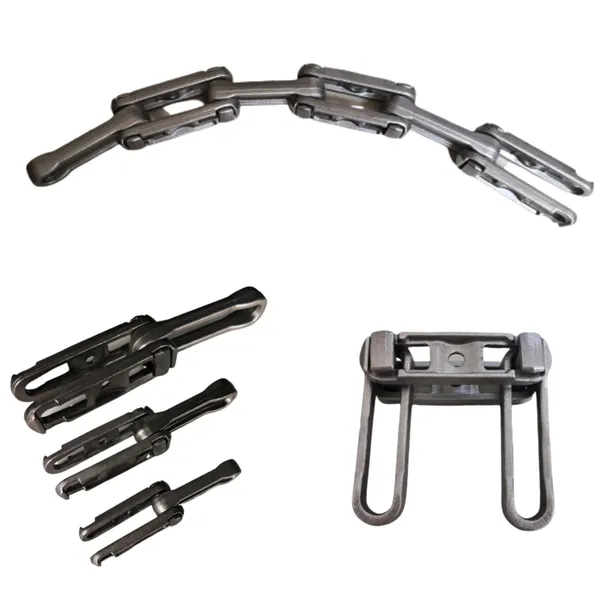
| Navn | Factory Direct Sale Steel Detachable Link Chain Detachable Chain |
| Materiale | Steel |
| Surface | Painted or Others |
| Havn | HangZhou in China |
| Prøve | Sample is free of charge, freight covered by customer |
| Pakking | Carton,Bag,Pallet Or Others |
| D/T | 30 days after order confirmation |
Vanlige spørsmål
>> 1.Are you a factory or a trading company?
We are a factory. We have been focused on forging nearly 30 years.
>> 2.How do you control your quality?
1: Design control
2:Incoming inspection
3:Dimensional control
4:Tensile tests
5:Quality inspection before delivery
| Bruk: | Transmission Chain, Conveyor Chain |
|---|---|
| Materiale: | Steel |
| Trekk: | Heat Resistant |
| Struktur: | Detachable Chain |
| Color: | Black |
| Technology: | Forging |
| Prøver: |
US$ 0/Stykke
1 stk (min. bestilling) | |
|---|
| Tilpasning: |
Tilgjengelig
| Tilpasset forespørsel |
|---|
Can a conveyor chain be used in cleanroom environments?
Yes, conveyor chains can be used in cleanroom environments with proper selection and design considerations. Cleanroom environments require stringent control of airborne particles, such as dust, microbes, and contaminants, to maintain high levels of cleanliness. Here are some factors to consider when using a conveyor chain in a cleanroom:
1. Materialvalg:
– Choose a conveyor chain made from materials that are compatible with cleanroom requirements. Stainless steel, plastic, or special coatings are commonly used for their clean and non-contaminating properties.
– Avoid materials that generate excessive particles or contaminants, such as certain types of lubricants or chain coatings.
2. Design Considerations:
– Design the conveyor chain system to minimize particle generation. This includes smooth surfaces, rounded edges, and avoiding areas that can trap or accumulate particles.
– Use sealed or enclosed chain designs to prevent the release of lubricants or contaminants.
– Consider the integration of additional features, such as covers or guards, to further protect the chain and prevent particle ingress.
3. Cleaning and Maintenance:
– Establish a cleaning and maintenance protocol specific to the cleanroom environment. This may include regular cleaning and sanitization procedures to maintain cleanliness standards.
– Use cleaning agents and procedures that are approved for cleanroom use and do not introduce contaminants.
– Regularly inspect the conveyor chain system for any signs of wear, damage, or contamination. Promptly address any issues to ensure the chain’s reliability and cleanliness.
4. Compliance with Cleanroom Standards:
– Ensure that the conveyor chain system meets the cleanliness and particle generation requirements of the specific cleanroom standards or classifications in which it will be used.
– Comply with relevant industry guidelines and regulations, such as ISO standards, when selecting and using conveyor chains in cleanroom environments.
By considering these factors and implementing proper material selection, design considerations, cleaning protocols, and compliance with cleanroom standards, a conveyor chain can be effectively used in cleanroom environments while maintaining the required cleanliness levels.

Kan en transportkjede brukes til tunge applikasjoner?
Ja, en transportkjede kan brukes til tunge oppgaver. Transportkjeder er spesielt utviklet for å håndtere tunge belastninger og gi pålitelig transport i industrielle miljøer.
Her er noen faktorer som gjør transportkjeder egnet for tunge applikasjoner:
1. Robust konstruksjon: Transportkjeder er vanligvis laget av høyfaste materialer som legert stål, rustfritt stål eller herdet karbonstål. Disse materialene gir utmerket holdbarhet og tåler de tunge belastningene og tøffe driftsforholdene som vanligvis finnes i krevende applikasjoner.
2. Høy lastekapasitet: Transportkjeder er konstruert for å håndtere betydelige belastninger, inkludert tunge produkter, bulkmaterialer eller store komponenter. Kjedene er konstruert med passende stigning, lenkedimensjoner og styrke for å sikre pålitelig transport av tunge gjenstander.
3. Utmattingsmotstand: Transportkjeder er konstruert for å tåle repeterende belastning og utmatting forårsaket av kontinuerlig drift under tunge belastninger. De gjennomgår spesifikke varmebehandlinger og overflateherdingsprosesser for å forbedre motstanden mot slitasje, utmatting og deformasjon.
4. Tilpasningsmuligheter: Transportkjeder kan tilpasses for å møte de spesifikke kravene til krevende applikasjoner. Dette inkluderer valg av passende kjedetype, stigning, festedesign og overflatebelegg for forbedret ytelse og levetid.
5. Kompatibilitet med tungt utstyr: Transportkjeder er konstruert for å integreres sømløst med tunge transportbåndsystemer, inkludert store motorer, drivverk og støttestrukturer. Dette sikrer riktig kraftoverføring og jevn drift selv i krevende miljøer.
6. Sikkerhetsfunksjoner: Transportbånd for tunge applikasjoner har ofte sikkerhetsfunksjoner som overbelastningsbeskyttelse, nødstopp og overvåkingssystemer for å sikre operatørenes sikkerhet og forhindre skade på utstyret.
Det er viktig å rådføre seg med en kvalifisert ingeniør eller transportbåndprodusent for å velge riktig transportbåndkjede og systemkomponenter for den spesifikke tunge applikasjonen. De kan gi veiledning om valg av kjede, systemdesign og vedlikeholdspraksis for å sikre optimal ytelse og pålitelighet.
What are the different types of conveyor chains?
There are several types of conveyor chains available, each designed to meet specific application requirements. Here are some common types of conveyor chains:
- Roller chains: Roller chains are the most commonly used type of conveyor chain. They consist of a series of cylindrical rollers connected by side plates. Roller chains provide smooth and efficient movement and are suitable for medium to heavy-duty applications.
- Double pitch chains: Double pitch chains have larger pitch (distance between the centers of adjacent pins) compared to standard roller chains. They are often used in applications that require slower speeds and lighter loads.
- Hollow pin chains: Hollow pin chains have hollow pins that allow for easy attachment of various accessories or attachments. They are commonly used in conveying applications that require customization or where attachments need to be mounted.
- Apron or slat chains: Apron or slat chains consist of plates or slats that are connected by hinges. They are used in heavy-duty applications where the chain needs to support and carry large loads or withstand harsh environments.
- Plastic chains: Plastic chains are made of durable and lightweight materials such as acetal or polyethylene. They offer benefits such as corrosion resistance, low noise levels, and the ability to work in wet or washdown environments. Plastic chains are commonly used in food processing, packaging, and pharmaceutical industries.
These are just a few examples of conveyor chain types, and there are many other variations available depending on specific application requirements. The selection of the appropriate conveyor chain type depends on factors such as load capacity, speed, environment, and desired functionality.


editor by CX 2023-10-24