Product Description
Product Description
Series : ANSI SS 40 /SS 50 / SS 60 / SS 80 / SS 100 etc.
Materal : SS 304
Packing : 5M/PCS or 10 FT/PCS Or as your require.
Delivery time : around 35 wworking days.
Product Attribute
| Product name | Transmission Standard Roller Chain |
|
Surface Treatment |
Shot Peening ,Tempering Oiling ,Nickel-plated Grease, zince plated, Heat Treatment ,Stain proofing Carburizing ,Pre-stretched and anti-fatigue ,Quenching |
| Product application | Industry machine,Agriculture, mining, metallurgy, petrochemical industry, lifting and transportation and other industries |
| Product Series |
Series A, Series B, Heavy Duty |
| material |
Stainless steel and carbon steel |
| structure |
Simplex/Duplex/Triplex |
| Port |
Any sea port or airport in China |
| Brand | TV OEM |
| Payment |
L/C, T/T, D/P, Western Union |
| Package |
Chain, Plastic Bag, Color Box, Wooden Case. or OEM |
| A Series | 03C,04C-1,06C-1,085-1,08A-1,10A-1,12A-1,16A-1,20A-1,24A-1,28A-1,32A-1,36A-1,40A-1,48A-1.
15,25,35,41,40,50,60,80,100,120,140,160,180,200,240 |
| 04C-2,06C-2,085-2,08A-2,10A-2,12A-2,16A-2,20A-2,24A-2,28A-2,32A-2,36A-2,40A-2,48A-2.
25-2,35-2,41-2,40-2,50-2,60-2,80-2,100-2,120-2,140-2,160-2,180-2,200-2,240-2. |
|
| 04C-3,06C-3,085-3,08A-3,10A-3,12A-3,16A-3,20A-3,24A-3,28A-3,32A-3,36A-3,40A-3,48A-3.
25-3,35-3,41-3,40-3,50-3,60-3,80-3,100-3,120-3,140-3,160-3,180-3,200-3,240-3. |
|
| B Series | 05B-1,06B-1,08B-1,10B-1,12B-1,16B-1,20B-1,24B-1,28B-1,32B-1,40B-1,48B-1,56B-1,64B-1,72B-1. |
| 05B-2,06B-2,08B-2,10B-2,12B-2,16B-2,20B-2,24B-2,28B-2,32B-2,40B-2,48B-2,56B-2,64B-2,72B-2. |
|
| 05B-3,06B-3,08B-3,10B-3,12B-3,16B-3,20B-3,24B-3,28B-3,32B-3,40B-3,48B-3,56B-3,64B-3,72B-3. |
|
| Heavy Duty | 08AH-1,10AH-1,12AH-1,16AH-1,20AH-1,24AH-1,28AH-1,32AH-1,36AH-1,40AH-1,48AH-1
35H,40H,50H,60H,80H,100H,120H,140H,160H,180H,200H,240H |
| 12AH-2,16AH-2,20AH-2,24AH-2,28AH-2,32AH-2,40AH-2,
35H-2,40H-2,50H-2,60H-2,80H-2,100H-2,120H-2,140H-2,160H-2,180H-2,200H-2,240H-2. |
|
| 12AH-3,16AH-3,20AH-3,24AH-3,28AH-3,32AH-3,40AH-3
35H-3,40H-3,50H-3,60H-3,80H-3,100H-3,120H-3,140H-3,160H-3,180H-3,200H-3,240H-3. |
|
| Double pitch Series |
208A,208B,210A,210B,212A,212B,216A,216AH,216B,220A,220B,224A,224B,228B,232B
2040,2050,2060,2080,2080H,2100,2120 |
| We also carry out OEM according to your requirements | |
Product Parameters
Our Advantages
Company advantages:
Own Import & Export License, The TV trade mark registered successfully in many countries, Sales network spread all over China, Products export to 65 countries in 5 continents.
Membership:
1. The member of China General Machine Components Industry Association.
2. The member of China Chain Transmission Association.
3. The member of China Chain Standardization Association.
4. The member of China Agricultural Association Machinery Manufacturers.
With our excellent trained staffs and workers, advanced and efficient equipments, completely sales network, strict QA systems. You are confidence that our premium qualified chain can meet all customers’ specification and strictest quality standards.
WHY CHOOSE US
Comprehensive Product Portfolio We produce and supply a wide range of power transmission
products including drive chains, leaf chains, conveyor chains, agricultural chains, sprockets, and
couplings. This one-store-for-all shopping experience will significantly reduce your searching costs while
guarantee youfind what you want at 1 click.
Value Choice Products Our products are the best combination of quality and price, and you get what
you want within your budgets
Seasoned Sales Associates and Engineers We have 15 seasoned sales associates and 5 engineers;
on our team at your disposal any time when you need a helping hand. They are well trained with industry
know-now and will always respond to your requests within 24 hours.
100% Customer Retention Rate Our regular customers from overseas come back not just for our
premium quality products, but for the superior services that we’ve provided over the years.
FAQ
Q1: What’s your average lead time?
A: It varies. Our regular end-to-end lead time is 1-2 months.. We also provide express shipments for rush orders. For details,please consult our sales associate.
Q2: Is your price better than your competitors given the same quality?
A: Definitely YES. We provide the most competitive price in the power transmission industry. If price disparity exists, we’ll be more than happy to do a price match.
Q3: Can you make chains according to my CAD drawings?
A: Yes. Besides the regular standard chains, we produce non-standard and custom-design products to meet the specific technical requirements. In reality, a sizable portion of our production capacity is assigned to make non-standard products.
Q4: Can we inspect the goods before shipment?
A: Yes. You or your representative or any third-party inspection party assigned is allowed access to our facility and do the inspection.
Q5: What kind of payment method is acceptable for your mill?
A: We’re flexible. We take T/T, L/C, or any other online payment methods so long as it’s applicable for you.
Q6: What if I have any other questions?
A: Whenever in doubt, you’re always encouraged to consult our sales associate any time – They will help you to your satisfaction.
|
Shipping Cost:
Estimated freight per unit. |
To be negotiated |
|---|
| Standard or Nonstandard: | Standard |
|---|---|
| Application: | Textile Machinery, Conveyer Equipment, Packaging Machinery, Food Machinery, Mining Equipment |
| Surface Treatment: | SS304 |
| Samples: |
US$ 5/Meter
1 Meter(Min.Order) | Order Sample |
|---|
| Customization: |
Available
| Customized Request |
|---|

How do you ensure proper tensioning and alignment of a conveyor chain?
Proper tensioning and alignment are essential for the efficient and reliable operation of a conveyor chain. Here are the steps to ensure correct tensioning and alignment:
1. Initial Installation:
– Ensure that the conveyor frame and supports are properly aligned and leveled before installing the chain. Any misalignment or unevenness can lead to tensioning and alignment issues.
– Follow the manufacturer’s guidelines and specifications for chain installation. This includes proper placement of sprockets, tensioners, and guides.
2. Tensioning:
– Adjust the tension of the chain to the manufacturer’s recommended specifications. Proper tension prevents excessive sagging or tightness, reducing wear and extending the chain’s life.
– Use tensioning devices, such as adjustable take-up units or tensioning screws, to achieve the desired tension. Refer to the manufacturer’s guidelines for the appropriate method of tensioning for your specific conveyor chain.
– Regularly check and adjust the tension as needed. Factors such as chain wear, load variations, and temperature changes can affect the chain’s tension over time.
3. Alignment:
– Check the alignment of the chain with respect to the sprockets and guides. Misalignment can cause uneven wear, increased friction, and premature failure of the chain.
– Inspect the alignment by visually examining the chain’s path along the sprockets and guides. It should run smoothly without any signs of rubbing or excessive deviation.
– Use alignment tools, such as laser alignment devices or straightedges, to accurately assess and correct any misalignment. Adjust the position of sprockets, guides, and supports as necessary.
4. Regular Maintenance:
– Implement a scheduled maintenance program to regularly inspect and maintain proper tensioning and alignment of the conveyor chain.
– Monitor the chain’s performance, including wear patterns, noise levels, and power consumption, as indicators of potential tensioning or alignment issues.
– Keep the chain clean and free from debris or contaminants that can affect its movement and alignment.
By following these steps and regularly monitoring the tensioning and alignment of the conveyor chain, you can ensure smooth and reliable operation, minimize chain wear, and reduce the risk of unexpected failures.
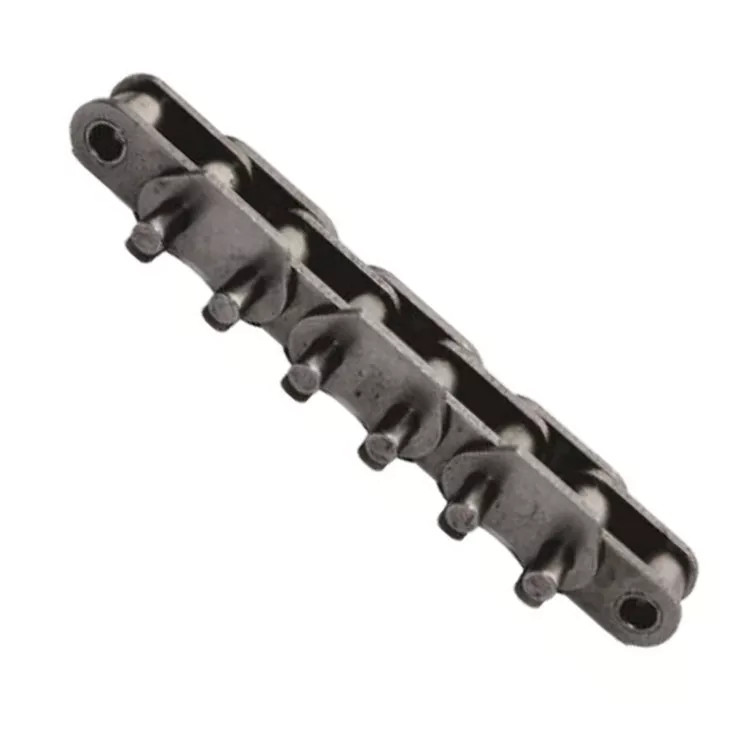
How do you prevent corrosion in conveyor chains?
Preventing corrosion in conveyor chains is essential for maintaining their performance and prolonging their lifespan. Here are some effective measures to prevent corrosion:
1. Material Selection: Choose conveyor chains made from corrosion-resistant materials such as stainless steel, plastic, or coatings specifically designed to resist corrosion. These materials offer better protection against rust and corrosion compared to standard steel chains.
2. Proper Lubrication: Apply a suitable lubricant to the conveyor chain regularly. Lubrication creates a protective barrier that helps prevent moisture and contaminants from reaching the metal surface, reducing the risk of corrosion. Select a lubricant that provides corrosion protection properties and is compatible with the chain material.
3. Environmental Controls: Control the operating environment to minimize exposure to corrosive elements. Implement measures such as humidity control, proper ventilation, and protection from direct contact with water or chemicals. Consider using covers or enclosures to shield the conveyor chain from environmental factors that can accelerate corrosion.
4. Surface Treatments: Apply corrosion-resistant coatings or treatments to the conveyor chain. These coatings can provide an additional protective layer that acts as a barrier against moisture and corrosive substances. Examples of surface treatments include zinc plating, galvanizing, or epoxy coatings.
5. Regular Inspections and Cleaning: Regularly inspect the conveyor chain for signs of corrosion or damage. Remove any accumulated dirt, debris, or corrosive substances promptly. Cleaning the chain helps prevent the buildup of contaminants that can accelerate corrosion.
6. Preventive Maintenance: Implement a preventive maintenance program that includes regular cleaning, lubrication, and inspection of the conveyor chain. This proactive approach helps identify and address any potential corrosion issues early on, preventing further damage.
7. Proper Storage: When not in use, store the conveyor chains in a dry and controlled environment. Protect them from exposure to moisture, humidity, and corrosive substances. Use appropriate storage methods, such as hanging the chains or storing them in sealed containers.
By following these preventive measures, you can significantly reduce the risk of corrosion in conveyor chains, ensuring their optimal performance and longevity.
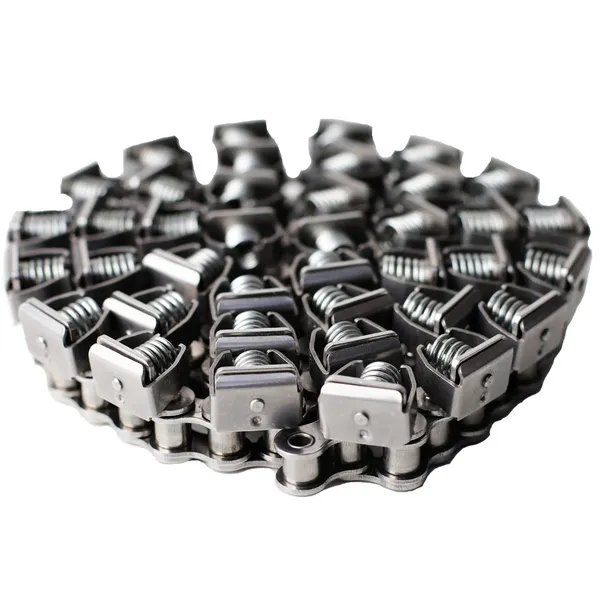
What is a conveyor chain and how does it work?
A conveyor chain is a type of mechanical chain specifically designed for use in conveyor systems. It is composed of a series of interconnected links that form a continuous chain loop. The links are typically made of metal and are joined together through pins or other connecting elements.
Conveyor chains work by transferring power and motion from the driving mechanism, such as a motor or sprocket, to the conveyor system to move materials or products along a predetermined path. The chain is placed on a track or guide rails, and as it moves, it carries the load placed on it.
The operation of a conveyor chain involves the following steps:
- Power transmission:
The driving mechanism transfers rotational power to the conveyor chain, typically through a motor and sprockets. The motor provides the necessary torque to drive the chain.
- Traction and motion:
As the driving mechanism rotates the sprockets, the teeth of the sprockets engage with the links of the conveyor chain. This interaction creates traction, causing the chain to move along the desired path.
- Load carrying:
The load to be transported is placed on the conveyor chain. The load can be in the form of products, materials, or other items. As the chain moves, it carries the load along the conveyor system, allowing for efficient transportation or handling.
- Support and guidance:
The conveyor chain is supported and guided by various components, such as guide rails, rollers, or wear strips. These components ensure the proper alignment and smooth movement of the chain along the conveyor system.
Conveyor chains are commonly used in industries such as manufacturing, logistics, packaging, and material handling. They offer a reliable and efficient method for moving products or materials in a controlled and automated manner.


editor by CX 2023-07-28
China Hot selling DIN Power Transmission Industry Carbon Steel Stainless Steel Heavy Duty a B Series Conveyor Chain for Industrial Applications Roller Chain 08b\10b\12b\16b
Product Description
Product Description
Vision Group is 1 of the largest manufacturers of Driving Chain, Conveyor Chain, Motorcycle Chain, Hoisting Chain, Agriculture Chain, Stainless Steel Chain, Dropped Forged Rivetless Chain, Long Pitch Conveyor Chain and so on.
GB/T, DIN, ANSI, ISO, BS, JIS.
ISO9001: 2000 and ISO1400: 2004.
Product Attribute
| Product name | Transmission Standard Roller Chain |
|
Surface Treatment |
Shot Peening ,Tempering Oiling ,Nickel-plated Grease, zince plated, Heat Treatment ,Stain proofing Carburizing ,Pre-stretched and anti-fatigue ,Quenching |
| Product application | Industry machine,Agriculture, mining, metallurgy, petrochemical industry, lifting and transportation and other industries |
| Product Series |
Series A, Series B, Heavy Duty |
| material |
Stainless steel and carbon steel |
| structure |
Simplex/Duplex/Triplex |
| Port |
Any sea port or airport in China |
| Brand | TV OEM |
| Payment |
L/C, T/T, D/P, Western Union |
| Package |
Chain, Plastic Bag, Color Box, Wooden Case. or OEM |
| A Series | 03C,04C-1,06C-1,085-1,08A-1,10A-1,12A-1,16A-1,20A-1,24A-1,28A-1,32A-1,36A-1,40A-1,48A-1.
15,25,35,41,40,50,60,80,100,120,140,160,180,200,240 |
| 04C-2,06C-2,085-2,08A-2,10A-2,12A-2,16A-2,20A-2,24A-2,28A-2,32A-2,36A-2,40A-2,48A-2.
25-2,35-2,41-2,40-2,50-2,60-2,80-2,100-2,120-2,140-2,160-2,180-2,200-2,240-2. |
|
| 04C-3,06C-3,085-3,08A-3,10A-3,12A-3,16A-3,20A-3,24A-3,28A-3,32A-3,36A-3,40A-3,48A-3.
25-3,35-3,41-3,40-3,50-3,60-3,80-3,100-3,120-3,140-3,160-3,180-3,200-3,240-3. |
|
| B Series | 05B-1,06B-1,08B-1,10B-1,12B-1,16B-1,20B-1,24B-1,28B-1,32B-1,40B-1,48B-1,56B-1,64B-1,72B-1. |
| 05B-2,06B-2,08B-2,10B-2,12B-2,16B-2,20B-2,24B-2,28B-2,32B-2,40B-2,48B-2,56B-2,64B-2,72B-2. |
|
| 05B-3,06B-3,08B-3,10B-3,12B-3,16B-3,20B-3,24B-3,28B-3,32B-3,40B-3,48B-3,56B-3,64B-3,72B-3. |
|
| Heavy Duty | 08AH-1,10AH-1,12AH-1,16AH-1,20AH-1,24AH-1,28AH-1,32AH-1,36AH-1,40AH-1,48AH-1
35H,40H,50H,60H,80H,100H,120H,140H,160H,180H,200H,240H |
| 12AH-2,16AH-2,20AH-2,24AH-2,28AH-2,32AH-2,40AH-2,
35H-2,40H-2,50H-2,60H-2,80H-2,100H-2,120H-2,140H-2,160H-2,180H-2,200H-2,240H-2. |
|
| 12AH-3,16AH-3,20AH-3,24AH-3,28AH-3,32AH-3,40AH-3
35H-3,40H-3,50H-3,60H-3,80H-3,100H-3,120H-3,140H-3,160H-3,180H-3,200H-3,240H-3. |
|
| Double pitch Series |
208A,208B,210A,210B,212A,212B,216A,216AH,216B,220A,220B,224A,224B,228B,232B
2040,2050,2060,2080,2080H,2100,2120 |
| We also carry out OEM according to your requirements | |
Product Parameters
Our Advantages
Company advantages:
Own Import & Export License, The TV trade mark registered successfully in many countries, Sales network spread all over China, Products export to 65 countries in 5 continents.
Membership:
1. The member of China General Machine Components Industry Association.
2. The member of China Chain Transmission Association.
3. The member of China Chain Standardization Association.
4. The member of China Agricultural Association Machinery Manufacturers.
With our excellent trained staffs and workers, advanced and efficient equipments, completely sales network, strict QA systems. You are confidence that our premium qualified chain can meet all customers’ specification and strictest quality standards.
WHY CHOOSE US
Comprehensive Product Portfolio We produce and supply a wide range of power transmission
products including drive chains, leaf chains, conveyor chains, agricultural chains, sprockets, and
couplings. This one-store-for-all shopping experience will significantly reduce your searching costs while
guarantee youfind what you want at 1 click.
Value Choice Products Our products are the best combination of quality and price, and you get what
you want within your budgets
Seasoned Sales Associates and Engineers We have 15 seasoned sales associates and 5 engineers;
on our team at your disposal any time when you need a helping hand. They are well trained with industry
know-now and will always respond to your requests within 24 hours.
100% Customer Retention Rate Our regular customers from overseas come back not just for our
premium quality products, but for the superior services that we’ve provided over the years.
FAQ
Q1: What’s your average lead time?
A: It varies. Our regular end-to-end lead time is 1-2 months.. We also provide express shipments for rush orders. For details,please consult our sales associate.
Q2: Is your price better than your competitors given the same quality?
A: Definitely YES. We provide the most competitive price in the power transmission industry. If price disparity exists, we’ll be more than happy to do a price match.
Q3: Can you make chains according to my CAD drawings?
A: Yes. Besides the regular standard chains, we produce non-standard and custom-design products to meet the specific technical requirements. In reality, a sizable portion of our production capacity is assigned to make non-standard products.
Q4: Can we inspect the goods before shipment?
A: Yes. You or your representative or any third-party inspection party assigned is allowed access to our facility and do the inspection.
Q5: What kind of payment method is acceptable for your mill?
A: We’re flexible. We take T/T, L/C, or any other online payment methods so long as it’s applicable for you.
Q6: What if I have any other questions?
A: Whenever in doubt, you’re always encouraged to consult our sales associate any time – They will help you to your satisfaction.
|
Shipping Cost:
Estimated freight per unit. |
To be negotiated |
|---|
| Usage: | Transmission Chain |
|---|---|
| Material: | Alloy/Carbon Steel |
| Surface Treatment: | Polishing |
| Customization: |
Available
| Customized Request |
|---|
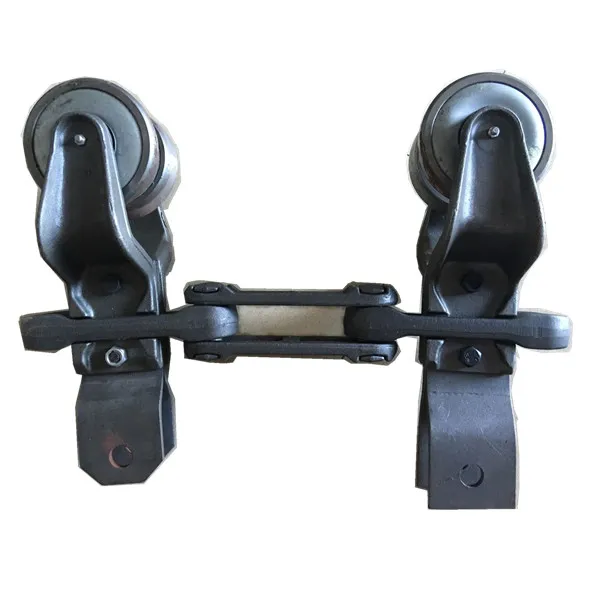
How do you calculate the required horsepower for a conveyor chain drive?
The calculation of required horsepower for a conveyor chain drive involves considering various factors related to the conveyor system and the specific application. Here is a step-by-step process:
1. Determine the Total Resistance:
– Calculate the total resistance that the conveyor chain needs to overcome during operation. This includes the resistance due to the load being conveyed, frictional losses, elevation changes, and any other resistances in the system.
2. Convert the Resistance to Equivalent Inertia:
– Convert the total resistance to an equivalent inertia by multiplying it by the square of the chain speed.
3. Calculate the Total Inertia:
– Determine the total inertia of the system by considering the inertia of all the rotating components, such as the conveyor chain, sprockets, and any other driven elements.
4. Determine the Required Torque:
– Calculate the required torque by multiplying the total inertia by the desired acceleration or deceleration rate.
5. Convert Torque to Horsepower:
– Convert the required torque to horsepower by dividing it by the motor speed (in RPM) and multiplying by a conversion factor.
6. Consider Safety Factors and Efficiency:
– Apply safety factors to the calculated horsepower to account for variations, contingencies, and future growth.
– Consider the efficiency of the drive system, including the motor, gearbox, and other transmission components, to ensure accurate power transmission.
It’s important to note that the above calculation method provides an estimate of the required horsepower. Consulting with conveyor system manufacturers, engineers, or industry-specific guidelines is recommended for precise calculations and to ensure the selected conveyor chain drive meets the application requirements.
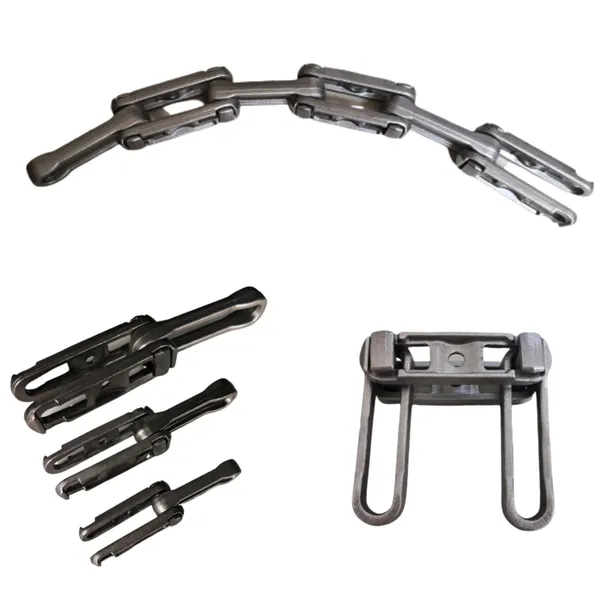
How does lubrication affect the performance of a conveyor chain?
Lubrication plays a crucial role in the performance and longevity of a conveyor chain. Proper lubrication helps to reduce friction, wear, and heat generation, ensuring smooth operation and minimizing the risk of premature failure. Here’s how lubrication affects the performance of a conveyor chain:
1. Friction Reduction: Lubrication forms a thin film between the chain components, reducing friction between metal surfaces. This reduces the energy required for operation, minimizes heat generation, and prevents excessive wear and tear.
2. Wear Prevention: Lubrication forms a protective layer on the chain components, preventing direct metal-to-metal contact. This helps to reduce wear and extend the service life of the chain.
3. Corrosion Protection: Lubricants often contain anti-corrosion additives that protect the chain from rust and oxidation. This is particularly important in environments with high humidity or exposure to corrosive substances.
4. Noise Reduction: Proper lubrication reduces the noise generated during chain operation by minimizing friction and metal-to-metal contact. This can contribute to a quieter and more comfortable working environment.
5. Temperature Control: Lubrication helps to dissipate heat generated during chain operation, preventing excessive temperature rise. This is crucial in high-speed or heavy-duty applications where heat can lead to accelerated wear and reduced chain performance.
6. Maintenance and Service Life: Regular lubrication and proper lubricant selection are essential for maintaining the chain’s performance and extending its service life. Adequate lubrication reduces the need for frequent maintenance, minimizes downtime, and lowers overall operating costs.
It’s important to follow the manufacturer’s recommendations for lubrication frequency and use the appropriate lubricant for the conveyor chain. Regular inspections and maintenance checks should also be conducted to ensure proper lubrication levels and address any issues promptly. Proper lubrication practices will enhance the performance, reliability, and durability of the conveyor chain system.
What are the cost considerations when purchasing a conveyor chain?
When purchasing a conveyor chain, there are several cost considerations that need to be taken into account to ensure an optimal investment and operational efficiency.
1. Initial Cost: The initial cost of the conveyor chain includes the cost of the chain itself, as well as any additional components such as sprockets, attachments, and connecting links. It is important to compare prices from different suppliers and evaluate the overall value for the money.
2. Maintenance and Repair Costs: Consider the long-term maintenance and repair costs associated with the conveyor chain. Some chains may require more frequent lubrication or replacement of components, which can add to the overall operating expenses.
3. Service Life: The service life of the conveyor chain is an essential factor in determining its cost-effectiveness. Chains with longer service life may have a higher initial cost but can result in lower replacement and downtime costs in the long run.
4. Energy Efficiency: Energy consumption is an ongoing cost to consider. Conveyor chains that offer lower friction and efficient power transmission can contribute to energy savings and reduce operating expenses.
5. Maintenance Ease: Consider the ease of maintenance when selecting a conveyor chain. Chains that are easier to clean, inspect, and maintain can reduce labor costs and increase operational efficiency.
6. Compatibility and Integration: Ensure that the selected conveyor chain is compatible with the existing conveyor system or equipment. Retrofitting or modifying the system to accommodate a specific chain may incur additional costs.
7. Supplier Support and Warranty: Evaluate the level of technical support provided by the supplier and the warranty coverage offered for the conveyor chain. This can impact the overall cost of ownership and provide peace of mind in case of any unforeseen issues.
It is important to consider these factors holistically and make a cost-benefit analysis based on the specific requirements of the application. Choosing a conveyor chain that aligns with the budget, performance needs, and long-term cost considerations will help optimize the investment and ensure efficient material handling operations.
editor by CX 2023-07-24
China Best Sales ISO Standard Short Pitch Precision Simplex Hardware Motorcycle Industrial Roller Chain manufacturer
Product Description
ISO Standard Short Pitch Precision Simplex Hardware Motorcycle Industrial Roller Chain
Product Description
1. Material: Alloy Steel
2. Surface Treatment: Shot peening
3. Application: The product is mainly applied in small lifting.
4. Chain No: 40-1, 50-1, 60-1, 80B-1, 10B-1, 12B-1, etc.
| Product name | ISO Standard Short Pitch Precision Simplex Hardware Motorcycle Industrial Roller Chain |
| Materials Available | 1. Stainless Steel: SS304, SS316, etc |
| 2. Alloy Steel: 45Mn, 42CrMo, 20CrMo, etc | |
| 3. OEM according to your request | |
| Surface Treatment | Shot peening, Blackening, Oxygenation, Polishing, Zinc-plated, Nickel-plated, Anodized, etc. |
| Characteristic | Fire Resistant, Oil Resistant, Heat Resistant |
| Design criterion | ISO DIN ANSI & Customer’s Drawing |
| Size | Customer’s Drawing & ISO standard |
| Package | Wooden Case / Container and pallet, or made-to-order |
| Certificate | ISO9001: 2008 |
| Advantage | Firtsr quality, Best service, Competitive price, Fast delivery |
| Delivery Time | 20 days for samples. 45 days for official order. |
Detailed Photos
View more products,please click here…
Company Profile
| Usage: | Transmission Chain |
|---|---|
| Material: | Alloy |
| Surface Treatment: | Oil Blooming |
| Feature: | Oil Resistant |
| Chain Size: | 40-1, 08b-1 |
| Structure: | Roller Chain |
| Samples: |
US$ 0/Meter
1 Meter(Min.Order) | |
|---|
| Customization: |
Available
| Customized Request |
|---|
How to choose a drive chain
The process of manufacturing a drive chain starts with bushing. Both inner and outer diameters are strictly measured to ensure tight tolerances. The roundness of the bushing is critical as irregular surfaces in the contact area can cause accelerated wear and shorten chain life. That’s why the CZPT manufacturing process is carefully designed to optimize the wear performance of the chain. There are several types of bushings including roller, forged rivetless, flat top, and timing.
roller chain
The tensile strength of a roller chain is the number of pounds it can withstand before breaking. Fatigue strength is equally important, although the two do not necessarily go hand in hand. Fatigue strength depends on several factors, including the quality of steel used in manufacturing, the quality of the pitch holes, the type of shot peening used, and the thickness and design of the link plates. Here are some things to consider when choosing a roller chain for a drive chain.
When sizing a chain, first determine how much power will be delivered. Then, determine how many teeth you need for the drive sprocket. The gear ratio is approximately 2:1. The number of sprocket teeth depends on the size of the motor. A chain with a higher tooth count requires fewer teeth than a smaller chain. The size of the drive sprocket also depends on the horsepower of the motor.
Before installing rollers or conveyor chains, make sure the drive system is properly aligned. If the drive chain is misaligned, the load on other components will be uneven. This can cause excessive wear on the sprocket or roller chain. Also, check that the sprocket is as close to the bearing as possible. Connecting links can be secured using openings or spring clips.
Different manufacturing processes can affect the performance of the roller chain. Some manufacturers have chains pre-installed at the factory to minimize initial stretch. Others build chains by preloading sprockets and ensuring consistent precision heat treatment. The final product may have greater elongation or less wear than previous products. It is best to follow the manufacturer’s recommendations to extend the life of the roller chain. If you are interested in purchasing a new drive chain, please contact a trusted supplier in your area.
Drop forged rivetless chain
Forged rivetless drive chains are ideal for applications where flexibility and strength are critical. The chain consists of forged steel components for high strength and lightweight. These chain assemblies are easy to assemble without the use of tools and are commonly used on carts, assembly lines, and drag conveyors. They are also compatible with related chain, drive, and accessory products. They have a short turning radius and therefore high flexibility and strength.
The X-348 Forged Rivetless Chain is an example of such a drive chain. This chain is perfect for automated machines that run late at night. It is available in a variety of weight limits and sizes. The chain is pre-stressed after assembly, and a two-year parts replacement warranty is standard. Its durability is also enhanced by the inclusion of push dogs that engage the front floating dogs on the leading free cart.
In addition to this type of chain, CZPT also offers a full line of Caterpillar Drive chains. They are designed to provide fatigue-free operation. The drive jaws are one-piece forged induction hardened steel compatible with forged rivetless chains. There are many special custom chains to choose from. These forged chains can be installed on Caterpillars as well as other types of tractors for maximum durability and efficiency.
Distributors of forged chain products offer a variety of sizes, pitches, and materials for material handling and conveying systems. Typically, this type of chain is used in conveyor and lifting applications and ranges from 3 inches to 9 inches. Depending on size and thickness, it is ideal for a variety of industries including automotive, food, paper, and steel mills. In addition, the chain is corrosion-resistant and corrosion-free.
flat top chain
The flat-top drive chain is used for conveying large and medium workpiece pallets. These chains are available in a variety of materials and designs, including plastic, steel, and stainless steel. The steel flat top chain provides high wear resistance and excellent noise reduction. Steel flat-top chains are suitable for applications requiring high loads and excellent workmanship. HD profiles are compatible with steel flat-top chains and are highly recommended for extreme applications.
CZPT produces two types of flat-top chains. Tabletop chains are similar to wing door hinges, while MatTop chains are assembled using full-width pins. Both types are available in standard widths of 3.25 to 12 inches and are shipped in 10-foot sections. Both types can be shaped according to the width of the chain.
Double hinge pin flat-top chains are available with a variety of hinge pins. There are TAB and standard hinge pins for different machines and drive methods. A flat-top chain with dual-hinge pins will provide higher load carrying capacity, but be aware of the hinge pin size and style required for your application. The hinge pins should be long enough to ensure a smooth and smooth delivery. Double hinge pin flat top drive chains are available in a variety of sizes and designs.
Using standardized components and modules, the flat-top chain conveyor system is highly adaptable and can be seamlessly integrated into any production process. It can also be extended to handle a wider range of containers. Using a single drive, the CZPT system can be extended to a length of 40 meters. Its versatility makes it the choice of many industries. There is also a wide variety of flat-top drive chains to choose from.
time chain
The drive chain is a critical component of any internal combustion engine. They transmit the rotation of the crankshaft to the camshaft via the timing chain. These chains have been standard in cars since the turn of the 20th century, and while toothed belts have become a more cost-effective alternative, manufacturers such as Mercedes-Benz and BMW remain loyal to traditional chain drives.
Timing chains come in many shapes and sizes, with different designs depending on the type of load they must carry. Roller chains are the most common and offer an excellent balance of strength and NVH performance. Its design is similar to a bicycle chain, and the inner link consists of two blades pressed into the holes of the sprocket. Roller chains can also pass through smaller diameter sprockets, and roller chains take up less space than chain links.
The length of the chain allows it to stretch over time. In addition, improper oil maintenance can lead to premature timing chain damage. Without an oil change, the chain is not lubricated, causing the rollers and links to rub against each other. This can cause excessive chain wear and eventually chain breakage. To avoid premature timing chain failure, it is advisable to have your vehicle inspected by a mechanic.
For automotive timing chains, the CZPT website offers the best prices for the timing chain you need. You can find the right timing chain for your car by registering on this website. You can also contact a mechanic to get the parts you need. If you don’t know how to diagnose your timing mechanism, you can always check the owner’s manual or the manufacturer’s website. It is critical to follow the manufacturer’s recommendations to avoid catastrophic failure.
Oil-impregnated bushing
Oil-impregnated bushings for drive chains are an excellent solution to drive chain lubrication problems. Usually, drive chains require additional lubrication, but by adding special oil-impregnated bushings, the chain can run without lubrication. Oil-immersed bushings, such as those of the CZPT brand for CZPT, are specially manufactured for this purpose. They capture oil during operation and release it onto the bearing surfaces, returning it to the bushing by capillary action.
Since their introduction to the automotive industry, engineered composite plastic bushings have been shown to provide longer service life and save up to 40% in maintenance costs. They have replaced bronze in thousands of applications, including pumps, medical equipment, and food processing machinery. Because oil-impregnated bronze bearings rely on capillary action, they must rotate to maintain a complete lubricating film. However, several factors prevent this film from fully forming, including low speeds and intermittent use.
During the manufacturing process, oil-impregnated bushings are manufactured to meet the wear resistance requirements of the drive chain. The sintered density of the oil-impregnated sintered bushing determines its mechanical strength. The larger sintered density increases the wear resistance of the oil-impregnated bushing but reduces the mechanical strength.
Whether or not a drive chain is lubricated will determine its overall life. Proper lubrication can extend chain life by 100% compared to a chain without proper lubrication. Proper lubrication means using high-quality oils without additives and oils that flow freely at prevailing temperatures. Indirect heating is required by immersing the drive chain in the molten pool as certain additives prevent oil from entering the chain joint.
editor by CX 2023-05-30
China Professional Carbon Steel/Stainless Steel Industrial Conveyor Roller Chain (08B 10B 12B 16B 40 50 60 80) roller chain end attachments
Product Description
| Item | Standard Transmission Roller Chains | Model | Series A, Series B, Heavy Duty |
| Row | Simplex/Duplex/Triplex | Application | Machinery Parts |
| Surface Teatment | Self-color/Sand-blasted/Shot-peening | Brand | OEM |
| Package | Poly bag, then box, finally poly-wooden case | Port | Any sea port or airport in China |
| A Series | 03C,04C-1,06C-1,085-1,08A-1,10A-1,12A-1,16A-1,20A-1,24A-1,28A-1,32A-1,36A-1,40A-1,48A-1. 15,25-1,35-1,41-1,40-1,50-1,60-1,80-1,100-1,120-1,140-1,160-1,180-1,200-1,240-1. | ||
| 04C-2,06C-2,085-2,08A-2,10A-2,12A-2,16A-2,20A-2,24A-2,28A-2,32A-2,36A-2,40A-2,48A-2. 15,25-2,35-2,41-2,40-2,50-2,60-2,80-2,100-2,120-2,140-2,160-2,180-2,200-2,240-2. | |||
| 04C-3,06C-3,085-3,08A-3,10A-3,12A-3,16A-3,20A-3,24A-3,28A-3,32A-3,36A-3,40A-3,48A-3. 15,25-3,35-3,41-3,40-3,50-3,60-3,80-3,100-3,120-3,140-3,160-3,180-3,200-3,240-3. | |||
| B Series | 05B-1,06B-1,08B-1,10B-1,12B-1,16B-1,20B-1,24B-1,28B-1,32B-1,40B-1,48B-1,56B-1,64B-1,72B-1. | ||
| 05B-2,06B-2,08B-2,10B-2,12B-2,16B-2,20B-2,24B-2,28B-2,32B-2,40B-2,48B-2,56B-2,64B-2,72B-2. | |||
| 05B-3,06B-3,08B-3,10B-3,12B-3,16B-3,20B-3,24B-3,28B-3,32B-3,40B-3,48B-3,56B-3,64B-3,72B-3. | |||
| Heavy Duty Type | 35H-1,40H-1,50H-1,60H-1,80H-1,100H-1,120H-1,140H-1,160H-1,180H-1,200H-1,240H-1. | ||
| 35H-2,40H-2,50H-2,60H-2,80H-2,100H-2,120H-2,140H-2,160H-2,180H-2,200H-2,240H-2. | |||
| 35H-3,40H-3,50H-3,60H-3,80H-3,100H-3,120H-3,140H-3,160H-3,180H-3,200H-3,240H-3. | |||
| Standard or Nonstandard: | Standard/Nonstandard |
|---|---|
| Application: | Textile Machinery, Garment Machinery, Conveyer Equipment, Packaging Machinery, Motorcycle, Food Machinery, Marine, Mining Equipment, Agricultural Machinery, Car |
| Surface Treatment: | Polishing |
| Structure: | Roller Chain |
| Material: | Carbon Steel/Stainless Steel |
| Type: | Short Pitch Chain |
| Samples: |
US$ 5/Several links of standard chain
1 Several links of standard chain(Min.Order) | |
|---|
| Customization: |
Available
| Customized Request |
|---|
drive chain type
Drive chains are used in a variety of industrial applications. Unlike roller chains, which are more efficient in terms of weight and size, drive chains slide on steel guides. Drive chains are often used for dirty work. Here’s what you need to know about the various types of drive chains. In this article, we’ll look at pin chains, engineered steel chains, bushing roller chains, and timing chains. These types are the most common and the most commonly used.
time chain
There are several factors to consider when deciding which drive chain to buy. What matters is how long the chain will last, as the timing chain will stretch over time. However, they are pre-stretched during manufacture to reduce the risk of stretching. Timing chains can also be noisy compared to toothed belt drives, but rails and chain tensioners can alleviate this problem. Timing chains also wear slower than belts, reducing repair costs.
Timing chains require little maintenance compared to belt drives. When well lubricated, timing chains require little maintenance. The only maintenance really required is checking the engine oil level and following the manufacturer’s recommended service intervals. Timing chains of drive chains are also safer than belt drives and can be dangerous if the toothed belt tears. Also, the timing chain only needs minor repairs and replacements. Garages can purchase complete timing chain kits that contain all the parts needed for repairs.
Drive chains can be equipped with roller chains or timing chains, depending on the load on the engine. The style of the timing chain depends on the type of motor used. However, the roller chain is the most common choice due to its high strength and NVH properties. The roller chain has two tabs pressed into the eyes, and two rollers above them. These components work together to improve engine performance.
Many modern vehicles use timing chains. Timing gears synchronize the camshaft and crankshaft so that the valves open and close at the appropriate times. This is critical to the running quality, power output, and fuel consumption of the engine. The timing chain also reduces the amount of pollution emitted by the vehicle. Over the past two decades, many OEMs have turned to time chains for OHC/DOHC engines.
pin chain
Steel pivot chains feature open barrels to reduce blocking and material buildup. These chains are designed for power transmission and transportation applications, often used in agricultural applications. They can be custom welded using specialized accessories. These chains can be used in agricultural, industrial and municipal applications. Here’s a closer look at each. Read on to learn about the benefits of steel pivot chains.
The Long Pitch Class 700 Pivot Chain is a versatile chain for conveying and lifting products. Its T-head pins fit snugly so dust doesn’t get into the pin holes. It is also constructed with a closed bearing structure to prevent elongation due to wear. Steel pivot chains are designed for high fatigue applications and are versatile.
Engineering Steel Chain
Engineered steel drive chain provides maximum power transfer while minimizing weight. Engineering chains are often used for tough oil drilling operations. Designed for durability and tight tolerances, these chains can be used in a variety of industrial equipment. Whether you need to lift heavy objects or store a lot of items, engineered steel chains will do the job. Read on to learn more about the benefits of engineering chains.
Engineered steel chains consist of links or pin joints with large gaps between the components. The material of these chains is designed to handle abrasives. While many of these chains are used as conveyors, some are designed for drives. You can find these chains on conveyors, forklifts, bucket elevators, oil rigs and more. To get the most out of them, they should be able to withstand the power produced by the prime mover.
The chain can withstand high tensile stresses and is ductile enough to withstand fatigue. The center-to-center distance between the chain and sprockets is between 30% and 50% of the pitch. On smaller sprockets, the arc of contact between the teeth and chain must be at least 120 degrees. The resistance of the chain drive depends on the use environment, including vibration, noise, fatigue strength and other factors.
There are many types of engineering steel drive chains, each with a different function. The most commonly used type is the elevator. Its lift mechanism raises and lowers the carriage. Most cranes are attached to the load with hooks. Another type of chain is the oval link. Its links are welded and the sprocket has receivers for each link. It is used in low speed applications for elevators, chain hoists and anchors in offshore operations.
Bushing Roller Chain
Typically, a bushing roller chain as a drive chain consists of two link assemblies. The inner link consists of two plates held together by two sleeves, while the outer link consists of two plates connected by pins that pass through the inner link. However, there are some differences between bushing roller chains. The main difference is the type of link and the amount of lubrication required. If you want to learn more about bushing roller chains, keep reading.
While roller chains are generally stronger and more durable than bushing chains, they are not immune to wear. During the driving cycle, they lengthen and undergo a process called articulation. The rate at which they elongate depends on the lubrication and load applied to them. The frequency of pin and bushing articulation is also critical. Like other wear parts, the manufacture of critical wear parts requires close attention to detail to ensure optimum performance. Correct raw material selection, part fabrication, and assembly are key factors in achieving optimum performance. Improperly prepared parts can affect wear life and performance.
Consider your application and load distribution when selecting a bushing roller chain as your drive chain. The length of the chain must be between 30 and 50 times its pitch. The arc of contact between the small sprocket teeth must be at least 120 degrees. The resistance of the drive chain depends on the usage environment, which will determine its fatigue strength and vibration level. It’s a good idea to check the chain length before deciding to replace it.
flat top chain
The TSplus flat top drive chain is the most flexible conveying medium on the market today. They can be connected end-to-end to create extended conveyor lines. The side bend design allows it to be used with a variety of conveyor types including inline, snake, and carousel conveyors. These chains are available in a variety of sizes, ranging in width from 3 feet to 20 feet.
A variety of materials are available for flat-top chains, including steel and plastic. Steel chains are ideal for applications requiring wear resistance. They are sturdy and well made. Plastic chains are particularly durable, but not suitable for harsh environments. Stainless steel flat top chains are suitable for a variety of applications, and some manufacturers make them from stainless steel or even aluminum. If your application requires a durable flat top chain, choose a chain made from iwis hardened stainless steel.
Another type of flat-top drive chain is the side bend chain. Suitable for flexible machinery requiring efficient conveying. It is equipped with a single hinge pin or double hinge pin. Either option will do, but each hinge pin has its advantages. Single hinge pin chains are suitable for smaller light-duty conveyors, while double hinge pins are more suitable for medium and heavy-duty applications.
CZPT is a modular flat top chain conveyor system. Its standardized components and modules can be easily integrated into any production process. And because it’s a single track, you can lengthen or shorten it as needed. Its versatile design makes it compatible with other conveyor systems such as belts and sprockets. This monorail modular design allows system lengths up to 40 meters and is compatible with other conveyor systems.
editor by CX 2023-05-29
China Good quality Industrial Drive Roller Conveyor Leaf Chain Hoisting Hollow Pin Heavy Duty Stainless Steel Short Double Pitch (AL BL LL) a2040 roller chain
Product Description
Product Description
Product name: Roller Chain, chain, special chain
Material: 40Mn with heat-treated and with standard thickness for plates
We can supply all kinds indutrial roller chains for transmission, such as the DIN8187 or ANSI standard roller chains, and specialized in this line for more than 10years, with good quality and high reputation in our customers.
Product Attribute
|
Usage |
Leaf Chain ,Flyer chain |
|
Material |
Alloy/Carbon Steel |
| Application industry | Metallurgy, coal, electricity, food, chemical industry, tobacco, beverage, etc |
|
Surface Treatment |
Self-color Sand-blasted Shot-peening |
| Product Series |
AL,BL ,LL,FL,LH |
| Port |
Any sea port or airport in China |
| Brand | TV OEM |
| Payment |
L/C, T/T, D/P, Western Union |
| Package |
Chain, Plastic Bag, Color Box, Wooden Case. or OEM |
| AL Series |
AL322,AL344,AL422,AL444,AL466,AL522,AL534,AL544,AL566,AL622,AL644,AL666,AL688 AL822,AL844,AL866,AL888,AL1571,AL1044,AL1066,AL1088,AL1222,AL1244,AL1266,AL1288 AL1444,AL1466,AL1644,AL1666,AL1688 |
| BL Series | BL422,BL423,BL434,BL444,BL446,BL488,BL522,BL523,BL534,BL544,BL546,BL566,BL588
BL622,BL623,BL634,BL644,BL646,BL688,BL822,BL823,BL834,BL844,BL846,BL866,BL888 BL1571,BL1571,BL1034,BL1044,BL1046,BL1088,BL1222,BL1223,BL1234,BL1244,BL1246 BL1266,BL1288,BL1422,BL1423,BL1434,BL1444,BL1446,BL1488,BL1622,BL1623,BL1634 BL1644,BL1646,BL1666,BL1888,BL2571,BL2571,BL2034,BL2044,BL2046,BL2088 |
| LL Series | LL0622,LL0644,LL0666,LL0822,LL0844,LL0866,LL 0571 ,LL1571,LL1044,LL1066,LL1088,LL1222
LL1244,LL1266,LL1288,LL1622,LL1644,LL1666,LL1688,LL2571,LL2044,LL2066,LL2088,LL2422 LL2444,LL2466,LL2488,LL2822,LL2844,LL2866,LL2888,LL3222,LL3244,LL3266,LL3288,LL4571 LL4044,LL4066,LL4088,LL4822,LL4844,LL4866,LL4888 |
| LH Series | LH0822,LH0823,LH571,LH0844,LH0846,LH0866,LH 0571 ,LH1571,LH1571,LH1034,LH1044
LH1046,LH1066,LH1088,LH1222,LH1223,LH1234,LH1244,LH1246,LH1266,LH1288,LH1622 LH1623,LH1634,LH1644,LH1646,LH1666,LH1688,LH2571,LH2571,LH2034,LH2044,LH2046 LH2066,LH2088,LH2422,LH2423,LH2434,LH2444,LH2446,LH2466,LH2488,LH2822,LH2823 LH2834,LH2844,LH2846,LH2866,LH2888,LH3222,LH3223,LH3234,LH3244,LH3246,LH3266 LH3288,LH4571,LH4571,LH4034,LH4044,LH4046,LH4066,LH4088 |
| FL Series | FL644,FL666,FL688,FL523,FL844,FL922,FL944,FL945,FL956,FL966,FL988 |
| We also carry out OEM according to your requirements |
|
Detailed Photos
Product Parameters
Our Advantages
Company Advantages:
Own Import & Export License, The TV trade mark registered successfully in many countries, Sales network spread all over China, Products export to 65 countries in 5 continents.
Membership:
1. The member of China General Machine Components Industry Association.
2. The member of China Chain Transmission Association.
3. The member of China Chain Standardization Association.
4. The member of China Agricultural Association Machinery Manufacturers.
With our excellent trained staffs and workers, advanced and efficient equipments, completely sales network, strict QA systems. You are confidence that our premium qualified chain can meet all customers’ specification and strictest quality standards.
Please do not hesitate to contact us for more information on how TransVision products can meet your industries demands at highly competitive pricing.
Quality First, Clients Uppermost.
Product Categories
| WHY CHOOSE US |
Comprehensive Product Portfolio We produce and supply a wide range of power transmission
products including drive chains, leaf chains, conveyor chains, agricultural chains, sprockets, and
couplings. This one-store-for-all shopping experience will significantly reduce your searching costs while
guarantee youfind what you want at 1 click.
Value Choice Products Our products are the best combination of quality and price, and you get what
you want within your budgets
Seasoned Sales Associates and Engineers We have 15 seasoned sales associates and 5 engineers;
on our team at your disposal any time when you need a helping hand. They are well trained with industry
know-now and will always respond to your requests within 24 hours.
100% Customer Retention Rate Our regular customers from overseas come back not just for our
premium quality products, but for the superior services that we’ve provided over the years.
| FAQ |
| Q1: What’s your average lead time? A: It varies. Our regular end-to-end lead time is 1-2 months.. We also provide express shipments for rush orders. For details,please consult our sales associate. Q2: Is your price better than your competitors given the same quality? Q4: Can we inspect the goods before shipment? Q5: What kind of payment method is acceptable for your mill? Q6: What if I have any other questions? |
|
Shipping Cost:
Estimated freight per unit. |
To be negotiated |
|---|
| Usage: | Transmission Chain |
|---|---|
| Material: | Alloy/Carbon Steel |
| Surface Treatment: | Natural |
| Customization: |
Available
| Customized Request |
|---|
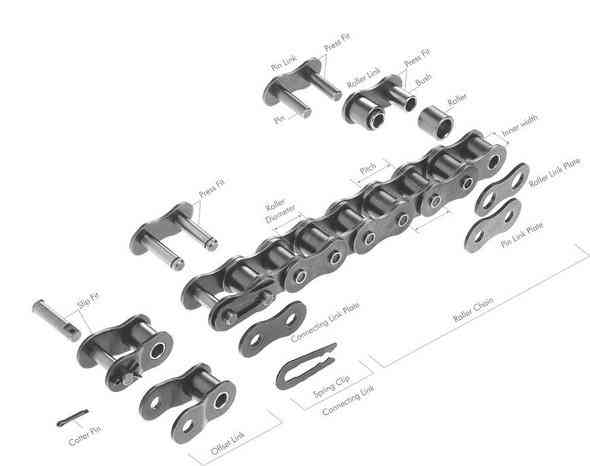
What is a drive chain?
A drive chain is a wheeled device that transmits power from one gear to another. The drive chain is usually an oval ring around a corner or worm gear. On the other hand, idler pulleys do not transmit power and are not used to move the chain. In some cases, drive chains can be used with idler pulleys to transport objects. This allows the drive chain to recover some power from the second gear.
conveyor chain
There are many types of conveyor chains to choose from. One type is a closed joint chain. It consists of the barrel and connecting rod, made from a single casting and heat-treated for high strength and durability. Conveyor chains typically have low running speeds and are typically made of malleable iron. Another type of chain is the power transmission chain, which is used to transmit mechanical power. They feature efficient lubrication and are stronger than conventional conveyor chains.
Roller chain pitches can range from half an inch to a third of an inch. They are available in steel and nickel-plated steel. They can be used with inline or staggered rollers and can be designed with different pitch levels. They can also have bushings between the chainplates or gaps between the teeth to increase their maximum spacing. When choosing a conveyor chain, remember to properly lubricate bearing surfaces to minimize power absorption, wear, and corrosion. Mineral oils of medium viscosity are suitable for normal operating temperatures. SAE 20W50 is suitable. Manufacturers also offer self-lubricating chains.
Conveyor chains are used in many industries. The automotive industry has traditionally used these chains for bulk transport. Their reliability and low cost make them an excellent choice for a variety of applications. CZPT Chains offers stainless steel and CZPT conveyor chains to meet your unique requirements. If you’re in the market for a new conveyor, don’t forget to shop around. CZPT Chain can help you find the perfect one.
The regular drive version consists of an ASME/ANSI roller chain wrapped around a driven sprocket. It can also be configured for variable rpm. The gear ratio between the two parts determines the reduction or increase in speed. In some cases, solution chains can be used. Roller chains are more efficient. Then, there are solutions for both cases. There are many types of conveyor chains to choose from.
Conveyor chain pitch also plays an important role in performance. The smaller the pitch of the chain, the faster it spins. On the other hand, a smaller pitch will require more teeth on the sprocket, which means more links will be engaged during the movement. This smaller articulation angle also produces smoother motion. It also reduces vibration. Therefore, CZPT Chains can be trusted for a long time.
roller chain
The performance of a drive chain depends on how well it is maintained and lubricated. Careful attention to detail is required when selecting a roller chain, which is one of the most important components in a drive chain. Its proper lubrication and assembly will significantly affect its wear life. Here are some important tips to follow when buying a roller chain:
The size of the drive chain should be selected according to the sprockets used. The large sprocket should have at least 25 teeth, and the small sprocket should have fewer teeth. The pitch of a drive chain is the contact angle between the chain and the sprocket. The smaller the sprocket, the smaller the contact angle of the two parts. Larger sprockets are better, but smaller sprockets must never have fewer teeth.
When purchasing a roller chain, be sure to consider the maximum speed of the small sprocket. This will determine how much lubrication you need. Different lubrication systems have different requirements. Manual lubrication limits how many feet per minute the drive chain can run, while oil bath lubrication can get you up to 1100 ft/min. The only way to maximize drive chain speed is to purchase a pump lubrication system.
Once you have the right length, you can determine if you need a new one. To do this you have to move the axis to measure the length. Once the length is determined, the drive chain should be removed from the sprocket and measured using the ANSI specified measuring load. You should also follow safety guidelines when measuring your chain. If you want to maximize the life of your drive chain, be sure to follow these tips.
Another important consideration is the type of environment you operate in. For applications that need to avoid rubbing steel rails, it is best to use a roller chain that can withstand a clean indoor environment. Although roller chains are generally more durable, they must be stored properly to avoid corrosion. If you care about the environment, consider opting for double chain. Its durability and low maintenance costs will make it a valuable investment in your business.
closed pivot
Closed-end pivot drive chains are used in a variety of applications. They are known for their durability, high strength, and long life. They are available in a variety of grades, including grade 400, grade 600, and grade 800 pivots, which can withstand the high forces required for certain applications. Enclosed pivot chains can be used to lift, pull, convey and transfer heavy loads.
Class 400 closed-end pivot chain features one-piece cast offset link construction. Steel pins connect each link and are prevented from rotating by head stops. This design allows the pin to connect inside the barrel without breaking. This type of chain is the most commonly used and has the highest durability. In addition to being extremely durable, it offers long-lasting performance and smooth operation.
Another closed-end pivot conveyor chain drive is called a power drive chain. These chains consist of barrels and links used to transmit rotation from one shaft to another. The barrels of the closed-end pivot chains are made of steel, which allows them to run easily on the sprockets. Block drive chains are used for low-speed applications, but they can be noisy when the chain is in contact with the sprockets.
The enclosed pivot drive chain has rollers on both ends to minimize wear. These chains are usually made of steel and can be used in areas where high-speed power transmission is required. They are also available in heavy-duty versions. Unlike other types of chains, steel pivot chains are designed for a variety of applications. They are suitable for heavy-duty applications and their open barrel design allows for minimal contact with the pins in the barrel and the root of the sprocket.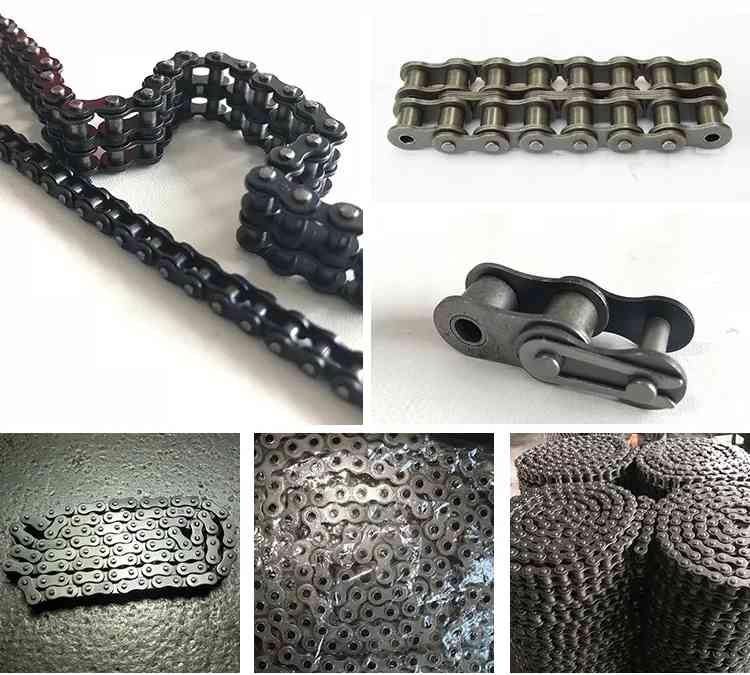
Linear chain
CZPT is an important part of linear drive technology. This type of chain is capable of delivering real power in tight spaces. Typically, loads are moved by pulling or pushing. CZPT can perform both types of movements. They can push and pull additional loads. This type of chain can also be wound and stored in the magazine. It is a popular choice for small machine tools and many other uses.
Unlike traditional mechanical chains, CZPT uses a push-pull strategy to move heavy objects. It is a rigid locking design that prevents kinking and allows the chain to transmit force without bending. The CZPT is an excellent choice for moving large loads and is particularly versatile in power transmission. However, CZPT is more expensive than traditional drive chain options.
The service life of a linear chain depends on its design, material type and size. You may want to buy a good quality chain, but it’s not necessary in all cases. While superior quality can extend the life of the chain, it may not be necessary for low-speed drives or very light shock loads. If you’re not dealing with high-velocity shock loads, you probably don’t need features like oil reservoirs or bushing grooves.
The size of the drive sprocket can have a major impact on the overall life of the linear chain. It determines how fast the chain can go and how much horsepower it can produce. An 11-tooth chain will hit about half its rated speed, but only about 30 percent of its rated horsepower. You can extend the life of your linear chain by choosing a drive sprocket with a higher number of teeth. It is best to choose a drive sprocket with a high number of teeth, but make sure the number of teeth is even. This will ensure that your chain wear is evenly distributed.
editor by CX 2023-04-19
China Heavy Duty Industrial Drive Roller Chain for Transmission Line bush chain exercise
Solution Description
About Factory
With far more than eighteen years’ histiory, we are a professinal maker for drop cast products such as cast chain (X348 X458 X658 X678 X698 F100 F160), scraper chain (10160, 14218, 14226, 142N), conveyor trolley (X348, X458, X678, XT160), and generate chain (X348, X458, X678), and so forth common moulds of chain.
Apart from, we can also generate as per your drawing or sample, unique link chain, pusher, pin and plate, according to customers’ distinctive specifications.
Merchandise Description
one) Content: Alloy metal, 40Cr, 42CrMo and so on.
two) Types: Normal types, X348 X458 X678, and so on. (Or as for every your drawing)
three) Process: Moulding→Forging→Polishing & Blasting→Fine machining→Heat treatment→Blasting→Inspecting & testing→Packing
Merchandise Present
Technical Data
| Model | Dimension | Excess weight (Kg) | Material | Hardness | Functioning Load (KN) | Limit Load (KN) | ||||||
| P | T | C | S | F | R | D | ||||||
| 10160B | a hundred and one.six | 24 | 36 | 13 | fourteen | six | fourteen | .32 | 20CrMnTi | Surface area HRC56-64° Depth .6-1.2mm |
18 | 100 |
| 10160 | 101.six | thirty | 36 | thirteen | fourteen.five | 9 | fourteen | .36 | 20CrMnTi | Surface HRC56-64° Depth .6-1.2mm | 21.six | a hundred and twenty |
| 14218 | 142 | 42 | fifty | 19 | twenty.5 | 11 | 25 | one.fifteen | 20CrMnTi | Area HRC56-64° Depth .6-1.2mm | forty eight.6 | 270 |
| 14226 | 142 | 62 | 50 | 28 | thirty | 15 | 25 | 1.75 | 20CrMnTi | Surface area HRC56-64° Depth .6-1.2mm | sixty one.2 | 340 |
| 2571 | 200 | 66 | 60 | thirty | 32 | 18 | thirty | two.8 | 20CrMnTi | Area HRC56-64° Depth .6-1.2mm | seventy two | 400 |
| 26014 | 260 | 70 | 75 | 31 | 33 | 20 | 34 | 5.two | 20CrMnTi | Surface HRC56-64° Depth .6-1.2mm | 135 | 750 |
| 142N | 142 | forty three | fifty | 19 | 22 | 12.five | 25 | 1.two | 40Cr | Quench HRC36-44° | 75.six | 420 |
| 150D | 142 | 42 | fifty | 19 | twenty.five | 11 | twenty five | 1.15 | 40Cr | Quench HRC36-44° | seventy five.6 | 420 |
| MG20 | 200 | 70 | fifty | 27 | 29 | 17 | 35 | 3.seventy eight | 40Cr | Quench HRC36-44° | one hundred forty four | 800 |
| MG20B | 200 | 70 | 50 | 27 | 29 | 17 | thirty | 3.82 | 40Cr | Quench HRC36-44° | one hundred forty.four | 780 |
| MG20C | 200 | 70 | fifty | 27 | 29 | 17 | 28 | three.85 | 40Cr | Quench HRC36-44° | 122.four | 680 |
| MS32 | 200 | 42 | 50 | twenty | 22 | twelve | 25 | 1.4 | 40Cr | Quench HRC36-44° | seventy five.6 | 420 |
| MS55 | two hundred | 80 | 70 | 35 | 38 | twenty five | 28 | 4.36 | 40Cr | Quench HRC36-44° | 138.6 | 770 |
| 3006 | 200 | sixty five | 70 | 30 | 33 | 24 | 32 | three.6 | 40Cr | Quench HRC36-44° | a hundred and sixty.2 | 890 |
| MS63 | 250 | 70 | 80 | thirty | 33 | twenty | 32 | four.ninety three | 40Cr | Quench HRC36-44° | 147.6 | 820 |
| S16 | a hundred | 30 | 27 | 15 | 16 | eight | fourteen | .3 | 40Cr | Quench HRC36-44° | 16 | 88 |
| S20 | one hundred twenty five | 34 | 33 | 17 | eighteen | 8 | seventeen | .37 | 40Cr | Quench HRC36-44° | 19.four | 108 |
| S25 | a hundred and sixty | forty eight | 39 | 23 | twenty five | 13 | twenty | one.28 | 40Cr | Quench HRC36-44° | 55.8 | 310 |
| S30 | 142 | forty six | forty nine | 22 | 23.5 | fourteen | twenty five | 1.three | 40Cr | Quench HRC36-44° | 91.eight | 510 |
| Z16 | one hundred | 40 | 35 | eighteen | twenty | twelve | seventeen | .four | 40Cr | Quench HRC36-44° | 32.4 | 180 |
| Z20 | a hundred twenty five | fifty | 46 | 24 | 26 | fifteen | twenty | .67 | 40Cr | Quench HRC36-44° | fifty nine.four | 330 |
| Z20D | 125 | 52 | 60 | 24 | 26 | 16 | 26 | 1.fifteen | 40Cr | Quench HRC36-44° | eighty two.eight | 460 |
| Z25 | one hundred sixty | fifty eight | fifty five | 28 | 30 | eighteen | 25 | two.25 | 40Cr | Quench HRC36-44° | eighty two.eight | 460 |
| Z25D | 160 | sixty six | sixty four | 29 | 31 | 22 | 28 | two.6 | 40Cr | Quench HRC36-44° | 120.6 | 670 |
| Z30 | 142 | sixty four | fifty | 29 | thirty.five | eighteen | twenty five | 1.eight | 40Cr | Quench HRC36-44° | 111.6 | 620 |
Merchandise & Tests Equipments
Products Software
Packing & Supply
Why Pick Us?
1. We are engaged in chain sector in excess of 15 years with rich market place experience. We preserve enhancing production techniques. All the goods have lengthier functioning life and have passed the marketplace take a look at.
two. We can design the appropriate chains with large good quality materials, great abrasion resistance, good corrosion, higher strengthen and and so forth as per your ask for or the chain software.
three. We are the chain company you can immediately buy the merchandise from us with minimal cost and large quality.
four. We have a specialist crew for global trade, they have plentiful activities and are usually all set to fix issues for customers. So you have absolutely nothing to worry about.
5. We have the long-phrase cooperative forwarder who can give us the lowest freight. And it can help you to preserve the freight. What’s more, for the FCL, we will design the deals as for each the container sizes with the premier ability to save the delivery price for both of us.
| Standard or Nonstandard: | Standard |
|---|---|
| Application: | Textile Machinery, Garment Machinery, Conveyer Equipment, Packaging Machinery, Electric Cars, Motorcycle, Food Machinery, Mining Equipment, Agricultural Machinery, Coating, Spraying, Mining, Slaughtering, Assembly |
| Surface Treatment: | Polishing |
| Structure: | Combined Chain |
| Material: | Alloy |
| Type: | Cranked Link Chain |
###
| Samples: |
US$ 5/Piece
1 Piece(Min.Order) |
|---|
###
| Customization: |
Available
|
|---|
###
| Model | Dimension | Weight (Kg) | Material | Hardness | Working Load (KN) | Limit Load (KN) | ||||||
| P | T | C | S | F | R | D | ||||||
| 10160B | 101.6 | 24 | 36 | 13 | 14 | 6 | 14 | 0.32 | 20CrMnTi | Surface HRC56-64° Depth 0.6-1.2mm |
18 | 100 |
| 10160 | 101.6 | 30 | 36 | 13 | 14.5 | 9 | 14 | 0.36 | 20CrMnTi | Surface HRC56-64° Depth 0.6-1.2mm | 21.6 | 120 |
| 14218 | 142 | 42 | 50 | 19 | 20.5 | 11 | 25 | 1.15 | 20CrMnTi | Surface HRC56-64° Depth 0.6-1.2mm | 48.6 | 270 |
| 14226 | 142 | 62 | 50 | 28 | 30 | 15 | 25 | 1.75 | 20CrMnTi | Surface HRC56-64° Depth 0.6-1.2mm | 61.2 | 340 |
| 20028 | 200 | 66 | 60 | 30 | 32 | 18 | 30 | 2.8 | 20CrMnTi | Surface HRC56-64° Depth 0.6-1.2mm | 72 | 400 |
| 26014 | 260 | 70 | 75 | 31 | 33 | 20 | 34 | 5.2 | 20CrMnTi | Surface HRC56-64° Depth 0.6-1.2mm | 135 | 750 |
| 142N | 142 | 43 | 50 | 19 | 22 | 12.5 | 25 | 1.2 | 40Cr | Quench HRC36-44° | 75.6 | 420 |
| 150D | 142 | 42 | 50 | 19 | 20.5 | 11 | 25 | 1.15 | 40Cr | Quench HRC36-44° | 75.6 | 420 |
| MG20 | 200 | 70 | 50 | 27 | 29 | 17 | 35 | 3.78 | 40Cr | Quench HRC36-44° | 144 | 800 |
| MG20B | 200 | 70 | 50 | 27 | 29 | 17 | 30 | 3.82 | 40Cr | Quench HRC36-44° | 140.4 | 780 |
| MG20C | 200 | 70 | 50 | 27 | 29 | 17 | 28 | 3.85 | 40Cr | Quench HRC36-44° | 122.4 | 680 |
| MS32 | 200 | 42 | 50 | 20 | 22 | 12 | 25 | 1.4 | 40Cr | Quench HRC36-44° | 75.6 | 420 |
| MS55 | 200 | 80 | 70 | 35 | 38 | 25 | 28 | 4.36 | 40Cr | Quench HRC36-44° | 138.6 | 770 |
| 3006 | 200 | 65 | 70 | 30 | 33 | 24 | 32 | 3.6 | 40Cr | Quench HRC36-44° | 160.2 | 890 |
| MS63 | 250 | 70 | 80 | 30 | 33 | 20 | 32 | 4.93 | 40Cr | Quench HRC36-44° | 147.6 | 820 |
| S16 | 100 | 30 | 27 | 15 | 16 | 8 | 14 | 0.3 | 40Cr | Quench HRC36-44° | 16 | 88 |
| S20 | 125 | 34 | 33 | 17 | 18 | 8 | 17 | 0.37 | 40Cr | Quench HRC36-44° | 19.4 | 108 |
| S25 | 160 | 48 | 39 | 23 | 25 | 13 | 20 | 1.28 | 40Cr | Quench HRC36-44° | 55.8 | 310 |
| S30 | 142 | 46 | 49 | 22 | 23.5 | 14 | 25 | 1.3 | 40Cr | Quench HRC36-44° | 91.8 | 510 |
| Z16 | 100 | 40 | 35 | 18 | 20 | 12 | 17 | 0.4 | 40Cr | Quench HRC36-44° | 32.4 | 180 |
| Z20 | 125 | 50 | 46 | 24 | 26 | 15 | 20 | 0.67 | 40Cr | Quench HRC36-44° | 59.4 | 330 |
| Z20D | 125 | 52 | 60 | 24 | 26 | 16 | 26 | 1.15 | 40Cr | Quench HRC36-44° | 82.8 | 460 |
| Z25 | 160 | 58 | 55 | 28 | 30 | 18 | 25 | 2.25 | 40Cr | Quench HRC36-44° | 82.8 | 460 |
| Z25D | 160 | 66 | 64 | 29 | 31 | 22 | 28 | 2.6 | 40Cr | Quench HRC36-44° | 120.6 | 670 |
| Z30 | 142 | 64 | 50 | 29 | 30.5 | 18 | 25 | 1.8 | 40Cr | Quench HRC36-44° | 111.6 | 620 |
| Standard or Nonstandard: | Standard |
|---|---|
| Application: | Textile Machinery, Garment Machinery, Conveyer Equipment, Packaging Machinery, Electric Cars, Motorcycle, Food Machinery, Mining Equipment, Agricultural Machinery, Coating, Spraying, Mining, Slaughtering, Assembly |
| Surface Treatment: | Polishing |
| Structure: | Combined Chain |
| Material: | Alloy |
| Type: | Cranked Link Chain |
###
| Samples: |
US$ 5/Piece
1 Piece(Min.Order) |
|---|
###
| Customization: |
Available
|
|---|
###
| Model | Dimension | Weight (Kg) | Material | Hardness | Working Load (KN) | Limit Load (KN) | ||||||
| P | T | C | S | F | R | D | ||||||
| 10160B | 101.6 | 24 | 36 | 13 | 14 | 6 | 14 | 0.32 | 20CrMnTi | Surface HRC56-64° Depth 0.6-1.2mm |
18 | 100 |
| 10160 | 101.6 | 30 | 36 | 13 | 14.5 | 9 | 14 | 0.36 | 20CrMnTi | Surface HRC56-64° Depth 0.6-1.2mm | 21.6 | 120 |
| 14218 | 142 | 42 | 50 | 19 | 20.5 | 11 | 25 | 1.15 | 20CrMnTi | Surface HRC56-64° Depth 0.6-1.2mm | 48.6 | 270 |
| 14226 | 142 | 62 | 50 | 28 | 30 | 15 | 25 | 1.75 | 20CrMnTi | Surface HRC56-64° Depth 0.6-1.2mm | 61.2 | 340 |
| 20028 | 200 | 66 | 60 | 30 | 32 | 18 | 30 | 2.8 | 20CrMnTi | Surface HRC56-64° Depth 0.6-1.2mm | 72 | 400 |
| 26014 | 260 | 70 | 75 | 31 | 33 | 20 | 34 | 5.2 | 20CrMnTi | Surface HRC56-64° Depth 0.6-1.2mm | 135 | 750 |
| 142N | 142 | 43 | 50 | 19 | 22 | 12.5 | 25 | 1.2 | 40Cr | Quench HRC36-44° | 75.6 | 420 |
| 150D | 142 | 42 | 50 | 19 | 20.5 | 11 | 25 | 1.15 | 40Cr | Quench HRC36-44° | 75.6 | 420 |
| MG20 | 200 | 70 | 50 | 27 | 29 | 17 | 35 | 3.78 | 40Cr | Quench HRC36-44° | 144 | 800 |
| MG20B | 200 | 70 | 50 | 27 | 29 | 17 | 30 | 3.82 | 40Cr | Quench HRC36-44° | 140.4 | 780 |
| MG20C | 200 | 70 | 50 | 27 | 29 | 17 | 28 | 3.85 | 40Cr | Quench HRC36-44° | 122.4 | 680 |
| MS32 | 200 | 42 | 50 | 20 | 22 | 12 | 25 | 1.4 | 40Cr | Quench HRC36-44° | 75.6 | 420 |
| MS55 | 200 | 80 | 70 | 35 | 38 | 25 | 28 | 4.36 | 40Cr | Quench HRC36-44° | 138.6 | 770 |
| 3006 | 200 | 65 | 70 | 30 | 33 | 24 | 32 | 3.6 | 40Cr | Quench HRC36-44° | 160.2 | 890 |
| MS63 | 250 | 70 | 80 | 30 | 33 | 20 | 32 | 4.93 | 40Cr | Quench HRC36-44° | 147.6 | 820 |
| S16 | 100 | 30 | 27 | 15 | 16 | 8 | 14 | 0.3 | 40Cr | Quench HRC36-44° | 16 | 88 |
| S20 | 125 | 34 | 33 | 17 | 18 | 8 | 17 | 0.37 | 40Cr | Quench HRC36-44° | 19.4 | 108 |
| S25 | 160 | 48 | 39 | 23 | 25 | 13 | 20 | 1.28 | 40Cr | Quench HRC36-44° | 55.8 | 310 |
| S30 | 142 | 46 | 49 | 22 | 23.5 | 14 | 25 | 1.3 | 40Cr | Quench HRC36-44° | 91.8 | 510 |
| Z16 | 100 | 40 | 35 | 18 | 20 | 12 | 17 | 0.4 | 40Cr | Quench HRC36-44° | 32.4 | 180 |
| Z20 | 125 | 50 | 46 | 24 | 26 | 15 | 20 | 0.67 | 40Cr | Quench HRC36-44° | 59.4 | 330 |
| Z20D | 125 | 52 | 60 | 24 | 26 | 16 | 26 | 1.15 | 40Cr | Quench HRC36-44° | 82.8 | 460 |
| Z25 | 160 | 58 | 55 | 28 | 30 | 18 | 25 | 2.25 | 40Cr | Quench HRC36-44° | 82.8 | 460 |
| Z25D | 160 | 66 | 64 | 29 | 31 | 22 | 28 | 2.6 | 40Cr | Quench HRC36-44° | 120.6 | 670 |
| Z30 | 142 | 64 | 50 | 29 | 30.5 | 18 | 25 | 1.8 | 40Cr | Quench HRC36-44° | 111.6 | 620 |
buy drive chain
Buying a drive chain requires a certain understading of its characteristics. This article discusses the different types of chains available, including Silent, Flat-top, and Duplex. By the end of this article, you should have a basic understanding of what each type of chain is for. First, here are some basic rules to keep in mind when shopping for a chain. To find the drive chain that best suits your needs, read on.
roller chain
Choosing the right roller chain for your drive chain depends on several factors. First, you have to determine the motor horsepower and rpm for the small drive sprocket. These values determine the size of the chain and the number of teeth on the drive sprocket. Next, you need to determine the size of the conveyor chain, it can be the horizontal, vertical, or curved radius. Depending on your specific needs, you can also choose between two-strand or three-strand chains.
The roller chain of the drive chain must be properly tensioned. It should also have a proper lubrication system. Chain sag should not exceed two to four percent of the center distance (the distance between the two axles). Also, it shouldn’t make any unusual noises or obvious problems. One of the main reasons for excessive wear is the size of the load. Each chain has a specified maximum working load.
The maximum roller chain load must be less than 1/9 or 6 times the tensile strength of the drive chain. This amount should not exceed this threshold, as exceeding this level will result in chain plate fatigue. To avoid this, you should use a roller chain with a higher number of strands. Also, for high power requirements, a roller chain with a higher number of strands is recommended. One final tip for choosing a drive chain: it should not be used when there is a high risk of corrosion or rusting.
The materials used to manufacture roller chains vary according to the specific application. Common materials include steel and stainless steel. However, stainless steel is used in food processing machinery and other environments that require lubrication. Brass and nylon are also sometimes used. These factors determine the selection of suitable materials for the drive chain. If you are not sure which material to use, you can consult an industry professional. These professionals will help you choose the right chain for the job at hand.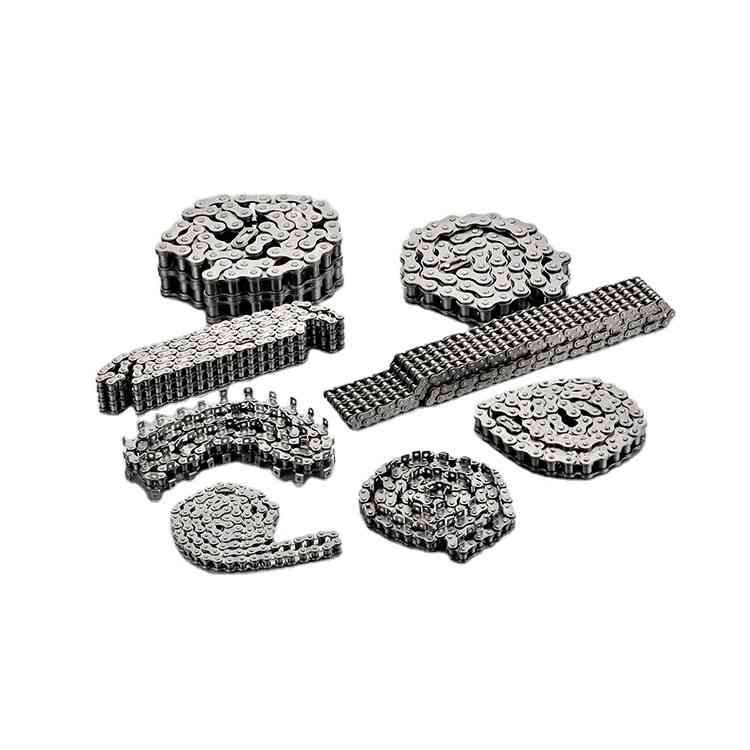
mute chain
The design of the silent transmission chain is as follows: the large chain plates 2 are stacked one on top of the other in the direction of the chain length. The connecting rods are connected by connecting pins 3. The outermost and central guide plates 4 are fastened to the connecting pins 3 by means of rivets. This construction helps minimize friction on the sliding surfaces of the chain. Chainplate 2 of the silent transmission chain is usually made of stainless steel.
The link plates are made of steel and have a rectangular shape with pinholes 41. These guide plates have no teeth but have curved surfaces that guide the silent drive chain on the sprockets. In addition, the rear portion of the guide plate is higher than the portion of the chainplate. This feature improves pitch balance. The present invention is also applicable to silent transmission chains using rockers.
When it comes to chain design, it’s important to remember that silent drive chains are often used in automotive engines, especially timing and cam drives. This type of drive reduces noise and vibration due to its low engagement angle and links engagement with the sprocket. However, these applications are not limited to timing and cam drives; they can also be used for front-wheel power transmission. For example, silent drive chains are designed to resemble those used in NASCAR racing engines.
The design of the silent drive chain is based on the structure of the roller chain. Its components are standardized and manufactured according to pitch. There are single-row and multi-row versions. Quiet chains, also known as inverted tooth chains, are shaped to reduce noise from stretching. It’s also designed to minimize the amount of friction caused by small changes in pitch. Its teeth don’t slide against each other, so the chain is smoother and more durable.
flat top chain
One of the important parts of the flat top chainplate system is the hinge pin, which is used to fix the chainplate and is responsible for the smooth and efficient conveying of the chainplate. There are several types of hinge pins, including single hinge pins and double hinge pins. The single hinge pin is suitable for the chainplate with a small span and small bearing capacity, and the double hinge pin is suitable for the chainplate with a large span and high bearing capacity.
The side bending flat top chain is suitable for conveying large and medium workpiece pallets. They can be made of steel or plastic, each with its own advantages. Both chainplates are designed to convey material smoothly. Side curved flat-top chains can be used on straight conveyors. They have a low coefficient of friction and can transport weights up to 1.2 kg/cm. They can also be combined with HD profiles.
Flat top drive chains are usually made of plastic material and come in two types: tabletop chains and buffer chains. They come in a variety of widths, but the most popular are standard widths, ranging from 3.25 inches to 12 inches. MatTop chains are usually shipped in 10-foot lengths. They come in different styles, but they all have the same basic specs. Tabletop chains are designed for general conveying, while pad chains are used for specific applications. Solid top chains are suitable for conveying bulk materials, while wide pad chains can handle large volumes of fluids and/or solid-solid mixtures.
These chain conveyors can be used to convey, connect or lift small items. This type of chain is especially useful in industries where the product is hot or greasy. The modular design of these chains allows them to be configured in three dimensions, making them suitable for production changes and transitions. They also help reduce slack in the chain. Flat top chains are commonly used in final assembly and mechanical or paint restoration in the automotive industry.
double chain
Besides the roller chain, another type of chain drive is the double drive chain. This type of chain consists of a series of short cylindrical rollers connected together by side links and driven by gears called sprockets. This type of chain is very reliable and only requires a tractor with a high rpm PTO. It is manufactured by CZPT and is available in many different sizes and finishes.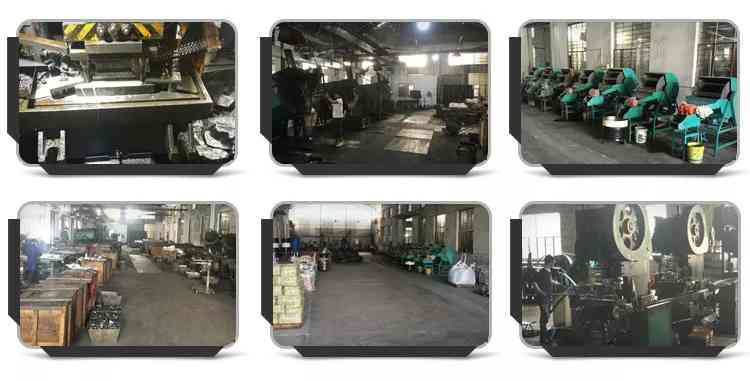
Self-lubricating chain
Self-lubricating drive chains are the ideal solution for applications that do not require the relubrication of conventional chains. This maintenance-free roller chain features fully heat-treated components that increase the chain’s fatigue resistance and strength. It’s sintered alloy bushings are oil-impregnated, reducing the chance of premature wear and elongation. Its self-lubricating properties enhance its durability and work well even in hard-to-reach places.
CZPT self-lubricating roller chains feature preloaded sintered steel bearing pins and oil-impregnated sintered bushings. These chains are drop-in replacements for standard roller chains and run on the same sprockets as standard chains. In addition to being maintenance-free, self-lubricating roller chains are compatible with most existing sprockets and are ideal for demanding applications.
The O-ring chain concept was used to develop self-lubricating systems. It has two or more annular grease storage chambers. A self-lubricating bushing roller chain has an oil reservoir between its pin chain and the roller chainplate. A grease seal between these two plates isolates the moving parts and keeps the joints well lubricated. O-rings are made of special nitrile rubber, whose properties vary by application.
CZPT SLR conveyor chains and CZPT SLR drive chains have rollers on sintered bushings. CZPT SLR chains and SLR conveyor chains are self-lubricating and have a higher working load than standard ANSI chains. They may not be interchangeable with other self-lubricating chains from other manufacturers. Self-lubricating drive chains are the best solution for demanding industrial applications requiring heavy-duty, reliable conveying.
editor by czh 2022-12-09
China high quality Engineering Class Roller C2082h Drag Conveyor Chain Lubricanttubular Industrial Transmission Conveyor Engineering Chain near me manufacturer
Product Description
Engineering Class Conveyor Chain Conveyor industrial transmission industrial conveyor roller c2082h lubricanttubular drag engineering chain
We, EPG CHAINS, specialize in designing and manufacturing industrial chains, with over 30 years history in this industry. Our factory occupies 60,000 square meters, with investments in machineries our fixed assets CZPT to 80 million RMB. We have a very energetic management team, experienced and skilled workers. The total employees rise to 180 in 2018.
With our specialty in producing chains for conveyor, transmission and dragging, our products have been exported to USA, Canada, Europe, Japan, South America, Southeast Asia, Africa, the Middle East and other countries and we have established sound connections with some key players in the related industries. In 2018, the total turnover reaches 14 million USD.
Our products have passed ISO:9001 quality management system and stand the end users’ ordeal. We devote ourselves to manufacture the high-quality products with competitive prices, we know the industries well, therefore from design to material selection, till manufacturing technique is up to the high standard, meanwhile our plHangZhou team and international team will ensure the punctual delivery.
We have strict quality control, each order has individual record and will be kept in file.
We welcome the OEM inquires and just remember we are expert in providing the solution for the chains in the industries of Sugar, Palm oil, Wood, Cement, Car, Paper, Asphalt , Food, ,Water treatment, Mining, Automation…
Also, welcome to visit our factory and you will find satisfaction…
EPG Chains hereby certify that if you found any defect in our material or technique of any kind of product,which will be free of charge;if you found any product was inconsistent with the approval drawing or sample after the delivery,we can accept the return or rework of goods and afford any charge about this.
|
Product name |
Engineering Class Conveyor Chain |
|
OEM |
Available |
|
Samples |
Available |
|
Trial Order |
Available |
|
Packing |
Can be customized |
|
Color |
Nature |
|
Certificate |
ISO9001:2015 |
|
Function |
Transmission |
|
Payment |
T/T,L/C,D/A,D/P, Western Union |
|
Treatment |
Through hardened and Case hardened and Induction hardened |
|
Material |
sidebar 40Cr Pin 40Cr or 42CrMo or SS420 Bush 20Cr or 20CrMo or SS420 Roller 40Cr or 20Cr
|
|
Standard |
DIN GB ISO JIS BA ANSI |
|
Brand |
Ever-Power or OEM |
Roller Chain Maintenance Tips
There are many things to keep in mind when maintaining a roller chain. The main reasons include friction and external influences. Without proper lubrication and adjustment, such chains will wear prematurely. Here are some tips for keeping your roller chain in top shape. continue reading! This will make your process easier. We will also discuss the cost of the new roller chain. As always, remember to check for loose ends and adjust the chain regularly.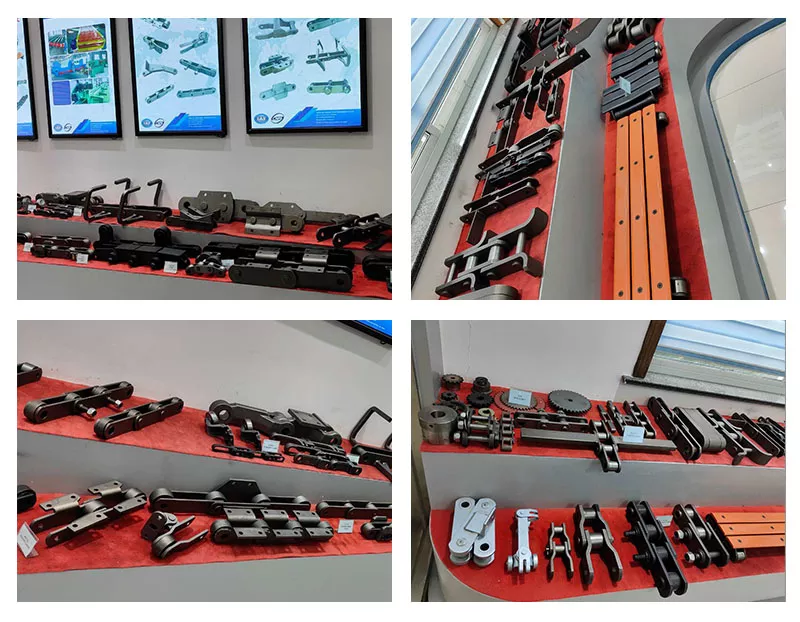
Preloading
Roller chains are designed to accommodate many different types of loads. Sprockets are the main cause of chain wear. Axial and angular misalignment occurs when the sprocket faces are not properly aligned. Both types of misalignment increase stress and wear on the roller chain. They can also negatively affect the drive. Therefore, choosing the right chain is an important consideration.
Preloading helps to eliminate initial elongation and extend service life. The benefits of preloading can be seen in the preloading chart. Significant elongation occurs during drive startup with no or minimal preload. This is due to the surface hardness of the worn parts. On the other hand, a properly preloaded chain shows little elongation during the initial start. Therefore, proper preload can prolong wear life.
Although elongation is a natural phenomenon in any drive, it can be minimized or eliminated with proper maintenance. In addition to regular inspections, you should do a full inspection of your chain after the first hundred hours. This inspection should focus on key life factors such as 3% elongation, how the chain is lubricated, and any other issues that may affect life. A good quality chain should have the longest life and no problems.
There are many different roller chain specifications. A good rule of thumb is to choose chains with at least 5 links. Then, tighten the chain until a break occurs, and it will tell you what kind of break occurred. Alternatively, you can use a roller chain with the maximum allowable load. As long as the MAL doesn’t exceed that number, it’s still perfectly safe to use it for any application.
lubricating
When it comes to lubrication, there are several different techniques. For example, spray lubrication is a popular method for high-horsepower drives and high-load and fast-moving machines. This method is very effective, but it is expensive, and spraying the chain too far out of the guard can cause leaks. Another common method is brush lubrication. Brush lubrication involves applying a continuous flow of oil to the chain, pushing it into the chain. This lubrication technique reduces the application temperature of the chain. Also, it can extend the life of the chain, depending on the manufacturer’s specifications.
While the lubrication of roller chain couplings varies by application, sprocket hubs should be lubricated monthly to ensure proper sealing. The amount of oil used depends on the rotational speed and the type of roller chain coupling. In general, lubricants used in roller chain couplings should have excellent adhesion, oxidation, and mechanical stability.
Wear-resistant lubricants are recommended. They prevent the rollers from sticking to each other and prevent rusting. These lubricants have low surface tension and are not harmful to metal or O-ring chains. The optimum lubrication method depends on ambient temperature, horsepower, and chain speed. Properly lubricating a roller chain increases the life of the chain and reduces the risk of wear.
Proper lubrication of the roller chain is essential to prevent corrosion and prolong its service life. The oil forms a smooth film on the chain components, reducing metal-to-metal contact and minimizing friction and wear. Additionally, the oil provides a smooth running surface and reduces noise. However, the running-in process of roller chain lubrication cannot be underestimated. When using heavy-duty oils, ensure that the lubricant is compatible with operating and ambient temperatures.
Maintain
To extend the life of your roller chain, you need to carry out regular inspections. First, you should check the T-pin on the link plate at the joint. If they are not connected properly, it can cause the chain to stretch and not maintain proper spacing and timing. Next, you should look for unusual noise, corrosion, and dirt that may indicate wear. If you notice any of these problems, it’s time to replace the chain.
In order to properly maintain a roller chain, both areas of the roller chain must be lubricated with the correct lubricant. Lubricants used should be SAE non-degreased oils. There are several types of lubricants available, but the best 1 is a petroleum-based oil with a high viscosity. You can also check for signs of wear, such as red or brown discoloration. This means that there is not enough lubrication.
While the life expectancy of a roller chain is unknown, it is important to know how to extend its life and maximize its effectiveness. Improper tension and alignment can shorten its life and place undue stress on the drive system and the chain itself. Incorrect tension can also lead to slippage and increased energy output. Therefore, you should calculate the tension and alignment of the chain during the initial installation. Check and adjust regularly.
Another way to extend the life of your rollers is to thoroughly clean the inside and outside of the rollers. You should also lubricate it frequently to prevent excessive heat buildup. Designed to prevent overheating by limiting the amount of work during break-ins. Additionally, regular inspections will help you catch anomalies early enough to stop operations. Last but not least, regular lubrication will prolong the life of the roller chain.
Cost
Buying a roller chain is a big decision, but initial cost shouldn’t be the only consideration. The cost of the roller chain itself, as well as the running costs, should be considered. Even the lowest-priced chains can be more expensive in the long run. Additionally, maintenance and energy costs may increase. The best roller chain for your business will be the 1 that best suits your needs. Listed below are some considerations to consider when purchasing a roller chain.
First, what material should you use? Roller chains come in many different materials. Stainless steel is a commonly used material in construction. Materials are selected based on the cost and design of chain horsepower transmission. Various manufacturing processes will determine which material is suitable for your application. Also, the weight of the chain will vary depending on its pitch and the construction technique used. A large part of the cost of a roller chain is on the drive sprocket.
Another consideration is installation cost. Roller chains are commonly used in agricultural and transportation applications, especially for agronomic products. If lubrication is your concern, maintenance-free chains are the best choice. Corrosion-resistant chains are ideal for wet environments. They are sold in boxed lengths, so replacing a longer length requires adding a shorter length. To avoid trouble, use the skateboard to help connect the links.
Another consideration is the overall width. The overall width of an open #40 roller chain may vary but should be at least 10 feet wide. Although it is not the most expensive type of roller chain, it will last longer. Using it correctly will increase its overall longevity, so it’s a good idea to choose it wisely. If your business uses roller chains regularly, the cost reduction is well worth it.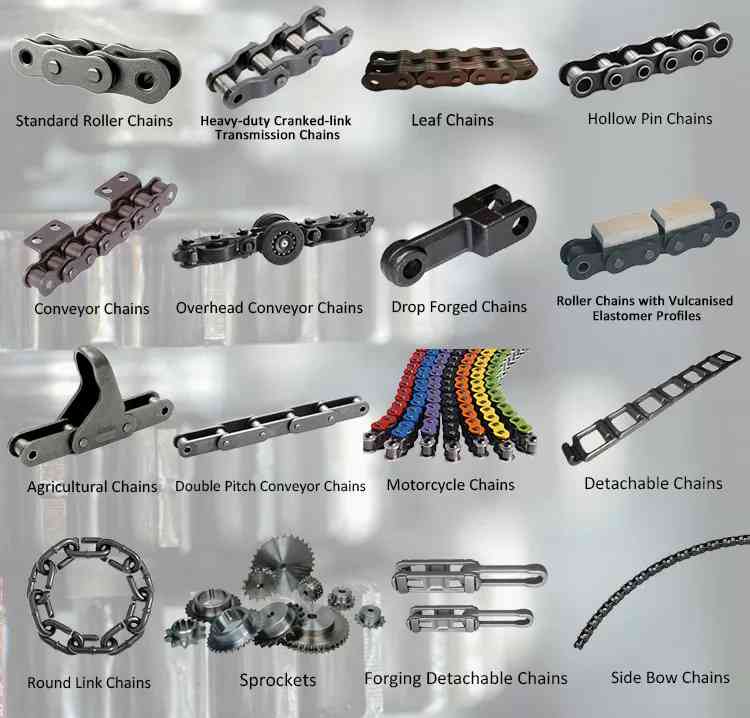
Application
A roller chain consists of a pair of alternating pins and roller links. The pins are pressed into the side panels and hinged to the rollers. Roller chains can be single or multi-strand, connected by a common pin. The multi-strand design provides higher shear strength for demanding power transmission applications. Typical applications for roller chains include conveyors, hoists, and other mechanical equipment.
The horsepower capability of a roller chain is limited by several factors, including pin shock and friction. While research into these factors has placed some limits on the maximum operating speed of the roller chain, practical experience has shown that these systems can be used at higher speeds. Proper lubrication and cooling can increase the durability of these chains. In addition, roller chain applications include:
Drive and conveyor systems are the 2 main uses of roller chains. During driving operations, wear and elongation are a natural part of the operation. However, lubrication plays a vital role in minimizing wear and shock loads. Therefore, wear is inevitable and special care must be taken to ensure proper lubrication. Additionally, lubrication reduces heat dissipation in the chain.
The materials used to make roller chains vary from 1 type to another. Stainless steel is common, but nylon or brass are sometimes used. These materials are less expensive and more durable than steel or stainless steel. The best material for the job depends on a variety of factors, including cost, environmental conditions, and design horsepower transmission. For example, the pin bushing contact area is a critical area requiring lubrication. Additionally, some coatings are designed to retard the corrosive effects of water or oil.
China manufacturer Industrial Hotpot Table Rotary Stainless Steel Sushi Chain for Conveyor Machine with Best Sales
Product Description
Product Description
Product Parameter
| Product Name | Sushi chain |
| Standard | GB, ISO, ANSI, DIN |
| Function | Conveyor Chain, Transmission |
| Type | Slat chain |
| Product Material | Food grade stainless steel |
| Treatment | Heat treatment |
| Certifications | ISO9001:2015, GB/T19001-2016, ISO1400:2015 |
| Tensile Strength | High strength |
| Packaging | Plastic Bag+ Carton+Wooden Case |
| Application | Sushi conveyor |
More Products
Advantage
Certifications
DETAILS ABOUT CZPT CHAIN
Exhibition
Workshop
Packaging Details
Shipping
FAQ
1. Are you a manufacturer or trade Company?
We are a factory founded in 1997 with a trade team for international service.
2. What terms of payment do you usually use?
T/T 30% deposit and 70% against document, Western Union, L/C at sight
3. What is your lead time for your goods?
Normally 35 days after confirmed order. 30 days could be available in the low season for some items (during May to July), and 45 days during the new year and hot season ( Jan to March).
4. Samples
For customers who need sample confirmation before ordering, please bear in mind that the following policy will be adopted:
1) All samples are free of charge with a maximum value not exceeding USD 100.
2) The courier cost for the first-time sample sending will be charged by the consignee. We will send the samples with freight to be collected. So please inform your account with FedEx, UPS, DHL, or TNT so that we can proceed promptly.
3) The first-time courier cost will be deducted from the contract value of the trial cooperation.
Different types of drive chains
Drive chains are an important part of many different types of machinery. In this article, we’ll cover a variety of different types, from square links to engineered steel. From there, we’ll discuss different types of chains, such as double and leaf chains. Let’s take a closer look at each one. Once you know what kind of chain you’re looking for, you can make a buying decision. If you’re not sure where to start, read on to learn more about these types of chains, what to look for when choosing, and how to choose the right chain for your specific application.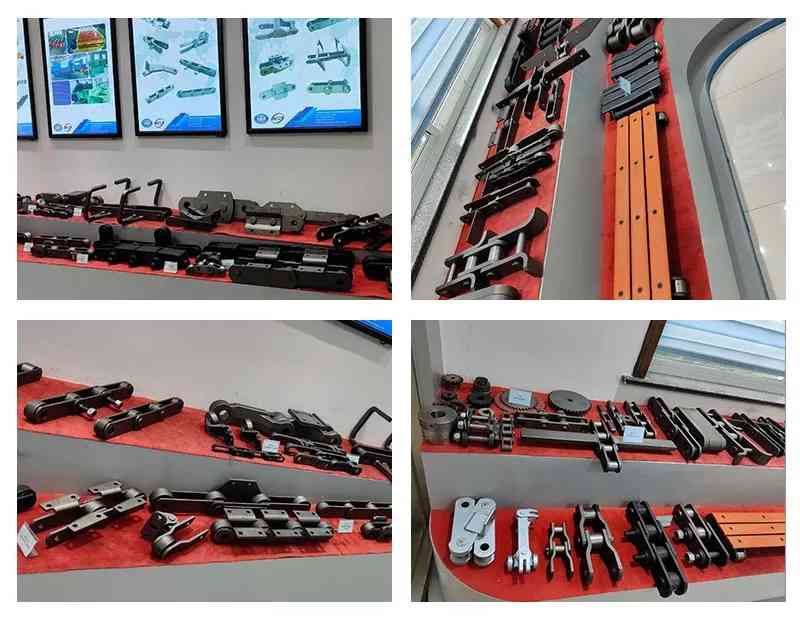
Engineering Steel Chain
Engineering steel chains are widely used in conveyors, bucket elevators, tensioning links, transmission chains, etc., and have the characteristics of high strength, low friction, and good shock resistance. Early models of these chains were developed for difficult-to-convey applications. They were originally made of all-steel components with flanged rollers made of cast iron. They then increase in size, strength, and spacing in response to the heavy-duty requirements of the industry.
Today, these chains are used in a wide variety of applications, including tough oil drilling operations and forklifts. They offer excellent durability and high power transfer and are available in a variety of materials. They are also ideal for harsh environments such as harsh oil drilling. Their high-strength steel construction means they can handle harsh operating conditions. Their durability is an essential feature of any chain, and CZPT Chains offers a full line of engineered steel chains to meet your exact specifications.
A drive chain made of engineered steel consists of several components: links, pin joints, and sprockets. This allows them to carry heavy loads with minimal stretch. Due to its internal mechanical advantage, the chain runs around the sprockets with almost 100% efficiency. Also, the chain is made of special steel that can withstand certain conditions. They are available in different alloys and grades. If you have any questions, please feel free to contact us.
Roller chain wear is a major problem for conveyor and drive chains. In these cases, the rollers of the chain are more prone to wear than the bushings, so lubrication is essential. Many chains are designed to work with little or no lubrication. Finally, material selection is an important factor in the design of engineered steel conveyor chains. These factors will help ensure that the chain stays in good shape.
Conveyor Chains with Square Links
There are 2 basic types of conveyor chains. The first is the square chain, commonly used in cranes and hoists. It’s cheap to manufacture but more prone to overload. The second is a chain that uses hook joints or detachable links. These are used for short-term power transmission and have a lubricating effect. Usually, they are made of malleable iron but can be more expensive.
Another type of chain is the removable steel chain. For moderate loads, this is an easy-to-install option. The closed end of the tab should face the sprocket. It is very important to maintain the alignment of the chain relative to the sprockets. The chain should be adjusted to suit the load before installation. It is important to keep the chain lubricated to prolong its life.
Steel chains offer a wider selection of materials and heat treatments. This chain is also more accurate than its counterpart. Steel bushing chains are less expensive but require more frequent lubrication. Steel roller chains are often used for long conveyor centers or high loads. However, lower friction requirements require lower strength chains. This means that chains with square links are a better choice for smaller conveyors. But this style has its drawbacks.
Bushing chains are made of steel and are an excellent alternative for small-scale applications. The pins are silent and prevent tooth damage. Bushed roller chains are also used to a certain extent as conveyor chains. However, the main advantage of the bushing roller chain is that it does not make any noise at all. Bushed roller chains are made of alloy steel and are suitable for very low-speed applications.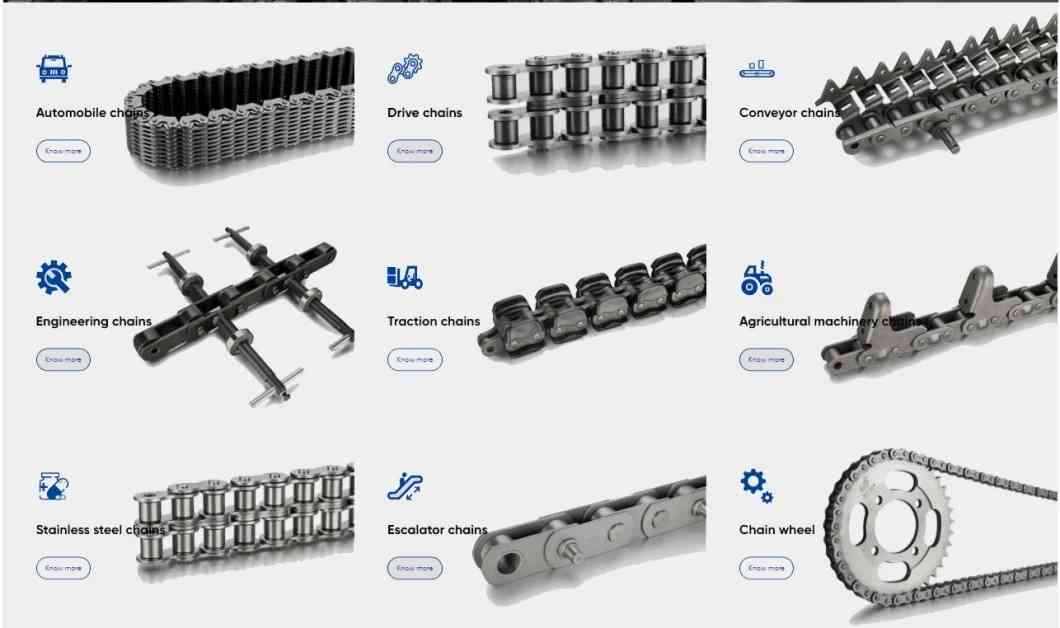
double chain
Double-strand roller chain, also known as a double-strand, consists of 2 rows of single-strand links. It has high impact strength, low weight, and a small form factor. Duplex roller chains are manufactured using CZPT technology, which uses solid rollers to improve sprocket tooth rotation and reduce shock loads. During the manufacturing process, the metal is heat-treated to increase strength and reduce corrosion.
A single chain is designed for a single sprocket, while a double chain consists of 2 identical chains connected side by side. Double chains are more durable than simple chains because double rollers contain roller bearings, pins, and other components. Simplex drive chains can handle high loads, while duplex drive chains are designed for medium-duty applications.
leaf chain
Blade chains are used in reciprocating devices such as forklifts. They are also used in machine tools for counterweight chains. Leaf chains come in a variety of lengths, usually with female or male ends. Leaf chains can be manufactured in even or odd pitches and are ideal for lifting and balancing. This article will introduce some key uses of leaf chains in drive chains. Additionally, we’ll discuss how they are made and how they behave in applications.
Most drive chains today are made from leaf chains. These chains are designed to increase the strength of the chain. However, they are less expensive than other types of chains. You can also purchase specialized leaf chains for certain applications. CZPT Chain also offers custom leaf chains for your unique needs. Leaf chains are commonly used in forklifts, material handling, and lifting applications. They are usually made from high-quality components. The BL1688 Leaf Chain has 8 x 8 laces and is sold in 10-foot boxes or 25- to 100-foot reels. The leaf chain can be cut as needed.
When selecting a leaf chain for a specific application, consider the minimum tensile strength of the chain. The minimum breaking strength must be high enough to protect the worker or machine, but must also be legal for the type of machine. Most manufacturers publish this minimum strength requirement. To make the most durable leaf chain, design engineers must consider the ISO4347 standard when choosing the right leaf chain. Leaf chain manufacturers tend to exceed international standards by about 20%.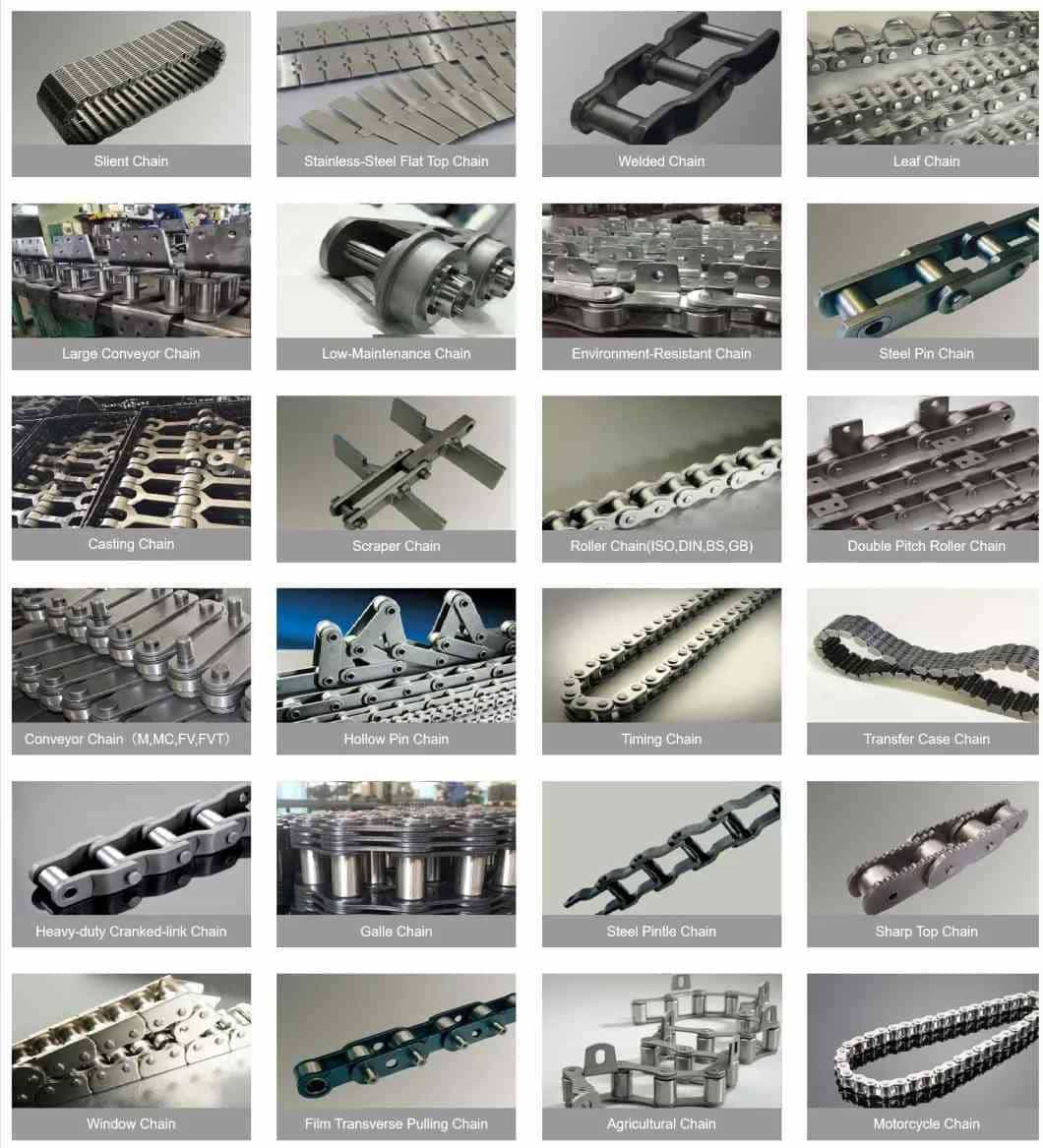
roller chain
Roller chains are made from a variety of materials. Some common materials include steel and stainless steel. The most suitable material depends on cost, environmental conditions, and horsepower transmission design. Chain manufacturers can optimize the material for the intended use. Depending on its size, spacing, and special construction techniques, it can be made lighter or heavier. This is an advantage for applications in noise-sensitive environments. Below are some examples of common uses for roller chains.
The wear of the components in a roller chain is an unavoidable part of its operation. The amount of elongation depends on factors such as lubrication, load, and the frequency of articulation between the pin and bushing. Manufacturing critical wear parts require careful attention to detail. Proper raw materials, manufacturing, and assembly are critical to product performance and longevity. If these components aren’t of high quality, they won’t last as long as the chain should.
The industry recommends measuring the wear elongation of the roller chain to determine when it needs to be replaced. Proper safety procedures must be used to measure chain tension. The tight span of the chain shall be measured by applying the measuring load specified by ANSI. A correctly measured roller chain is safe to use. For motorcycles, the chain is bigger and stronger. Often, toothed belts are replaced by shaft drives because they are less noisy and require less maintenance.
Tensile strength is the most commonly used measurement method for roller chains. This measurement represents the amount of load the chain can withstand before it breaks. Fatigue strength is another measure of durability. Fatigue strength measures how long a roller chain can withstand long-term use before failing. These 2 measurements are closely related and maybe the same or different. In addition to tensile strength, fatigue strength is a useful factor to consider when purchasing a chain.
China wholesaler Industrial Manufactures 304 Stainless Steel Conveyor Roller Chain 12.70mm Pitch Film Clamp Chain near me shop
Product Description
Product Description
Product Parameter
| Product Name | Sushi chain |
| Standard | GB, ISO, ANSI, DIN |
| Function | Conveyor Chain, Transmission |
| Type | Slat chain |
| Product Material | Food grade stainless steel |
| Treatment | Heat treatment |
| Certifications | ISO9001:2015, GB/T19001-2016, ISO1400:2015 |
| Tensile Strength | High strength |
| Packaging | Plastic Bag+ Carton+Wooden Case |
| Application | Sushi conveyor |
More Products
Advantage
Certifications
DETAILS ABOUT CZPT CHAIN
Exhibition
Workshop
Packaging Details
Shipping
FAQ
1. Are you a manufacturer or trade Company?
We are a factory founded in 1997 with a trade team for international service.
2. What terms of payment do you usually use?
T/T 30% deposit and 70% against document, Western Union, L/C at sight
3. What is your lead time for your goods?
Normally 35 days after confirmed order. 30 days could be available in the low season for some items (during May to July), and 45 days during the new year and hot season ( Jan to March).
4. Samples
For customers who need sample confirmation before ordering, please bear in mind that the following policy will be adopted:
1) All samples are free of charge with a maximum value not exceeding USD 100.
2) The courier cost for the first-time sample sending will be charged by the consignee. We will send the samples with freight to be collected. So please inform your account with FedEx, UPS, DHL, or TNT so that we can proceed promptly.
3) The first-time courier cost will be deducted from the contract value of the trial cooperation.
Advantages and Disadvantages of Drive Chains
Drive chains are widely used for sliding steel guides. While solution chains are often used, roller chains are more efficient in size and weight. Nevertheless, a drive chain is often the best choice for dirty jobs. The following are some of the benefits and disadvantages of drive chains. Learn more! Adapt your vehicle to your specific situation with drive chains. You’ll be glad you did! Read on to learn more! Continue reading for information on different types of drive chains.
Inverted tooth chain
An inverted tooth camshaft drive chain has teeth on its links and 2 pin rolling pivot joints that engage each other to transmit moderate to high-speed rotations. This type of drive chain is also known as a silent chain drive, which is particularly effective in reducing noise and vibration. The teeth on the links mesh perfectly with the teeth of the gear sprocket. The inverted tooth design also provides smooth communication of chain links with the teeth of the sprocket.
The design of the new model was particularly effective in quelling noise. The “Druid” spring forks enabled the chain to adjust with minimal motion of the axle. It was launched at the 1910 Olympia show and sold more than 500 units. The drive chain was also silent, which reduced the need for sound insulation and attenuation components, which in turn minimized weight. Hence, it became an ideal choice for wind turbines.
The main disadvantages of chain drive include its low speed and limited range. It is expensive to manufacture and requires precise mounting. Maintenance is essential, including lubrication and slack adjustment. Its velocity fluctuates as the chain is stretched. This causes the chain to fail at the worst possible time. The chain drive also has problems associated with slippage. In addition, it can be prone to excessive wear and tear. Fortunately, however, there are newer types of drive chains available, which are more durable and reliable.
Duplex chain
There are 3 types of duplex drive chains: SC, RP, and Ramsey. Each has their own unique advantages and features. The Rampower duplex series offers twice the power capacity of the standard SC duplex chain. They are often used in new applications. SC duplex chains are the most affordable and are used in less demanding applications. The SC duplex chain has a lower power capacity but lower weight. There is also no guarantee of performance.
Multi-strand roller chain
The Multiple-strand roller chain for drive chain market can be defined on the basis of the factors that drive growth in this industry. The factors that hamper market growth can be understood in order to come up with alternative bends for lucrative opportunities. This report aims to understand the current scenario and the impact of COVID-19 on the industry as a whole. We will also discuss the market drivers and restraints. We will discuss the various types of Multiple-strand roller chains for drive chain and their market sizes in the coming years.
The minimum tensile strength for a roller chain is 1 sixth or one-ninth the tensile strength of a conventional drive chain. These standards are established to prevent linkplate fatigue, which is the main cause of premature breakdown. A chain made of this material is considered a superior choice for high-performance applications involving a high load-bearing capacity. If you’re using a drive chain, make sure to choose a proper chain based on the type of application. A simple chain with a high load-bearing capacity is also ideal for simple applications.
While it is true that a high-10sion, high-speed drive requires a higher power rating than a low-speed chain, roller chains are primarily used in low to mid-speed applications. They are similar to bicycle chains but may have a master link. In motorcycles, chains are heavier and may require a chain tool to remove. These chains are often replaced with toothed belts or a combination of both.
Flat top chain
The flat top drive chain is a versatile conveyor belt that conveys medium and large workpiece pallets. Its arcing capacity makes it suitable for continuous drive combinations involving curve arcs. The flat top chain is also available with PA wear pads on the workpiece pallets. The flat top chain’s steel and plastic glide profiles allow surface loads of up to 1.5 kg/cm. HD profiles are compatible with the flat top chain.
The steel flat top chain is available in several types: 815, 820, and 881 series. These are heat-treated to have high strength and excellent wear resistance. They can also be used with various sprockets, including 820 sprockets. The high-quality steel chain can be used with many industrial applications. However, if you are looking for a durable chain for your industrial application, iwis hardened stainless steel flat top chains are an excellent choice.
TSplus flat top drive chain offers the most flexibility of any conveying media. The drive units can be linked end-to-end to form extended conveyor lines. Side-flexing flat top chains are available to create serpentine, in-line, and carousel conveyors. Drive units are available in standard and heavy-duty models. They are versatile enough to handle a variety of container sizes. If you need a more complex conveyor system, you can choose a heavy-duty drive chain.
Rexnord flat top chains come in 2 basic styles: MatTop chain and TableTop chain. The TableTop chain is molded in standard widths ranging from 3.25 inches to 12 inches. These are shipped in ten-foot sections, but you can also find 20-foot-wide mattop chains. You can even customize your MatTop chain to meet your exact needs. They are perfect for a variety of conveying applications, from general conveying to wash down applications.
Conveyor chain
Drive chains for conveyors come in a variety of styles. These chains can have varying degrees of pitch. Pitch is governed by wheel tooth strength, the overall chain rigidity, and the type of drive motor. A normal maximum pitch is determined by the width of the link plates and the angle between the mounting angles. You can increase the pitch of your chain by strengthening the bushes between the link plates. Make sure that the gap between the wheel teeth and the bushes is approximately one-4th inch.
Pitch and tension of the chain are important considerations when choosing a chain. The minimum pitch is determined by the thickness of the tooth on the wheel and the maximum pitch is determined by the rigidity of the link plates. However, this maximum pitch may be exceeded with bushes between the link plates or clearance with the wheel teeth. A good quality chain will have bearing surfaces lubricated to prevent excessive wear and rust. Medium-viscosity mineral oil is suitable for normal operating conditions. SAE 20W-50 is a good choice for this application. Self-lubricating chains are available from many chain manufacturers.
The chain is usually lubricated by dripping oil between the links. This type of lubrication requires regular inspection of the conveyor chain. The amount of oil should be enough to prevent reddish brown discoloration on the chain joints. A lubricating oil should be applied on a daily basis, according to the manufacturer’s specifications. In order to ensure a longer life for your drive chain, make sure that you lubricate it on a regular basis.
China supplier Stainless Steel Slat Top Transmission Chain Industrial Sushi Conveyor Chain near me manufacturer
Product Description
Product Description
Product Parameter
| Product Name | Sushi chain |
| Standard | GB, ISO, ANSI, DIN |
| Function | Conveyor Chain, Transmission |
| Type | Slat chain |
| Product Material | Food grade stainless steel |
| Treatment | Heat treatment |
| Certifications | ISO9001:2015, GB/T19001-2016, ISO1400:2015 |
| Tensile Strength | High strength |
| Packaging | Plastic Bag+ Carton+Wooden Case |
| Application | Sushi conveyor |
More Products
Advantage
Certifications
DETAILS ABOUT CZPT CHAIN
Exhibition
Workshop
Packaging Details
Shipping
FAQ
1. Are you a manufacturer or trade Company?
We are a factory founded in 1997 with a trade team for international service.
2. What terms of payment do you usually use?
T/T 30% deposit and 70% against document, Western Union, L/C at sight
3. What is your lead time for your goods?
Normally 35 days after confirmed order. 30 days could be available in the low season for some items (during May to July), and 45 days during the new year and hot season ( Jan to March).
4. Samples
For customers who need sample confirmation before ordering, please bear in mind that the following policy will be adopted:
1) All samples are free of charge with a maximum value not exceeding USD 100.
2) The courier cost for the first-time sample sending will be charged by the consignee. We will send the samples with freight to be collected. So please inform your account with FedEx, UPS, DHL, or TNT so that we can proceed promptly.
3) The first-time courier cost will be deducted from the contract value of the trial cooperation.
Pin chain conveyor
The choice between roller chains and friction drives depends on the usage environment. Roller chains are more resistant to dirty environments and are more suitable for conveying bulk products. The pivot chain is designed to handle highly bulk products. Ideally, the center-to-center distance between the 2 axles should be 30 to 50 times the chain pitch. The size of the sprocket will depend on the usage environment, which will also determine the fatigue strength and resistance of the chain.
Roller chains are more resistant to dirty environments
There are some key differences between drive chains and roller chains. The most notable difference is in the materials. Drive chains are generally more durable than roller chains. However, both chains are prone to dirty environments. While solution chains are sometimes used for heavy-duty tasks, roller chains are often used in dirtier environments. In fact, drive chains are often used when the job is very dirty and the chain has to slide on the rails.
The new lubricant used on the roller chain attracts dirt and other debris to the surface of the chain and prevents lubricant from entering the load-carrying parts of the chain, such as hinge plates, bushings, and rollers. When dust is drawn into these components, lubricants, and dirt form an abrasive paste that accelerates wear.
Lube-free roller chains keep chains clean longer. This makes it easier to specify and install in areas with strict hygiene requirements. CZPT lube-free roller chains meet NSF-H1 lubrication standards. However, lubricated roller chains are still suitable for areas where food contact is unlikely.
Stainless steel roller chains are particularly resistant to acids, alkalis, and low-temperature environments. Since stainless steel is softer than carbon steel, lubricants are not as effective at preventing dirt from entering the chain. Stainless steel roller chains have a higher strength rating than standard chains, but are not as strong as chains made from carbon steel. If you are using a roller chain in a very dirty environment, you should use a stainless steel chain.
A stud chain is more efficient than a friction drive
The present invention relates to a light-duty double-ended chain that is more efficient than conventional chains. Stud chains are made by die-forging bar steel into roughly the-shaped links. This method avoids loss of shear strength due to bending and also minimizes the welded portion. The double-headed chain is light in weight and has strong resistance to fatigue damage.
This chain type has a stud-style design. Stud-shaped design provides greater tensile strength and prevents tangling. Each stud is formed by die forging and is usually shaped like an e or th. However, it is not necessary for each stud to have a uniform cross-sectional shape. Different cross-sectional shapes can be used depending on the application.
Stud chains are more efficient than friction drives because the studs in the chain are integrated. Stud links resist large breaks. Its applications are in conveyor chains and fisheries. Wear tested on boat chains made of SBC material. In the process, bolt chains were found to be more efficient than friction drives. Its applications are rapidly expanding.
Double-ended chains are more efficient for high-load applications. It features studs throughout its internal width to prevent kinking. Chains of this type are commonly used for heavy lifting machinery. Other types of chains are roller chains, power transmission chains, and bushing roller chains. These types of chains are also widely used in motorcycle, bicycle and transportation applications. In addition to being more efficient, stud chains also have fewer wear problems than friction drive chains.
A study on the difference between wear percentage and friction time showed that stud chains are more efficient than friction drives. The friction strips were measured at the beginning of the test. Take it off after 6 hours, 10080 times, and take pictures with the same diameter. As a boundary value, the diameter of the friction strip is smaller than that of a conventional chain. This shows that the present invention has better wear resistance than friction drives.
Shaft chains designed for conveying bulk products
Pivot chains are versatile conveyors used in many applications. Low back type, small backrest distance, rear opening design to prevent the product from sticking to the joints and causing stiffness. Stainless steel and carbon bushing pin chains do not have pre-rotating rollers. In contrast, bucket elevators do not use pivot chains.
CZPT pin chains provide unmatched performance in agricultural and industrial machinery. They are constructed from a single cast barrel and are connected by hardened steel pins. CZPT’s steel pivot chains are strong enough to withstand the corrosive environments of agricultural and industrial applications. The steel pins in the CZPT Pintle Chain are hardened and riveted to ensure long-term durability and optimum performance.
Lifeguard chains feature patented interlocking side links that reduce gaps between adjacent side panels. They can withstand a variety of applications and will never break under pressure. These chains are available in 1/2” and 1” pitch configurations. CZPT combines both types of pin chains to achieve the best of both worlds. CZPT features dual pin chains and pin joints to increase chain durability and reduce maintenance hassles.
CZPT’s engineering team can custom design pivot chains for your specific application. Designed for specific speed, friction, temperature and wear requirements, these chains are ideal for a variety of applications. Headquartered in Milwaukee, Wisconsin, the company operates on 2 strategic platforms: Food and Beverage and Industrial Applications. The products of these companies are used in food, energy and manufacturing.