Product Description
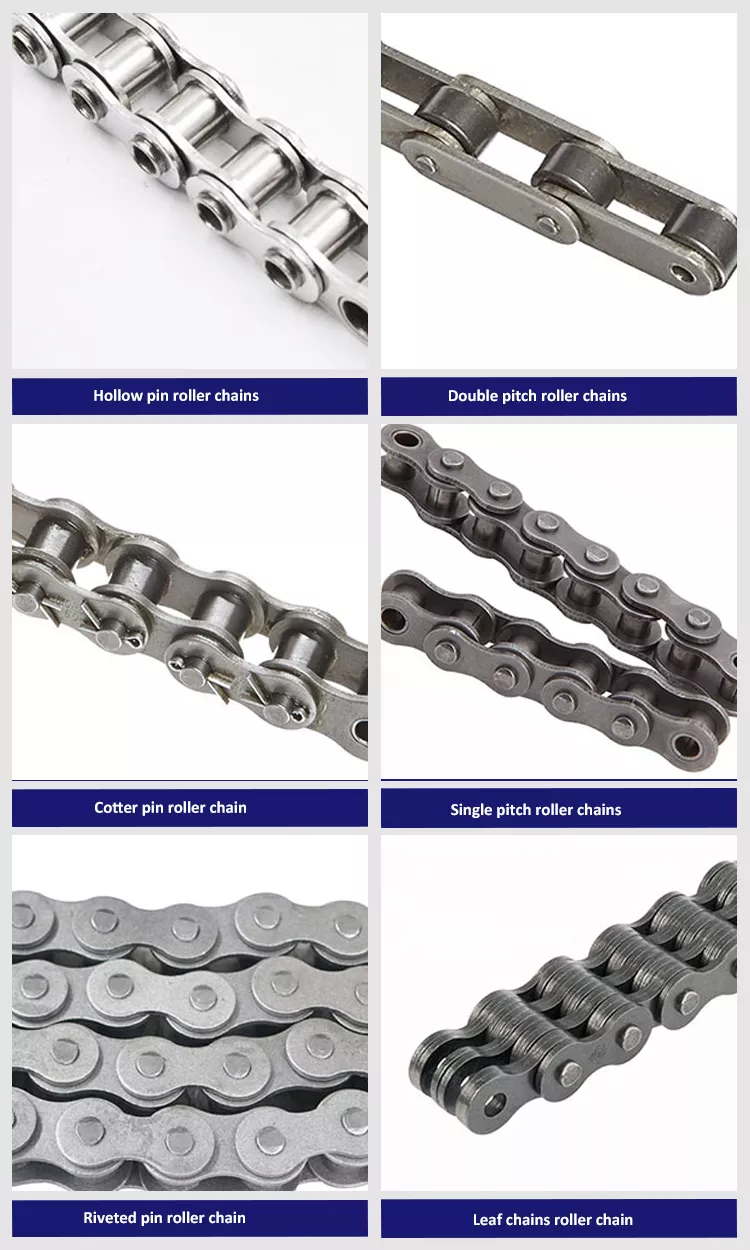
MC Series Hollow Pin Chains:
Carbon Steel and Stainless Steel Hollow Pin Chain for food handling conveyors. Products are available in ANSI standard series, double pitch series with standard rollers, and large rollers.
This chain has hollow pins so that the holes can be used to mount various pins and attachments.
| Product Name |
MC Series Hollow Pin Chains |
| Type | MC28, MC56, MC112, MC224 |
| Colour | primary |
| Material | carbon steel, alloy steel,stainless steel |
| Customize | YES |
| OEM | YES |
| Surface Treatment | rust-preventative oil |
| Shipping Type | sea & air |
| Market | global |
| Payment Terms | T/T in advance |
| Packaging | carton,wooden case,pallet |
Main products:
Transmission Chains:
Standard Roller Chains/ Nickel-Plated Roller Chain/ Stainless Steel Roller Chain/ Bicycle Chain/ Motorcycle Chain/ Chains for Automotive Engines/ Leaf Chains/ Silent Chain.
Conveyor Chains:
Small Size Conveyor Chains/ Large Size Conveyor Chains/ Roller Conveyor Chain/ Hollow Pin Chain/ Drive Chain/ Steel Bushing Chain/ Welded Steel Mill Chain/ Welded Steel Drag Chain/ Barloop Chain/ Drop Forged Rivetless Chain/ Caterpiller Drive Chain/ Cast Combination Chain/ Cast Pintle Chain/ Double Flex Chain/ Specialty Chain/ Plastic Top Chain/ Snap Cover Chain.
Link Chains:
Grade 120 Alloy Chain/ Grade 100 Alloy chain/ Grade 80 Lifting Chain/ Grade 70 Transport Chain/ Grade 50 Stainless Steel Chain/ Grade 43 High Test Chain/ Grade 40 High Test chain/ Grade 30 Proof Coil Chain/ Double Loop Chain/ Single Jack Chain/ Twist Chain/ Register Chain/ Ball Chain/ Oval Link/ Square Chain.
Sprockets:
Single Type A Hub/ Single Type B Hub/ Single Type C Hub/ Single Type D Hub/ Double Strand Type B Hub/ Double Strand Type C Hub/ Hardened Teeth Type A/ Double Single Type A Sprocket/ Double Pitch Strand Type B Hub/ Large Roller Double Pitch Sprocket.
Gear & Rack:
Spur Gears/ Helical Gears/ Bevel Gear/ Hypoid Gears/ Worm Gear/ Internal Helical Gear/ Herringbone Gears/ Rack And Pinion Gears/ Sector Gear/ Internal Ring Gear/ Miter Gears/ Nylon Gear Rack.
Wire Mesh:
Woven Wire Mesh/ Plain Weave/ Twilled Weave/ Plain Dutch Weave/ Twilled Dutch Weave/ Reverse Plain Dutch Weave/ Reverse Twilled Dutch Weave/ Five Heddle Weave/ Super Mesh Weave/ Welded Wire Mesh/ Wire Mesh Belt.
Shackles:
Screw Pin Anchor Shackle/ Round Pin Anchor Shackle/ Bolt Type Safety Anchor Shackle/ Screw Pin Chain Shackle/ Round Pin Chain Shackle/ Bolt Type Safety Chain Shackle.
Hooks:
Clevis Sling Hook/ Clevis Grab Hook/ Eye Sling Hooks/ Eye Grab Hook/ Clevis Foundry Hooks.
Riggings:
Chain Hoists/ Wire Rope Clip/ Link/ Coupling Link/ Quick Link/ Snap Hooks/ Eye Bolt/ Turnbuckle/ Anchor Rod/ Swivels/ Cable Thimble.
Machinery Equipment:
Belt conveyors/ Scraper Conveyor/ Chain Conveyor/ Plate Conveyor/ Roller Conveyor/ Spiral Conveyor/ Elevator Conveyors/ Incline Conveyor/ Vegetable And Fruit Processing Machines/ Food Processing Machinery/ Dairy Processing Equipment/ Slaughtering Equipment/ Brewing Equipment/ Frozen Drink Machine.
Company information:
We are engaged in the import and export of Mechanical Hardware.
We have professional factory. Technology is strong in products of different specifications complete, has strong product development and manufacturing capacity.to provide all kinds of hardware tools products, specifications complete, variety, quality, reasonable price.
Our Advantages:
Our company has over 20 years’ experience producing high-quality hardware products.
The products are reliable and we can manufacture the products according to customers’ requirement.
We can also cooperate with customers to develop new products.
Our products have been certified by CE and ROHS, also can provide customized product Certificate.
We sincerely welcome domestic and foreign, new and old customers to carry on the cooperation and exchange with us, and establish a long-time cooperative relationship.
Company Name: HangZhou CZPT Jin Hao International Trade Co., Ltd.
| Material: | Alloy |
|---|---|
| Structure: | Hollow Chain |
| Surface Treatment: | Oxygenation |
| Chain Size: | 1/2"*11/128" |
| Feature: | Oil Resistant |
| Pin Length: | 45.0mm |
| Samples: |
US$ 10/Piece
1 Piece(Min.Order) | |
|---|
| Customization: |
Available
| Customized Request |
|---|

Can a conveyor chain be used in high-speed applications?
Yes, a conveyor chain can be used in high-speed applications depending on the design and specifications of the chain and the conveyor system. However, there are certain factors to consider when using a conveyor chain in high-speed applications:
1. Chain Design: The design of the conveyor chain should be capable of handling high speeds without compromising safety or performance. Specialized high-speed chains are available that are specifically engineered to withstand the demands of high-speed applications.
2. Material Selection: The material used in the construction of the conveyor chain should have high strength and durability to withstand the forces and stresses at high speeds. Common materials for high-speed conveyor chains include alloy steels, stainless steel, and special polymers.
3. Lubrication: Proper lubrication is crucial in high-speed applications to reduce friction, heat, and wear. Lubricants specifically designed for high-speed conveyor chains should be used to ensure smooth operation and extend the chain’s lifespan.
4. Tensioning and Alignment: Accurate tensioning and alignment of the conveyor chain are critical for high-speed applications. Proper tensioning helps to maintain the chain’s stability and prevent excessive vibrations or elongation, which can lead to chain failure or premature wear.
5. Safety Considerations: High-speed applications require additional safety measures to protect personnel and equipment. Proper guarding, emergency stop systems, and regular maintenance inspections are essential to ensure safe operation.
It’s important to consult the conveyor chain manufacturer or an engineering professional to determine the suitability of a specific chain for high-speed applications. They can provide guidance on selecting the appropriate chain design, material, lubrication, and maintenance practices to ensure reliable and efficient operation at high speeds.

What are the factors to consider when selecting the pitch of a conveyor chain?
When selecting the pitch of a conveyor chain, several factors need to be considered to ensure optimal performance and efficiency. Here are the key factors:
1. Load Capacity: The pitch of the conveyor chain should be selected based on the anticipated load capacity of the system. Consider the weight and size of the conveyed materials to ensure the chain can handle the required load without exceeding its capacity.
2. Speed and Application: The operating speed of the conveyor system and the specific application play a role in determining the pitch. Higher speeds may require smaller pitch chains to maintain smooth and reliable operation.
3. Conveyor Length: The length of the conveyor system affects the selection of the chain pitch. Longer conveyors may require larger pitch chains to distribute the load and reduce tension on individual chain links.
4. Space Constraints: Consider the available space for the conveyor system. Smaller pitch chains may be preferred in applications with limited space to minimize the overall footprint of the conveyor.
5. Wear and Maintenance: The pitch selection should also consider the anticipated wear and maintenance requirements. Smaller pitch chains often provide better wear resistance and may require less frequent lubrication and maintenance.
6. Speed Regulation: If the conveyor system requires speed regulation or precise positioning, the pitch selection should align with the control capabilities of the drive system. Smaller pitch chains can offer finer control and accuracy.
7. Compatibility: Ensure that the selected pitch is compatible with other components of the conveyor system, including sprockets, guides, and attachments. They should be designed to work together smoothly and efficiently.
8. Application Environment: Consider the environmental conditions in which the conveyor will operate. Factors such as temperature, humidity, corrosive substances, or abrasive materials may influence the choice of chain pitch and material to ensure durability and longevity.
By considering these factors, you can select the appropriate pitch for the conveyor chain, ensuring optimal performance, longevity, and reliable operation of the system.
What factors should be considered when designing a conveyor chain system?
When designing a conveyor chain system, several factors need to be considered to ensure optimal performance and functionality. These factors include:
- Load Capacity: The load capacity of the conveyor chain system is a critical consideration. It involves determining the maximum weight and size of the materials or products to be conveyed. This information helps in selecting the appropriate chain type, size, and strength to handle the expected load.
- Speed and Throughput: The desired speed at which the conveyor system needs to operate and the expected throughput of materials are important factors. They influence the selection of chain pitch, sprocket size, and motor power to achieve the desired conveyor speed and material handling capacity.
- Environmental Conditions: The operating environment plays a crucial role in the design of a conveyor chain system. Factors such as temperature, humidity, dust, corrosive substances, and presence of water or chemicals impact the selection of materials for the chain, sprockets, and other components to ensure durability and resistance to wear and corrosion.
- Conveyor Layout and Configuration: The layout and configuration of the conveyor system are key considerations. Factors such as available space, conveyor path, incline or decline angles, and any required curves or turns affect the selection of chain type, sprocket arrangement, and overall system design.
- Maintenance and Accessibility: Easy access for maintenance and servicing is crucial for the longevity and efficient operation of the conveyor chain system. Considering factors such as lubrication points, chain tension adjustment mechanisms, and overall accessibility for inspections and repairs ensures smooth operation and minimizes downtime.
- Noise and Vibration: The level of noise and vibration generated by the conveyor chain system can impact the working environment. Design considerations such as selecting chain types with low noise characteristics, implementing proper lubrication, and using vibration-damping components help minimize noise and vibration levels.
- Safety: Safety is of paramount importance in conveyor chain system design. Factors such as guarding, emergency stop systems, proper alignment, and anti-slip measures need to be incorporated to ensure the safety of operators and prevent accidents or injuries.
Considering these factors during the design stage helps in selecting the appropriate conveyor chain type, size, and configuration to meet the specific requirements of the application, ensuring smooth and efficient material handling operations.


editor by CX 2023-08-03
China 18K Gold Plated Letter Square Pendant name necklace personalisedStainless Steel Beaded Chain Necklace custom name necklace metric roller chain
Error:获取session失败,
Types of Roller Chains
There are several types of roller chains available. These chains have different properties and serve different purposes. Here you will learn about diamond roller chains, X-ring and O-ring chains, inverted tooth chains, and self-lubricating chains. You can choose the type that best suits your needs by reading this article. It will also help you make an informed decision. Buying the right roller chain for your needs is easy. Hope this article is helpful to you!
Diamond roller chain
Diamond roller chains are more efficient than other chains and can significantly extend chain life. The superior design of the chain prevents internal rust from seeping out. Additionally, Diamond ACE features a corrosion-resistant exterior and a zinc-nickel pre-assembled coating that provides extended corrosion protection and wear resistance. These features reduce chain downtime and labor costs, saving a building materials manufacturing company nearly $33,000 over the life of its machines.
Diamond series chains lead the industry in quality and durability, with industry-leading tensile strength and the lowest total cost of ownership. With a diverse product portfolio including standard chains, specialty chains, and custom chains, the company is sure to provide the right chain for your application. The company also offers a wide range of accessories for a variety of machinery. For more information, please visit the company website.
As one of the leading manufacturers of roller chains, the CZPT Company offers unparalleled expertise and wear resistance in the power transmission market. CZPT is trusted by leading industries and provides the highest return on investment. The diamond is a symbol of strength and durability, and the company chose it as the company’s trademark to convey its core values. CZPTs can last up to 100 years or more in harsh conditions, even in underwater environments.
Self-lubricating chain
Self-lubricating roller chains are designed to increase performance while maintaining a high level of cleanliness. These chains are made of sintered alloy bushings impregnated with lubricant and pins specially treated to release oil when necessary. These chains have a long service life and are suitable for environments where regular lubrication is difficult. Below are the benefits of self-lubricating roller chains.
Maintenance-free self-lubricating roller chains are the perfect replacement for standard roller chains. They are suitable for packaging, printing, textile, and sawmill applications. These chains reduce downtime and increase productivity. Furthermore, they reduce the risk of contamination. Another advantage is that there are many types of self-lubricating roller chains to choose from, allowing you to choose the one that best suits your needs. To learn more about these benefits, read the Maintenance Free Roller Chains Market Report published by Dataintelo.
CAN-AM self-lubricating roller chains ensure stick-free operation. These chains are available in ANSI/BS standard and double pitch variants. They feature oil-impregnated bushings and preloaded sintered steel bushings for long life. These self-lubricating roller chains are drop-in replacements for standard roller chains and run on standard roller chain sprockets.<br/
X-Ring and O-Ring Chains
Both O-ring and X-ring roller chains are sealed and unsealed. You’ll find them on vintage bikes and small economy cars. Other applications include bulldozer treads and conveyor belts. Standard chains are made of simple plain bearings that require lubrication every few hundred miles. While the former is the most affordable type of roller chain, they do require more maintenance than O-rings.
The main difference between the two types of chains is the friction and cost they generate. X-rings are slightly less expensive, but they create less friction than O-rings. X-rings are a more affordable option for road riders, while O-ring chains are more expensive for off-road racers. In some cases, X-ring and O-ring roller chains can be distinguished by the price tag alone.
Both X-ring and O-ring roller sprockets are available in a variety of styles. The two styles offer comparable performance, but there are some key differences to consider. X-rings are generally better for longer travel as they offer greater durability and performance. O-rings are usually more expensive than X-ring chains, but if you’re thinking about long trips, they’re a great option.
Reverse chain
Inverted roller chains are often referred to as silent chains. They have two protrusions on each board. The outer surface is ground to include an angle of sixty or seventy degrees. These protrusions about the working surfaces of the sprocket teeth. The inner surface or shape of the sprocket can clear the sprocket. This produces a silent but still valid chain. This type of chain is used in transmissions to move heavy objects.
There are three basic types of inverted toothed roller chains. Simple chains are single chains, while double and triple chains have two or three strands. In these types of chains, the pins pass through-hardened steel bushings at the ends of the links. The main difference between these types is their size. If you are not sure what size you need, first calculate the capacity of the chain. You might be surprised to learn that the smaller the diameter the better.
The number of links in a reverse roller chain determines the frequency of vibration. The frequency depends on the size of the chain and the length of the chain between the sprockets. The shorter the chain, the bigger the “pull” – the up-and-down jitter caused by the sprocket. This causes additional peak loads on the drive and shortens its life.
PEER Chain’s Heavy Duty Series Double-Stranded Roller Chains
Heavy-duty double-strand roller chains are ideal for industrial and agricultural use as they provide extra stability and strength. PEER Chains manufactures chains in various lengths and pitches and offers different accessories including sprockets and pre tensioned chains. These chains are also available in a variety of different alloys and grades. Listed below are some of the most common uses for heavy-duty double strand roller chains.
Heavy-duty PEER double-strand roller chains are available in a variety of styles and types, including the HKK NICKEL PLATED series. These chains are best suited for outdoor and mildly corrosive applications. They use a patented process to increase fatigue strength and reduce initial elongation. In addition, HKK double pitch twin-strand roller chains are lighter and less expensive than standard roller chains.
The report also highlights the competitive environment and the latest market trends. The report identifies key players in the Roller Chains industry, including manufacturing, sales, and global market share. It also provides detailed company profiles and analyses of each vendor, including recent product launches, partnerships, and mergers and acquisitions. It also provides the competitive landscape, including company profiles, product mix, and production scale. Once you know what to expect from the market, you can make a buying decision.
Maintenance of Mechanical Flexible Couplings
Proper maintenance of mechanical flexible couplings on roller chains is critical to ensuring the proper operation and reliability of the system. Maintenance of these couplings includes periodic inspection of the components. Check for signs of fatigue and wear. Regular inspections will help determine when to replace the coupling. It also helps determine the remaining life of the coupling.
Couplings should be replaced periodically for optimum performance. When replacing, be sure to use the correct parts. Make sure the coupling type matches the coupling type and chain size. Identical coupling parts may not fit, so a cross-reference guide or manufacturer’s spec number may be helpful. Make sure that the coupling is fitted with a suitable roller chain.
Mechanical elastic couplings on the roller chain can be easily lubricated to avoid premature failure. Elastomeric couplings can accommodate minor shaft misalignments and are suitable for high rotational speeds. Also, it absorbs shocks. Its flexibility is due to loose components. Additionally, lubrication is essential to reduce wear on coupling components.
Roller chain size
Knowing the basic dimensions of the rollers is essential if you need to find the right roller chain for your needs. The three key dimensions of a roller chain are pitch, width, and pin diameter. These dimensions are important because they are used to identify the type of chain. These dimensions do not normally appear in chain manufacturer catalogs. They are usually designed for people designing new equipment. They are not important to maintenance technicians, but they are important to know if you are looking for a specific type of roller chain.
Once you know the exact size of the chain, you can move on to choosing the correct type. You can use the printable template to measure your chain, which makes it easy to compare with the size chart. Don’t forget to check the rest of the roller chain’s specs to make sure it fits your machine. Using the Roller Chain Size Chart is an easy way to determine the proper length, width, and height for your application.
When buying a roller chain, be sure to check the number of teeth and the ratio of the two. A common ratio is 2:1. The drive sprocket must have at least twice as many teeth as the roller sprocket. If the chain is used for high precision, check the type of sprocket as this will determine the correct size of the chain. You can also choose between slip-fit and press-fit mid plates.
editor by Cx 2023-04-27
China Metric Conveyor Roller Chain (M315-160) for Conveyor System roller chain sprocket
Solution Description
We specialize in the chains made to customers’ drawings and specification. Our edge is reliable good quality, competitive cost, prompt supply and great support.
Normal products include different transmission and conveyor chains, like Roller Chain, double pitch Conveyor Chain, Hollow Pin Chain, Leaf Chain, Desk Prime Chain, Facet Bow Chain, Lumber Chain, Agriculture Chain, Silent Chain, PIV Chain, Stainless Metal Chain, Nickel/ Zinc plated Chain, Dacromet Chain, Engineering Chain, Steel Pintle Chain, Welded steel chain, Cast chain, Malleable Iron chain, and a lot of other kinds. Diverse kinds of attachment are offered.
Solution Description
Specs:
1) Attachments on 1 aspect
2) Attachments on inner plates
3) Attachments on outer plates
four) Attachments on equally sides
five) Straight attachments
six) Crank attachments
7) Pin attachments
8) Other special attachments
Transmission chain is well-known for its high strength and steady antifatigue The chain proportions entirely meet up with the requirements of ANSI and BS.
In accordance to different operating circumstances, it may decide on the chain with distinct coating treatment, such as zinc plating, nickel plating, chromeplating and dacromet plating ec
Item Description
|
25-1 to 240-one |
We source different sorts of roller chains, conveyor chains, transmission chains and agricultural chains and so on. According drawings.
Attributes:
one) A series chains:
A) Simplex: 25-1 – 240-1
B) Duplex: 25-2 – 240-two
C) Triplex: 25-3 – 240-3
two) B series chains:
A) Simplex: 04B-1 – 72B-1
B) Duplex: 05B-2 – 72B-two
C) Triplex: 05B-3 – 72B-3
3) Components: Stainless metal or carbon metal
four) Other chains offered: Weighty-obligation series roller chains, cottered sort quick pitch precision roller chains (A sequence), large responsibility collection cottered kind roller chains, other simplex roller chains, zinc plated chains, dacromet plated chains, nickel plated chains, anti-facet bow chains, side bow chains for pushing windows, side bow chains, facet bow chains, self-lubrication roller chains, silent chains, self-tooth forming chains (P. I. V. Chains), large-responsibility cranked-hyperlink transmission chains, metal chains for sewage disposal, oil field chains, coupling chains, motorcycle chains, O-ring bike chains, engine system chain (timing chains), double pitch transmission chains and double pitch transmission chain attachments.
| To Be Negotiated | 1 Meter (Min. Order) |
###
| Material: | Stainless Steel |
|---|---|
| Structure: | Roller Chain |
| Surface Treatment: | Polishing |
| Chain Size: | 1/2"*11/128" |
| Feature: | Antirust,Anticorrosion |
| Structure(for Chain): | Roller Chain |
###
| Samples: |
US$ 1/Piece
1 Piece(Min.Order) |
|---|
###
|
25-1 to 240-1 |
| To Be Negotiated | 1 Meter (Min. Order) |
###
| Material: | Stainless Steel |
|---|---|
| Structure: | Roller Chain |
| Surface Treatment: | Polishing |
| Chain Size: | 1/2"*11/128" |
| Feature: | Antirust,Anticorrosion |
| Structure(for Chain): | Roller Chain |
###
| Samples: |
US$ 1/Piece
1 Piece(Min.Order) |
|---|
###
|
25-1 to 240-1 |
How to choose a roller chain for a conveyor
When choosing a roller chain for your conveyor, the easiest way is to refer to the horsepower and RPM charts. The horsepower and rpm of the small drive sprocket will determine the size and number of teeth of the chain. Conveyor chains are available in a variety of options, including moving products horizontally, vertically, or around a bend radius. When choosing a conveyor chain, consider the purpose of the chain. For example, if you’re delivering products to customers’ doorsteps, you might choose chains that can move products up and down a hallway or warehouse.
Double pitch
Double pitch roller chains are a popular way to drive agricultural equipment. It has twice the pitch of a standard roller chain and is ideal for light-duty drives. Extended pitch increases performance at lower speeds, but requires fewer components per foot than standard single-pitch chains. Compared to single-pitch roller chains, double-pitch chainplates are longer and are suitable for lighter loads. Read on to learn more about double pitch chains and how they can improve your operation.
The most common type of conveyor chain is double pitch. It is used in the auto parts industry, as well as in the precision machinery industry. It is made from the same components as the standard drive roller chain, except it has longer side plates. Double pitch chains are often used on slow-moving conveyors to reduce the stress placed on them. Industries that commonly use double pitch conveyor chains include airport equipment manufacturers, lumber mills, and fruit packing plants.
RS series roller chains are manufactured from high-quality stainless steel. It has excellent chemical and abrasion resistance and is available in a variety of cord lengths. RS sprockets have over 30 teeth. They contain all the necessary connection links for easy installation. PEER Chain offers double pitch roller chain attachments including pre-stretched chains, sprockets, and other attachments.
Double pitch roller chains have several advantages over standard chains. Double pitch chains have double the pitch, making them ideal for conveying applications such as conveyors. In addition to that, it also provides ANSI-compliant styles. These chains also have free connection links. When shopping for a double pitch roller chain, be sure to choose the one that fits your requirements and budget. They will last longer and save you money in the long run.
Double pitch roller chains to ANSI standards feature oversized rollers. These chains are best suited for applications where the product is mounted on top of the chain. They are ideal for agricultural applications where cotton is on top of the drum. Also, this type of chain is used in light-duty conveyors and agricultural applications. You can find double pitch roller chains in a variety of sizes and styles. And, as long as you know what you want, you’ll be happy with the results.
Self-lubricating
Self-lubricating roller chains eliminate the need for manual relubrication, providing long-lasting operation and reducing maintenance costs. These chains are particularly popular in industries such as the food and beverage industry, textiles, printing, and sawmills. They can also replace standard roller chain drives and conveyor chains. Manufactured to the specific standard ISO R606, these chains are ideal replacements for conventional chains. PC chains are particularly beneficial for food and beverage production and packaging applications due to their anti-corrosion properties.
Self-lubricating roller chains meet ISO, ASME/ANSI, and DIN standards. They are interchangeable with standard chains of the same size and shape and can be used in a variety of industrial applications. Self-lubricating chains have special oil-impregnated sleeves to reduce maintenance time. These chains are also suitable for applications where cleanliness is an issue.
Self-lubricating roller chains are manufactured with unique RS attachments. Rather than a traditional roller chain with an external lubricating ring, this type of chain retains the lubricant within its bushings. During operation, the application generates heat, heating the lubricant, which flows out of the pin and bushing area. Therefore, CZPT roller chains are ideal for certain food conveying applications.
In addition to self-lubricating roller chains, carbon steel, stainless steel or nickel-plated steel are also available. Self-lubricating roller chains are available in different sizes depending on the application, including 0.375″ wide profile straight-chain, extended pin chain, and four-link. In addition, these chains are also available in ANSI and BS chain specifications.
Accumulation
Whether you need to move large or small loads, accumulating roller chains are a viable solution. This chain conveyor is designed with low back pressure to transport large and bulky items with minimal noise. Free-running rollers within the chain help create a smooth build-up surface. These chains are available in a variety of options, including accumulating rollers of different pitches.
The accumulation and release roller chain 14 includes an upper part 15 and a lower part 16. The upper part 15 rests in the upper subspace 28, while the lower part 16 rests on the top side 20 of the profile. As the upper belt 15 rolls around the accumulation roller chain 14, it aligns with the lower chain 16 to form a continuous receiving space. This arrangement allows the accumulation roller chain 14 to rest on the top surface of the support profile 11.
A cumulative roller chain consists of many individual parts. Each section of the chain has an elongated cylindrical shape and is connected to each other by hinged joints. Each chain section also has an accumulation and release roller associated therewith. Each roller protrudes from the upper side 20 and the lower side 21 of the chain portion. The accumulation rollers are movable about an axis 22 extending transversely to the longitudinal axis of the chain.
A feature of the stacking and releasing roller chain is its simplicity. The conveyor has a profiled section that is permanently divided into two cross-sectional spaces. The bottom space is closed from all sides. The upper space accommodates the conveyor line. The contoured portion includes an opening that guides the bottom strap. A shunt can also be inserted between the two sections. The accumulating roller chain system is a convenient and versatile way to move bulky items.
There are many different types of accumulating roller chains. Some chains have offset rollers for optimal load distribution. Others have protection to prevent machine wear. Some run without lubricant, which is a safety advantage. In addition to protection, cumulative chains can also provide protection. The side bow version of the accumulation and release roller chain with offset accumulation and release rollers is designed for conveyor systems with very small bend radii.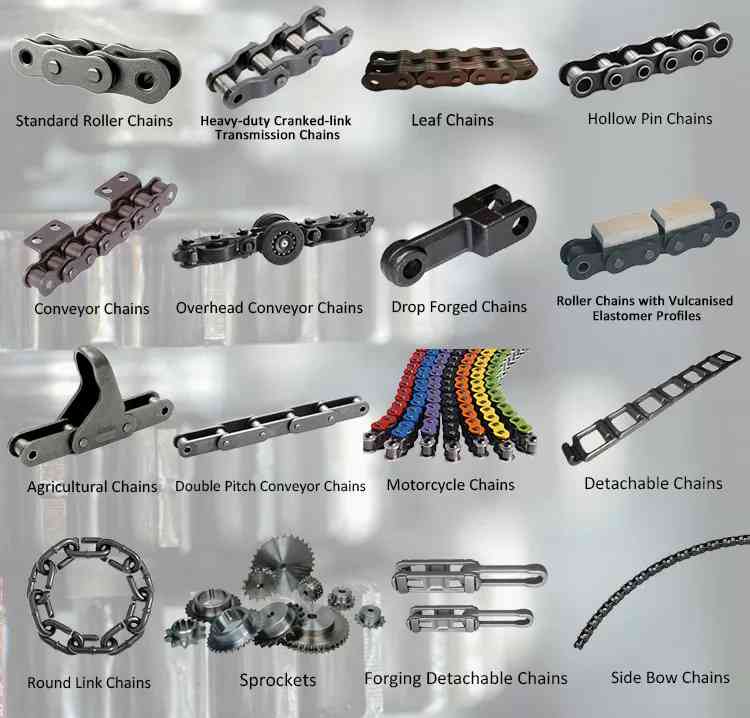
Without bushing
Bushless roller chains are the most common type of industrial chain. They are simple in design and require only regular maintenance. Regular maintenance includes lubricating, assessing wear, and replacing worn sprockets. For more information, please read the following information:
The outer chainplates and the inner chain plates are alternately arranged in pairs. The connecting pin extends through the hole in the inner link plate. The rollers thus positioned can be rotated on the connecting pins. Oil provided between the outer circumferential surfaces of each connecting pin serves to lubricate the chain. This system reduces noise and wears caused by collisions between inner chain plates and sprockets.
Compared to traditional roller chains, bushings roller chains have rollers around the bushing. These rollers are in rolling contact with the sprocket teeth, providing low friction and excellent wear resistance. To ensure smooth operation, bushings roller chains must be greased to prevent rust and keep the chain properly tensioned. Lubricated chains run smoother and last longer.
In a bushingless chain, the inner links are shaped like half bushings and ride on the rollers. The pins go through the outer plate and connect the inner links to the rollers. The outer plates overlap the inner links and open the pins. This system is also known as a heterochain. This type of chain is more common than traditional roller chains. If you are not sure which type of bushingless roller chain to choose, you may need to purchase an additional pair of inner chainplates.
Linerless roller chains may also include chain guides. In a bushingless roller chain, the outer and inner link plates conform to the surfaces of the guide rails. Thus, the large area of contact between the chain and the guide rail is eliminated, the friction loss is reduced, and the power transmission efficiency is improved. These properties make bushless roller chains more efficient and durable than traditional roller chains. It’s also less noisy. If you are looking for a chain with a lower noise level, a bushingless roller chain may be the right choice for you.
editor by czh 2022-12-28