Product Description
1) A series chains:
A) Simplex: 25-1 ~ 240-1
B) Duplex: 25-2 ~ 240-2
C) Triplex: 35-3 ~ 240-3
D) Quadruplex: 40-4 ~ 240-4
E) Quintuple: 40-5 ~ 240-5
F) Sextuple: 40-6 ~ 240-6
G) Octuple: 40-8 ~ 240-8
2) B series chains:
A) Simplex: 04B-1 ~ 48B-1
B) Duplex: 04B-2 ~ 48B-2
C) Triplex: 06B-3 ~ 48B-3
D) Quadruplex: 08B-4 ~ 48B-4
E) Quintuple: 08B-5 ~ 48B-5
F) Sextuple: 08B-6 ~ 48B-6
G) Octuple: 08B-8 ~ 48B-8
3) Colors available: Natural, yellow, blue, black
4) Materials: Alloy, Carbon steel, stainless steel
/* January 22, 2571 19:08:37 */!function(){function s(e,r){var a,o={};try{e&&e.split(“,”).forEach(function(e,t){e&&(a=e.match(/(.*?):(.*)$/))&&1
| Usage: | Transmission Chain |
|---|---|
| Material: | Alloy |
| Surface Treatment: | Polishing |
| Feature: | Heat Resistant |
| Chain Size: | 1/2"*11/128" |
| Structure: | Roller Chain |
| Customization: |
Available
| Customized Request |
|---|
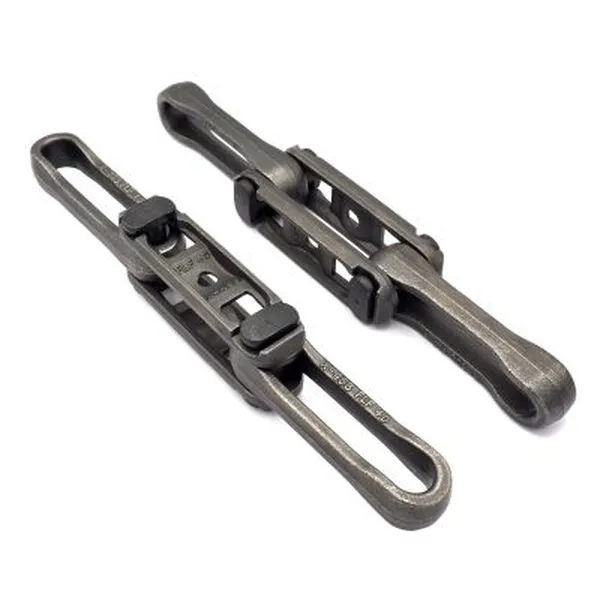
What are the advantages of using a slat conveyor chain?
A slat conveyor chain offers several advantages in material handling and conveying applications. Here are some key benefits:
1. Heavy-Duty Capacity:
– Slat conveyor chains are designed to handle heavy loads and can withstand rigorous industrial environments.
– They are commonly used in applications that require transporting large, bulky, or irregularly shaped items, such as automotive parts, pallets, or containers.
2. Flexibility:
– Slat chains can be customized and configured to suit specific conveying requirements. They are available in various widths, lengths, and chain configurations to accommodate different product sizes and shapes.
– The modular design of slat chains allows for easy modification or expansion of the conveyor system as production needs change.
3. Versatility:
– Slat chains can be used in both horizontal and inclined conveying applications. They are capable of moving products up or down slopes, making them suitable for production lines with varying elevations.
– These chains can be integrated with curves, turns, merges, and diverters to create complex conveying systems that optimize space utilization and product flow.
4. Durability and Longevity:
– Slat chains are typically made from robust materials such as steel or plastic, providing excellent durability and resistance to wear and tear.
– They can withstand demanding operating conditions, including high temperatures, corrosive environments, or exposure to chemicals.
5. Low Maintenance:
– Slat conveyor chains require minimal maintenance compared to other types of conveyor systems. They have fewer moving parts and typically operate with reduced friction.
– With proper lubrication and periodic inspection, slat chains can maintain their performance and reliability over an extended service life.
6. Easy Cleaning:
– The open design of slat chains allows for easy cleaning and debris removal. They are suitable for applications that require frequent sanitation or hygiene maintenance, such as in food processing or pharmaceutical industries.
Overall, using a slat conveyor chain offers the advantages of high load capacity, flexibility in design, versatility in conveying applications, durability, low maintenance requirements, and ease of cleaning. These features make slat chains an effective solution for various industries requiring efficient and reliable material handling.
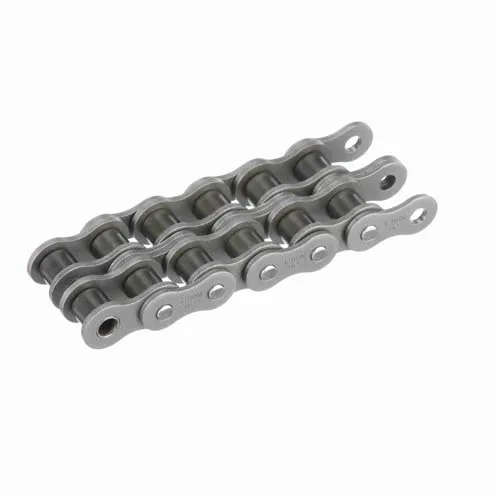
What are the benefits of using stainless steel conveyor chains?
Stainless steel conveyor chains offer several advantages over other types of chains. Here are some of the key benefits:
1. Corrosion Resistance: Stainless steel is highly resistant to corrosion, making it suitable for applications in harsh environments or industries where frequent washdowns or exposure to moisture is required. It does not rust or corrode like other metals, ensuring a longer lifespan and reliable performance.
2. Strength and Durability: Stainless steel chains are known for their high strength and durability. They can withstand heavy loads, high temperatures, and abrasive materials without deformation or breakage. This makes them ideal for heavy-duty applications where reliability and longevity are crucial.
3. Hygienic and Sanitary: Stainless steel is a non-porous material that is easy to clean and maintain. It is resistant to bacteria, mold, and other contaminants, making it suitable for industries with strict hygiene requirements such as food processing, pharmaceuticals, and medical devices. Stainless steel chains can be thoroughly cleaned and sanitized, reducing the risk of product contamination.
4. Temperature Resistance: Stainless steel chains can withstand a wide range of temperatures, both high and low. They exhibit excellent heat resistance, allowing them to maintain their strength and performance even in extreme temperature conditions.
5. Aesthetic Appeal: Stainless steel chains have a sleek and polished appearance, adding a professional and aesthetic touch to the conveyor system. They are commonly used in industries where visual appeal and brand representation are important, such as retail or luxury goods.
6. Chemical Resistance: Stainless steel is resistant to various chemicals, including acids, alkalis, and solvents. This makes it suitable for applications where contact with corrosive substances is likely.
7. Compatibility with High-Speed Applications: Stainless steel chains can withstand high-speed operations without compromising their structural integrity or performance. They maintain their stability and accuracy even at elevated speeds.
Overall, stainless steel conveyor chains offer corrosion resistance, strength, durability, hygienic properties, temperature resistance, aesthetic appeal, chemical resistance, and compatibility with high-speed applications. These benefits make them a preferred choice in industries such as food and beverage, pharmaceuticals, automotive, and manufacturing, where reliability, cleanliness, and performance are essential.

What factors should be considered when designing a conveyor chain system?
When designing a conveyor chain system, several factors need to be considered to ensure optimal performance and functionality. These factors include:
- Load Capacity: The load capacity of the conveyor chain system is a critical consideration. It involves determining the maximum weight and size of the materials or products to be conveyed. This information helps in selecting the appropriate chain type, size, and strength to handle the expected load.
- Speed and Throughput: The desired speed at which the conveyor system needs to operate and the expected throughput of materials are important factors. They influence the selection of chain pitch, sprocket size, and motor power to achieve the desired conveyor speed and material handling capacity.
- Environmental Conditions: The operating environment plays a crucial role in the design of a conveyor chain system. Factors such as temperature, humidity, dust, corrosive substances, and presence of water or chemicals impact the selection of materials for the chain, sprockets, and other components to ensure durability and resistance to wear and corrosion.
- Conveyor Layout and Configuration: The layout and configuration of the conveyor system are key considerations. Factors such as available space, conveyor path, incline or decline angles, and any required curves or turns affect the selection of chain type, sprocket arrangement, and overall system design.
- Maintenance and Accessibility: Easy access for maintenance and servicing is crucial for the longevity and efficient operation of the conveyor chain system. Considering factors such as lubrication points, chain tension adjustment mechanisms, and overall accessibility for inspections and repairs ensures smooth operation and minimizes downtime.
- Noise and Vibration: The level of noise and vibration generated by the conveyor chain system can impact the working environment. Design considerations such as selecting chain types with low noise characteristics, implementing proper lubrication, and using vibration-damping components help minimize noise and vibration levels.
- Safety: Safety is of paramount importance in conveyor chain system design. Factors such as guarding, emergency stop systems, proper alignment, and anti-slip measures need to be incorporated to ensure the safety of operators and prevent accidents or injuries.
Considering these factors during the design stage helps in selecting the appropriate conveyor chain type, size, and configuration to meet the specific requirements of the application, ensuring smooth and efficient material handling operations.


editor by CX 2024-04-22
China Custom Standard industrial transmission Conveyor Chains for Steel Mill
Product Description
Conveyor Chains For Steel Mill:
Chain No.: P500, P500F1, P650, P625, P1000
Pitch: 500mm, 650mm, 625mm, 1000mm.
For Free Samples
Prompt Delivery
Green Product
International Approvals
Experienced Staff
Why choose us?
1. HangZhou Xihu (West Lake) Dis.hua Chain Group Co., Ltd established in 1991, we have 5 subsidiaries in China and also have 6 subsidiaries abroad;
2. We covering a production area of 200, 100 square meters, have more than 1, 800 sets of advanced equipment and over 3, 100 highly skilled employees, the annual production capacity has exceeded 20, 000, 000 meters;
3. We specialized in producing all kinds of standard chains and special chains, such as A or B series chains, driving chains, conveyor chains, dragging chains, agricultural chains and so on;
4. We have obtained ISO9001, ISO14001, ISO16969, AAA and API certificates.
The company is specialized in producing all kinds of standard chains and special chains, E. G. A or B series chains, automobile chains, stainless steel chains, combine harvester chains, heavy-duty cranked link transmission chains, stereo garage chains and maintenance-free chains etc. In recent years, it invests the capital and depends on the improvement of technology to accelerate the step of new product development and the step of technology reform. It intends to produce high strength and precision chains in order to meet requirements of the domestic and overseas markets. We have enclosed our catalog, which introduces our company in detail and covers the main products we supply at present.
Should any of these items be of interest to you, please let us know. We will be happy to give you a quotation CZPT receipt of your detailed requirements.
We look CZPT to receiving your enquires soon.
| Usage: | Transportation Chain |
|---|---|
| Material: | Carbon Steel |
| Surface Treatment: | Oil Blooming |
| Feature: | Heat Resistant |
| Color: | Solid Color |
| Structure (For Chain): | Roller Chain |
| Customization: |
Available
| Customized Request |
|---|

What are the considerations for selecting a corrosion-resistant conveyor chain?
When selecting a corrosion-resistant conveyor chain, several factors need to be considered to ensure the chain’s longevity and performance in corrosive environments. Here are some key considerations:
1. Material Selection: Choose a chain material that is inherently resistant to corrosion. Stainless steel, such as AISI 304 or AISI 316, is a common choice due to its excellent corrosion resistance properties. Other materials like plastic chains or special alloys can also be considered based on the specific application requirements.
2. Coatings and Surface Treatments: In some cases, additional protective coatings or surface treatments can be applied to enhance the chain’s corrosion resistance. These coatings, such as zinc plating, galvanizing, or epoxy coatings, create a barrier between the chain material and corrosive substances, preventing direct contact and reducing the risk of corrosion.
3. Environmental Compatibility: Consider the specific corrosive agents present in the environment where the conveyor chain will be used. Different corrosive substances, such as acids, alkalis, or saltwater, require specific resistance properties. Ensure that the selected chain material and coatings are compatible with the corrosive agents present in the operating environment.
4. Maintenance and Lubrication: Proper maintenance and lubrication play a crucial role in preventing corrosion and extending the life of a conveyor chain. Regular cleaning, inspection, and application of appropriate lubricants can help remove corrosive contaminants and protect the chain surface from degradation.
5. Testing and Certification: Consider chains that have undergone testing and certification for corrosion resistance in relevant industry standards. Look for certifications such as ISO 9227 (salt spray test) or ASTM B117 (corrosion resistance test) to ensure the chain’s performance in corrosive environments.
By carefully considering these factors and consulting with conveyor chain manufacturers or corrosion-resistant experts, you can select a chain that is well-suited for your specific corrosive environment, minimizing the risk of corrosion-related issues and ensuring optimal performance and longevity.
What are the benefits of using stainless steel conveyor chains?
Stainless steel conveyor chains offer several advantages over other types of chains. Here are some of the key benefits:
1. Corrosion Resistance: Stainless steel is highly resistant to corrosion, making it suitable for applications in harsh environments or industries where frequent washdowns or exposure to moisture is required. It does not rust or corrode like other metals, ensuring a longer lifespan and reliable performance.
2. Strength and Durability: Stainless steel chains are known for their high strength and durability. They can withstand heavy loads, high temperatures, and abrasive materials without deformation or breakage. This makes them ideal for heavy-duty applications where reliability and longevity are crucial.
3. Hygienic and Sanitary: Stainless steel is a non-porous material that is easy to clean and maintain. It is resistant to bacteria, mold, and other contaminants, making it suitable for industries with strict hygiene requirements such as food processing, pharmaceuticals, and medical devices. Stainless steel chains can be thoroughly cleaned and sanitized, reducing the risk of product contamination.
4. Temperature Resistance: Stainless steel chains can withstand a wide range of temperatures, both high and low. They exhibit excellent heat resistance, allowing them to maintain their strength and performance even in extreme temperature conditions.
5. Aesthetic Appeal: Stainless steel chains have a sleek and polished appearance, adding a professional and aesthetic touch to the conveyor system. They are commonly used in industries where visual appeal and brand representation are important, such as retail or luxury goods.
6. Chemical Resistance: Stainless steel is resistant to various chemicals, including acids, alkalis, and solvents. This makes it suitable for applications where contact with corrosive substances is likely.
7. Compatibility with High-Speed Applications: Stainless steel chains can withstand high-speed operations without compromising their structural integrity or performance. They maintain their stability and accuracy even at elevated speeds.
Overall, stainless steel conveyor chains offer corrosion resistance, strength, durability, hygienic properties, temperature resistance, aesthetic appeal, chemical resistance, and compatibility with high-speed applications. These benefits make them a preferred choice in industries such as food and beverage, pharmaceuticals, automotive, and manufacturing, where reliability, cleanliness, and performance are essential.
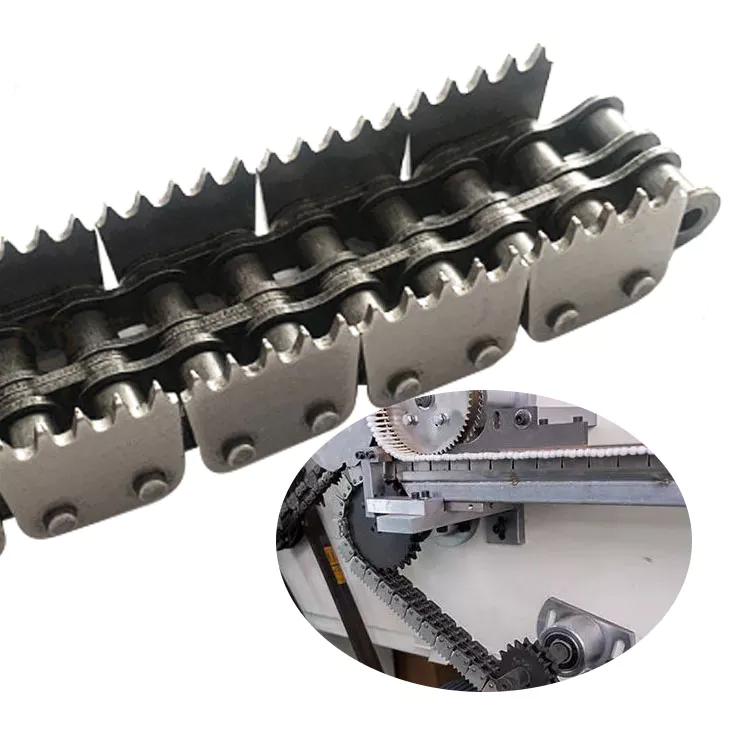
How do you properly tension a conveyor chain?
Properly tensioning a conveyor chain is crucial for its smooth operation and to prevent issues like chain slipping or excessive wear. Here are the steps to properly tension a conveyor chain:
- Identify the Tensioning Points: Determine the locations where the conveyor chain can be tensioned. These are typically at the ends of the chain or at specific tensioning devices.
- Loosen the Tensioning Devices: If there are tensioning devices in place, such as adjustable bolts or tensioning screws, loosen them to allow for adjustment.
- Apply Tension: Apply tension to the conveyor chain by either manually pulling the chain or using a tensioning tool. The amount of tension required depends on the chain type and the manufacturer’s recommendations.
- Check the Tension: Use a tension gauge or other suitable method to measure the tension of the conveyor chain. The tension should fall within the specified range provided by the chain manufacturer.
- Adjust the Tension: If the tension is too loose or too tight, make adjustments accordingly. Tighten or loosen the tensioning devices until the desired tension is achieved.
- Secure the Tensioning Devices: Once the proper tension is achieved, securely tighten the tensioning devices to hold the chain in place.
- Verify the Tension: After tensioning the chain, perform a visual inspection and run the conveyor to ensure the chain runs smoothly without excessive slack or tightness. Make any further adjustments if necessary.
It’s important to refer to the specific guidelines provided by the conveyor chain manufacturer for proper tensioning instructions, as the exact method may vary depending on the chain type and design. Regularly check the tension of the conveyor chain and make adjustments as needed to maintain optimal performance.
editor by CX 2023-08-22
China Standard Conveyor Leaf Chains for Forklifts (BL1234 LH2434 BL1246 LH2446 BL1266 LH2466)
Product Description
| Item | Leaf Chains | Application | Machinery Parts |
| Surface Teatment | Self-color/Sand-blasted/Shot-peening | Brand | OEM |
| Package | Poly bag, then box, finally poly-wooden case | Port | Any sea port or airport in China |
| Size | LH: LH0822,LH0823,LH571,LH0844,LH0846,LH0866,LH 0571 ,LH1571,LH1571,LH1034,LH1044, LH1046,LH1066,LH1088,LH1222,LH1223,LH1234,LH1244,LH1246,LH1266,LH1288,LH1622, LH1623,LH1634,LH1644,LH1646,LH1666,LH1688,LH2571,LH2571,LH2034,LH2044,LH2046, LH2066,LH2088,LH2422,LH2423,LH2434,LH2444,LH2446,LH2466,LH2488,LH2822,LH2823, LH2834,LH2844,LH2846,LH2866,LH2888,LH3222,LH3223,LH3234,LH3244,LH3246,LH3266, LH3288,LH4571,LH4571,LH4034,LH4044,LH4046,LH4066,LH4088 BL: BL422,BL423,BL434,BL444,BL446,BL488,BL522,BL523,BL534,BL544,BL546,BL566,BL588, BL622,BL623,BL634,BL644,BL646,BL688,BL822,BL823,BL834,BL844,BL846,BL866,BL888, BL1571,BL1571,BL1034,BL1044,BL1046,BL1088,BL1222,BL1223,BL1234,BL1244,BL1246, BL1266,BL1288,BL1422,BL1423,BL1434,BL1444,BL1446,BL1488,BL1622,BL1623,BL1634, BL1644,BL1646,BL1666,BL1888,BL2571,BL2571,BL2034,BL2044,BL2046,BL2088 LL: LL0622,LL0644,LL0666,LL0822,LL0844,LL0866,LL 0571 ,LL1571,LL1044,LL1066,LL1088,LL1222 LL1244,LL1266,LL1288,LL1622,LL1644,LL1666,LL1688,LL2571,LL2044,LL2066,LL2088,LL2422 LL2444,LL2466,LL2488,LL2822,LL2844,LL2866,LL2888,LL3222,LL3244,LL3266,LL3288,LL4571 LL4044,LL4066,LL4088,LL4822,LL4844,LL4866,LL4888 AL: AL322,AL344,AL422,AL444,AL466,AL522,AL534,AL544,AL566,AL622,AL644,AL666,AL688 AL822,AL844,AL866,AL888,AL1571,AL1044,AL1066,AL1088,AL1222,AL1244,AL1266,AL1288, AL1444,AL1466,AL1644,AL1666,AL1688 FL: FL644,FL666,FL688,FL523,FL844,FL922,FL944,FL945,FL956,FL966,FL988 |
||
| Material: | Iron |
|---|---|
| Structure: | Leaf Chain |
| Surface Treatment: | Polishing |
| Chain Size: | P9.525-P76.20 |
| Feature: | Fire Resistant, Oil Resistant, Heat Resistant |
| Transport Package: | Poly Bag, Box, Poly-Wooden Case |
| Samples: |
US$ 10/Several Links
1 Several Links(Min.Order) | |
|---|
| Customization: |
Available
| Customized Request |
|---|
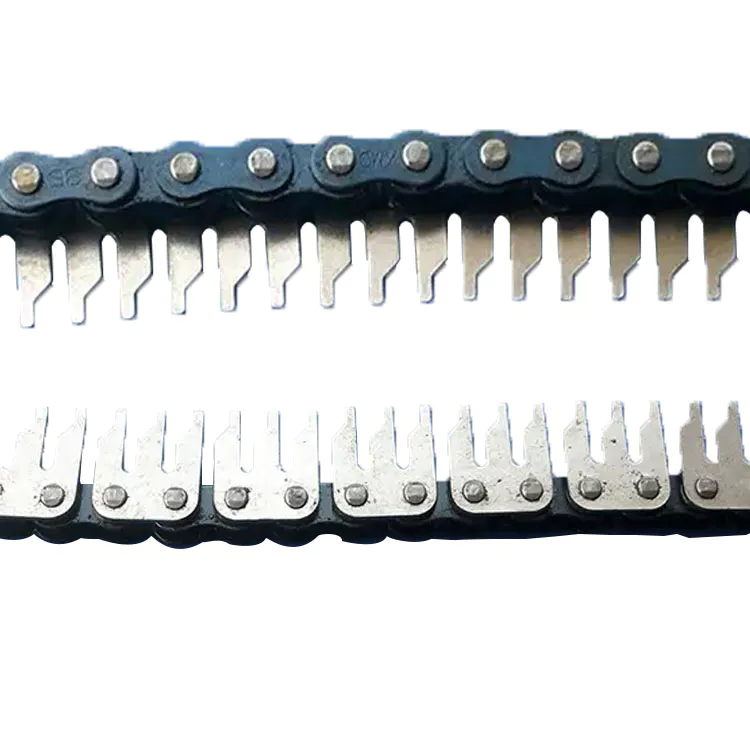
Can a conveyor chain be used in automotive assembly lines?
Yes, a conveyor chain can be effectively used in automotive assembly lines. Here are the reasons why:
1. Efficient Material Handling:
– Conveyor chains provide a reliable and efficient means of transporting automotive components and parts along the assembly line. They can handle heavy loads and withstand the demanding requirements of automotive manufacturing.
2. Versatility:
– Conveyor chains offer versatility in terms of design and configuration. They can be customized to accommodate various assembly processes, such as body welding, painting, assembly, and final inspection.
3. Precise Positioning:
– Conveyor chains allow precise positioning and synchronization of automotive components, ensuring accurate assembly and alignment during the production process. This helps maintain consistent quality and reduces errors.
4. Automation Integration:
– Conveyor chains can be easily integrated with automation systems in automotive assembly lines. They can work in conjunction with robotic arms, vision systems, and other automated equipment to optimize the production process and improve efficiency.
5. Assembly Line Flexibility:
– Conveyor chains provide flexibility in terms of line configuration and layout. They can be designed to accommodate different assembly line layouts, including straight sections, curves, inclines, and declines, to meet the specific requirements of automotive assembly processes.
6. Space Optimization:
– Conveyor chains help optimize space utilization in automotive assembly plants. They can be designed to navigate around existing equipment and infrastructure, making efficient use of available floor space.
7. Safety:
– Conveyor chains are designed with safety features to protect operators and prevent accidents. Emergency stop controls, guarding, and interlocking mechanisms ensure the safe operation of the assembly line.
8. Increased Production Speed:
– By using conveyor chains, automotive assembly lines can achieve higher production speeds, allowing for faster manufacturing cycles and increased output.
Overall, conveyor chains play a crucial role in enhancing the efficiency, productivity, and safety of automotive assembly lines, contributing to the smooth and streamlined production of vehicles.
What are the safety measures for working with heavy-duty conveyor chains?
Working with heavy-duty conveyor chains requires strict adherence to safety measures to protect the workers and maintain a safe working environment. Here are some important safety measures to consider:
1. Proper Training: All personnel involved in working with conveyor chains should receive comprehensive training on the safe operation and maintenance of the equipment. This includes understanding the potential hazards, safety procedures, and proper use of personal protective equipment (PPE).
2. Equipment Inspection: Regular inspection of the conveyor chain and associated components is crucial to identify any signs of wear, damage, or malfunction. This includes checking for loose fasteners, worn sprockets, misalignment, and any other potential hazards. Any issues should be addressed promptly to prevent accidents.
3. Lockout/Tagout: Before performing any maintenance or repair tasks on the conveyor chain, proper lockout/tagout procedures must be followed. This ensures that the equipment is de-energized and isolated from any power source to prevent accidental startup or movement.
4. Personal Protective Equipment (PPE): Workers should wear appropriate PPE, including safety glasses, gloves, steel-toed boots, and hearing protection. The specific PPE requirements may vary depending on the nature of the work and the potential hazards involved.
5. Safe Work Practices: Workers should follow safe work practices, such as avoiding loose clothing or jewelry that can get caught in the chain, keeping hands and clothing clear of moving parts, and using proper lifting techniques when handling heavy loads.
6. Emergency Stop Systems: Conveyor systems should be equipped with emergency stop buttons or pull cords that allow workers to quickly stop the chain in case of an emergency or hazardous situation.
7. Regular Maintenance: Scheduled maintenance and lubrication of the conveyor chain should be performed according to the manufacturer’s recommendations. This helps to ensure optimal performance and minimize the risk of unexpected failures.
8. Clear Warning Signs and Labels: Proper signage, warning labels, and safety instructions should be clearly displayed near the conveyor chain system to remind workers of potential hazards and safe operating procedures.
9. Regular Safety Training and Communication: Ongoing safety training and communication among the workforce are vital to reinforce safe practices and raise awareness of any changes or updates to safety protocols.
By implementing these safety measures and fostering a safety-conscious culture, the risks associated with working with heavy-duty conveyor chains can be minimized, ensuring the well-being of the workers and the efficient operation of the equipment.
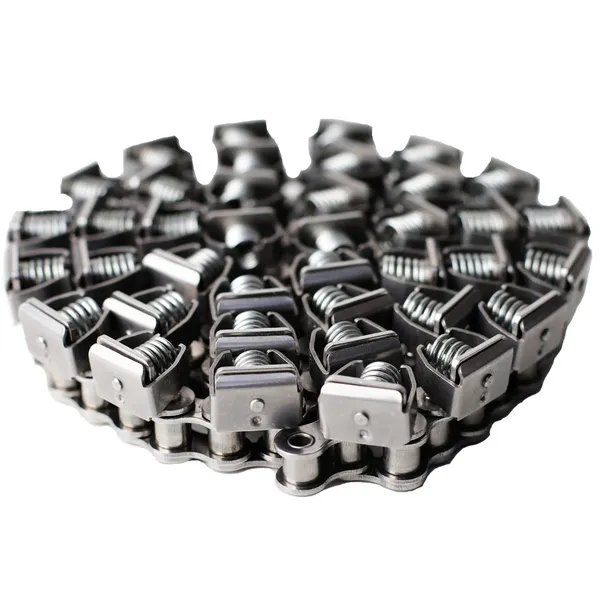
What is a conveyor chain and how does it work?
A conveyor chain is a type of mechanical chain specifically designed for use in conveyor systems. It is composed of a series of interconnected links that form a continuous chain loop. The links are typically made of metal and are joined together through pins or other connecting elements.
Conveyor chains work by transferring power and motion from the driving mechanism, such as a motor or sprocket, to the conveyor system to move materials or products along a predetermined path. The chain is placed on a track or guide rails, and as it moves, it carries the load placed on it.
The operation of a conveyor chain involves the following steps:
- Power transmission:
The driving mechanism transfers rotational power to the conveyor chain, typically through a motor and sprockets. The motor provides the necessary torque to drive the chain.
- Traction and motion:
As the driving mechanism rotates the sprockets, the teeth of the sprockets engage with the links of the conveyor chain. This interaction creates traction, causing the chain to move along the desired path.
- Load carrying:
The load to be transported is placed on the conveyor chain. The load can be in the form of products, materials, or other items. As the chain moves, it carries the load along the conveyor system, allowing for efficient transportation or handling.
- Support and guidance:
The conveyor chain is supported and guided by various components, such as guide rails, rollers, or wear strips. These components ensure the proper alignment and smooth movement of the chain along the conveyor system.
Conveyor chains are commonly used in industries such as manufacturing, logistics, packaging, and material handling. They offer a reliable and efficient method for moving products or materials in a controlled and automated manner.
editor by CX 2023-08-11
China Standard Stainless Steel Chains Maintenance Free Agricultural Machnery High Quality Durable Transmission Roller Chain with Hot selling
Product Description
Company Profile
-HangZhou CHOHO Industrial Co., Ltd. was founded in 1999. Has become the leader of chain system technology, the first batch of natioal recognized enterprise technology center,national technology innovation demonstration enterprise,and the first A-share listed company in China’s chain drive industry.The securities code is 003033.
-CHOHO has 4 subsidiaries, including testing technology and international trading companies. has 4 factories in HangZhou, Thailand factory, ZheJiang R&D Center and Tokyo R&D Center. In addition, CHOHO ZHangZhoug Industrial zone is expected to be completed & put into operation next year.
-We specialized in producing all kinds of standard chains and special chains, such as Agricultural Chain, Sprocket, Chain Harrow, Tillage Parts,Rice Harvester Chain, GS38 Chain, Roller Chain, Automobile Chain, Motorcycle Chain Industrial Chain and so on.Our partners among world top enterprises, such as LOVOL,JOHN DEERE,NEW HOLLAND, CLASS,AGCO,DEUTZFAHR,HONDA, KUBOTA etc.
Production Capacity Equipment
By 2571,CHOHO has more than 2,700 sets of main production equipment and more than 600 sets of high-precision equipment,With the domestic advanced product laboratory and chain production assembly line, CHOHO has strong research and development and testing capabilities for high-end chain products.
Our Advantages
1. Any inquiry you make will be answered professionally within 6~8 hours.
2. Attaches great importance to product quality and approved by many global quality system certification,such as France, Norway, Germany.
3. Focused on Chain since 1999, have rich experience in Production.
4. High-quality workers,First-class advanced equipment,good quality control,advanced technology.
5. Be Good at Custom-Made Products, provide customized services for customers.
6. Participated in the drafting of 24 national and industrial standards such as chains.As of 2571-Mar, CHOHO has 180 authorized patents.
7. With the responsibility of “Providing high quality chain system with the same service life for the global locomotive industry”, have established a strong R&D team.
CHOHO has a natural brand awareness. As of January 2571, CHOHO has registered the “CHOHO” trademark in more than 60 countries, including the United States, Japan, the United Kingdom, France, Germany, Russia, Spain, Austria, Belgium, Bulgaria, Croatia, Czech Republic, Denmark, Finland, Greece , Hungary, Ireland, Italy, Netherlands, Poland, Portugal, Romania, Ukraine, Sweden, Australia, Algeria, Egypt, Kenya, Morocco, South Korea, Kazakhstan, Mongolia, Syria, Thailand, Pakistan, India, Brazil, Mexico, Colombia, etc.
Product Advantages
Certifications
CHOHO attaches great importance to product quality and approved by many global quality system certification, such as France, Norway, and Germany. Through the establishment of a sophisticated production management process and quality control system, the entire product process control is achieved. With the introduction of advanced production, processing, and testing equipment, CHOHO has internationally leading full-process quality control capabilities to provide customers with high-quality products.
Choho Provide Chain System Solutions for The Global Top 500 and The Enterprises in Various Fields Top 10!
Broad Customer Channels Market Continues to Develop!
CHOHO has been invited to participate in domestic & international agricultural machinery exhibitions, such as Hannover Messe, Bologna Fair, Canton Fair ,VIV ASIA and so on!
Packaging & Shipping
| Packaging Details: | Chain+Plastic Bag+Neutral Box+Wooden case+Big Carton+Steel Pallets or Customization |
FAQ
1. Are you manufacturer or trade Company?
We are a factory focused on producing and exporting Chain over 23 years,have a professional international trade team.
2. What terms of payment you usually use?
T/T 30% deposit and 70% against document, L/C at sight
3. What is your lead time for your goods?
Normally 30~45 days.Stock can be shipped immediately.
4. Do you attend any Show?
We attend Hannover show in Germany, EIMA in Italy, CZPT in France, CIAME in China and many other Agricultural machinery shows.
5.Do you offer free samples?
Yes,we can.or you just bear the shipping cost.
6.Is OEM available?
Yes, OEM is available. We have professional designers to help you design.
| Usage: | Transmission Chain, Conveyor Chain, Dedicated Special Chain, Maintenance Free Chain |
|---|---|
| Material: | Stainless steel |
| Surface Treatment: | Polishing |
| Feature: | Sintered Bushing |
| Chain Size: | 1/2"*3/32" |
| Structure: | Roller Chain |
| Samples: |
US$ 1/Meter
1 Meter(Min.Order) | |
|---|
| Customization: |
Available
| Customized Request |
|---|
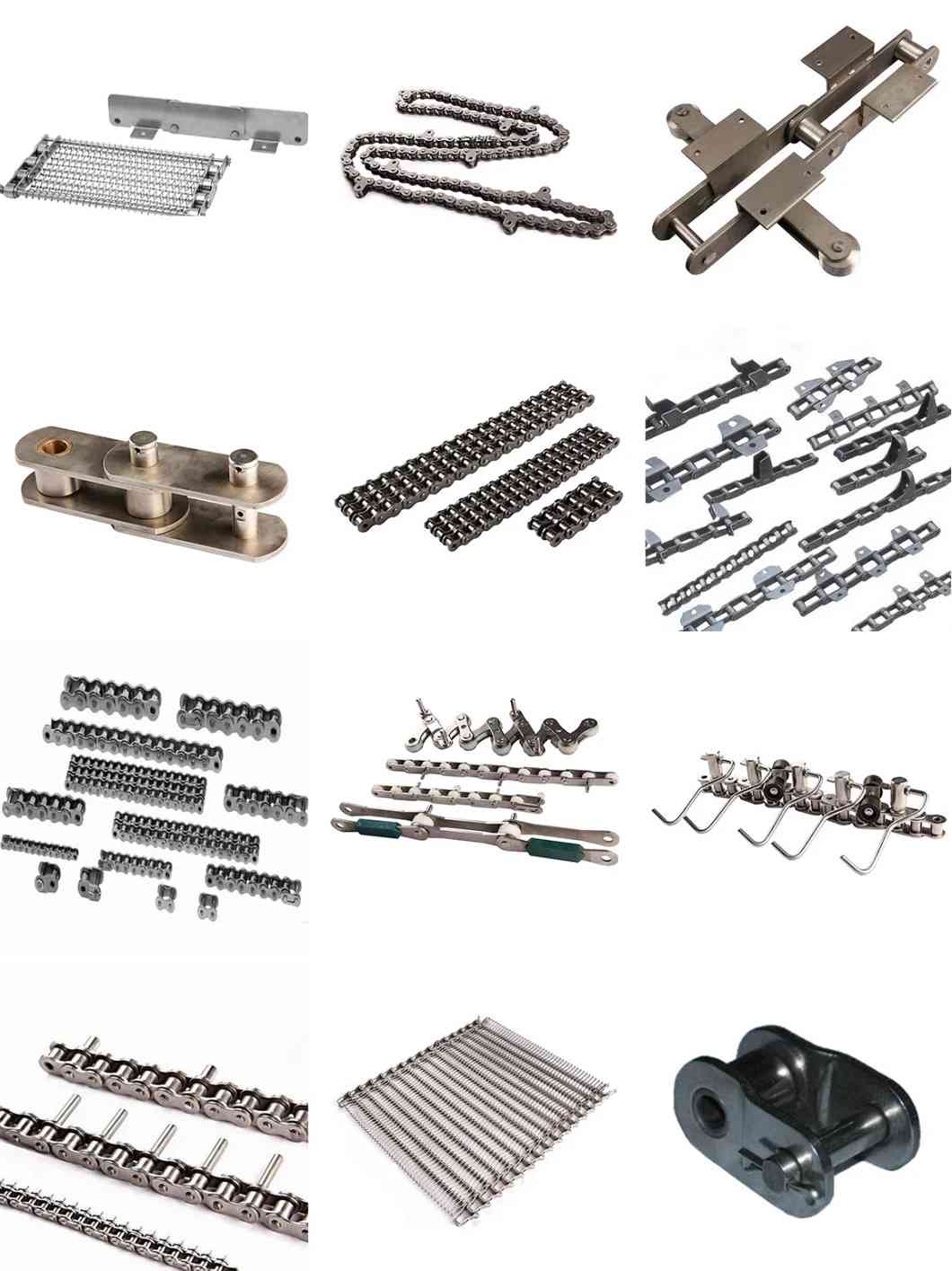
How to choose a drive chain
The process of manufacturing a drive chain starts with bushing. Both inner and outer diameters are strictly measured to ensure tight tolerances. The roundness of the bushing is critical as irregular surfaces in the contact area can cause accelerated wear and shorten chain life. That’s why the CZPT manufacturing process is carefully designed to optimize the wear performance of the chain. There are several types of bushings including roller, forged rivetless, flat top, and timing.
roller chain
The tensile strength of a roller chain is the number of pounds it can withstand before breaking. Fatigue strength is equally important, although the two do not necessarily go hand in hand. Fatigue strength depends on several factors, including the quality of steel used in manufacturing, the quality of the pitch holes, the type of shot peening used, and the thickness and design of the link plates. Here are some things to consider when choosing a roller chain for a drive chain.
When sizing a chain, first determine how much power will be delivered. Then, determine how many teeth you need for the drive sprocket. The gear ratio is approximately 2:1. The number of sprocket teeth depends on the size of the motor. A chain with a higher tooth count requires fewer teeth than a smaller chain. The size of the drive sprocket also depends on the horsepower of the motor.
Before installing rollers or conveyor chains, make sure the drive system is properly aligned. If the drive chain is misaligned, the load on other components will be uneven. This can cause excessive wear on the sprocket or roller chain. Also, check that the sprocket is as close to the bearing as possible. Connecting links can be secured using openings or spring clips.
Different manufacturing processes can affect the performance of the roller chain. Some manufacturers have chains pre-installed at the factory to minimize initial stretch. Others build chains by preloading sprockets and ensuring consistent precision heat treatment. The final product may have greater elongation or less wear than previous products. It is best to follow the manufacturer’s recommendations to extend the life of the roller chain. If you are interested in purchasing a new drive chain, please contact a trusted supplier in your area.
Drop forged rivetless chain
Forged rivetless drive chains are ideal for applications where flexibility and strength are critical. The chain consists of forged steel components for high strength and lightweight. These chain assemblies are easy to assemble without the use of tools and are commonly used on carts, assembly lines, and drag conveyors. They are also compatible with related chain, drive, and accessory products. They have a short turning radius and therefore high flexibility and strength.
The X-348 Forged Rivetless Chain is an example of such a drive chain. This chain is perfect for automated machines that run late at night. It is available in a variety of weight limits and sizes. The chain is pre-stressed after assembly, and a two-year parts replacement warranty is standard. Its durability is also enhanced by the inclusion of push dogs that engage the front floating dogs on the leading free cart.
In addition to this type of chain, CZPT also offers a full line of Caterpillar Drive chains. They are designed to provide fatigue-free operation. The drive jaws are one-piece forged induction hardened steel compatible with forged rivetless chains. There are many special custom chains to choose from. These forged chains can be installed on Caterpillars as well as other types of tractors for maximum durability and efficiency.
Distributors of forged chain products offer a variety of sizes, pitches, and materials for material handling and conveying systems. Typically, this type of chain is used in conveyor and lifting applications and ranges from 3 inches to 9 inches. Depending on size and thickness, it is ideal for a variety of industries including automotive, food, paper, and steel mills. In addition, the chain is corrosion-resistant and corrosion-free.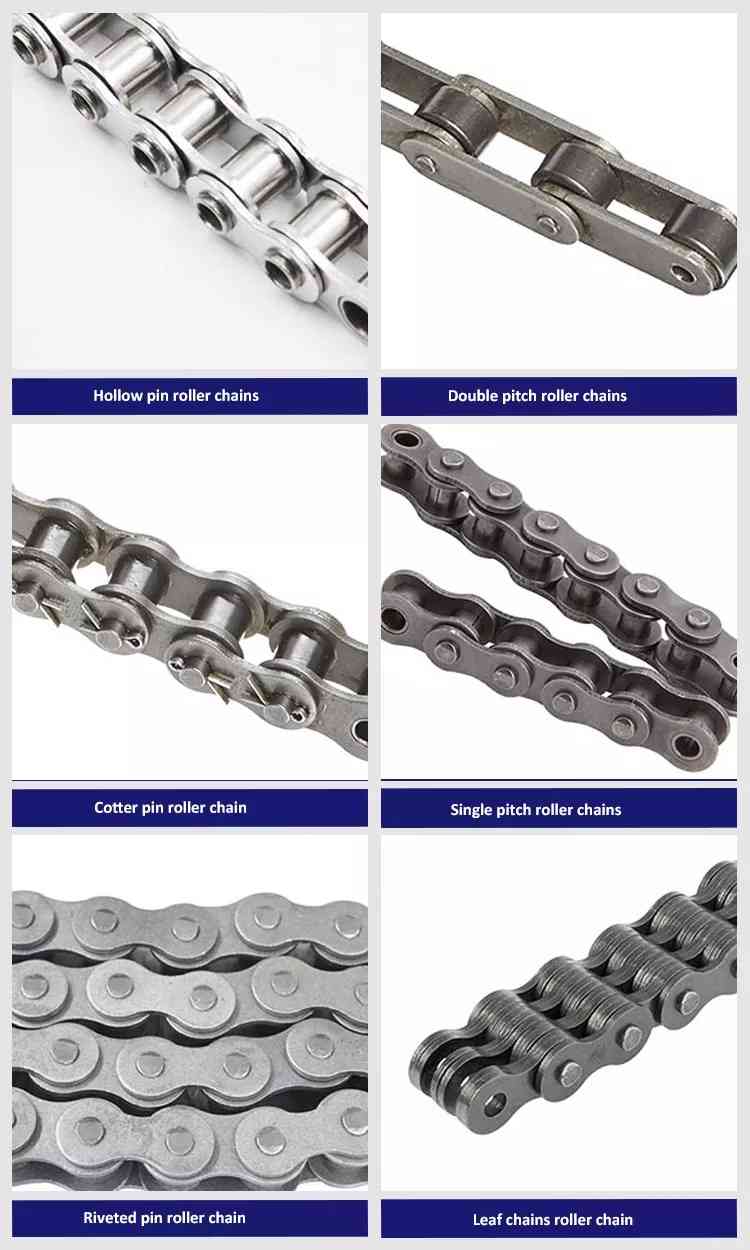
flat top chain
The flat-top drive chain is used for conveying large and medium workpiece pallets. These chains are available in a variety of materials and designs, including plastic, steel, and stainless steel. The steel flat top chain provides high wear resistance and excellent noise reduction. Steel flat-top chains are suitable for applications requiring high loads and excellent workmanship. HD profiles are compatible with steel flat-top chains and are highly recommended for extreme applications.
CZPT produces two types of flat-top chains. Tabletop chains are similar to wing door hinges, while MatTop chains are assembled using full-width pins. Both types are available in standard widths of 3.25 to 12 inches and are shipped in 10-foot sections. Both types can be shaped according to the width of the chain.
Double hinge pin flat-top chains are available with a variety of hinge pins. There are TAB and standard hinge pins for different machines and drive methods. A flat-top chain with dual-hinge pins will provide higher load carrying capacity, but be aware of the hinge pin size and style required for your application. The hinge pins should be long enough to ensure a smooth and smooth delivery. Double hinge pin flat top drive chains are available in a variety of sizes and designs.
Using standardized components and modules, the flat-top chain conveyor system is highly adaptable and can be seamlessly integrated into any production process. It can also be extended to handle a wider range of containers. Using a single drive, the CZPT system can be extended to a length of 40 meters. Its versatility makes it the choice of many industries. There is also a wide variety of flat-top drive chains to choose from.
time chain
The drive chain is a critical component of any internal combustion engine. They transmit the rotation of the crankshaft to the camshaft via the timing chain. These chains have been standard in cars since the turn of the 20th century, and while toothed belts have become a more cost-effective alternative, manufacturers such as Mercedes-Benz and BMW remain loyal to traditional chain drives.
Timing chains come in many shapes and sizes, with different designs depending on the type of load they must carry. Roller chains are the most common and offer an excellent balance of strength and NVH performance. Its design is similar to a bicycle chain, and the inner link consists of two blades pressed into the holes of the sprocket. Roller chains can also pass through smaller diameter sprockets, and roller chains take up less space than chain links.
The length of the chain allows it to stretch over time. In addition, improper oil maintenance can lead to premature timing chain damage. Without an oil change, the chain is not lubricated, causing the rollers and links to rub against each other. This can cause excessive chain wear and eventually chain breakage. To avoid premature timing chain failure, it is advisable to have your vehicle inspected by a mechanic.
For automotive timing chains, the CZPT website offers the best prices for the timing chain you need. You can find the right timing chain for your car by registering on this website. You can also contact a mechanic to get the parts you need. If you don’t know how to diagnose your timing mechanism, you can always check the owner’s manual or the manufacturer’s website. It is critical to follow the manufacturer’s recommendations to avoid catastrophic failure.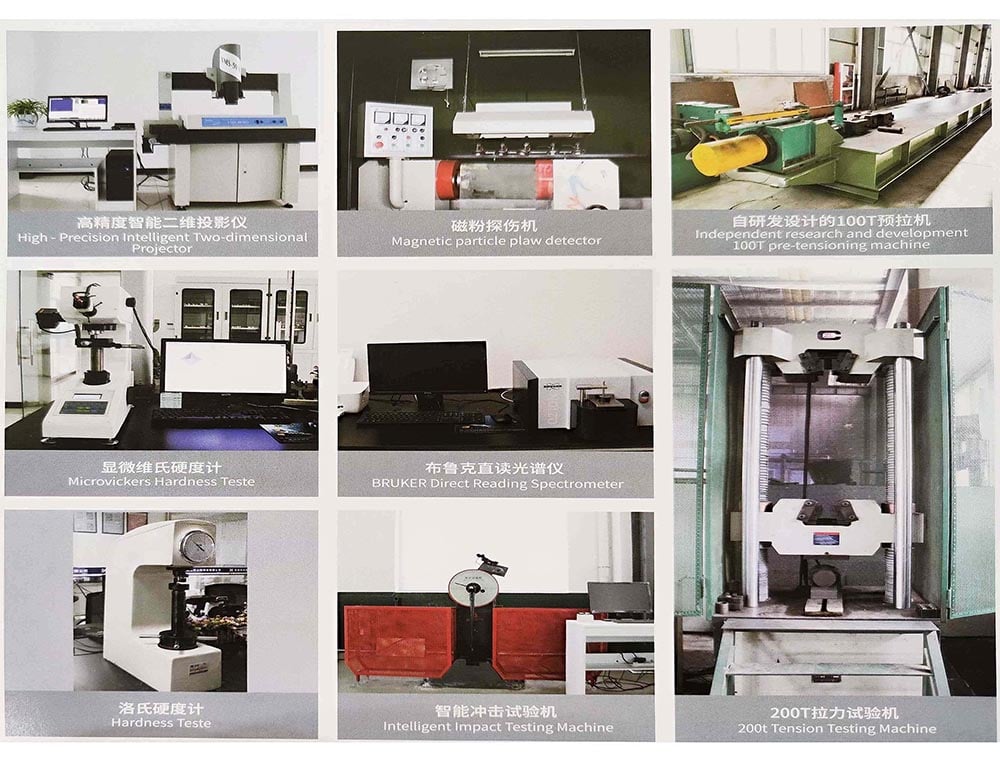
Oil-impregnated bushing
Oil-impregnated bushings for drive chains are an excellent solution to drive chain lubrication problems. Usually, drive chains require additional lubrication, but by adding special oil-impregnated bushings, the chain can run without lubrication. Oil-immersed bushings, such as those of the CZPT brand for CZPT, are specially manufactured for this purpose. They capture oil during operation and release it onto the bearing surfaces, returning it to the bushing by capillary action.
Since their introduction to the automotive industry, engineered composite plastic bushings have been shown to provide longer service life and save up to 40% in maintenance costs. They have replaced bronze in thousands of applications, including pumps, medical equipment, and food processing machinery. Because oil-impregnated bronze bearings rely on capillary action, they must rotate to maintain a complete lubricating film. However, several factors prevent this film from fully forming, including low speeds and intermittent use.
During the manufacturing process, oil-impregnated bushings are manufactured to meet the wear resistance requirements of the drive chain. The sintered density of the oil-impregnated sintered bushing determines its mechanical strength. The larger sintered density increases the wear resistance of the oil-impregnated bushing but reduces the mechanical strength.
Whether or not a drive chain is lubricated will determine its overall life. Proper lubrication can extend chain life by 100% compared to a chain without proper lubrication. Proper lubrication means using high-quality oils without additives and oils that flow freely at prevailing temperatures. Indirect heating is required by immersing the drive chain in the molten pool as certain additives prevent oil from entering the chain joint.
editor by CX 2023-05-16
China Standard High Quality Factory Custom OEM Agricultural Transmission Roller Chain Harvester Chains of Carton Steel (415S) roller chain
Solution Description
Harvester Chains of Carton Metal (415S)
Item Demonstrate
Solution Particulars
Product Parameters
| Standard | GB, ISO, ANSI, DIN |
| Type | Standard A and normal B precision roller chain, conveyor chain |
| specific chain with accessories, welding chain, leaf chain and sprocket | |
| ANSI chain No. | 40,50,60,eighty,100,120,140,160,180,two hundred,240 |
| C40,C50,C60,C80,C100,C120,C140,C160 | |
| DIN/ISO chain No. | 08A,10A,12A,16A,20A,24A,28A,32A,36A,40A,48A |
| C08A,C10A,C12A,C16A,C20A,C24A,C28A,C32A | |
| Application | Food processing, pharmaceutical and chemical industries, electronics, machinery |
| family appliances, automotive production, metallurgy, sewage therapy | |
| Collection | A collection, B series |
Much more Products
Benefit
Certifications
Particulars ABOUT CZPT CHAIN
Exhibition
Workshop
Software
Packaging Information
Shipping
FAQ
1. Are you a manufacturer or trade Firm?
We are a factory launched in 1997 with a trade team for worldwide service.
2. What conditions of payment do you normally use?
T/T 30% deposit and 70% in opposition to document, Western Union, L/C at sight
three. What is your direct time for your items?
Generally 35 times after confirmed buy. 30 days could be accessible in the low season for some products (throughout Could to July), and forty five times during the new yr and scorching year ( Jan to March).
four. Samples
For customers who want sample confirmation prior to buying, make sure you bear in head that the adhering to policy will be adopted:
one) All samples are cost-free of demand with a highest value not exceeding USD one hundred.
2) The courier cost for the initial-time sample sending will be billed by the consignee. We will deliver the samples with freight to be gathered. So you should inform your account with FedEx, UPS, DHL, or TNT so that we can continue instantly.
three) The 1st-time courier cost will be absolutely deducted from the agreement price of the trial cooperation.
| Usage: | Transmission Chain, Conveyor Chain, Agricultural Machine |
|---|---|
| Material: | Alloy/Carbon Steel |
| Surface Treatment: | Polishing |
| Feature: | Heat Resistant |
| Chain Size: | All Sizes |
| Structure: | Agricultural Machine |
| Customization: |
Available
| Customized Request |
|---|
How to choose a drive chain
The process of manufacturing a drive chain starts with bushing. Both inner and outer diameters are strictly measured to ensure tight tolerances. The roundness of the bushing is critical as irregular surfaces in the contact area can cause accelerated wear and shorten chain life. That’s why the CZPT manufacturing process is carefully designed to optimize the wear performance of the chain. There are several types of bushings including roller, forged rivetless, flat top, and timing.
roller chain
The tensile strength of a roller chain is the number of pounds it can withstand before breaking. Fatigue strength is equally important, although the two do not necessarily go hand in hand. Fatigue strength depends on several factors, including the quality of steel used in manufacturing, the quality of the pitch holes, the type of shot peening used, and the thickness and design of the link plates. Here are some things to consider when choosing a roller chain for a drive chain.
When sizing a chain, first determine how much power will be delivered. Then, determine how many teeth you need for the drive sprocket. The gear ratio is approximately 2:1. The number of sprocket teeth depends on the size of the motor. A chain with a higher tooth count requires fewer teeth than a smaller chain. The size of the drive sprocket also depends on the horsepower of the motor.
Before installing rollers or conveyor chains, make sure the drive system is properly aligned. If the drive chain is misaligned, the load on other components will be uneven. This can cause excessive wear on the sprocket or roller chain. Also, check that the sprocket is as close to the bearing as possible. Connecting links can be secured using openings or spring clips.
Different manufacturing processes can affect the performance of the roller chain. Some manufacturers have chains pre-installed at the factory to minimize initial stretch. Others build chains by preloading sprockets and ensuring consistent precision heat treatment. The final product may have greater elongation or less wear than previous products. It is best to follow the manufacturer’s recommendations to extend the life of the roller chain. If you are interested in purchasing a new drive chain, please contact a trusted supplier in your area.
Drop forged rivetless chain
Forged rivetless drive chains are ideal for applications where flexibility and strength are critical. The chain consists of forged steel components for high strength and lightweight. These chain assemblies are easy to assemble without the use of tools and are commonly used on carts, assembly lines, and drag conveyors. They are also compatible with related chain, drive, and accessory products. They have a short turning radius and therefore high flexibility and strength.
The X-348 Forged Rivetless Chain is an example of such a drive chain. This chain is perfect for automated machines that run late at night. It is available in a variety of weight limits and sizes. The chain is pre-stressed after assembly, and a two-year parts replacement warranty is standard. Its durability is also enhanced by the inclusion of push dogs that engage the front floating dogs on the leading free cart.
In addition to this type of chain, CZPT also offers a full line of Caterpillar Drive chains. They are designed to provide fatigue-free operation. The drive jaws are one-piece forged induction hardened steel compatible with forged rivetless chains. There are many special custom chains to choose from. These forged chains can be installed on Caterpillars as well as other types of tractors for maximum durability and efficiency.
Distributors of forged chain products offer a variety of sizes, pitches, and materials for material handling and conveying systems. Typically, this type of chain is used in conveyor and lifting applications and ranges from 3 inches to 9 inches. Depending on size and thickness, it is ideal for a variety of industries including automotive, food, paper, and steel mills. In addition, the chain is corrosion-resistant and corrosion-free.
flat top chain
The flat-top drive chain is used for conveying large and medium workpiece pallets. These chains are available in a variety of materials and designs, including plastic, steel, and stainless steel. The steel flat top chain provides high wear resistance and excellent noise reduction. Steel flat-top chains are suitable for applications requiring high loads and excellent workmanship. HD profiles are compatible with steel flat-top chains and are highly recommended for extreme applications.
CZPT produces two types of flat-top chains. Tabletop chains are similar to wing door hinges, while MatTop chains are assembled using full-width pins. Both types are available in standard widths of 3.25 to 12 inches and are shipped in 10-foot sections. Both types can be shaped according to the width of the chain.
Double hinge pin flat-top chains are available with a variety of hinge pins. There are TAB and standard hinge pins for different machines and drive methods. A flat-top chain with dual-hinge pins will provide higher load carrying capacity, but be aware of the hinge pin size and style required for your application. The hinge pins should be long enough to ensure a smooth and smooth delivery. Double hinge pin flat top drive chains are available in a variety of sizes and designs.
Using standardized components and modules, the flat-top chain conveyor system is highly adaptable and can be seamlessly integrated into any production process. It can also be extended to handle a wider range of containers. Using a single drive, the CZPT system can be extended to a length of 40 meters. Its versatility makes it the choice of many industries. There is also a wide variety of flat-top drive chains to choose from.
time chain
The drive chain is a critical component of any internal combustion engine. They transmit the rotation of the crankshaft to the camshaft via the timing chain. These chains have been standard in cars since the turn of the 20th century, and while toothed belts have become a more cost-effective alternative, manufacturers such as Mercedes-Benz and BMW remain loyal to traditional chain drives.
Timing chains come in many shapes and sizes, with different designs depending on the type of load they must carry. Roller chains are the most common and offer an excellent balance of strength and NVH performance. Its design is similar to a bicycle chain, and the inner link consists of two blades pressed into the holes of the sprocket. Roller chains can also pass through smaller diameter sprockets, and roller chains take up less space than chain links.
The length of the chain allows it to stretch over time. In addition, improper oil maintenance can lead to premature timing chain damage. Without an oil change, the chain is not lubricated, causing the rollers and links to rub against each other. This can cause excessive chain wear and eventually chain breakage. To avoid premature timing chain failure, it is advisable to have your vehicle inspected by a mechanic.
For automotive timing chains, the CZPT website offers the best prices for the timing chain you need. You can find the right timing chain for your car by registering on this website. You can also contact a mechanic to get the parts you need. If you don’t know how to diagnose your timing mechanism, you can always check the owner’s manual or the manufacturer’s website. It is critical to follow the manufacturer’s recommendations to avoid catastrophic failure.
Oil-impregnated bushing
Oil-impregnated bushings for drive chains are an excellent solution to drive chain lubrication problems. Usually, drive chains require additional lubrication, but by adding special oil-impregnated bushings, the chain can run without lubrication. Oil-immersed bushings, such as those of the CZPT brand for CZPT, are specially manufactured for this purpose. They capture oil during operation and release it onto the bearing surfaces, returning it to the bushing by capillary action.
Since their introduction to the automotive industry, engineered composite plastic bushings have been shown to provide longer service life and save up to 40% in maintenance costs. They have replaced bronze in thousands of applications, including pumps, medical equipment, and food processing machinery. Because oil-impregnated bronze bearings rely on capillary action, they must rotate to maintain a complete lubricating film. However, several factors prevent this film from fully forming, including low speeds and intermittent use.
During the manufacturing process, oil-impregnated bushings are manufactured to meet the wear resistance requirements of the drive chain. The sintered density of the oil-impregnated sintered bushing determines its mechanical strength. The larger sintered density increases the wear resistance of the oil-impregnated bushing but reduces the mechanical strength.
Whether or not a drive chain is lubricated will determine its overall life. Proper lubrication can extend chain life by 100% compared to a chain without proper lubrication. Proper lubrication means using high-quality oils without additives and oils that flow freely at prevailing temperatures. Indirect heating is required by immersing the drive chain in the molten pool as certain additives prevent oil from entering the chain joint.
editor by CX 2023-04-13
China Precision Standard Motorcycle Chains for Motorcycle bush conveyor chain
Product Description
Precision Common Motorbike Chains for Motorcycle
Merchandise Show
More Merchandise
FAQ
Q1. What is your phrases of packing?
A: Usually, we pack our goods in neutral white boxes and brown cartons. If you have lawfully registered patent,we can pack the items in your branded boxes right after receiving your authorization letters.
Q2. What is your terms of payment?
A: T/T 30% as deposit, and 70% before supply. We will demonstrate you the images of the products and packages before you shell out the harmony.
Q3. What is your terms of delivery?
A: EXW, FOB, CFR, CIF, DDU.
This fall. How about your supply time?
A: Normally, it will consider 30 to sixty times right after receiving your progress payment. The specific delivery time relies upon on the products and the amount of your get.
Q5. Can you generate according to the samples?
A: Yes, we can make by your samples or technical drawings. We can build the molds and fixtures.
Q6. What is your sample coverage?
A: We can provide the sample if we have ready parts in inventory, but the customers have to pay the sample cost and the courier expense.
Q7. Do you take a look at all your goods before shipping?
A: Sure, we have a hundred% take a look at just before shipping and delivery
Q8: How do you make our organization lengthy-time period and good connection?
A:1. We keep good high quality and aggressive price tag to guarantee our clients advantage
2. We regard every consumer as our pal and we sincerely do business and make pals with them,no subject where they appear from.
CONTAICT Information:
|
US $0.5-3.15 / Piece | |
1,000 Pieces (Min. Order) |
###
| Type: | Sprocket and Chain |
|---|---|
| Certification: | ISO9001: 2000 |
| Material: | Stainless Steel |
| Application: | Transmission System |
| Surface Treatment: | Zinc Plated, Chrom Plated, Sand Blasting, Polishi |
| Performance: | Abrasion Resistence |
###
| Samples: |
US$ 0/Piece
1 Piece(Min.Order) |
|---|
|
US $0.5-3.15 / Piece | |
1,000 Pieces (Min. Order) |
###
| Type: | Sprocket and Chain |
|---|---|
| Certification: | ISO9001: 2000 |
| Material: | Stainless Steel |
| Application: | Transmission System |
| Surface Treatment: | Zinc Plated, Chrom Plated, Sand Blasting, Polishi |
| Performance: | Abrasion Resistence |
###
| Samples: |
US$ 0/Piece
1 Piece(Min.Order) |
|---|
How to choose a drive chain
The process of manufacturing a drive chain starts with bushing. Both inner and outer diameters are strictly measured to ensure tight tolerances. The roundness of the bushing is critical as irregular surfaces in the contact area can cause accelerated wear and shorten chain life. That’s why the CZPT manufacturing process is carefully designed to optimize the wear performance of the chain. There are several types of bushings including roller, forged rivetless, flat top, and timing.
roller chain
The tensile strength of a roller chain is the number of pounds it can withstand before breaking. Fatigue strength is equally important, although the two do not necessarily go hand in hand. Fatigue strength depends on several factors, including the quality of steel used in manufacturing, the quality of the pitch holes, the type of shot peening used, and the thickness and design of the link plates. Here are some things to consider when choosing a roller chain for a drive chain.
When sizing a chain, first determine how much power will be delivered. Then, determine how many teeth you need for the drive sprocket. The gear ratio is approximately 2:1. The number of sprocket teeth depends on the size of the motor. A chain with a higher tooth count requires fewer teeth than a smaller chain. The size of the drive sprocket also depends on the horsepower of the motor.
Before installing rollers or conveyor chains, make sure the drive system is properly aligned. If the drive chain is misaligned, the load on other components will be uneven. This can cause excessive wear on the sprocket or roller chain. Also, check that the sprocket is as close to the bearing as possible. Connecting links can be secured using openings or spring clips.
Different manufacturing processes can affect the performance of the roller chain. Some manufacturers have chains pre-installed at the factory to minimize initial stretch. Others build chains by preloading sprockets and ensuring consistent precision heat treatment. The final product may have greater elongation or less wear than previous products. It is best to follow the manufacturer’s recommendations to extend the life of the roller chain. If you are interested in purchasing a new drive chain, please contact a trusted supplier in your area.
Drop forged rivetless chain
Forged rivetless drive chains are ideal for applications where flexibility and strength are critical. The chain consists of forged steel components for high strength and lightweight. These chain assemblies are easy to assemble without the use of tools and are commonly used on carts, assembly lines, and drag conveyors. They are also compatible with related chain, drive, and accessory products. They have a short turning radius and therefore high flexibility and strength.
The X-348 Forged Rivetless Chain is an example of such a drive chain. This chain is perfect for automated machines that run late at night. It is available in a variety of weight limits and sizes. The chain is pre-stressed after assembly, and a two-year parts replacement warranty is standard. Its durability is also enhanced by the inclusion of push dogs that engage the front floating dogs on the leading free cart.
In addition to this type of chain, CZPT also offers a full line of Caterpillar Drive chains. They are designed to provide fatigue-free operation. The drive jaws are one-piece forged induction hardened steel compatible with forged rivetless chains. There are many special custom chains to choose from. These forged chains can be installed on Caterpillars as well as other types of tractors for maximum durability and efficiency.
Distributors of forged chain products offer a variety of sizes, pitches, and materials for material handling and conveying systems. Typically, this type of chain is used in conveyor and lifting applications and ranges from 3 inches to 9 inches. Depending on size and thickness, it is ideal for a variety of industries including automotive, food, paper, and steel mills. In addition, the chain is corrosion-resistant and corrosion-free.
flat top chain
The flat-top drive chain is used for conveying large and medium workpiece pallets. These chains are available in a variety of materials and designs, including plastic, steel, and stainless steel. The steel flat top chain provides high wear resistance and excellent noise reduction. Steel flat-top chains are suitable for applications requiring high loads and excellent workmanship. HD profiles are compatible with steel flat-top chains and are highly recommended for extreme applications.
CZPT produces two types of flat-top chains. Tabletop chains are similar to wing door hinges, while MatTop chains are assembled using full-width pins. Both types are available in standard widths of 3.25 to 12 inches and are shipped in 10-foot sections. Both types can be shaped according to the width of the chain.
Double hinge pin flat-top chains are available with a variety of hinge pins. There are TAB and standard hinge pins for different machines and drive methods. A flat-top chain with dual-hinge pins will provide higher load carrying capacity, but be aware of the hinge pin size and style required for your application. The hinge pins should be long enough to ensure a smooth and smooth delivery. Double hinge pin flat top drive chains are available in a variety of sizes and designs.
Using standardized components and modules, the flat-top chain conveyor system is highly adaptable and can be seamlessly integrated into any production process. It can also be extended to handle a wider range of containers. Using a single drive, the CZPT system can be extended to a length of 40 meters. Its versatility makes it the choice of many industries. There is also a wide variety of flat-top drive chains to choose from.
time chain
The drive chain is a critical component of any internal combustion engine. They transmit the rotation of the crankshaft to the camshaft via the timing chain. These chains have been standard in cars since the turn of the 20th century, and while toothed belts have become a more cost-effective alternative, manufacturers such as Mercedes-Benz and BMW remain loyal to traditional chain drives.
Timing chains come in many shapes and sizes, with different designs depending on the type of load they must carry. Roller chains are the most common and offer an excellent balance of strength and NVH performance. Its design is similar to a bicycle chain, and the inner link consists of two blades pressed into the holes of the sprocket. Roller chains can also pass through smaller diameter sprockets, and roller chains take up less space than chain links.
The length of the chain allows it to stretch over time. In addition, improper oil maintenance can lead to premature timing chain damage. Without an oil change, the chain is not lubricated, causing the rollers and links to rub against each other. This can cause excessive chain wear and eventually chain breakage. To avoid premature timing chain failure, it is advisable to have your vehicle inspected by a mechanic.
For automotive timing chains, the CZPT website offers the best prices for the timing chain you need. You can find the right timing chain for your car by registering on this website. You can also contact a mechanic to get the parts you need. If you don’t know how to diagnose your timing mechanism, you can always check the owner’s manual or the manufacturer’s website. It is critical to follow the manufacturer’s recommendations to avoid catastrophic failure.
Oil-impregnated bushing
Oil-impregnated bushings for drive chains are an excellent solution to drive chain lubrication problems. Usually, drive chains require additional lubrication, but by adding special oil-impregnated bushings, the chain can run without lubrication. Oil-immersed bushings, such as those of the CZPT brand for CZPT, are specially manufactured for this purpose. They capture oil during operation and release it onto the bearing surfaces, returning it to the bushing by capillary action.
Since their introduction to the automotive industry, engineered composite plastic bushings have been shown to provide longer service life and save up to 40% in maintenance costs. They have replaced bronze in thousands of applications, including pumps, medical equipment, and food processing machinery. Because oil-impregnated bronze bearings rely on capillary action, they must rotate to maintain a complete lubricating film. However, several factors prevent this film from fully forming, including low speeds and intermittent use.
During the manufacturing process, oil-impregnated bushings are manufactured to meet the wear resistance requirements of the drive chain. The sintered density of the oil-impregnated sintered bushing determines its mechanical strength. The larger sintered density increases the wear resistance of the oil-impregnated bushing but reduces the mechanical strength.
Whether or not a drive chain is lubricated will determine its overall life. Proper lubrication can extend chain life by 100% compared to a chain without proper lubrication. Proper lubrication means using high-quality oils without additives and oils that flow freely at prevailing temperatures. Indirect heating is required by immersing the drive chain in the molten pool as certain additives prevent oil from entering the chain joint.
editor by czh 2023-01-02
China Standard High Quality Plastic POM Delrin Conveyor Chains with Great quality
Product Description
Introduction:;
POM(Polyformaldehyde);,; is a engineering plastics of non-side-chain,; high density,; high crystalline and linear polymer,; which is praised “Plastic Steel”,; and has comprehensive excellent performances,;such as:; wear-resistance,; high hardness,; anti-impregnant,; good rigidity (Tensile modulus of elasticity);,; chemical stability,; isolation resistance and dimensional stability.;
Feature:;
High Wear-resistance
Good Anti-corrosion-resistance
Good self-lubrication
Very high-impact resistance
Very good electrical insulation
High inadhesion resistance
Non-toxic and clean property
| Name | pom delrin conveyor chains |
| Material | PU/hDPE/ UHMW-PE/MC Nylon/PA66/POM/ Teflon/ PVDF/ PPS/PEEK/PSU etc.; As your like.; |
| Color | Natural,;White,;Black,;Green,;Blue,;Yellow,;Gray and so on.; |
| Advantage | One stop procurement |
| Diameter | 1-200cm,;or customized |
| Density | 1.;6g/cm2 |
| Size | Customized as your drawing |
| Price | Factory price offered |
| OEM/ODM | Customers provide design or photo or we create design according to customers’ requirements.; |
| Certification | ISO9001,;SGS,;FDA,;RoHS,;Test Report,;ect.; |
| Shape | sheet,; rod,; tube,; gear,; pulley,; CZPT rail,; and so on |
| Leading Time | 10-20 days for production.; |
| Payment | PayPal,; Escrow,; Western union,; Money Gram,; T/T ,;Alibaba Trade Assurance and Cash.; |
| Packing | Plastic bags,;Cartons,;Wodden case,;Pallet,;Container,;ect.; |
| Other | 24 hours instant and comfortable customer service.; Shipping status notification during delivery.; Regular notification of new styles & hot selling styles.; |
Our Service:;
1.; Rich industry experience since 1988.;
2.; Wide arrange product line,; including plastics sheet/rod/parts/accessories:; MC NYLON,; OIL NYLON,; POM,; UHMW-PE,; PU,; PETP,; PC,; PTFE,; PVDF,; PPS,; PEEK,; PAI,; PI,; PBI ect.;
3.; Manufacture,; design and processing service as per your demand.;
Product technology:;
CNC machine,;Extrusion,;Injection,;ect.;
Processing Equipment :;
CNC machining center,;CNC lathes,;Milling,;Injection Molding Machine,;Extruder,;Moulding press
Packaging &Shipping:;
Packing in plastics bags,;wooden case,;pallet,;container,;ect.;
Certificate:;
Certification:;ISO,;SGS,;FDA,;RoHS,;Test report,;ect.;
FAQ:;
1.;A:; What’s the size of plastics sheet?
B:;Nylon sheet:;Thickness*Width*Length:;20-100*1000*2000mm
UHMW-PE sheet:;Thickness*Width*Length:;20-100*1000*2000mm; 20-100*1250*3130mm; 20-100*1250*4250mm
POM sheet:;Width*Length:;1000*2000mm
2.; A:;Can we purchase a small part of plastics sheet?
B:; Yes,;you can,; if we have the size you require in stock.;
3.; A:;What color of plastics sheet?
B:; Nylon sheet:; Natural,;black,;blue,;or according to client’s requiremnet.;
UHMW-PE sheet:; White,;black,;green ,;bule,;yellow,;or according to client’s requirement.;
White,;black
4.; A:;Can you manufacture the plastics products as per drawing?
B:; Yes,;we can.;
5.;A:; What the precision of plastic products according to drawing?
B:; Different machine with different precision,;it usually around 0.;05-0.;1mm
6.;A:; What the technologies in producing plastics parts?
B:; Different products with different technologies,;such as CNC machine,;Extrusion,;Injection
7:; A:;What kinds of processing machine do you have?
B:; CNC machining center,;CNC lathes,;Milling,;Injection Molding Machine,;Extruder,;Moulding press
What is a drive chain?
A drive chain is a wheeled device that transmits power from 1 gear to another. The drive chain is usually an oval ring around a corner or worm gear. On the other hand, idler pulleys do not transmit power and are not used to move the chain. In some cases, drive chains can be used with idler pulleys to transport objects. This allows the drive chain to recover some power from the second gear.
conveyor chain
There are many types of conveyor chains to choose from. One type is a closed joint chain. It consists of the barrel and connecting rod, made from a single casting and heat-treated for high strength and durability. Conveyor chains typically have low running speeds and are typically made of malleable iron. Another type of chain is the power transmission chain, which is used to transmit mechanical power. They feature efficient lubrication and are stronger than conventional conveyor chains.
Roller chain pitches can range from half an inch to a third of an inch. They are available in steel and nickel-plated steel. They can be used with inline or staggered rollers and can be designed with different pitch levels. They can also have bushings between the chainplates or gaps between the teeth to increase their maximum spacing. When choosing a conveyor chain, remember to properly lubricate bearing surfaces to minimize power absorption, wear, and corrosion. Mineral oils of medium viscosity are suitable for normal operating temperatures. SAE 20W50 is suitable. Manufacturers also offer self-lubricating chains.
Conveyor chains are used in many industries. The automotive industry has traditionally used these chains for bulk transport. Their reliability and low cost make them an excellent choice for a variety of applications. CZPT Chains offers stainless steel and CZPT conveyor chains to meet your unique requirements. If you’re in the market for a new conveyor, don’t forget to shop around. CZPT Chain can help you find the perfect one.
The regular drive version consists of an ASME/ANSI roller chain wrapped around a driven sprocket. It can also be configured for variable rpm. The gear ratio between the 2 parts determines the reduction or increase in speed. In some cases, solution chains can be used. Roller chains are more efficient. Then, there are solutions for both cases. There are many types of conveyor chains to choose from.
Conveyor chain pitch also plays an important role in performance. The smaller the pitch of the chain, the faster it spins. On the other hand, a smaller pitch will require more teeth on the sprocket, which means more links will be engaged during the movement. This smaller articulation angle also produces smoother motion. It also reduces vibration. Therefore, CZPT Chains can be trusted for a long time.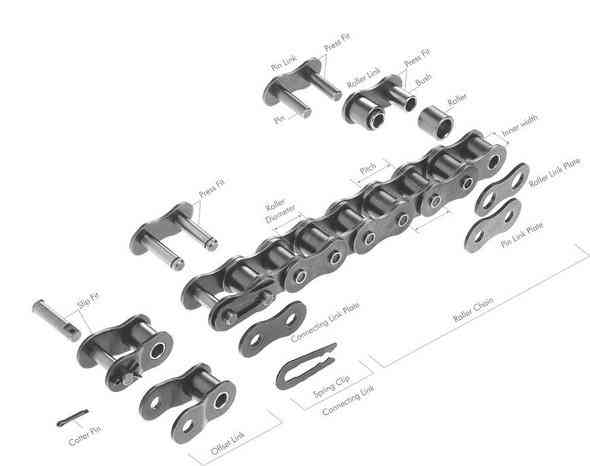
roller chain
The performance of a drive chain depends on how well it is maintained and lubricated. Careful attention to detail is required when selecting a roller chain, which is 1 of the most important components in a drive chain. Its proper lubrication and assembly will significantly affect its wear life. Here are some important tips to follow when buying a roller chain:
The size of the drive chain should be selected according to the sprockets used. The large sprocket should have at least 25 teeth, and the small sprocket should have fewer teeth. The pitch of a drive chain is the contact angle between the chain and the sprocket. The smaller the sprocket, the smaller the contact angle of the 2 parts. Larger sprockets are better, but smaller sprockets must never have fewer teeth.
When purchasing a roller chain, be sure to consider the maximum speed of the small sprocket. This will determine how much lubrication you need. Different lubrication systems have different requirements. Manual lubrication limits how many feet per minute the drive chain can run, while oil bath lubrication can get you up to 1100 ft/min. The only way to maximize drive chain speed is to purchase a pump lubrication system.
Once you have the right length, you can determine if you need a new one. To do this you have to move the axis to measure the length. Once the length is determined, the drive chain should be removed from the sprocket and measured using the ANSI specified measuring load. You should also follow safety guidelines when measuring your chain. If you want to maximize the life of your drive chain, be sure to follow these tips.
Another important consideration is the type of environment you operate in. For applications that need to avoid rubbing steel rails, it is best to use a roller chain that can withstand a clean indoor environment. Although roller chains are generally more durable, they must be stored properly to avoid corrosion. If you care about the environment, consider opting for double chain. Its durability and low maintenance costs will make it a valuable investment in your business.
closed pivot
Closed-end pivot drive chains are used in a variety of applications. They are known for their durability, high strength, and long life. They are available in a variety of grades, including grade 400, grade 600, and grade 800 pivots, which can withstand the high forces required for certain applications. Enclosed pivot chains can be used to lift, pull, convey and transfer heavy loads.
Class 400 closed-end pivot chain features one-piece cast offset link construction. Steel pins connect each link and are prevented from rotating by head stops. This design allows the pin to connect inside the barrel without breaking. This type of chain is the most commonly used and has the highest durability. In addition to being extremely durable, it offers long-lasting performance and smooth operation.
Another closed-end pivot conveyor chain drive is called a power drive chain. These chains consist of barrels and links used to transmit rotation from 1 shaft to another. The barrels of the closed-end pivot chains are made of steel, which allows them to run easily on the sprockets. Block drive chains are used for low-speed applications, but they can be noisy when the chain is in contact with the sprockets.
The enclosed pivot drive chain has rollers on both ends to minimize wear. These chains are usually made of steel and can be used in areas where high-speed power transmission is required. They are also available in heavy-duty versions. Unlike other types of chains, steel pivot chains are designed for a variety of applications. They are suitable for heavy-duty applications and their open barrel design allows for minimal contact with the pins in the barrel and the root of the sprocket.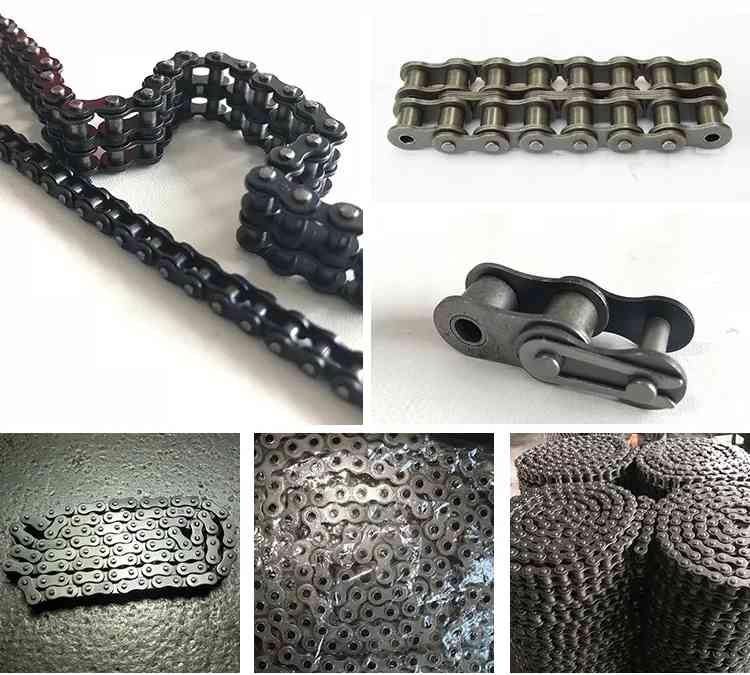
Linear chain
CZPT is an important part of linear drive technology. This type of chain is capable of delivering real power in tight spaces. Typically, loads are moved by pulling or pushing. CZPT can perform both types of movements. They can push and pull additional loads. This type of chain can also be wound and stored in the magazine. It is a popular choice for small machine tools and many other uses.
Unlike traditional mechanical chains, CZPT uses a push-pull strategy to move heavy objects. It is a rigid locking design that prevents kinking and allows the chain to transmit force without bending. The CZPT is an excellent choice for moving large loads and is particularly versatile in power transmission. However, CZPT is more expensive than traditional drive chain options.
The service life of a linear chain depends on its design, material type and size. You may want to buy a good quality chain, but it’s not necessary in all cases. While superior quality can extend the life of the chain, it may not be necessary for low-speed drives or very light shock loads. If you’re not dealing with high-velocity shock loads, you probably don’t need features like oil reservoirs or bushing grooves.
The size of the drive sprocket can have a major impact on the overall life of the linear chain. It determines how fast the chain can go and how much horsepower it can produce. An 11-tooth chain will hit about half its rated speed, but only about 30 percent of its rated horsepower. You can extend the life of your linear chain by choosing a drive sprocket with a higher number of teeth. It is best to choose a drive sprocket with a high number of teeth, but make sure the number of teeth is even. This will ensure that your chain wear is evenly distributed.
China high quality ANSI DIN Standard Pitch Industrial Differential Stainless Steel Film Clamp Chains with Hot selling
Product Description
Product Description
Product Parameter
| Product Name | Sushi chain |
| Standard | GB, ISO, ANSI, DIN |
| Function | Conveyor Chain, Transmission |
| Type | Slat chain |
| Product Material | Food grade stainless steel |
| Treatment | Heat treatment |
| Certifications | ISO9001:2015, GB/T19001-2016, ISO1400:2015 |
| Tensile Strength | High strength |
| Packaging | Plastic Bag+ Carton+Wooden Case |
| Application | Sushi conveyor |
More Products
Advantage
Certifications
DETAILS ABOUT CZPT CHAIN
Exhibition
Workshop
Packaging Details
Shipping
FAQ
1. Are you a manufacturer or trade Company?
We are a factory founded in 1997 with a trade team for international service.
2. What terms of payment do you usually use?
T/T 30% deposit and 70% against document, Western Union, L/C at sight
3. What is your lead time for your goods?
Normally 35 days after confirmed order. 30 days could be available in the low season for some items (during May to July), and 45 days during the new year and hot season ( Jan to March).
4. Samples
For customers who need sample confirmation before ordering, please bear in mind that the following policy will be adopted:
1) All samples are free of charge with a maximum value not exceeding USD 100.
2) The courier cost for the first-time sample sending will be charged by the consignee. We will send the samples with freight to be collected. So please inform your account with FedEx, UPS, DHL, or TNT so that we can proceed promptly.
3) The first-time courier cost will be deducted from the contract value of the trial cooperation.
Different types of drive chains
Drive chains are an important part of many different types of machinery. In this article, we’ll cover a variety of different types, from square links to engineered steel. From there, we’ll discuss different types of chains, such as double and leaf chains. Let’s take a closer look at each one. Once you know what kind of chain you’re looking for, you can make a buying decision. If you’re not sure where to start, read on to learn more about these types of chains, what to look for when choosing, and how to choose the right chain for your specific application.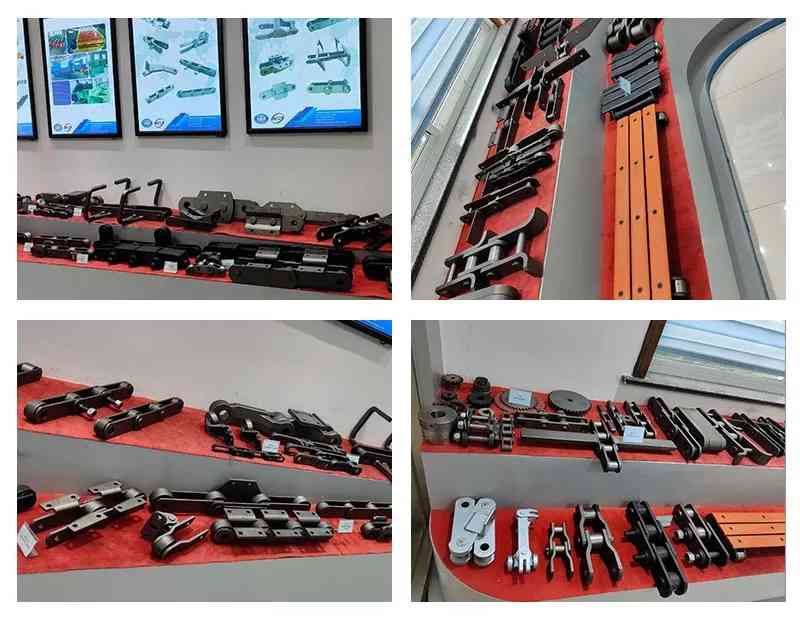
Engineering Steel Chain
Engineering steel chains are widely used in conveyors, bucket elevators, tensioning links, transmission chains, etc., and have the characteristics of high strength, low friction, and good shock resistance. Early models of these chains were developed for difficult-to-convey applications. They were originally made of all-steel components with flanged rollers made of cast iron. They then increase in size, strength, and spacing in response to the heavy-duty requirements of the industry.
Today, these chains are used in a wide variety of applications, including tough oil drilling operations and forklifts. They offer excellent durability and high power transfer and are available in a variety of materials. They are also ideal for harsh environments such as harsh oil drilling. Their high-strength steel construction means they can handle harsh operating conditions. Their durability is an essential feature of any chain, and CZPT Chains offers a full line of engineered steel chains to meet your exact specifications.
A drive chain made of engineered steel consists of several components: links, pin joints, and sprockets. This allows them to carry heavy loads with minimal stretch. Due to its internal mechanical advantage, the chain runs around the sprockets with almost 100% efficiency. Also, the chain is made of special steel that can withstand certain conditions. They are available in different alloys and grades. If you have any questions, please feel free to contact us.
Roller chain wear is a major problem for conveyor and drive chains. In these cases, the rollers of the chain are more prone to wear than the bushings, so lubrication is essential. Many chains are designed to work with little or no lubrication. Finally, material selection is an important factor in the design of engineered steel conveyor chains. These factors will help ensure that the chain stays in good shape.
Conveyor Chains with Square Links
There are 2 basic types of conveyor chains. The first is the square chain, commonly used in cranes and hoists. It’s cheap to manufacture but more prone to overload. The second is a chain that uses hook joints or detachable links. These are used for short-term power transmission and have a lubricating effect. Usually, they are made of malleable iron but can be more expensive.
Another type of chain is the removable steel chain. For moderate loads, this is an easy-to-install option. The closed end of the tab should face the sprocket. It is very important to maintain the alignment of the chain relative to the sprockets. The chain should be adjusted to suit the load before installation. It is important to keep the chain lubricated to prolong its life.
Steel chains offer a wider selection of materials and heat treatments. This chain is also more accurate than its counterpart. Steel bushing chains are less expensive but require more frequent lubrication. Steel roller chains are often used for long conveyor centers or high loads. However, lower friction requirements require lower strength chains. This means that chains with square links are a better choice for smaller conveyors. But this style has its drawbacks.
Bushing chains are made of steel and are an excellent alternative for small-scale applications. The pins are silent and prevent tooth damage. Bushed roller chains are also used to a certain extent as conveyor chains. However, the main advantage of the bushing roller chain is that it does not make any noise at all. Bushed roller chains are made of alloy steel and are suitable for very low-speed applications.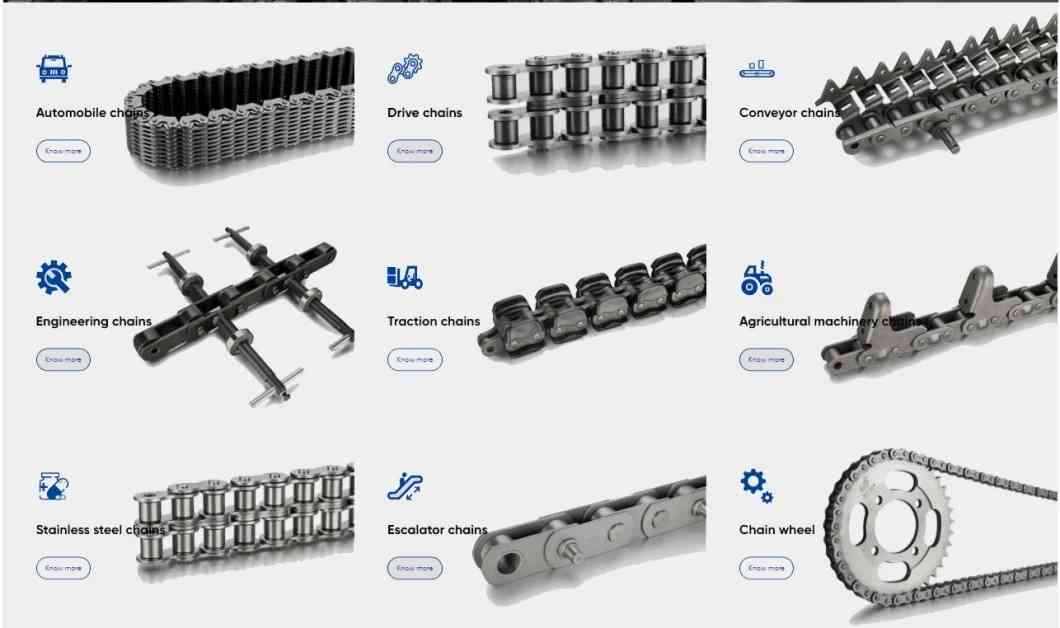
double chain
Double-strand roller chain, also known as a double-strand, consists of 2 rows of single-strand links. It has high impact strength, low weight, and a small form factor. Duplex roller chains are manufactured using CZPT technology, which uses solid rollers to improve sprocket tooth rotation and reduce shock loads. During the manufacturing process, the metal is heat-treated to increase strength and reduce corrosion.
A single chain is designed for a single sprocket, while a double chain consists of 2 identical chains connected side by side. Double chains are more durable than simple chains because double rollers contain roller bearings, pins, and other components. Simplex drive chains can handle high loads, while duplex drive chains are designed for medium-duty applications.
leaf chain
Blade chains are used in reciprocating devices such as forklifts. They are also used in machine tools for counterweight chains. Leaf chains come in a variety of lengths, usually with female or male ends. Leaf chains can be manufactured in even or odd pitches and are ideal for lifting and balancing. This article will introduce some key uses of leaf chains in drive chains. Additionally, we’ll discuss how they are made and how they behave in applications.
Most drive chains today are made from leaf chains. These chains are designed to increase the strength of the chain. However, they are less expensive than other types of chains. You can also purchase specialized leaf chains for certain applications. CZPT Chain also offers custom leaf chains for your unique needs. Leaf chains are commonly used in forklifts, material handling, and lifting applications. They are usually made from high-quality components. The BL1688 Leaf Chain has 8 x 8 laces and is sold in 10-foot boxes or 25- to 100-foot reels. The leaf chain can be cut as needed.
When selecting a leaf chain for a specific application, consider the minimum tensile strength of the chain. The minimum breaking strength must be high enough to protect the worker or machine, but must also be legal for the type of machine. Most manufacturers publish this minimum strength requirement. To make the most durable leaf chain, design engineers must consider the ISO4347 standard when choosing the right leaf chain. Leaf chain manufacturers tend to exceed international standards by about 20%.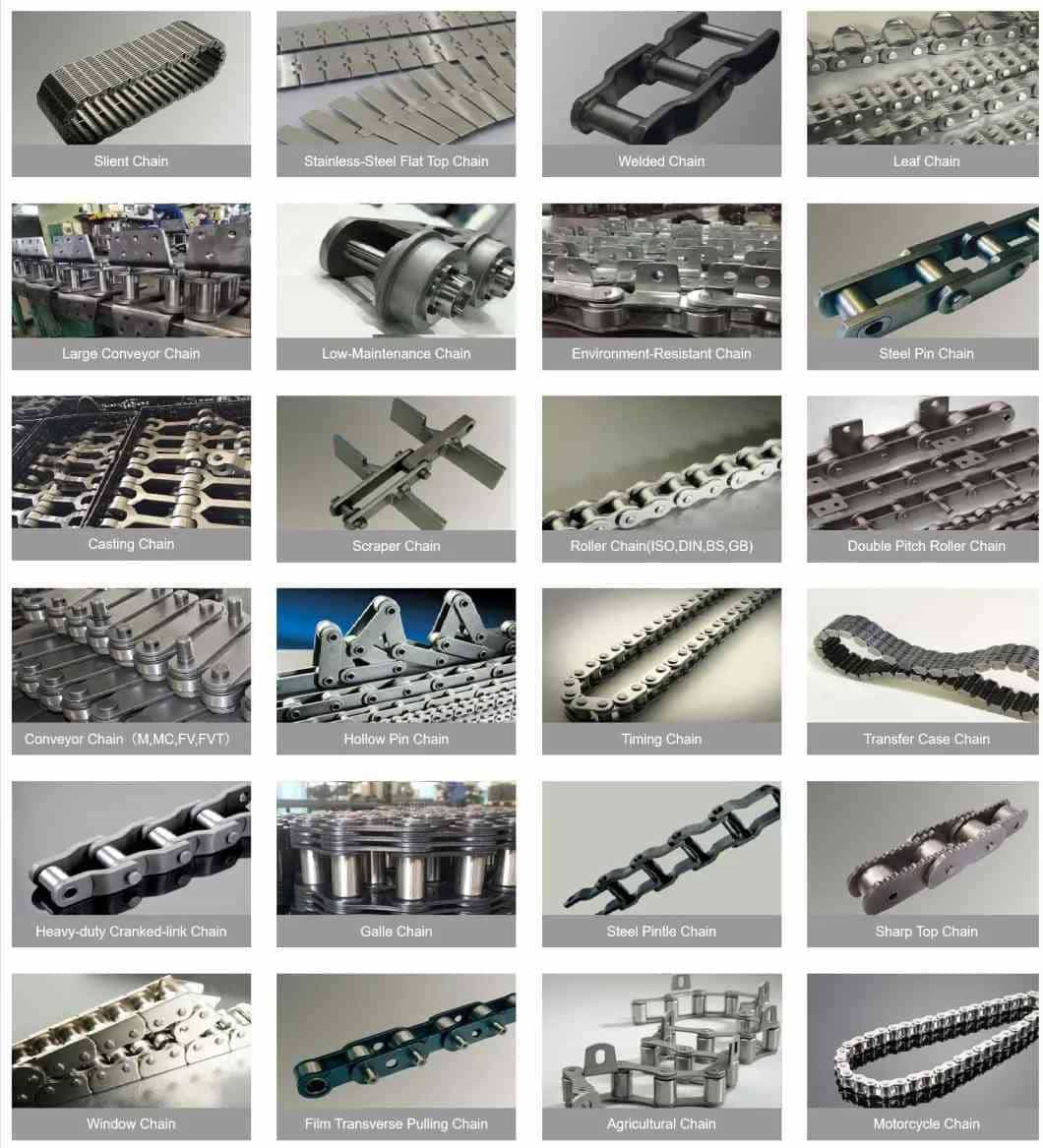
roller chain
Roller chains are made from a variety of materials. Some common materials include steel and stainless steel. The most suitable material depends on cost, environmental conditions, and horsepower transmission design. Chain manufacturers can optimize the material for the intended use. Depending on its size, spacing, and special construction techniques, it can be made lighter or heavier. This is an advantage for applications in noise-sensitive environments. Below are some examples of common uses for roller chains.
The wear of the components in a roller chain is an unavoidable part of its operation. The amount of elongation depends on factors such as lubrication, load, and the frequency of articulation between the pin and bushing. Manufacturing critical wear parts require careful attention to detail. Proper raw materials, manufacturing, and assembly are critical to product performance and longevity. If these components aren’t of high quality, they won’t last as long as the chain should.
The industry recommends measuring the wear elongation of the roller chain to determine when it needs to be replaced. Proper safety procedures must be used to measure chain tension. The tight span of the chain shall be measured by applying the measuring load specified by ANSI. A correctly measured roller chain is safe to use. For motorcycles, the chain is bigger and stronger. Often, toothed belts are replaced by shaft drives because they are less noisy and require less maintenance.
Tensile strength is the most commonly used measurement method for roller chains. This measurement represents the amount of load the chain can withstand before it breaks. Fatigue strength is another measure of durability. Fatigue strength measures how long a roller chain can withstand long-term use before failing. These 2 measurements are closely related and maybe the same or different. In addition to tensile strength, fatigue strength is a useful factor to consider when purchasing a chain.