
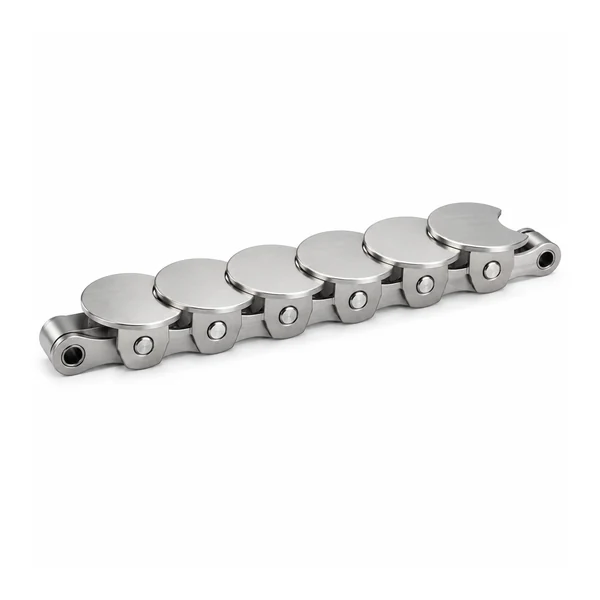
SSSC76.2A Sushi Conveyor Chain
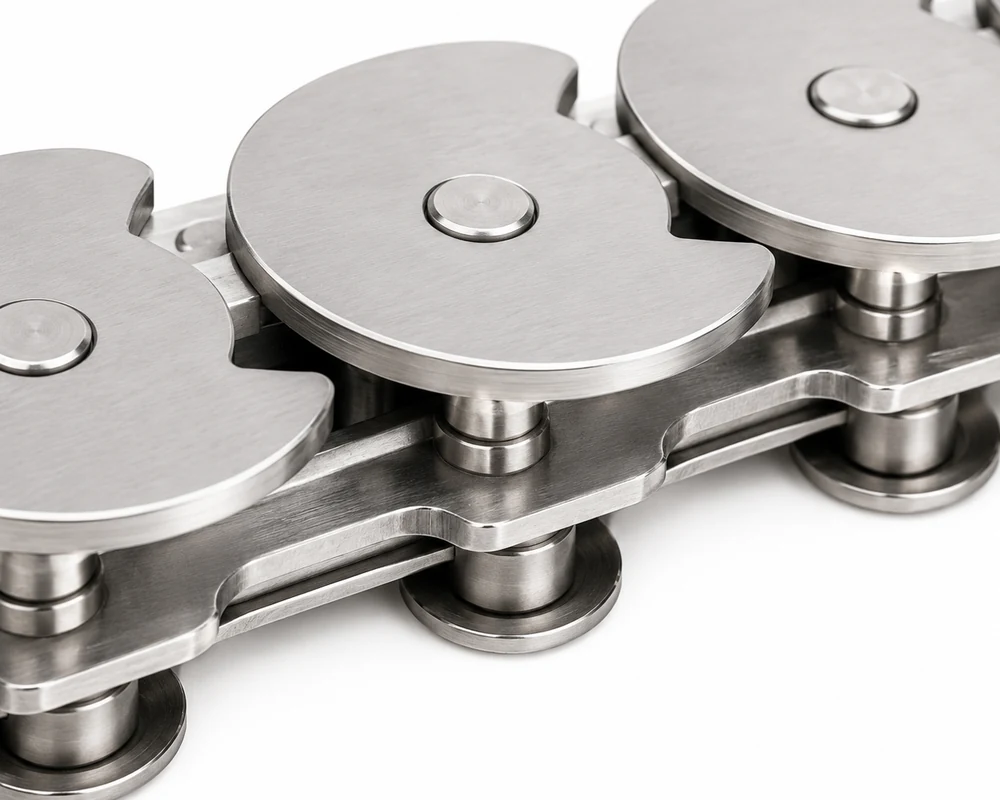
This stainless steel sushi conveyor chain is built around a dedicated crescent-shaped top plate rather than a generic flat plastic module. The top plate creates a continuous carrying surface around curves while the central chain body supplies pitch control and articulation. For replacement work, the buyer should treat pitch, top-plate width, chain width and the interface to the guide track as one geometry set; matching only the nominal model name is not enough when the restaurant conveyor or guide rail has been modified. The series specification identifies the material family as 300, 400 and 600 series stainless steel. A quotation should therefore state the required material series or the existing material if known, together with photographs of the installed track and return path.
For replacement work, treat the crescent top plate, central chain body, guide track and drive sprocket as one interface. The part should be compared with the conveyor that exists today, including any guide, carrier or sprocket modifications made after the original machine was commissioned.
检查控制合身度和运动性能的功能。
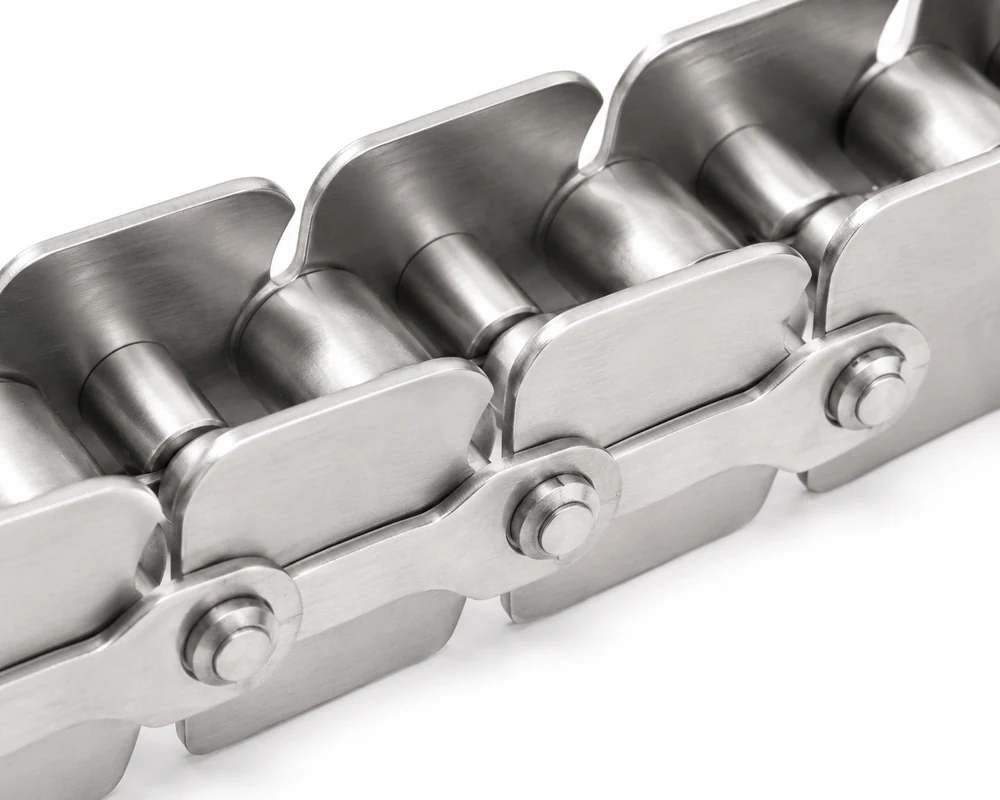
The key review points are curve clearance, return-path support and sprocket engagement. Measure several repeating features where possible instead of relying on one worn joint, rod or attachment. Photograph the component while it is still installed so running direction, guide contact and drive engagement are visible.
Selection starts with two measurements that are easy to verify on an installed line: center-to-center pitch and the effective top-plate width. Measure several pitches over a straight section to reduce single-joint error, then verify the overall chain width and roller diameter. Also record the smallest curve radius in the conveyor, the plate support arrangement, direction of travel and whether plates must pass under covers, dish guides or transfer points. If an existing chain runs quietly on the straight but binds in curves, the problem may be guide geometry, side clearance or accumulated pitch error rather than nominal pitch alone. For OEM projects, send a section drawing of the track and the mating sprocket before production approval.
当尺寸不确定时,应标注为根据磨损样品测量所得的尺寸,而不是将其四舍五入为假定的标称值。这样有助于在技术审查过程中区分真正的尺寸偏差和正常的使用磨损。
技术图纸和规范
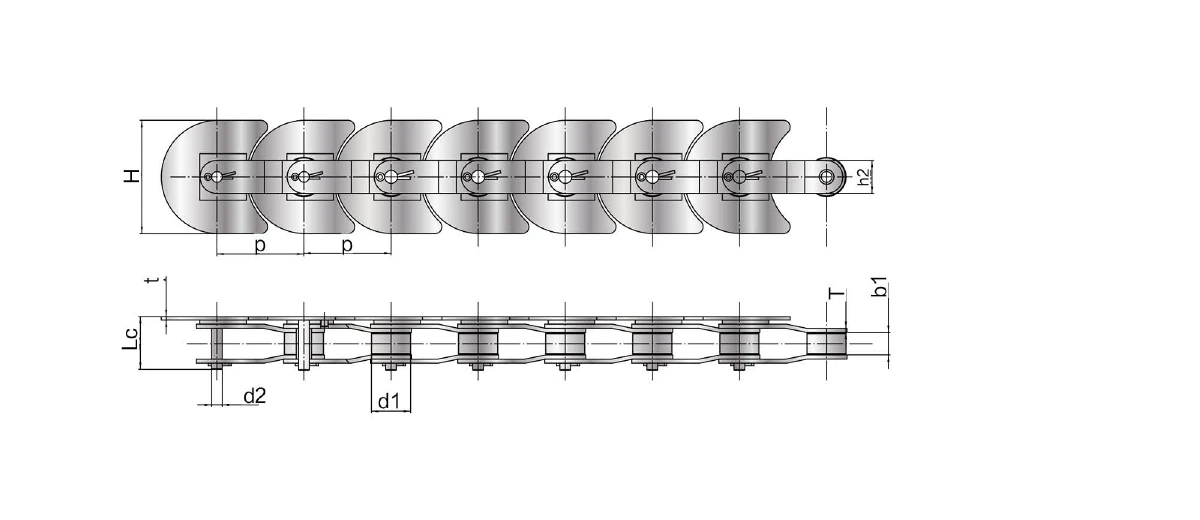
尺寸图例: P = pitch; d1 = roller diameter; b1 = width between inner plates; d2 = pin diameter; H = top plate width; h2 = inner plate height; T = plate thickness; t = top plate thickness; Lc = chain width.
| 模型 | Pitch P (mm) | Roller Diameter d1 (mm) | Width Between Inner Plates b1 (mm) | Pin Diameter d2 (mm) | Top Plate Width H (mm) | Inner Plate Height h2 (mm) | Plate Thickness T (mm) | Top Plate Thickness t (mm) | Chain Width Lc (mm) |
|---|---|---|---|---|---|---|---|---|---|
| SSSC76.2A | 76.20 | 49.50 | 19.00 | 7.92 | 175.00 | 22.00 | 2.50 | 3.00 | 42.50 |
此表格列出了该产品页面可用的型号/配置数据。未在此列出的数值应根据项目图纸、当前组件或机器接口进行确认,而不能从其他系列推断。
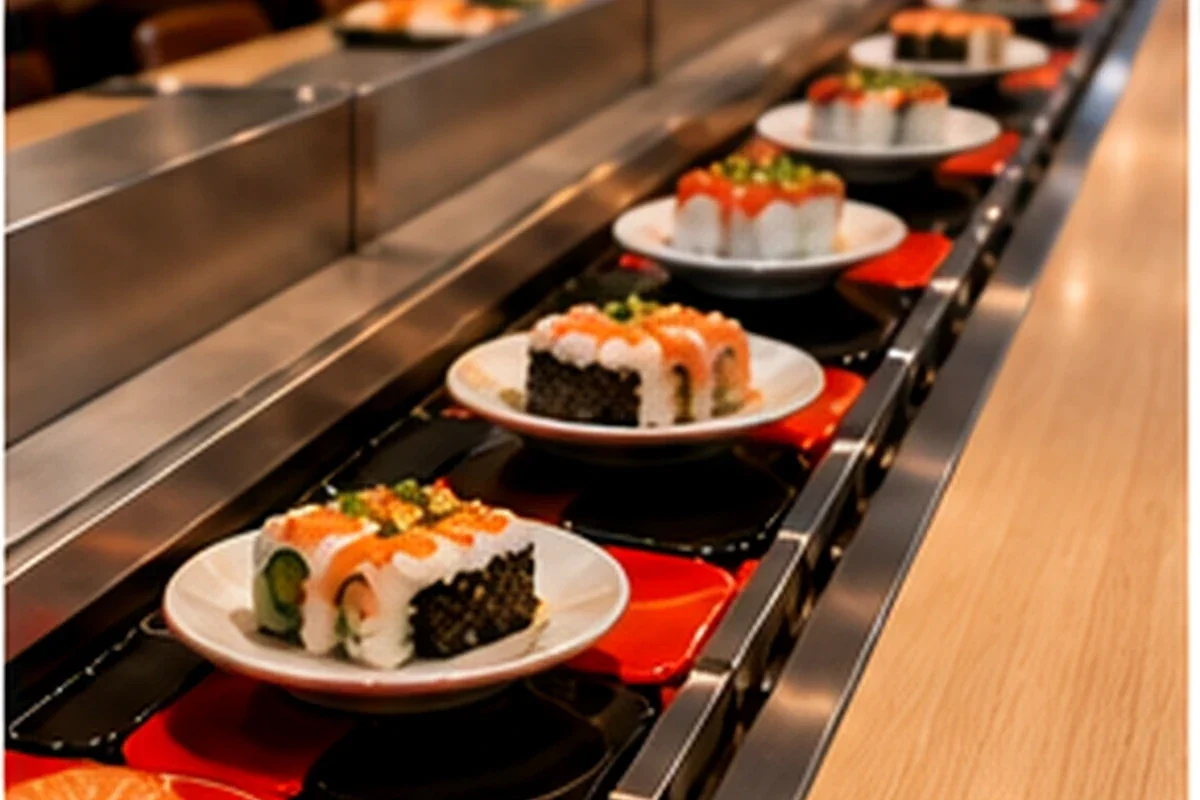
评估整个传送路径内的组件
SSSC76.2A Sushi Conveyor Chain is considered for rotary sushi and plate-conveyor systems. In addition to the component dimensions, state the product being conveyed, spacing, line speed, starts and stops, curve or incline conditions, process zones and sanitation method. These operating inputs help identify the interfaces that deserve extra attention during approval.
检查驱动装置、支撑件、传动点和回程路径是否存在磨损或改动。如果损坏在机器的同一位置反复出现,则在决定是否更换新的链条或皮带之前,应先修复该接口。更换部件无法弥补毛刺、导轨错位、链轮损坏或传动装置缺乏支撑等问题。
Where the project is considering a different conveying architecture, compare the complete machine interface rather than making a visual substitution. A related reference on tabletop conveyor chain architectures can help frame the architecture comparison; final suitability still depends on the actual conveyor.
在正常生产前以低速进行调试
During installation, clean the track and return rail before laying in the new chain, then verify that the chain can articulate freely through the tightest curve without forcing the top plates against fixed guides. Sprocket engagement should be checked by hand over several revolutions before powered commissioning. Initial testing should be performed empty, followed by representative dish loads distributed around the loop. Watch for localized lift, plate-to-guide contact, cyclic noise and changes in chain tension as the loop moves through transitions. These observations are more useful than simply checking that the conveyor can run at full speed.
首次空载运行后,在典型负载下对相同的观察点进行比较。记录横向位置、铰接、传递冲击、噪音或收紧位置的任何变化。一份简短且可重复的调试记录有助于区分正常的磨合过程和需要在正式生产前进行纠正的机器接口问题。
安装新部件之前,请清洁并检查链轮、导轨、支架和传动装置。
在不强行将部件压入轨道的情况下,确认运行方向、横向位置和啮合情况。
以尽可能低的速度,沿着标记好的关节或皮带行完成整个环。
引入代表性载荷并重新检查传递、曲线、跟踪和返回路径行为。
保持承载面和关节点清晰可见
For food-service duty, cleaning access is part of the mechanical design. Remove product debris from the plate interfaces and guide path without levering the plates sideways. Use cleaning chemistry that is compatible with the specified stainless steel and any non-metallic guide components in the conveyor. After washdown, inspect the pin and roller zones for trapped residue, confirm that guide clearances have not been disturbed, and run the line slowly to detect a plate that was reinstalled out of alignment. Lubrication practice depends on the complete conveyor design and food-contact zone; the RFQ should therefore state whether the existing system is dry-running, centrally lubricated or manually lubricated rather than assuming a universal method.
记录任何反复出现的边缘磨损、抛光导向接触、连接件变形、销钉移动、钩子错位或网格扭曲等情况。在相同的检查点拍摄带有日期的照片,比单独的报废检查更容易识别趋势变化。
冻结对重复订单至关重要的尺寸和检查项目
After the first acceptable sample or production batch is confirmed, retain the model/designation, current dimension record, approved photographs and the machine position where the component is used. For SSSC76.2A Sushi Conveyor Chain, include the features that control curve clearance, return-path support and sprocket engagement. If the conveyor is modified later, update the interface record instead of assuming the historical part number still describes the machine.
对于新的询价,即使多个型号在商业上组合使用,也应将每个型号作为单独的技术线列出。样品数量和生产数量应分别说明。如果特定材料、表面状态或特殊工艺是强制性的,请将其明确列为要求,以便与工艺最低标准进行比对。
生产批准前需要解决的问题
Confirm crescent top plate, central chain body, guide track and drive sprocket against the current machine. Record where the part is supported, guided and driven, and identify any feature that has been repaired or modified.
Describe product footprint, spacing, orientation and transfer points for rotary sushi and plate-conveyor systems. Note curves, inclines or hanging sections that change the clearance requirement.
Photograph recurring wear and identify the machine position where it occurs. Check curve clearance, return-path support and sprocket engagement before deciding that the old component itself caused the problem.
对于来料检验,应选择可稳定测量的尺寸,并将其与图纸或已批准的样品进行比对。当两种配置具有相似的整体形状时,不要仅以外观作为验收标准。对于调试,应在正常生产之前记录低速运行结果,以便后续维护工作有基准进行比较。
订购重复批次产品时,请说明机器、产品规格或清洗流程是否与上一批产品有所不同。即使组件的标称型号保持不变,导轨、传送装置或产品间距的细微变化也可能导致控制性能的接口发生改变。
Confirm SSSC76.2A Sushi Conveyor Chain against the current conveyor before production quantity
A dimensional table identifies the listed product, but replacement approval should also compare the crescent top plate, central chain body, guide track and drive sprocket with the machine that will receive the part. For SSSC76.2A Sushi Conveyor Chain, record curve clearance, plate overlap, chain width and sprocket engagement using the same datums that will be used for incoming inspection. If an old component is worn, measure several repeats and photograph the least-damaged reference area rather than selecting one convenient value.
照片应清晰展现除松动部件以外的更多信息,包括驱动和回程路径、输送机的两侧边缘、最急的过渡区域以及任何重复磨损的位置。此外,还应添加一张整机视图,以便清晰地显示运行方向和产品路径。如果导轨、链轮、支撑件或传送装置已维修,请务必记录这一变更,因为更换部件必须与现有安装接口相匹配。
样品审批前,应在样品生产前确认关键尺寸和可见结构。低速测试时,沿标记的连接点、托架或皮带排旋转一周,并记录任何摩擦、抬升、倾斜、周期性噪音或产品位置变化。如果故障现象出现在机器的某个固定位置,请在更改组件规格前检查周围的硬件。
对于重复订单,请保留已确认的型号、尺寸记录和机器位置信息。这样可以减少同一工厂在多条生产线上使用类似组件时可能出现的歧义。如果产品规格、生产线布局或清洗流程发生变化,即使组件名称不变,也应在下次询价时注明这些变化。
SSSC76.2A Sushi Conveyor Chain FAQ
Are SSSC76.2A, SSSC76.2B and SSSC100 interchangeable?
No. They differ in pitch and/or top-plate and chain-width dimensions. Confirm the full dimension set and track interface before substitution.
What should I measure on an old sushi chain?
Measure multiple pitches, roller diameter, inner width, pin diameter, top-plate width and overall chain width, then photograph the curve and sprocket engagement.
Is the top plate a plastic attachment?
The series specification depicts this sushi chain as a stainless steel chain with a crescent-shaped metal top plate. Do not substitute a generic plastic tabletop chain without checking the complete conveyor design.
Can you quote from a sample or drawing?
Yes. A physical sample, dimensional drawing or clear photographs with measured reference dimensions make replacement identification more reliable.
What operating details help with selection?
Share conveyor speed, loop length, smallest curve radius, dish or carrier load, cleaning method, guide material and current sprocket information.
在产品发布前检查可衡量的功能。
使用可重复测量的尺寸和当前机器照片进行来料检验和更换批准。

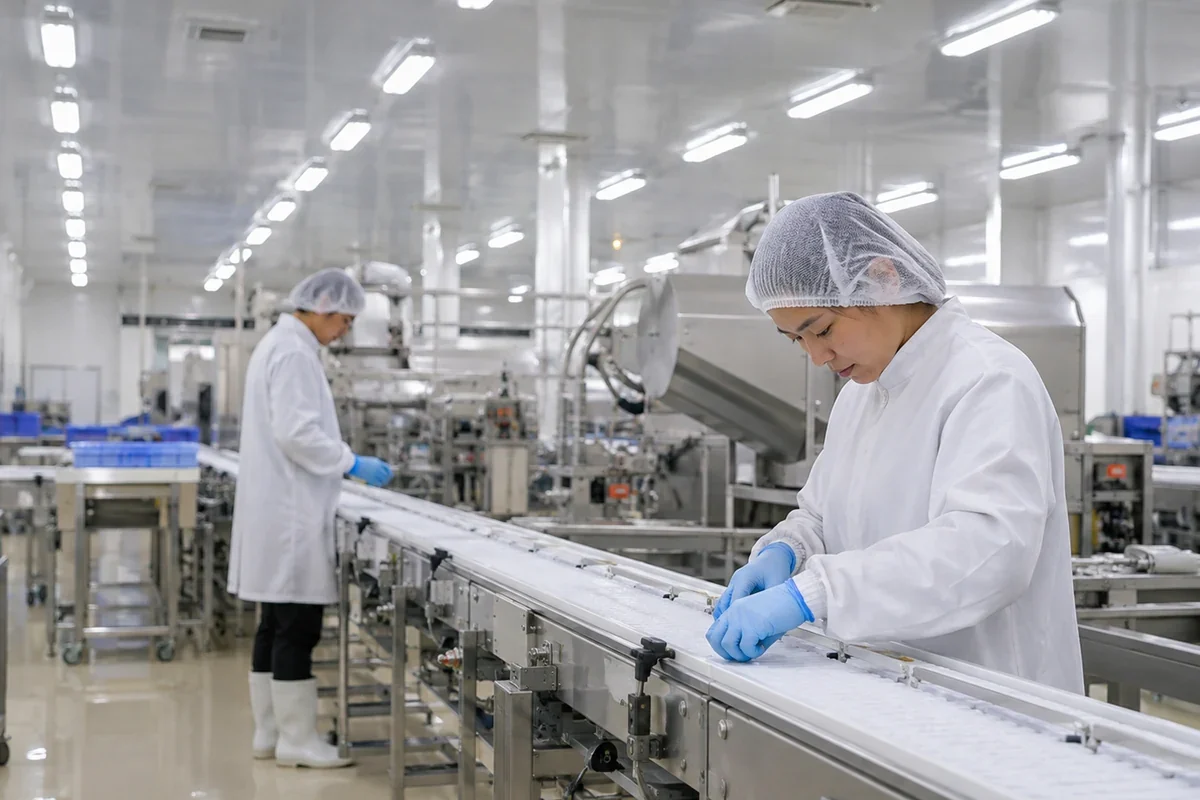
如果项目是更换或改造,则需包含当前的输送机路径和运行条件。