Product Description
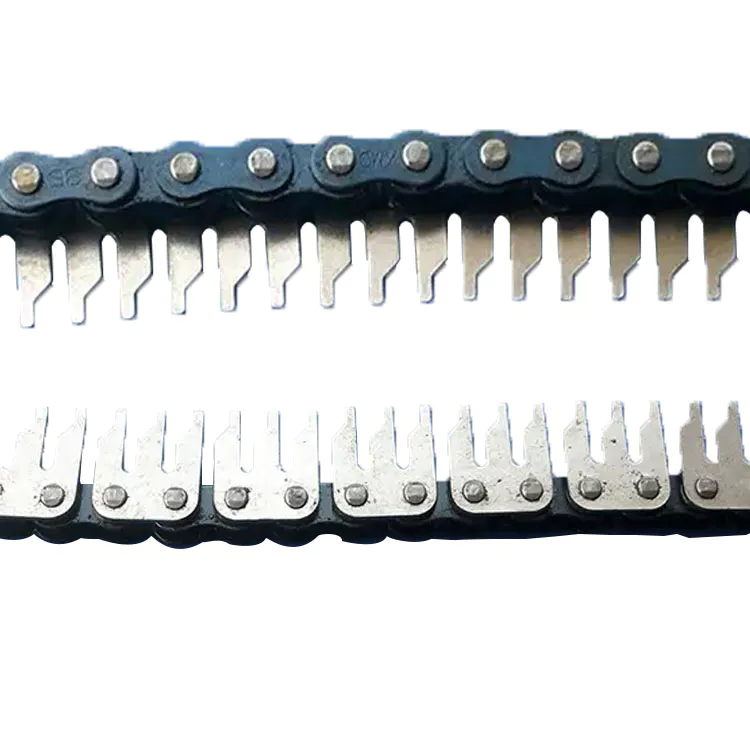
High Quality & Made to Order Stainless Steel Table Top Conveyor Chain (TS635)
Product Description
1. Material: Stainless steel chain / Alloy Carbon Steel
2. Surface Treatment: Zinc-Plated / Nickel-Plated / Dacromet-Plated
3. Short pitch stainless steel conveyor chain with attachments.
4. Double pitch stainless steel conveyor chain.
5. Double pitch hollow pin chain.
Note: If you have drawing or samples, we can do the special conveyor chains.
| Product name | Table Top Conveyor Chain (TS635) |
| Materials Available | 1. Stainless Steel: SS304, SS316, etc |
| 2. Alloy Steel: 45Mn, 42CrMo, etc | |
| 3. OEM according to your request | |
| Surface Treatment | Shot peening, Polishing, Oxygenation, Blackening, Zinc-plated, Nickel-plated, Anodized, etc. |
| Characteristic | Fire Resistant, Oil Resistant, Heat Resistant |
| Application | Mainly used in products transmission |
| Design criterion | ISO DIN ANSI & Customer’s Drawing |
| Size | Customer’s Drawing & ISO standard |
| Package | Wooden Case / Container and pallet, or made-to-order |
| Certificate | ISO9001: 2008 |
| Advantage | First quality, Best service, Competitive price, Fast delivery |
| Delivery Time | 20 days for samples. 45 days for official order. |
View more products,please click here…
Company Profile
| Material: | Stainless Steel |
|---|---|
| Structure: | Conveyor Chain |
| Surface Treatment: | Oil Blooming |
| Chain Size: | Ts635 |
| Feature: | Heat Resistant |
| Sample: | for Free |
| Samples: |
US$ 0/Meter
1 Meter(Min.Order) | |
|---|
| Customization: |
Available
| Customized Request |
|---|
Can a conveyor chain be used in automotive assembly lines?
Yes, a conveyor chain can be effectively used in automotive assembly lines. Here are the reasons why:
1. Efficient Material Handling:
– Conveyor chains provide a reliable and efficient means of transporting automotive components and parts along the assembly line. They can handle heavy loads and withstand the demanding requirements of automotive manufacturing.
2. Versatility:
– Conveyor chains offer versatility in terms of design and configuration. They can be customized to accommodate various assembly processes, such as body welding, painting, assembly, and final inspection.
3. Precise Positioning:
– Conveyor chains allow precise positioning and synchronization of automotive components, ensuring accurate assembly and alignment during the production process. This helps maintain consistent quality and reduces errors.
4. Automation Integration:
– Conveyor chains can be easily integrated with automation systems in automotive assembly lines. They can work in conjunction with robotic arms, vision systems, and other automated equipment to optimize the production process and improve efficiency.
5. Assembly Line Flexibility:
– Conveyor chains provide flexibility in terms of line configuration and layout. They can be designed to accommodate different assembly line layouts, including straight sections, curves, inclines, and declines, to meet the specific requirements of automotive assembly processes.
6. Space Optimization:
– Conveyor chains help optimize space utilization in automotive assembly plants. They can be designed to navigate around existing equipment and infrastructure, making efficient use of available floor space.
7. Safety:
– Conveyor chains are designed with safety features to protect operators and prevent accidents. Emergency stop controls, guarding, and interlocking mechanisms ensure the safe operation of the assembly line.
8. Increased Production Speed:
– By using conveyor chains, automotive assembly lines can achieve higher production speeds, allowing for faster manufacturing cycles and increased output.
Overall, conveyor chains play a crucial role in enhancing the efficiency, productivity, and safety of automotive assembly lines, contributing to the smooth and streamlined production of vehicles.
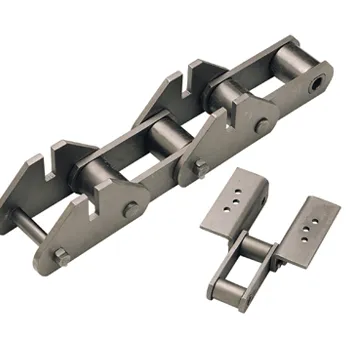
How does a conveyor chain impact material flow in a production line?
A conveyor chain plays a crucial role in facilitating the smooth and efficient flow of materials in a production line. Here are the key ways in which a conveyor chain impacts material flow:
1. Continuous Movement: A conveyor chain enables continuous movement of materials along the production line. By securely holding and transporting the materials, the chain ensures a consistent flow without interruptions or delays.
2. Speed Control: The speed at which the conveyor chain moves can be adjusted to match the desired production rate. This allows for precise control over the material flow, ensuring that it aligns with the downstream processes and avoids bottlenecks or overloading.
3. Orientation and Positioning: Conveyor chains can be designed with specific attachments or fixtures to orient and position materials in a desired manner. This ensures that the materials are presented correctly for processing, assembly, or packaging, optimizing the overall production flow.
4. Sorting and Diverging: In certain applications, conveyor chains can be equipped with mechanisms for sorting or diverging materials based on predetermined criteria. This allows for efficient routing of different products or components to their respective destinations, streamlining the material flow.
5. Accumulation and Buffering: Conveyor chains can incorporate accumulation zones or buffering areas where materials can temporarily pause or accumulate. This feature is useful when downstream processes experience temporary disruptions or when there is a need to balance the flow between different production stages.
6. Integration with Equipment: Conveyor chains can be integrated with other equipment or machines in the production line, such as robotic arms, automated packaging systems, or inspection stations. This seamless integration enables synchronized material handling, optimizing the flow and efficiency of the entire production process.
7. Customization for Specific Needs: Conveyor chains can be customized to meet specific material handling requirements. This includes considerations such as chain width, length, height adjustments, inclines or declines, and specialized attachments or guides. Such customization ensures that the material flow is tailored to the unique needs of the production line.
By providing a reliable and controlled method of transporting materials, a conveyor chain significantly influences the material flow in a production line. It enhances productivity, reduces manual handling, minimizes the risk of errors or damage, and ultimately contributes to the overall efficiency and success of the manufacturing process.

What are the different types of conveyor chains?
There are several types of conveyor chains available, each designed to meet specific application requirements. Here are some common types of conveyor chains:
- Roller chains: Roller chains are the most commonly used type of conveyor chain. They consist of a series of cylindrical rollers connected by side plates. Roller chains provide smooth and efficient movement and are suitable for medium to heavy-duty applications.
- Double pitch chains: Double pitch chains have larger pitch (distance between the centers of adjacent pins) compared to standard roller chains. They are often used in applications that require slower speeds and lighter loads.
- Hollow pin chains: Hollow pin chains have hollow pins that allow for easy attachment of various accessories or attachments. They are commonly used in conveying applications that require customization or where attachments need to be mounted.
- Apron or slat chains: Apron or slat chains consist of plates or slats that are connected by hinges. They are used in heavy-duty applications where the chain needs to support and carry large loads or withstand harsh environments.
- Plastic chains: Plastic chains are made of durable and lightweight materials such as acetal or polyethylene. They offer benefits such as corrosion resistance, low noise levels, and the ability to work in wet or washdown environments. Plastic chains are commonly used in food processing, packaging, and pharmaceutical industries.
These are just a few examples of conveyor chain types, and there are many other variations available depending on specific application requirements. The selection of the appropriate conveyor chain type depends on factors such as load capacity, speed, environment, and desired functionality.


editor by CX 2023-08-14