Descrizione del prodotto
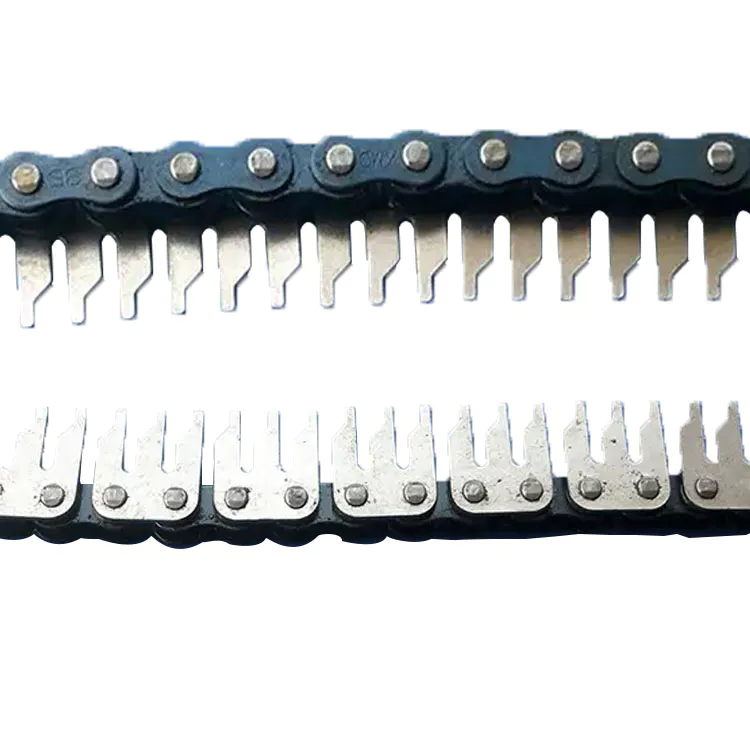
High Quality & Made to Order Stainless Steel Table Top Conveyor Chain (TS635)
Descrizione del prodotto
1. Material: Stainless steel chain / Alloy Carbon Steel
2. Surface Treatment: Zinc-Plated / Nickel-Plated / Dacromet-Plated
3. Short pitch stainless steel conveyor chain with attachments.
4. Double pitch stainless steel conveyor chain.
5. Double pitch hollow pin chain.
Note: If you have drawing or samples, we can do the special conveyor chains.
| Product name | Table Top Conveyor Chain (TS635) |
| Materials Available | 1. Stainless Steel: SS304, SS316, etc |
| 2. Alloy Steel: 45Mn, 42CrMo, etc | |
| 3. OEM according to your request | |
| Trattamento superficiale | Shot peening, Polishing, Oxygenation, Blackening, Zinc-plated, Nickel-plated, Anodized, etc. |
| Characteristic | Fire Resistant, Oil Resistant, Heat Resistant |
| Applicazione | Mainly used in products transmission |
| Design criterion | ISO DIN ANSI & Customer’s Drawing |
| Misurare | Customer’s Drawing & ISO standard |
| Pacchetto | Wooden Case / Container and pallet, or made-to-order |
| Certificato | ISO9001: 2008 |
| Vantaggio | First quality, Best service, Competitive price, Fast delivery |
| Delivery Time | 20 days for samples. 45 days for official order. |
View more products,please click here…
Profilo Aziendale
| Materiale: | Stainless Steel |
|---|---|
| Struttura: | Conveyor Chain |
| Trattamento superficiale: | Fioritura oleosa |
| Dimensioni della catena: | Ts635 |
| Caratteristica: | Resistente al calore |
| Sample: | for Free |
| Esempi: |
US$ 0/Meter
1 metro (ordine minimo) | |
|---|
| Personalizzazione: |
Disponibile
| Richiesta personalizzata |
|---|
È possibile utilizzare una catena di trasporto nelle linee di assemblaggio automobilistiche?
Sì, una catena di trasporto può essere utilizzata efficacemente nelle linee di assemblaggio automobilistiche. Ecco perché:
1. Gestione efficiente dei materiali:
– Le catene di trasporto rappresentano un mezzo affidabile ed efficiente per il trasporto di componenti e parti automobilistiche lungo la linea di assemblaggio. Sono in grado di gestire carichi pesanti e di resistere alle rigorose esigenze della produzione automobilistica.
2. Versatilità:
– Le catene di trasporto offrono versatilità in termini di design e configurazione. Possono essere personalizzate per adattarsi a diversi processi di assemblaggio, come la saldatura della carrozzeria, la verniciatura, l'assemblaggio e il controllo finale.
3. Posizionamento preciso:
– Le catene di trasporto consentono un posizionamento e una sincronizzazione precisi dei componenti automobilistici, garantendo un assemblaggio e un allineamento accurati durante il processo produttivo. Ciò contribuisce a mantenere una qualità costante e a ridurre gli errori.
4. Integrazione dell'automazione:
– Le catene di trasporto possono essere facilmente integrate con i sistemi di automazione nelle linee di assemblaggio automobilistiche. Possono funzionare in combinazione con bracci robotici, sistemi di visione e altre apparecchiature automatizzate per ottimizzare il processo produttivo e migliorarne l'efficienza.
5. Flessibilità della linea di assemblaggio:
– Le catene di trasporto offrono flessibilità in termini di configurazione e layout della linea. Possono essere progettate per adattarsi a diverse configurazioni di linee di assemblaggio, inclusi tratti rettilinei, curve, salite e discese, per soddisfare i requisiti specifici dei processi di assemblaggio automobilistico.
6. Ottimizzazione dello spazio:
– Le catene di trasporto contribuiscono a ottimizzare l'utilizzo dello spazio negli impianti di assemblaggio automobilistico. Possono essere progettate per aggirare attrezzature e infrastrutture esistenti, sfruttando in modo efficiente lo spazio disponibile.
7. Sicurezza:
– Le catene di trasporto sono progettate con dispositivi di sicurezza per proteggere gli operatori e prevenire incidenti. Comandi di arresto di emergenza, protezioni e meccanismi di interblocco garantiscono il funzionamento sicuro della linea di assemblaggio.
8. Aumento della velocità di produzione:
– Grazie all'utilizzo di catene di trasporto, le linee di assemblaggio automobilistiche possono raggiungere velocità di produzione più elevate, consentendo cicli di produzione più rapidi e una maggiore produttività.
Nel complesso, le catene di trasporto svolgono un ruolo cruciale nel migliorare l'efficienza, la produttività e la sicurezza delle linee di assemblaggio automobilistiche, contribuendo a una produzione di veicoli fluida e senza intoppi.
How does a conveyor chain impact material flow in a production line?
A conveyor chain plays a crucial role in facilitating the smooth and efficient flow of materials in a production line. Here are the key ways in which a conveyor chain impacts material flow:
1. Continuous Movement: A conveyor chain enables continuous movement of materials along the production line. By securely holding and transporting the materials, the chain ensures a consistent flow without interruptions or delays.
2. Speed Control: The speed at which the conveyor chain moves can be adjusted to match the desired production rate. This allows for precise control over the material flow, ensuring that it aligns with the downstream processes and avoids bottlenecks or overloading.
3. Orientation and Positioning: Conveyor chains can be designed with specific attachments or fixtures to orient and position materials in a desired manner. This ensures that the materials are presented correctly for processing, assembly, or packaging, optimizing the overall production flow.
4. Sorting and Diverging: In certain applications, conveyor chains can be equipped with mechanisms for sorting or diverging materials based on predetermined criteria. This allows for efficient routing of different products or components to their respective destinations, streamlining the material flow.
5. Accumulation and Buffering: Conveyor chains can incorporate accumulation zones or buffering areas where materials can temporarily pause or accumulate. This feature is useful when downstream processes experience temporary disruptions or when there is a need to balance the flow between different production stages.
6. Integration with Equipment: Conveyor chains can be integrated with other equipment or machines in the production line, such as robotic arms, automated packaging systems, or inspection stations. This seamless integration enables synchronized material handling, optimizing the flow and efficiency of the entire production process.
7. Customization for Specific Needs: Conveyor chains can be customized to meet specific material handling requirements. This includes considerations such as chain width, length, height adjustments, inclines or declines, and specialized attachments or guides. Such customization ensures that the material flow is tailored to the unique needs of the production line.
By providing a reliable and controlled method of transporting materials, a conveyor chain significantly influences the material flow in a production line. It enhances productivity, reduces manual handling, minimizes the risk of errors or damage, and ultimately contributes to the overall efficiency and success of the manufacturing process.

What are the different types of conveyor chains?
There are several types of conveyor chains available, each designed to meet specific application requirements. Here are some common types of conveyor chains:
- Roller chains: Roller chains are the most commonly used type of conveyor chain. They consist of a series of cylindrical rollers connected by side plates. Roller chains provide smooth and efficient movement and are suitable for medium to heavy-duty applications.
- Double pitch chains: Double pitch chains have larger pitch (distance between the centers of adjacent pins) compared to standard roller chains. They are often used in applications that require slower speeds and lighter loads.
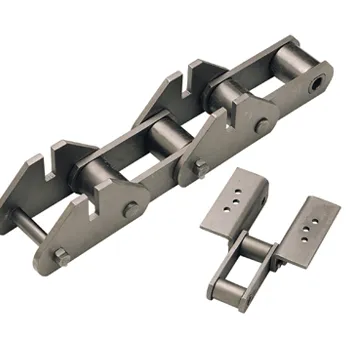
- Hollow pin chains: Hollow pin chains have hollow pins that allow for easy attachment of various accessories or attachments. They are commonly used in conveying applications that require customization or where attachments need to be mounted.
- Apron or slat chains: Apron or slat chains consist of plates or slats that are connected by hinges. They are used in heavy-duty applications where the chain needs to support and carry large loads or withstand harsh environments.
- Plastic chains: Plastic chains are made of durable and lightweight materials such as acetal or polyethylene. They offer benefits such as corrosion resistance, low noise levels, and the ability to work in wet or washdown environments. Plastic chains are commonly used in food processing, packaging, and pharmaceutical industries.
These are just a few examples of conveyor chain types, and there are many other variations available depending on specific application requirements. The selection of the appropriate conveyor chain type depends on factors such as load capacity, speed, environment, and desired functionality.


editor by CX 2023-08-14