Descrição do produto
High Quality & Made to Order Stainless Steel Table Top Conveyor Chain (TS635)
Descrição do produto
1. Material: Stainless steel chain / Alloy Carbon Steel
2. Surface Treatment: Zinc-Plated / Nickel-Plated / Dacromet-Plated
3. Short pitch stainless steel conveyor chain with attachments.
4. Double pitch stainless steel conveyor chain.
5. Double pitch hollow pin chain.
Note: If you have drawing or samples, we can do the special conveyor chains.
| Product name | Table Top Conveyor Chain (TS635) |
| Materials Available | 1. Stainless Steel: SS304, SS316, etc |
| 2. Alloy Steel: 45Mn, 42CrMo, etc | |
| 3. OEM according to your request | |
| Tratamento de superfície | Shot peening, Polishing, Oxygenation, Blackening, Zinc-plated, Nickel-plated, Anodized, etc. |
| Characteristic | Fire Resistant, Oil Resistant, Heat Resistant |
| Aplicativo | Mainly used in products transmission |
| Design criterion | ISO DIN ANSI & Customer’s Drawing |
| Size | Customer’s Drawing & ISO standard |
| Pacote | Wooden Case / Container and pallet, or made-to-order |
| Certificado | ISO9001: 2008 |
| Vantagem | First quality, Best service, Competitive price, Fast delivery |
| Delivery Time | 20 days for samples. 45 days for official order. |
View more products,please click here…
perfil de companhia
| Material: | Stainless Steel |
|---|---|
| Estrutura: | Corrente transportadora |
| Tratamento de superfície: | Floração de óleo |
| Tamanho da corrente: | Ts635 |
| Recurso: | Resistente ao calor |
| Sample: | for Free |
| Exemplos: |
US$ 0/Meter
1 metro (pedido mínimo) | |
|---|
| Personalização: |
Disponível
| Solicitação personalizada |
|---|
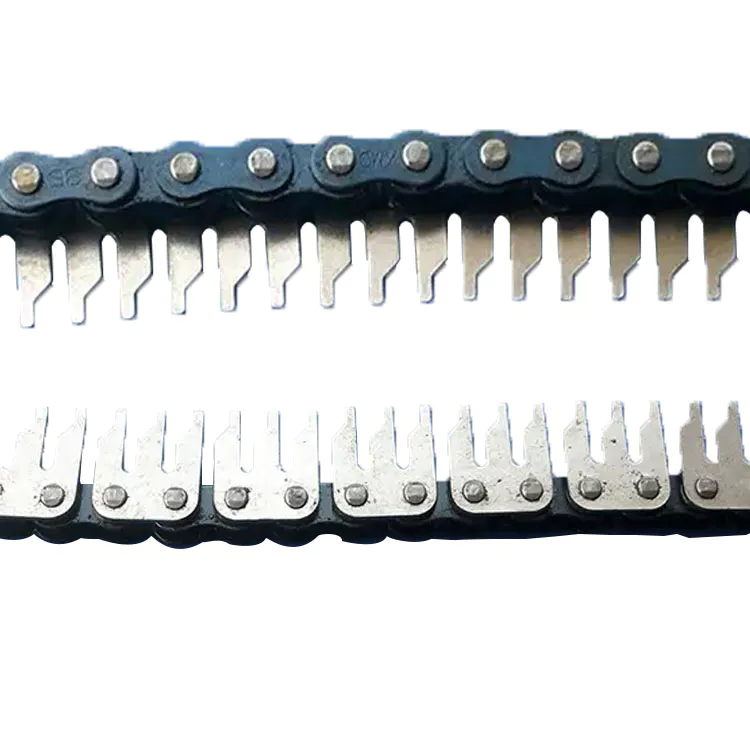
Can a conveyor chain be used in automotive assembly lines?
Yes, a conveyor chain can be effectively used in automotive assembly lines. Here are the reasons why:
1. Efficient Material Handling:
– Conveyor chains provide a reliable and efficient means of transporting automotive components and parts along the assembly line. They can handle heavy loads and withstand the demanding requirements of automotive manufacturing.
2. Versatility:
– Conveyor chains offer versatility in terms of design and configuration. They can be customized to accommodate various assembly processes, such as body welding, painting, assembly, and final inspection.
3. Precise Positioning:
– Conveyor chains allow precise positioning and synchronization of automotive components, ensuring accurate assembly and alignment during the production process. This helps maintain consistent quality and reduces errors.
4. Automation Integration:
– Conveyor chains can be easily integrated with automation systems in automotive assembly lines. They can work in conjunction with robotic arms, vision systems, and other automated equipment to optimize the production process and improve efficiency.
5. Assembly Line Flexibility:
– Conveyor chains provide flexibility in terms of line configuration and layout. They can be designed to accommodate different assembly line layouts, including straight sections, curves, inclines, and declines, to meet the specific requirements of automotive assembly processes.
6. Space Optimization:
– Conveyor chains help optimize space utilization in automotive assembly plants. They can be designed to navigate around existing equipment and infrastructure, making efficient use of available floor space.
7. Safety:
– Conveyor chains are designed with safety features to protect operators and prevent accidents. Emergency stop controls, guarding, and interlocking mechanisms ensure the safe operation of the assembly line.
8. Increased Production Speed:
– By using conveyor chains, automotive assembly lines can achieve higher production speeds, allowing for faster manufacturing cycles and increased output.
Overall, conveyor chains play a crucial role in enhancing the efficiency, productivity, and safety of automotive assembly lines, contributing to the smooth and streamlined production of vehicles.
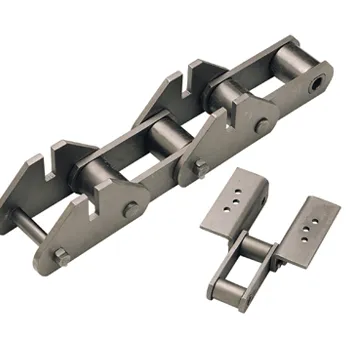
Como uma corrente transportadora impacta o fluxo de materiais em uma linha de produção?
Uma corrente transportadora desempenha um papel crucial na facilitação do fluxo suave e eficiente de materiais em uma linha de produção. Aqui estão as principais maneiras pelas quais uma corrente transportadora impacta o fluxo de materiais:
1. Movimento contínuo: Uma corrente transportadora permite o movimento contínuo de materiais ao longo da linha de produção. Ao segurar e transportar os materiais com segurança, a corrente garante um fluxo constante, sem interrupções ou atrasos.
2. Controle de Velocidade: A velocidade de deslocamento da corrente transportadora pode ser ajustada para corresponder à taxa de produção desejada. Isso permite um controle preciso do fluxo de material, garantindo que ele esteja alinhado com os processos subsequentes e evitando gargalos ou sobrecargas.
3. Orientação e Posicionamento: As correntes transportadoras podem ser projetadas com acessórios ou dispositivos específicos para orientar e posicionar os materiais da maneira desejada. Isso garante que os materiais sejam apresentados corretamente para processamento, montagem ou embalagem, otimizando o fluxo de produção como um todo.
4. Classificação e Divergência: Em determinadas aplicações, as correntes transportadoras podem ser equipadas com mecanismos para classificar ou diversificar materiais com base em critérios predeterminados. Isso permite o encaminhamento eficiente de diferentes produtos ou componentes para seus respectivos destinos, otimizando o fluxo de materiais.
5. Acumulação e Reservatório: As esteiras transportadoras podem incorporar zonas de acumulação ou áreas de reserva onde os materiais podem ser temporariamente interrompidos ou acumulados. Essa característica é útil quando os processos subsequentes sofrem interrupções temporárias ou quando há necessidade de equilibrar o fluxo entre diferentes etapas de produção.
6. Integração com Equipamentos: As correntes transportadoras podem ser integradas a outros equipamentos ou máquinas na linha de produção, como braços robóticos, sistemas automatizados de embalagem ou estações de inspeção. Essa integração perfeita permite o manuseio sincronizado de materiais, otimizando o fluxo e a eficiência de todo o processo produtivo.
7. Personalização para Necessidades Específicas: As correntes transportadoras podem ser personalizadas para atender a requisitos específicos de movimentação de materiais. Isso inclui considerações como largura, comprimento e ajustes de altura da corrente, inclinações ou declives, além de acessórios ou guias especiais. Essa personalização garante que o fluxo de materiais seja adaptado às necessidades exclusivas da linha de produção.
Ao proporcionar um método confiável e controlado de transporte de materiais, uma corrente transportadora influencia significativamente o fluxo de materiais em uma linha de produção. Ela aumenta a produtividade, reduz o manuseio manual, minimiza o risco de erros ou danos e, em última análise, contribui para a eficiência e o sucesso geral do processo de fabricação.

What are the different types of conveyor chains?
There are several types of conveyor chains available, each designed to meet specific application requirements. Here are some common types of conveyor chains:
- Roller chains: Roller chains are the most commonly used type of conveyor chain. They consist of a series of cylindrical rollers connected by side plates. Roller chains provide smooth and efficient movement and are suitable for medium to heavy-duty applications.
- Double pitch chains: Double pitch chains have larger pitch (distance between the centers of adjacent pins) compared to standard roller chains. They are often used in applications that require slower speeds and lighter loads.
- Hollow pin chains: Hollow pin chains have hollow pins that allow for easy attachment of various accessories or attachments. They are commonly used in conveying applications that require customization or where attachments need to be mounted.
- Apron or slat chains: Apron or slat chains consist of plates or slats that are connected by hinges. They are used in heavy-duty applications where the chain needs to support and carry large loads or withstand harsh environments.
- Plastic chains: Plastic chains are made of durable and lightweight materials such as acetal or polyethylene. They offer benefits such as corrosion resistance, low noise levels, and the ability to work in wet or washdown environments. Plastic chains are commonly used in food processing, packaging, and pharmaceutical industries.
These are just a few examples of conveyor chain types, and there are many other variations available depending on specific application requirements. The selection of the appropriate conveyor chain type depends on factors such as load capacity, speed, environment, and desired functionality.


editor by CX 2023-08-14