
Produktbeskrivelse
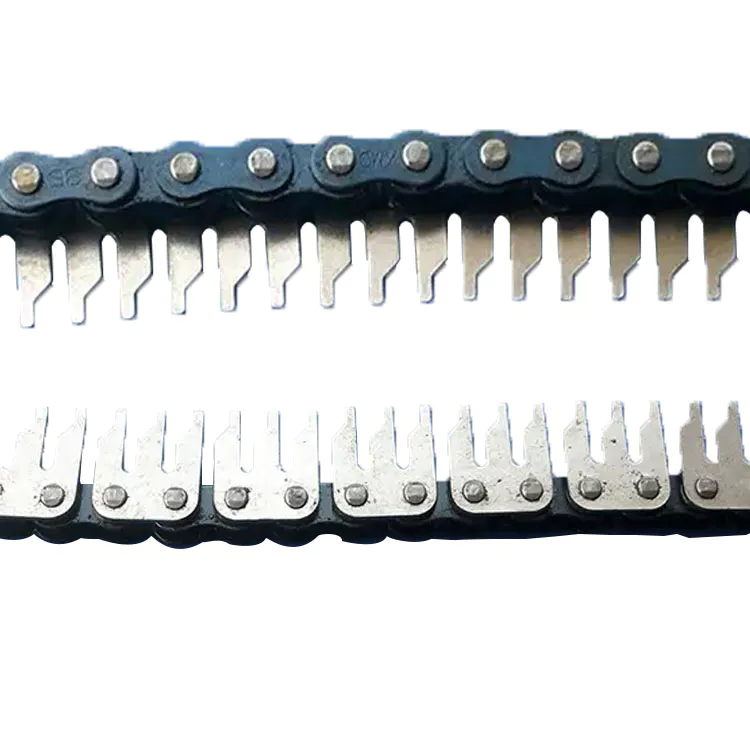
| Punkt | Leaf Chains | Søknad | Machinery Parts |
| Surface Teatment | Self-color/Sand-blasted/Shot-peening | Merke | OEM |
| Pakke | Poly bag, then box, finally poly-wooden case | Havn | Enhver havn eller flyplass i Kina |
| Størrelse | LH: LH0822,LH0823,LH571,LH0844,LH0846,LH0866,LH 0571 ,LH1571,LH1571,LH1034,LH1044, LH1046,LH1066,LH1088,LH1222,LH1223,LH1234,LH1244,LH1246,LH1266,LH1288,LH1622, LH1623,LH1634,LH1644,LH1646,LH1666,LH1688,LH2571,LH2571,LH2034,LH2044,LH2046, LH2066,LH2088,LH2422,LH2423,LH2434,LH2444,LH2446,LH2466,LH2488,LH2822,LH2823, LH2834,LH2844,LH2846,LH2866,LH2888,LH3222,LH3223,LH3234,LH3244,LH3246,LH3266, LH3288, LH4571, LH4571, LH4034, LH4044, LH4046, LH4066, LH4088 BL: BL422,BL423,BL434,BL444,BL446,BL488,BL522,BL523,BL534,BL544,BL546,BL566,BL588, BL622,BL623,BL634,BL644,BL646,BL688,BL822,BL823,BL834,BL844,BL846,BL866,BL888, BL1571,BL1571,BL1034,BL1044,BL1046,BL1088,BL1222,BL1223,BL1234,BL1244,BL1246, BL1266,BL1288,BL1422,BL1423,BL1434,BL1444,BL1446,BL1488,BL1622,BL1623,BL1634, BL1644, BL1646, BL1666, BL1888, BL2571, BL2571, BL2034, BL2044, BL2046, BL2088 LL: LL0622, LL0644, LL0666, LL0822, LL0844, LL0866, LL 0571, LL1571, LL1044, LL1066, LL1088, LL1222 LL1244, LL1266, LL1288, LL1622, LL1644, LL1666, LL1688, LL2571, LL2044, LL2066, LL2088, LL2422 LL2444, LL2466, LL2488, LL2822, LL2844, LL2866, LL2888, LL3222, LL3244, LL3266, LL3288, LL4571 LL4044, LL4066, LL4088, LL4822, LL4844, LL4866, LL4888 AL: AL322,AL344,AL422,AL444,AL466,AL522,AL534,AL544,AL566,AL622,AL644,AL666,AL688 AL822,AL844,AL866,AL888,AL1571,AL1044,AL1066,AL1088,AL1222,AL1244,AL1266,AL1288, AL1444, AL1466, AL1644, AL1666, AL1688 FL: FL644, FL666, FL688, FL523, FL844, FL922, FL944, FL945, FL956, FL966, FL988 |
||
| Materiale: | Stryke |
|---|---|
| Struktur: | Bladkjede |
| Overflatebehandling: | Polering |
| Kjedestørrelse: | P9.525-P76.20 |
| Trekk: | Fire Resistant, Oil Resistant, Heat Resistant |
| Transportpakke: | Poly Bag, Box, Poly-Wooden Case |
| Prøver: |
US$ 10/Several Links
1 Several Links(Min.Order) | |
|---|
| Tilpasning: |
Tilgjengelig
| Tilpasset forespørsel |
|---|
Can a conveyor chain be used in automotive assembly lines?
Yes, a conveyor chain can be effectively used in automotive assembly lines. Here are the reasons why:
1. Efficient Material Handling:
– Conveyor chains provide a reliable and efficient means of transporting automotive components and parts along the assembly line. They can handle heavy loads and withstand the demanding requirements of automotive manufacturing.
2. Versatility:
– Conveyor chains offer versatility in terms of design and configuration. They can be customized to accommodate various assembly processes, such as body welding, painting, assembly, and final inspection.
3. Precise Positioning:
– Conveyor chains allow precise positioning and synchronization of automotive components, ensuring accurate assembly and alignment during the production process. This helps maintain consistent quality and reduces errors.
4. Automation Integration:
– Conveyor chains can be easily integrated with automation systems in automotive assembly lines. They can work in conjunction with robotic arms, vision systems, and other automated equipment to optimize the production process and improve efficiency.
5. Assembly Line Flexibility:
– Conveyor chains provide flexibility in terms of line configuration and layout. They can be designed to accommodate different assembly line layouts, including straight sections, curves, inclines, and declines, to meet the specific requirements of automotive assembly processes.
6. Space Optimization:
– Conveyor chains help optimize space utilization in automotive assembly plants. They can be designed to navigate around existing equipment and infrastructure, making efficient use of available floor space.
7. Safety:
– Conveyor chains are designed with safety features to protect operators and prevent accidents. Emergency stop controls, guarding, and interlocking mechanisms ensure the safe operation of the assembly line.
8. Increased Production Speed:
– By using conveyor chains, automotive assembly lines can achieve higher production speeds, allowing for faster manufacturing cycles and increased output.
Overall, conveyor chains play a crucial role in enhancing the efficiency, productivity, and safety of automotive assembly lines, contributing to the smooth and streamlined production of vehicles.
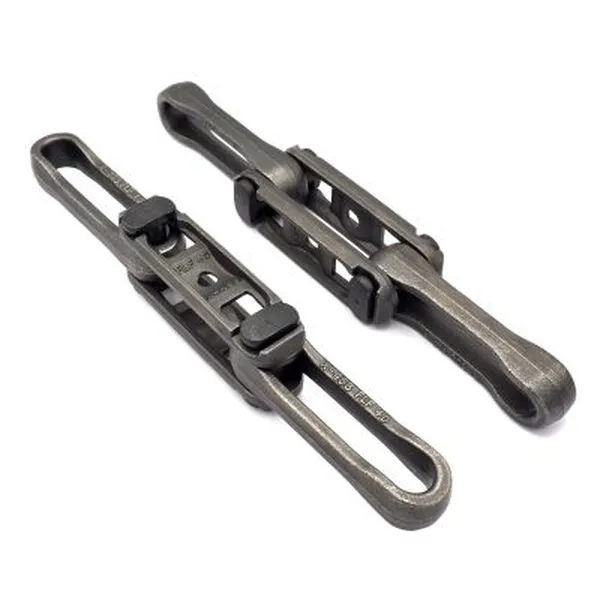
What are the safety measures for working with heavy-duty conveyor chains?
Working with heavy-duty conveyor chains requires strict adherence to safety measures to protect the workers and maintain a safe working environment. Here are some important safety measures to consider:
1. Proper Training: All personnel involved in working with conveyor chains should receive comprehensive training on the safe operation and maintenance of the equipment. This includes understanding the potential hazards, safety procedures, and proper use of personal protective equipment (PPE).
2. Equipment Inspection: Regular inspection of the conveyor chain and associated components is crucial to identify any signs of wear, damage, or malfunction. This includes checking for loose fasteners, worn sprockets, misalignment, and any other potential hazards. Any issues should be addressed promptly to prevent accidents.
3. Lockout/Tagout: Before performing any maintenance or repair tasks on the conveyor chain, proper lockout/tagout procedures must be followed. This ensures that the equipment is de-energized and isolated from any power source to prevent accidental startup or movement.
4. Personal Protective Equipment (PPE): Workers should wear appropriate PPE, including safety glasses, gloves, steel-toed boots, and hearing protection. The specific PPE requirements may vary depending on the nature of the work and the potential hazards involved.
5. Safe Work Practices: Workers should follow safe work practices, such as avoiding loose clothing or jewelry that can get caught in the chain, keeping hands and clothing clear of moving parts, and using proper lifting techniques when handling heavy loads.
6. Emergency Stop Systems: Conveyor systems should be equipped with emergency stop buttons or pull cords that allow workers to quickly stop the chain in case of an emergency or hazardous situation.
7. Regular Maintenance: Scheduled maintenance and lubrication of the conveyor chain should be performed according to the manufacturer’s recommendations. This helps to ensure optimal performance and minimize the risk of unexpected failures.
8. Clear Warning Signs and Labels: Proper signage, warning labels, and safety instructions should be clearly displayed near the conveyor chain system to remind workers of potential hazards and safe operating procedures.
9. Regular Safety Training and Communication: Ongoing safety training and communication among the workforce are vital to reinforce safe practices and raise awareness of any changes or updates to safety protocols.
By implementing these safety measures and fostering a safety-conscious culture, the risks associated with working with heavy-duty conveyor chains can be minimized, ensuring the well-being of the workers and the efficient operation of the equipment.
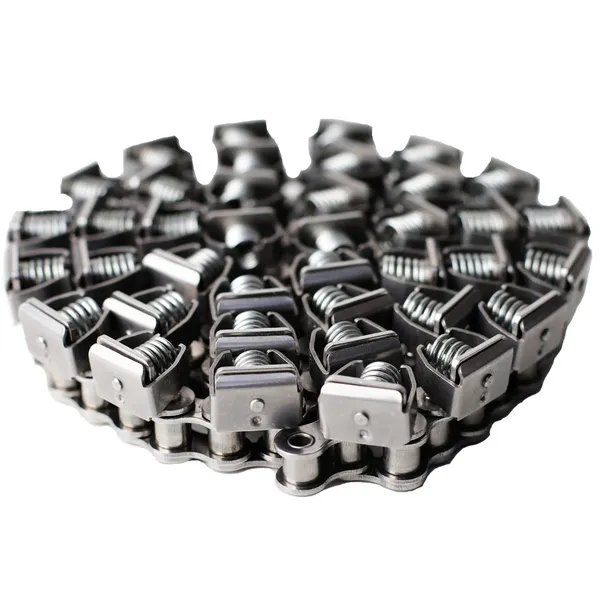
Hva er en transportkjede, og hvordan fungerer den?
En transportkjede er en type mekanisk kjede som er spesielt utviklet for bruk i transportbåndssystemer. Den består av en serie sammenkoblede lenker som danner en kontinuerlig kjedesløyfe. Lenkene er vanligvis laget av metall og er forbundet med pinner eller andre forbindelseselementer.
Transportkjeder fungerer ved å overføre kraft og bevegelse fra drivmekanismen, for eksempel en motor eller et tannhjul, til transportbåndsystemet for å flytte materialer eller produkter langs en forhåndsbestemt bane. Kjeden er plassert på et spor eller føringsskinner, og mens den beveger seg, bærer den lasten som er plassert på den.
Driften av en transportkjede innebærer følgende trinn:
- Kraftoverføring:
Drivmekanismen overfører rotasjonskraft til transportkjeden, vanligvis gjennom en motor og tannhjul. Motoren gir det nødvendige dreiemomentet for å drive kjeden.
- Trekkkraft og bevegelse:
Når drivmekanismen roterer tannhjulene, griper tannhjulenes tenner inn i leddene i transportkjeden. Denne interaksjonen skaper trekkraft, som får kjeden til å bevege seg langs ønsket bane.
- Lastbæring:
Lasten som skal transporteres plasseres på transportkjeden. Lasten kan være i form av produkter, materialer eller andre gjenstander. Etter hvert som kjeden beveger seg, bærer den lasten langs transportbåndsystemet, noe som muliggjør effektiv transport eller håndtering.
- Støtte og veiledning:
Transportkjeden støttes og styres av ulike komponenter, som føringsskinner, ruller eller slitelister. Disse komponentene sikrer riktig justering og jevn bevegelse av kjeden langs transportbåndsystemet.
Transportkjeder brukes ofte i bransjer som produksjon, logistikk, emballasje og materialhåndtering. De tilbyr en pålitelig og effektiv metode for å flytte produkter eller materialer på en kontrollert og automatisert måte.


editor by CX 2023-08-11