
Описание продукта
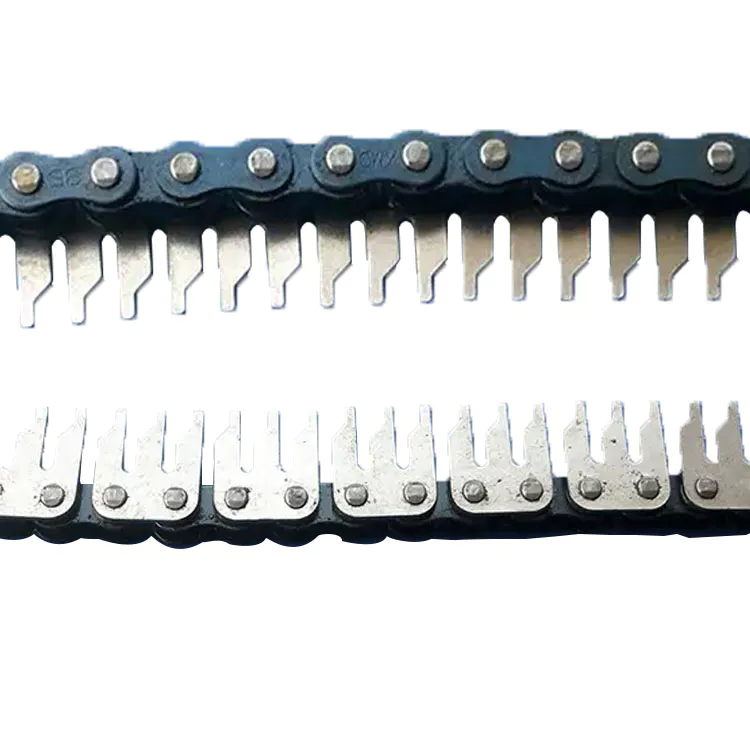
| Элемент | Leaf Chains | Приложение | Machinery Parts |
| Surface Teatment | Self-color/Sand-blasted/Shot-peening | Бренд | OEM |
| Упаковка | Poly bag, then box, finally poly-wooden case | Порт | Любой морской порт или аэропорт в Китае |
| Размер | LH: LH0822,LH0823,LH571,LH0844,LH0846,LH0866,LH 0571 ,LH1571,LH1571,LH1034,LH1044, LH1046,LH1066,LH1088,LH1222,LH1223,LH1234,LH1244,LH1246,LH1266,LH1288,LH1622, LH1623,LH1634,LH1644,LH1646,LH1666,LH1688,LH2571,LH2571,LH2034,LH2044,LH2046, LH2066,LH2088,LH2422,LH2423,LH2434,LH2444,LH2446,LH2466,LH2488,LH2822,LH2823, LH2834,LH2844,LH2846,LH2866,LH2888,LH3222,LH3223,LH3234,LH3244,LH3246,LH3266, LH3288,LH4571,LH4571,LH4034,LH4044,LH4046,LH4066,LH4088 BL: BL422,BL423,BL434,BL444,BL446,BL488,BL522,BL523,BL534,BL544,BL546,BL566,BL588, BL622,BL623,BL634,BL644,BL646,BL688,BL822,BL823,BL834,BL844,BL846,BL866,BL888, BL1571,BL1571,BL1034,BL1044,BL1046,BL1088,BL1222,BL1223,BL1234,BL1244,BL1246, BL1266,BL1288,BL1422,BL1423,BL1434,BL1444,BL1446,BL1488,BL1622,BL1623,BL1634, BL1644, BL1646, BL1666, BL1888, BL2571, BL2571, BL2034, BL2044, BL2046, BL2088 LL: LL0622, LL0644, LL0666, LL0822, LL0844, LL0866, LL 0571, LL1571, LL1044, LL1066, LL1088, LL1222 LL1244,LL1266,LL1288,LL1622,LL1644,LL1666,LL1688,LL2571,LL2044,LL2066,LL2088,LL2422 LL2444,LL2466,LL2488,LL2822,LL2844,LL2866,LL2888,LL3222,LL3244,LL3266,LL3288,LL4571 LL4044, LL4066, LL4088, LL4822, LL4844, LL4866, LL4888 AL: АЛ322, АЛ344, АЛ422, АЛ444, АЛ466, АЛ522, АЛ534, АЛ544, АЛ566, АЛ622, АЛ644, АЛ666, АЛ688 AL822,AL844,AL866,AL888,AL1571,AL1044,AL1066,AL1088,AL1222,AL1244,AL1266,AL1288, AL1444, AL1466, AL1644, AL1666, AL1688 FL: FL644,FL666,FL688,FL523,FL844,FL922,FL944,FL945,FL956,FL966,FL988 |
||
| Материал: | Железо |
|---|---|
| Структура: | Цепь листьев |
| Обработка поверхности: | Полировка |
| Размер цепочки: | P9.525-P76.20 |
| Особенность: | Fire Resistant, Oil Resistant, Heat Resistant |
| Transport Package: | Poly Bag, Box, Poly-Wooden Case |
| Образцы: |
US$ 10/Several Links
1 Several Links(Min.Order) | |
|---|
| Настройка: |
Доступный
| Индивидуальный запрос |
|---|
Can a conveyor chain be used in automotive assembly lines?
Yes, a conveyor chain can be effectively used in automotive assembly lines. Here are the reasons why:
1. Efficient Material Handling:
– Conveyor chains provide a reliable and efficient means of transporting automotive components and parts along the assembly line. They can handle heavy loads and withstand the demanding requirements of automotive manufacturing.
2. Versatility:
– Conveyor chains offer versatility in terms of design and configuration. They can be customized to accommodate various assembly processes, such as body welding, painting, assembly, and final inspection.
3. Precise Positioning:
– Conveyor chains allow precise positioning and synchronization of automotive components, ensuring accurate assembly and alignment during the production process. This helps maintain consistent quality and reduces errors.
4. Automation Integration:
– Conveyor chains can be easily integrated with automation systems in automotive assembly lines. They can work in conjunction with robotic arms, vision systems, and other automated equipment to optimize the production process and improve efficiency.
5. Assembly Line Flexibility:
– Conveyor chains provide flexibility in terms of line configuration and layout. They can be designed to accommodate different assembly line layouts, including straight sections, curves, inclines, and declines, to meet the specific requirements of automotive assembly processes.
6. Space Optimization:
– Conveyor chains help optimize space utilization in automotive assembly plants. They can be designed to navigate around existing equipment and infrastructure, making efficient use of available floor space.
7. Safety:
– Conveyor chains are designed with safety features to protect operators and prevent accidents. Emergency stop controls, guarding, and interlocking mechanisms ensure the safe operation of the assembly line.
8. Increased Production Speed:
– By using conveyor chains, automotive assembly lines can achieve higher production speeds, allowing for faster manufacturing cycles and increased output.
Overall, conveyor chains play a crucial role in enhancing the efficiency, productivity, and safety of automotive assembly lines, contributing to the smooth and streamlined production of vehicles.
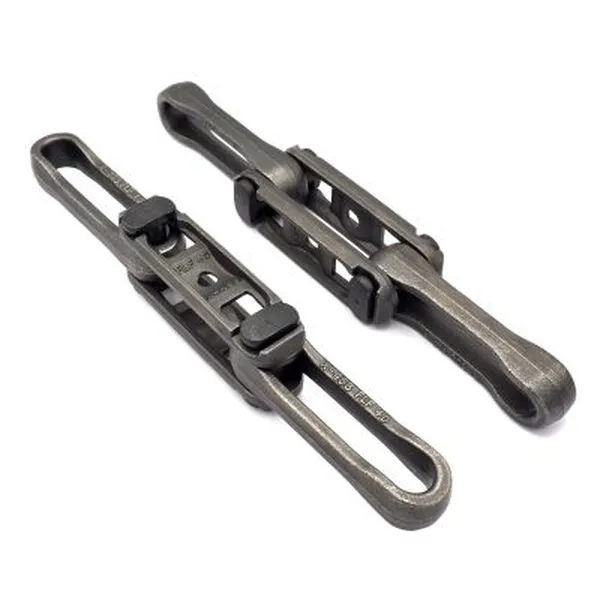
What are the safety measures for working with heavy-duty conveyor chains?
Working with heavy-duty conveyor chains requires strict adherence to safety measures to protect the workers and maintain a safe working environment. Here are some important safety measures to consider:
1. Proper Training: All personnel involved in working with conveyor chains should receive comprehensive training on the safe operation and maintenance of the equipment. This includes understanding the potential hazards, safety procedures, and proper use of personal protective equipment (PPE).
2. Equipment Inspection: Regular inspection of the conveyor chain and associated components is crucial to identify any signs of wear, damage, or malfunction. This includes checking for loose fasteners, worn sprockets, misalignment, and any other potential hazards. Any issues should be addressed promptly to prevent accidents.
3. Lockout/Tagout: Before performing any maintenance or repair tasks on the conveyor chain, proper lockout/tagout procedures must be followed. This ensures that the equipment is de-energized and isolated from any power source to prevent accidental startup or movement.
4. Personal Protective Equipment (PPE): Workers should wear appropriate PPE, including safety glasses, gloves, steel-toed boots, and hearing protection. The specific PPE requirements may vary depending on the nature of the work and the potential hazards involved.
5. Safe Work Practices: Workers should follow safe work practices, such as avoiding loose clothing or jewelry that can get caught in the chain, keeping hands and clothing clear of moving parts, and using proper lifting techniques when handling heavy loads.
6. Emergency Stop Systems: Conveyor systems should be equipped with emergency stop buttons or pull cords that allow workers to quickly stop the chain in case of an emergency or hazardous situation.
7. Regular Maintenance: Scheduled maintenance and lubrication of the conveyor chain should be performed according to the manufacturer’s recommendations. This helps to ensure optimal performance and minimize the risk of unexpected failures.
8. Clear Warning Signs and Labels: Proper signage, warning labels, and safety instructions should be clearly displayed near the conveyor chain system to remind workers of potential hazards and safe operating procedures.
9. Regular Safety Training and Communication: Ongoing safety training and communication among the workforce are vital to reinforce safe practices and raise awareness of any changes or updates to safety protocols.
By implementing these safety measures and fostering a safety-conscious culture, the risks associated with working with heavy-duty conveyor chains can be minimized, ensuring the well-being of the workers and the efficient operation of the equipment.
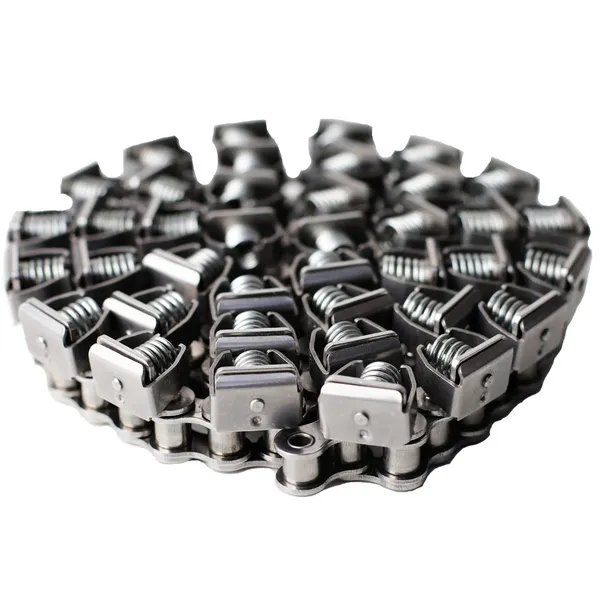
Что такое конвейерная цепь и как она работает?
Конвейерная цепь — это тип механической цепи, специально разработанный для использования в конвейерных системах. Она состоит из ряда взаимосвязанных звеньев, образующих непрерывную цепь. Звенья обычно изготавливаются из металла и соединяются между собой с помощью штифтов или других соединительных элементов.
Конвейерные цепи работают за счет передачи энергии и движения от приводного механизма, такого как двигатель или звездочка, к конвейерной системе для перемещения материалов или изделий по заданному пути. Цепь размещается на направляющих рельсах и, двигаясь, несет на себе груз.
Работа конвейерной цепи включает в себя следующие этапы:
- Передача энергии:
Приводной механизм передает вращательную силу на конвейерную цепь, как правило, через двигатель и звездочки. Двигатель обеспечивает необходимый крутящий момент для привода цепи.
- Тяга и движение:
Вращая зубья звездочек приводным механизмом, они входят в зацепление со звеньями конвейерной цепи. Это взаимодействие создает тягу, заставляя цепь двигаться по заданной траектории.
- Несущая способность:
Груз, подлежащий транспортировке, размещается на конвейерной цепи. Груз может представлять собой продукцию, материалы или другие предметы. По мере движения цепи груз перемещается вдоль конвейерной системы, обеспечивая эффективную транспортировку или погрузку и разгрузку.
- Поддержка и консультации:
Конвейерная цепь поддерживается и направляется различными компонентами, такими как направляющие рельсы, ролики или износостойкие полосы. Эти компоненты обеспечивают правильное выравнивание и плавное движение цепи вдоль конвейерной системы.
Конвейерные цепи широко используются в таких отраслях, как производство, логистика, упаковка и погрузочно-разгрузочные работы. Они представляют собой надежный и эффективный способ перемещения продукции или материалов контролируемым и автоматизированным образом.


editor by CX 2023-08-11