Product Description
Product Description
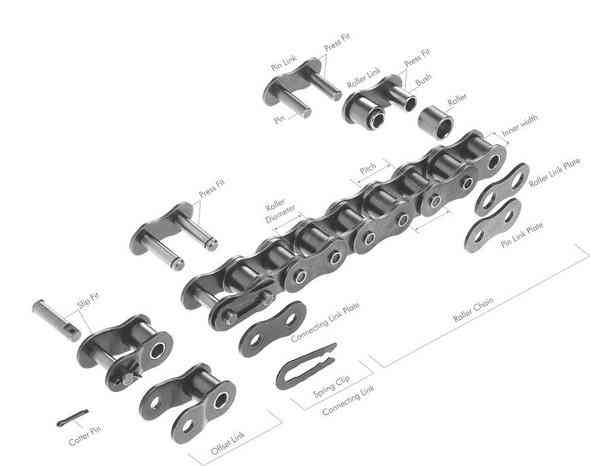
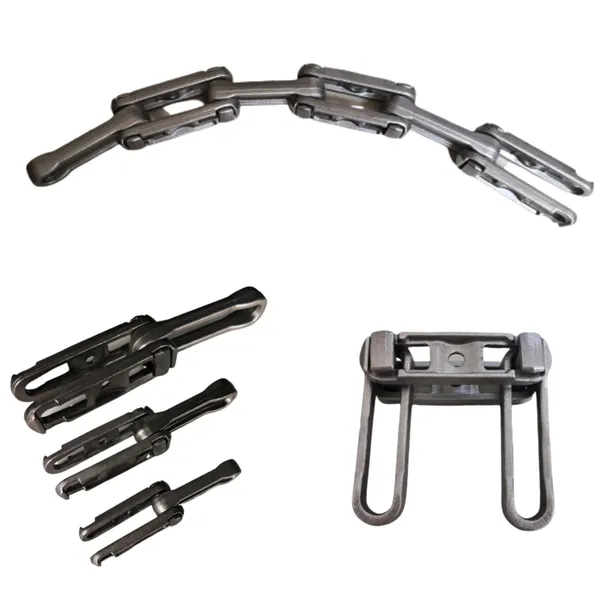
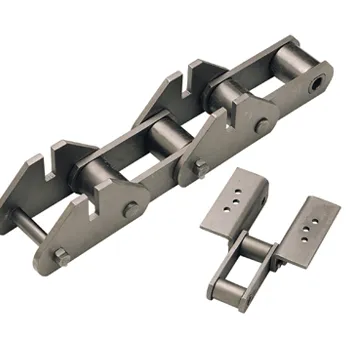
Palm oil chain, a kind of conveyor chain, is a kind of conveyor equipment that conveys the palm fruits from the oil palm tree to the pressing machine for pressing by using palm oil chain.
Palm oil chain is divided into:
1, Straight type palm oil chain
2, Bent plate type palm oil chain
3, Hollow pin type palm oil chain
4, Palm Oil Chain-Accessories
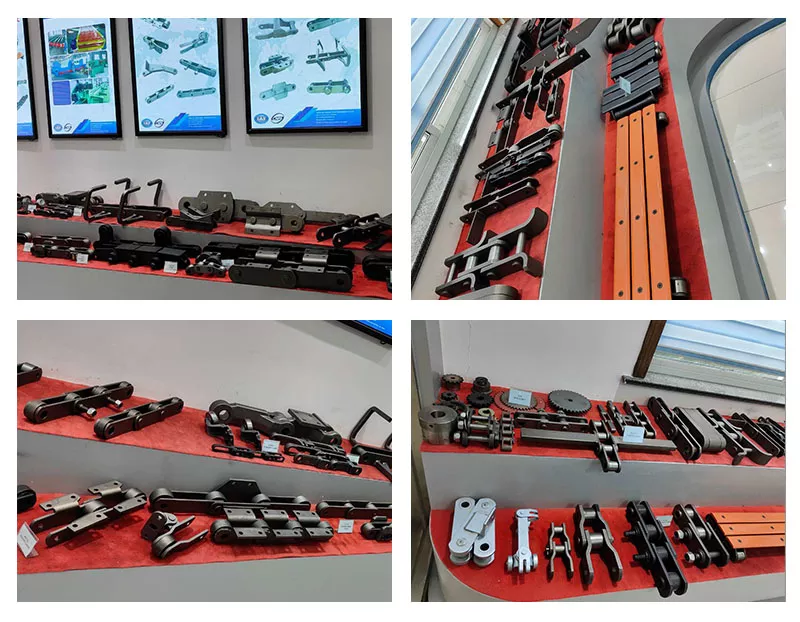
Sugar mill chain refers to the chain used in the production equipment of sugar (the main raw materials are sugar cane and sugar beet), and the products cover the manufacturing process of transmission, lifting and conveying in sugar industry.
According to the different processes in the sugar production process, different materials and the same heat treatment process can be selected to ensure that the chains have better quality characteristics such as toughness, abrasion resistance and corrosion resistance.
Product Attribute
| Product Name | Conveyor Chians |
| Available materials | carbon steel, alloy steel,stainless steel |
| OEM customisation according to your requirements | |
| Surface Treatment | Shot peening, Zinc-plated, Nickel-plated, Anodized, etc. |
| Performance | High temperature resistant Abrasion resistant |
| Reference standards | ISO,DIN,ANSL |
| Customised drawings | YES |
| Certificates | ISO9001:2008 SGS brand TV |
| Delivery time | 20 days for samples. 45 days for official order. |
| Packaging | Plastic Bag + Cardboard Box + Wooden |
Detailed Photos
Product Parameters
Our Advantages
Company Advantages:
Own Import & Export License, The TV trade mark registered successfully in many countries, Sales network spread all over China, Products export to 65 countries in 5 continents.
Membership:
1. The member of China General Machine Components Industry Association.
2. The member of China Chain Transmission Association.
3. The member of China Chain Standardization Association.
4. The member of China Agricultural Association Machinery Manufacturers.
With our excellent trained staffs and workers, advanced and efficient equipments, completely sales network, strict QA systems. You are confidence that our premium qualified chain can meet all customers’ specification and strictest quality standards.
Please do not hesitate to contact us for more information on how TransVision products can meet your industries demands at highly competitive pricing.
Quality First, Clients Uppermost.
Product Categories
WHY CHOOSE US
Comprehensive Product Portfolio We produce and supply a wide range of power transmission
products including drive chains, leaf chains, conveyor chains, agricultural chains, sprockets, and
couplings. This one-store-for-all shopping experience will significantly reduce your searching costs while
guarantee youfind what you want at 1 click.
Value Choice Products Our products are the best combination of quality and price, and you get what
you want within your budgets
Seasoned Sales Associates and Engineers We have 15 seasoned sales associates and 5 engineers;
on our team at your disposal any time when you need a helping hand. They are well trained with industry
know-now and will always respond to your requests within 24 hours.
100% Customer Retention Rate Our regular customers from overseas come back not just for our
premium quality products, but for the superior services that we’ve provided over the years.
FAQ
Q1: What’s your average lead time?
A: It varies. Our regular end-to-end lead time is 1-2 months.. We also provide express shipments for rush orders. For details,please consult our sales associate.
Q2: Is your price better than your competitors given the same quality?
A: Definitely YES. We provide the most competitive price in the power transmission industry. If price disparity exists, we’ll be more than happy to do a price match.
Q3: Can you make chains according to my CAD drawings?
A: Yes. Besides the regular standard chains, we produce non-standard and custom-design products to meet the specific technical requirements. In reality, a sizable portion of our production capacity is assigned to make non-standard products.
Q4: Can we inspect the goods before shipment?
A: Yes. You or your representative or any third-party inspection party assigned is allowed access to our facility and do the inspection.
Q5: What kind of payment method is acceptable for your mill?
A: We’re flexible. We take T/T, L/C, or any other online payment methods so long as it’s applicable for you.
Q6: What if I have any other questions?
A: Whenever in doubt, you’re always encouraged to consult our sales associate any time – They will help you to your satisfaction.
| Material: | Alloy/Carbon Steel |
|---|---|
| Structure: | Roller Chain |
| Surface Treatment: | Polishing |
| Customization: |
Available
| Customized Request |
|---|
.shipping-cost-tm .tm-status-off{background: none;padding:0;color: #1470cc}
|
Shipping Cost:
Estimated freight per unit. |
about shipping cost and estimated delivery time. |
|---|
| Payment Method: |
|
|---|---|
|
Initial Payment Full Payment |
| Currency: | US$ |
|---|
| Return&refunds: | You can apply for a refund up to 30 days after receipt of the products. |
|---|
Can a conveyor chain be used in cleanroom environments?
Yes, conveyor chains can be used in cleanroom environments with proper selection and design considerations. Cleanroom environments require stringent control of airborne particles, such as dust, microbes, and contaminants, to maintain high levels of cleanliness. Here are some factors to consider when using a conveyor chain in a cleanroom:
1. Material Selection:
– Choose a conveyor chain made from materials that are compatible with cleanroom requirements. Stainless steel, plastic, or special coatings are commonly used for their clean and non-contaminating properties.
– Avoid materials that generate excessive particles or contaminants, such as certain types of lubricants or chain coatings.
2. Design Considerations:
– Design the conveyor chain system to minimize particle generation. This includes smooth surfaces, rounded edges, and avoiding areas that can trap or accumulate particles.
– Use sealed or enclosed chain designs to prevent the release of lubricants or contaminants.
– Consider the integration of additional features, such as covers or guards, to further protect the chain and prevent particle ingress.
3. Cleaning and Maintenance:
– Establish a cleaning and maintenance protocol specific to the cleanroom environment. This may include regular cleaning and sanitization procedures to maintain cleanliness standards.
– Use cleaning agents and procedures that are approved for cleanroom use and do not introduce contaminants.
– Regularly inspect the conveyor chain system for any signs of wear, damage, or contamination. Promptly address any issues to ensure the chain’s reliability and cleanliness.
4. Compliance with Cleanroom Standards:
– Ensure that the conveyor chain system meets the cleanliness and particle generation requirements of the specific cleanroom standards or classifications in which it will be used.
– Comply with relevant industry guidelines and regulations, such as ISO standards, when selecting and using conveyor chains in cleanroom environments.
By considering these factors and implementing proper material selection, design considerations, cleaning protocols, and compliance with cleanroom standards, a conveyor chain can be effectively used in cleanroom environments while maintaining the required cleanliness levels.
How do you prevent corrosion in conveyor chains?
Preventing corrosion in conveyor chains is essential for maintaining their performance and prolonging their lifespan. Here are some effective measures to prevent corrosion:
1. Material Selection: Choose conveyor chains made from corrosion-resistant materials such as stainless steel, plastic, or coatings specifically designed to resist corrosion. These materials offer better protection against rust and corrosion compared to standard steel chains.
2. Proper Lubrication: Apply a suitable lubricant to the conveyor chain regularly. Lubrication creates a protective barrier that helps prevent moisture and contaminants from reaching the metal surface, reducing the risk of corrosion. Select a lubricant that provides corrosion protection properties and is compatible with the chain material.
3. Environmental Controls: Control the operating environment to minimize exposure to corrosive elements. Implement measures such as humidity control, proper ventilation, and protection from direct contact with water or chemicals. Consider using covers or enclosures to shield the conveyor chain from environmental factors that can accelerate corrosion.
4. Surface Treatments: Apply corrosion-resistant coatings or treatments to the conveyor chain. These coatings can provide an additional protective layer that acts as a barrier against moisture and corrosive substances. Examples of surface treatments include zinc plating, galvanizing, or epoxy coatings.
5. Regular Inspections and Cleaning: Regularly inspect the conveyor chain for signs of corrosion or damage. Remove any accumulated dirt, debris, or corrosive substances promptly. Cleaning the chain helps prevent the buildup of contaminants that can accelerate corrosion.
6. Preventive Maintenance: Implement a preventive maintenance program that includes regular cleaning, lubrication, and inspection of the conveyor chain. This proactive approach helps identify and address any potential corrosion issues early on, preventing further damage.
7. Proper Storage: When not in use, store the conveyor chains in a dry and controlled environment. Protect them from exposure to moisture, humidity, and corrosive substances. Use appropriate storage methods, such as hanging the chains or storing them in sealed containers.
By following these preventive measures, you can significantly reduce the risk of corrosion in conveyor chains, ensuring their optimal performance and longevity.
What are the maintenance requirements for a conveyor chain?
Maintaining a conveyor chain is essential to ensure its smooth operation and prolong its lifespan. Here are some key maintenance requirements for a conveyor chain:
- Regular Cleaning: Clean the conveyor chain regularly to remove dirt, debris, and contaminants that can contribute to chain wear and reduce performance. Use appropriate cleaning agents and tools to avoid damaging the chain.
- Lubrication: Apply the recommended lubricant to the conveyor chain according to the manufacturer’s guidelines. Lubrication helps reduce friction, minimize wear, and prevent corrosion.
- Tension Adjustment: Check the tension of the conveyor chain regularly and adjust it if necessary. Proper tension ensures smooth operation and prevents issues like chain slipping or excessive wear.
- Inspection: Conduct regular inspections of the conveyor chain to identify any signs of wear, damage, or misalignment. Look for issues such as worn sprockets, elongation, bent or damaged links, and loose connections. Address any problems promptly to prevent further damage.
- Replace Worn Components: If any components of the conveyor chain, such as links, pins, or sprockets, are excessively worn or damaged, they should be replaced. Using worn components can compromise the chain’s performance and lead to failure.
- Alignment: Ensure proper alignment of the conveyor chain by checking the alignment of sprockets, idlers, and other components. Misalignment can cause uneven wear and increase the risk of chain failure.
- Training and Education: Provide proper training to personnel responsible for operating and maintaining the conveyor chain. They should understand the maintenance requirements, safety protocols, and best practices to ensure effective and safe operation.
Following these maintenance requirements will help keep the conveyor chain in optimal condition, minimize downtime, and ensure safe and efficient material handling.


editor by CX 2023-11-08
China factory High Quality Professional China Factory (ANSI, BS, DIN, JIS Standard) Motorcycle Hollow Pin Palm Oil Sugar Mill Stainless Steel Ice Cream Conveyor Roller Chain roller chain
Product Description
Professional Standard C216ALSS-I Type Conveyor Chain For Ice Cream
C216ALSS-I type chain is a transmission chain for ice cream production and conveying machinery. The pitch is 50.8mm. The roller material is made of reinforced nylon and machined. It is not injection molded and it is wear-resistant, low-temperature resistant, and not easy to break. The chain piece is made of stainless steel 304, with high hardness, low temperature resistance and not easy to break. The main parameters of the product comply with ISO, ANSI, DIN, BS, JIS standards
HangZhou CZPT Industry Co., Ltd. is a specialized supplier of a full range of chains.
Due to our CZPT in offering best service to our clients, understanding of your needs and overriding sense of responsibility toward filling ordering requirements, we have obtained the trust of buyers worldwide. Having accumulated precious experience in cooperating with foreign customers, our products are selling well in the American, European, South American and Asian markets.Our products are manufactured by modern computerized machinery and equipment. Meanwhile, our products are manufactured according to high quality standards, and complying with the international advanced standard criteria.
With many years’ experience in this line, we will be trusted by our advantages in competitive price, one-time delivery, prompt response, on-hand engineering support and good after-sales services.
Additionally, all our production procedures are in compliance with ISO9001 standards. We also can design and make non-standard products to meet customers’ special requirements. Quality and credit are the bases that make a corporation alive. We will provide best services and high quality products with all sincerity. If you need any information or samples, please contact us and you will have our soon reply.
FAQ:
Q1: Are you trading company or manufacturer ?
A: We are factory.
Q2: How long is your delivery time and shipment?
1.Sample Lead-times: generally 30 workdays.
2.Production Lead-times: 60 workdays after getting your deposit.
Q3. What is your terms of payment?
A: T/T 30% as deposit, and 70% before delivery.
We’ll show you the photos of the products and packages before you pay the balance.
Q4: What is your advantages?
1. Manufacturer,the most competitive price and good quality.
2. Perfect technical engineers give you the best support.
3. OEM is available.
4. Rich stock and quick delivery.
Q5. If you can’t find the product on our website,what do you next?
Please send us inquiry with product pictures and drawings by email or other ways and we’ll check
|
Shipping Cost:
Estimated freight per unit. |
To be negotiated |
|---|
| Standard or Nonstandard: | Standard |
|---|---|
| Application: | Textile Machinery, Garment Machinery, Conveyer Equipment, Food Machinery |
| Surface Treatment: | Polishing |
| Samples: |
US$ 50/Meter
1 Meter(Min.Order) | Order Sample |
|---|
| Customization: |
Available
| Customized Request |
|---|
buy drive chain
Buying a drive chain requires a certain understading of its characteristics. This article discusses the different types of chains available, including Silent, Flat-top, and Duplex. By the end of this article, you should have a basic understanding of what each type of chain is for. First, here are some basic rules to keep in mind when shopping for a chain. To find the drive chain that best suits your needs, read on.
roller chain
Choosing the right roller chain for your drive chain depends on several factors. First, you have to determine the motor horsepower and rpm for the small drive sprocket. These values determine the size of the chain and the number of teeth on the drive sprocket. Next, you need to determine the size of the conveyor chain, it can be the horizontal, vertical, or curved radius. Depending on your specific needs, you can also choose between two-strand or three-strand chains.
The roller chain of the drive chain must be properly tensioned. It should also have a proper lubrication system. Chain sag should not exceed two to four percent of the center distance (the distance between the two axles). Also, it shouldn’t make any unusual noises or obvious problems. One of the main reasons for excessive wear is the size of the load. Each chain has a specified maximum working load.
The maximum roller chain load must be less than 1/9 or 6 times the tensile strength of the drive chain. This amount should not exceed this threshold, as exceeding this level will result in chain plate fatigue. To avoid this, you should use a roller chain with a higher number of strands. Also, for high power requirements, a roller chain with a higher number of strands is recommended. One final tip for choosing a drive chain: it should not be used when there is a high risk of corrosion or rusting.
The materials used to manufacture roller chains vary according to the specific application. Common materials include steel and stainless steel. However, stainless steel is used in food processing machinery and other environments that require lubrication. Brass and nylon are also sometimes used. These factors determine the selection of suitable materials for the drive chain. If you are not sure which material to use, you can consult an industry professional. These professionals will help you choose the right chain for the job at hand.
mute chain
The design of the silent transmission chain is as follows: the large chain plates 2 are stacked one on top of the other in the direction of the chain length. The connecting rods are connected by connecting pins 3. The outermost and central guide plates 4 are fastened to the connecting pins 3 by means of rivets. This construction helps minimize friction on the sliding surfaces of the chain. Chainplate 2 of the silent transmission chain is usually made of stainless steel.
The link plates are made of steel and have a rectangular shape with pinholes 41. These guide plates have no teeth but have curved surfaces that guide the silent drive chain on the sprockets. In addition, the rear portion of the guide plate is higher than the portion of the chainplate. This feature improves pitch balance. The present invention is also applicable to silent transmission chains using rockers.
When it comes to chain design, it’s important to remember that silent drive chains are often used in automotive engines, especially timing and cam drives. This type of drive reduces noise and vibration due to its low engagement angle and links engagement with the sprocket. However, these applications are not limited to timing and cam drives; they can also be used for front-wheel power transmission. For example, silent drive chains are designed to resemble those used in NASCAR racing engines.
The design of the silent drive chain is based on the structure of the roller chain. Its components are standardized and manufactured according to pitch. There are single-row and multi-row versions. Quiet chains, also known as inverted tooth chains, are shaped to reduce noise from stretching. It’s also designed to minimize the amount of friction caused by small changes in pitch. Its teeth don’t slide against each other, so the chain is smoother and more durable.
flat top chain
One of the important parts of the flat top chainplate system is the hinge pin, which is used to fix the chainplate and is responsible for the smooth and efficient conveying of the chainplate. There are several types of hinge pins, including single hinge pins and double hinge pins. The single hinge pin is suitable for the chainplate with a small span and small bearing capacity, and the double hinge pin is suitable for the chainplate with a large span and high bearing capacity.
The side bending flat top chain is suitable for conveying large and medium workpiece pallets. They can be made of steel or plastic, each with its own advantages. Both chainplates are designed to convey material smoothly. Side curved flat-top chains can be used on straight conveyors. They have a low coefficient of friction and can transport weights up to 1.2 kg/cm. They can also be combined with HD profiles.
Flat top drive chains are usually made of plastic material and come in two types: tabletop chains and buffer chains. They come in a variety of widths, but the most popular are standard widths, ranging from 3.25 inches to 12 inches. MatTop chains are usually shipped in 10-foot lengths. They come in different styles, but they all have the same basic specs. Tabletop chains are designed for general conveying, while pad chains are used for specific applications. Solid top chains are suitable for conveying bulk materials, while wide pad chains can handle large volumes of fluids and/or solid-solid mixtures.
These chain conveyors can be used to convey, connect or lift small items. This type of chain is especially useful in industries where the product is hot or greasy. The modular design of these chains allows them to be configured in three dimensions, making them suitable for production changes and transitions. They also help reduce slack in the chain. Flat top chains are commonly used in final assembly and mechanical or paint restoration in the automotive industry.
double chain
Besides the roller chain, another type of chain drive is the double drive chain. This type of chain consists of a series of short cylindrical rollers connected together by side links and driven by gears called sprockets. This type of chain is very reliable and only requires a tractor with a high rpm PTO. It is manufactured by CZPT and is available in many different sizes and finishes.
Self-lubricating chain
Self-lubricating drive chains are the ideal solution for applications that do not require the relubrication of conventional chains. This maintenance-free roller chain features fully heat-treated components that increase the chain’s fatigue resistance and strength. It’s sintered alloy bushings are oil-impregnated, reducing the chance of premature wear and elongation. Its self-lubricating properties enhance its durability and work well even in hard-to-reach places.
CZPT self-lubricating roller chains feature preloaded sintered steel bearing pins and oil-impregnated sintered bushings. These chains are drop-in replacements for standard roller chains and run on the same sprockets as standard chains. In addition to being maintenance-free, self-lubricating roller chains are compatible with most existing sprockets and are ideal for demanding applications.
The O-ring chain concept was used to develop self-lubricating systems. It has two or more annular grease storage chambers. A self-lubricating bushing roller chain has an oil reservoir between its pin chain and the roller chainplate. A grease seal between these two plates isolates the moving parts and keeps the joints well lubricated. O-rings are made of special nitrile rubber, whose properties vary by application.
CZPT SLR conveyor chains and CZPT SLR drive chains have rollers on sintered bushings. CZPT SLR chains and SLR conveyor chains are self-lubricating and have a higher working load than standard ANSI chains. They may not be interchangeable with other self-lubricating chains from other manufacturers. Self-lubricating drive chains are the best solution for demanding industrial applications requiring heavy-duty, reliable conveying.
editor by CX 2023-04-23
China Standard OIL FIELD ROLLER CHAIN 100GA-4 with tensile load 350KN with Good quality
Common or Nonstandard: Standard
Variety: DRIVING CHAINS
Content: ALLOY
Tensile Energy: 350KN MIN
Product Variety: 1
Fax:
MP:
Skype: troghy
Site: http://troghy.en.alibaba.com
| Product | OIL Subject ROLLER CHAIN one
MP: Skype: troghy Site: http://troghy.en.alibaba.com Your pleasure is our greatest purpose!!!TROGHY
What to look for in a roller chainThere are many different factors to consider when purchasing a roller chain. One of the most important factors is tensile strength, which represents the force required to break the chain. Roller chains are available in three different tensile strengths: minimum, average and ultimate. Each strength reflects a different limit to the load the chain can handle. However, these limits are not always equal and you should be aware of the differences between roller chains. Canonical chainMost roller chains have standard sizes printed on the side panels. This is usually “40” or “C2080H”, but can also be the letter “B”. If the chain is old, it will need to be cleaned to see its size. You can find the size on the standard roller chain size chart, but not everyone is marked. To determine the size, measure the diameter and pitch of the chain, then compare the results to the chart to see what size you need. Chain without bushingBushless roller chains have advantages over conventional roller chains. Unlike conventional chains, bushless chains have extensive lateral flexibility, which increases the chain’s lubrication flow. The inner plates of bushless chains have protruding shoulders so the oil can flow through them more easily and efficiently. This is an important characteristic of a smooth-running chain. Additionally, bushless chains may have improved shifting performance. Mute chainThe silent roller chain has a smooth, low-noise drive. They are made of stacked rows of flat chainplates with a gear-like profile that meshes with the sprocket teeth. Each chainplate is attached to a corresponding sprocket, which also allows the chain to bend. While these basic components are the same for every silent roller chain, there are many variations that allow them to be used in a variety of applications. ANSI chain pitchTo measure your bike’s chain pitch, you can use a caliper. This measurement is taken from the center of the rolling pin to the center of the next rolling pin. Chains come in many sizes, but ANSI is the most common chain standard in the United States. A caliper is handy if you’re not sure which size to buy, as it allows you to check for worn sprockets. Roller chain wear measurementThe purpose of roller chain wear measurement is to prevent breakage by monitoring the strain on the chain. There are several ways to measure roller chain wear. The first is to remove the chain from its working position and measure the distance from the sprocket to its measuring end. Another way is to measure the pitch of the chain or the distance between two pins. This method is superior to other methods because it is convenient and accurate.
|