
Descrizione del prodotto
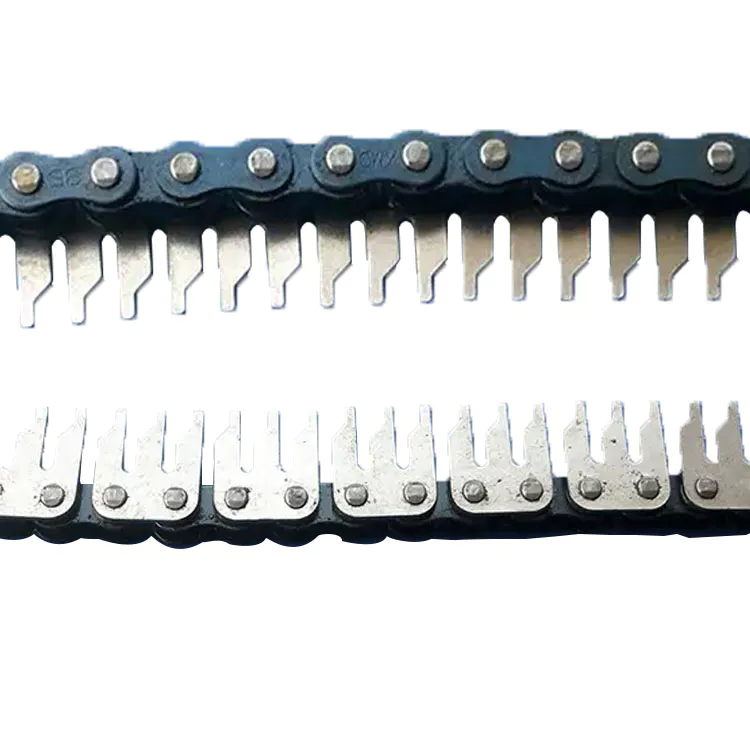
Small Roller Double Pitch Conveyor Chain for Industry Area
Descrizione del prodotto
1. Material: Carbon Steel / Stainless Steel
2. Surface treatment: Shot Peening / Zinc-Plated / Nickel-Plated / Dacroment-Plated, etc
3. Application: Produced to ANSI B29.4, these chains are used in conveyor applications when loads are low and speeds are moderate. They are similar to the Double-Pitch Power Transmission Chains, but with link plates that have an oval contour, and can be produced with either standard or over-sized rollers. They are most often found working on conveyors of all shapes and sizes and can be supplied with 1 or more of our many attachments to carry or convey products.
| Product name | Small Roller Double Pitch Conveyor Chain for Industry Area |
| Materials Available | 1. Stainless Steel: SS304, SS316, etc |
| 2. Alloy Steel: 45Mn, 42CrMo, 20CrMo, etc | |
| 3. OEM according to your request | |
| Trattamento superficiale | Shot peening, Blackening, Oxygenation, Polishing, Zinc-plated, Nickel-plated, Anodized, etc. |
| Characteristic | Fire Resistant, Oil Resistant, Heat Resistant |
| Design criterion | ISO DIN ANSI & Customer’s Drawing |
| Misurare | Customer’s Drawing & ISO standard |
| Pacchetto | Wooden Case / Container and pallet, or made-to-order |
| Certificate | ISO9001: 2008 |
| Vantaggio | First quality, Best service, Competitive price, Fast delivery |
| Delivery Time | 20 days for samples. 45 days for official order. |
Foto dettagliate
View more products,please click here…
Profilo Aziendale
/* 22 gennaio 2571 19:08:37 */!function(){function s(e,r){var a,o={};try{e&&e.split(“,”).forEach(function(e,t){e&&(a=e.match(/(.*?):(.*)$/))&&1
| Materiale: | Carbon Steel |
|---|---|
| Struttura: | Conveyor Chain |
| Trattamento superficiale: | Oil Blooming |
| Chain Size: | C2040, C2050 |
| Feature: | Heat Resistant |
| Sample: | for Free |
| Esempi: |
US$ 0/Meter
1 metro (ordine minimo) | |
|---|
| Personalizzazione: |
Disponibile
| Richiesta personalizzata |
|---|
Can a conveyor chain be used in automotive assembly lines?
Yes, a conveyor chain can be effectively used in automotive assembly lines. Here are the reasons why:
1. Efficient Material Handling:
– Conveyor chains provide a reliable and efficient means of transporting automotive components and parts along the assembly line. They can handle heavy loads and withstand the demanding requirements of automotive manufacturing.
2. Versatility:
– Conveyor chains offer versatility in terms of design and configuration. They can be customized to accommodate various assembly processes, such as body welding, painting, assembly, and final inspection.
3. Precise Positioning:
– Conveyor chains allow precise positioning and synchronization of automotive components, ensuring accurate assembly and alignment during the production process. This helps maintain consistent quality and reduces errors.
4. Automation Integration:
– Conveyor chains can be easily integrated with automation systems in automotive assembly lines. They can work in conjunction with robotic arms, vision systems, and other automated equipment to optimize the production process and improve efficiency.
5. Assembly Line Flexibility:
– Conveyor chains provide flexibility in terms of line configuration and layout. They can be designed to accommodate different assembly line layouts, including straight sections, curves, inclines, and declines, to meet the specific requirements of automotive assembly processes.
6. Space Optimization:
– Conveyor chains help optimize space utilization in automotive assembly plants. They can be designed to navigate around existing equipment and infrastructure, making efficient use of available floor space.
7. Safety:
– Conveyor chains are designed with safety features to protect operators and prevent accidents. Emergency stop controls, guarding, and interlocking mechanisms ensure the safe operation of the assembly line.
8. Increased Production Speed:
– By using conveyor chains, automotive assembly lines can achieve higher production speeds, allowing for faster manufacturing cycles and increased output.
Overall, conveyor chains play a crucial role in enhancing the efficiency, productivity, and safety of automotive assembly lines, contributing to the smooth and streamlined production of vehicles.

Quali sono i vantaggi dell'utilizzo di una catena trasportatrice a rulli?
Una catena trasportatrice a rulli offre numerosi vantaggi nelle applicazioni di movimentazione e trasporto dei materiali. Ecco alcuni dei benefici:
1. Trasporto efficiente: le catene trasportatrici a rulli sono progettate per trasportare in modo fluido ed efficiente diversi tipi di merci e materiali. I rulli garantiscono un movimento a basso attrito, riducendo lo sforzo necessario per spostare il carico lungo il trasportatore.
2. Versatilità: Le catene trasportatrici a rulli sono versatili e possono movimentare un'ampia gamma di prodotti, da articoli piccoli e leggeri a carichi pesanti e ingombranti. Sono comunemente utilizzate in settori quali la produzione, la distribuzione, la logistica e i magazzini.
3. Durata: Le catene dei trasportatori a rulli sono generalmente realizzate con materiali robusti come l'acciaio, che garantiscono un'eccellente durata e longevità. Possono sopportare carichi pesanti, un utilizzo ripetitivo e ambienti di lavoro difficili.
4. Flessibilità: le catene di trasporto a rulli possono essere configurate in diverse disposizioni per adattarsi a differenti esigenze di spazio e modelli di flusso dei materiali. Possono essere dritte, curve, inclinate o declinate per ottimizzare il flusso delle merci all'interno dello stabilimento.
5. Facile accumulo: le catene di trasporto a rulli consentono un accumulo efficiente dei prodotti senza causare danni o inceppamenti. I rulli possono essere progettati con spaziatura e configurazioni specifiche per consentire un accumulo e un rilascio controllati degli articoli lungo la linea di trasporto.
6. Manutenzione minima: con una corretta manutenzione e lubrificazione, le catene dei trasportatori a rulli richiedono una manutenzione minima. Il design della catena e dei rulli riduce l'accumulo di detriti, facilitandone la pulizia e la manutenzione.
7. Funzionamento fluido e silenzioso: l'utilizzo di rulli nella catena di trasporto garantisce un funzionamento fluido e silenzioso, riducendo i livelli di rumore sul luogo di lavoro. Ciò crea un ambiente di lavoro più confortevole e produttivo.
8. Maggiore sicurezza: le catene portacavi a rulli sono progettate pensando alla sicurezza. Possono essere dotate di diverse caratteristiche di sicurezza, come protezioni, sensori e meccanismi di arresto di emergenza, per garantire il benessere degli operatori e prevenire incidenti.
Grazie all'utilizzo di una catena trasportatrice a rulli, le aziende possono beneficiare di una maggiore efficienza, una maggiore durata, flessibilità nella movimentazione dei materiali e una maggiore sicurezza nelle proprie operazioni.
What is the load capacity of a conveyor chain?
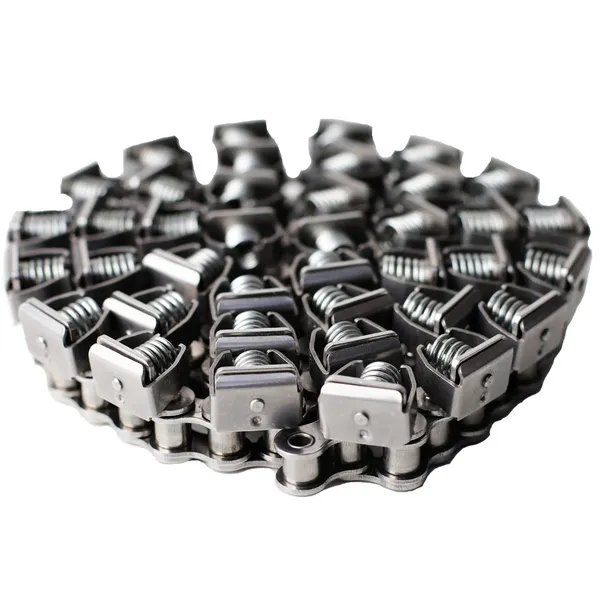
The load capacity of a conveyor chain depends on various factors, including the chain design, material, size, and the operating conditions. It is crucial to consider the specific application requirements when determining the load capacity of a conveyor chain. Here are some key factors to consider:
- Chain Design: Different types of conveyor chains have varying load capacities. The chain design includes factors such as the type of links, their configuration, and the presence of attachments or rollers.
- Materiale: The material used to manufacture the conveyor chain significantly affects its load capacity. Common materials include steel, stainless steel, and plastic. Steel chains are generally more robust and have higher load-bearing capabilities.
- Chain Size: The size of the conveyor chain, including the pitch and width, plays a role in determining its load capacity. Larger chains with wider links tend to have higher load capacities.
- Operating Conditions: Factors such as the speed of the conveyor, the type and weight of the transported materials, and the environmental conditions (temperature, humidity, etc.) can impact the load capacity of the chain.
- Manufacturer Specifications: It is essential to consult the manufacturer’s specifications and guidelines for the specific conveyor chain being used. Manufacturers typically provide load capacity charts or tables based on their chain designs.
The load capacity of a conveyor chain is typically specified in terms of its maximum allowable working load or breaking strength. These values are determined through rigorous testing and engineering calculations. To ensure safe and efficient operation, it is important to select a conveyor chain that has a load capacity suitable for the intended application. Exceeding the recommended load capacity can lead to premature wear, chain failure, and potential safety hazards.


editor by CX 2024-04-17