Produktbeskrivning
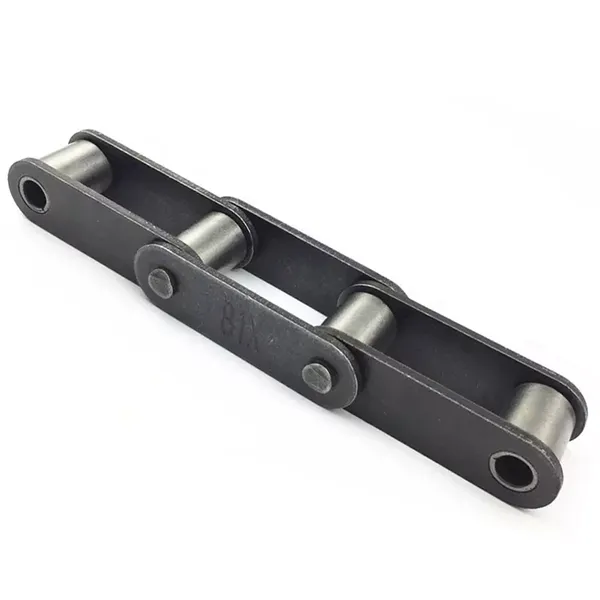
| Modell nr. | 06C/08A/10A/12A/16A/20A/24A/28A/32A/40A/06B/08B/10B/12B/16B/20B/24B/28B/32B/40B-1/2/3 Tung belastning |
| Kedjemodell | Rullkedjor |
| Struktur (för kedja) | Rullkedja |
| Specifikation | GB/T, DIN, ANSI, ISO, BS, JIS. |
| Ursprung | HangZhou, ZheJiang |
| Färg | Enfärgad |
| Kedjefärg | Anpassad |
From raw material carbon steel to the chain with your brand, send us your inquiry we will make it for you
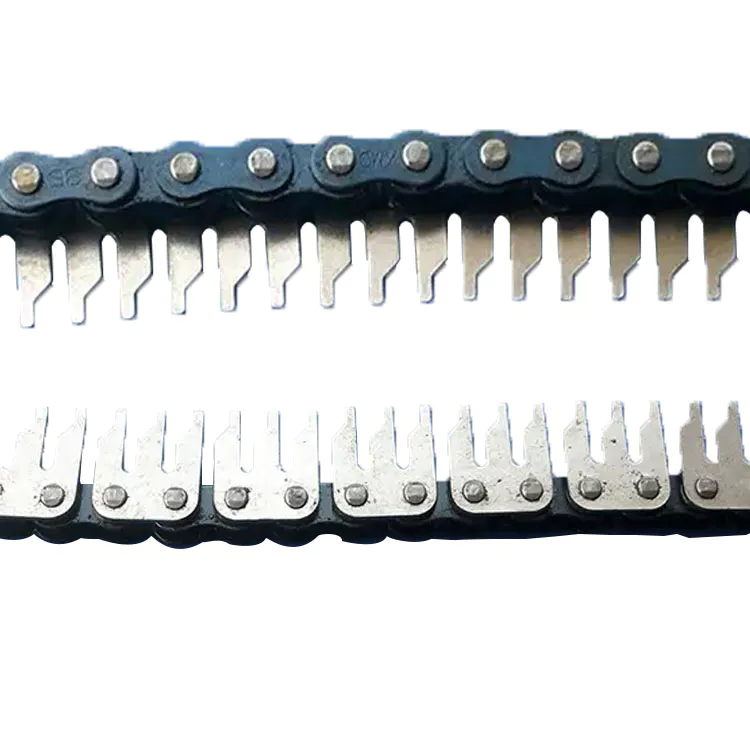
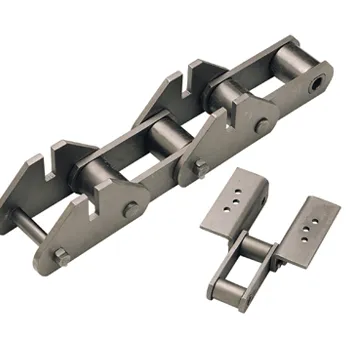
A/B series roller chain, agri chain with attachment, suitable for the corn harvester, wheat harvester~
we can make according to your sample or drawing~
Vårt företag
Wolff Chain Co. är en av de professionella kedjetillverkarna i Kina. Vi fokuserar på forskning, tillverkning och handel med kedjedrift med kända varumärken – "DOVON" och "DECHO". Vi tillhandahåller OEM-tjänster för många kända företag som SUZUKI, XIHU (WEST LAKE) DIS., FAW, AGCO och JUMING.
Wolff mainly producing the Transmission chains,Conveyor chains,Dragging Chains,Silent chains,Leaf chains,Roller chains,Special chain and many other series of chain products. Our technicians a have improved the chains quality to the world-level. High quality material selection, powerful and precise heat-treatment technology and excellent assembly methods ensure Wolff chains meet the tough and strict requirements for machines and vehicles.
All of our products completely conform to the international standard such as ISO\DIN\ANSI\BS\JIS, etc. Wolff has been successfully certified by ISO9001 Quality Management System,SGS inspection and BV inspection. Wolff chains can be widely applied to many industries including automobile, motorcycle, forklift, wood processing machine, constructure machine, packing machine, food machine,tobacco machine and agricultural equipments. Wolff chains are popular in America,South America,Europe,Middle East, South East Asia and Africa markets.
Vår verkstad
Vår certifiering
Välkommen till vår utställning
Vanliga frågor
Q1. Vilka är era förpackningsvillkor?
A: Generellt sett packar vi våra varor i enfärgade lådor. Om du har speciella önskemål om förpackning, vänligen förhandla med oss i förväg, så kan vi packa varorna enligt din begäran.
F2. Vilka är era betalningsvillkor?
A: T/T 30% som deposition och 70% före leverans. Vi visar dig bilder på produkterna och paketen.
innan du betalar slutbeloppet. Andra betalningsvillkor, vänligen förhandla med oss i förväg, vi kan diskutera det.
F3. Vilka är era leveransvillkor?
A: EXW, FOB, CFR, CIF.
Q4. Hur är det med din leveranstid?
A: Generellt sett tar det 25 till 30 dagar efter att du mottagit din förskottsbetalning. Den specifika leveranstiden beror på
på varorna och kvantiteten i din beställning.
Q5. Kan ni producera enligt proverna?
A: Ja, vi kan producera enligt dina prover eller tekniska ritningar. Vi kan bygga formar och fixturer.
F6. Vilken är er policy för exempel?
A: Vi kan leverera provet om vi har färdiga delar i lager, men kunderna måste betala provkostnaden och
kurirkostnaden. Vi välkomnar provbeställningar.
Q7. Testar ni alla era varor före leverans?
A: Ja, vi har ett 100%-test före leverans
Q8: Hur gör ni vår verksamhet till en långsiktig och god relation?
1. Vi håller god kvalitet och konkurrenskraftiga priser för att säkerställa att våra kunder drar nytta av det;
2. Vi respekterar varje kund som vår vän och vi gör uppriktigt affärer och blir vän med dem,
no matter where they come from.
| Standard eller icke-standard: | Standard |
|---|---|
| Ansökan: | Textilmaskiner, klädmaskiner, transportbandsutrustning, förpackningsmaskiner, livsmedelsmaskiner, marin, gruvutrustning |
| Ytbehandling: | Oljeblomning |
| Strukturera: | Rullkedja |
| Material: | Kolstål |
| Typ: | Kort kedja |
| Prover: |
US$ 0/Styck
1 styck (minsta beställning) | |
|---|
| Anpassning: |
Tillgänglig
| Anpassad förfrågan |
|---|
Kan en transportkedja användas i monteringslinjer för fordon?
Ja, en transportkedja kan effektivt användas i monteringslinjer för bilar. Här är anledningarna till varför:
1. Effektiv materialhantering:
– Transportörkedjor är ett pålitligt och effektivt sätt att transportera bildelar och -komponenter längs monteringslinjen. De kan hantera tunga laster och klara de krävande kraven inom fordonstillverkning.
2. Mångsidighet:
– Transportörkedjor erbjuder mångsidighet vad gäller design och konfiguration. De kan anpassas för att hantera olika monteringsprocesser, såsom svetsning av karosser, målning, montering och slutkontroll.
3. Exakt positionering:
– Transportörkedjor möjliggör exakt positionering och synkronisering av fordonskomponenter, vilket säkerställer korrekt montering och uppriktning under produktionsprocessen. Detta bidrar till att upprätthålla en jämn kvalitet och minska fel.
4. Automatiseringsintegration:
– Transportörkedjor kan enkelt integreras med automationssystem i fordonsmonteringslinjer. De kan fungera tillsammans med robotarmar, visionssystem och annan automatiserad utrustning för att optimera produktionsprocessen och förbättra effektiviteten.
5. Flexibilitet vid monteringslinjen:
– Transportörkedjor ger flexibilitet när det gäller linjekonfiguration och layout. De kan utformas för att passa olika monteringslinjelayouter, inklusive raka sektioner, kurvor, lutningar och nedförsbackar, för att möta de specifika kraven för fordonsmonteringsprocesser.
6. Rymdoptimering:
– Transportörkedjor hjälper till att optimera utrymmesutnyttjandet i bilmonteringsfabriker. De kan utformas för att navigera runt befintlig utrustning och infrastruktur, vilket effektivt utnyttjar tillgänglig golvyta.
7. Säkerhet:
– Transportörkedjor är konstruerade med säkerhetsfunktioner för att skydda operatörer och förhindra olyckor. Nödstopp, skydd och förreglingsmekanismer säkerställer säker drift av monteringslinjen.
8. Ökad produktionshastighet:
– Genom att använda transportkedjor kan monteringslinjer för bilar uppnå högre produktionshastigheter, vilket möjliggör snabbare tillverkningscykler och ökad produktion.
Sammantaget spelar transportkedjor en avgörande roll för att förbättra effektiviteten, produktiviteten och säkerheten vid monteringslinjer för fordon, vilket bidrar till en smidig och strömlinjeformad produktion av fordon.
What are the future trends and advancements in conveyor chain technology?
The field of conveyor chain technology is constantly evolving, driven by the need for improved efficiency, productivity, and sustainability. Here are some of the future trends and advancements in conveyor chain technology:
1. Automation and robotics: The integration of conveyor chains with automation and robotics systems is a growing trend. This includes the use of advanced sensors, machine vision, and artificial intelligence to enable autonomous operation, precise positioning, and efficient material handling.
2. Smart and connected systems: Conveyor chains are becoming increasingly connected through the Internet of Things (IoT) technology. This allows for real-time monitoring, data collection, and analysis of various performance parameters such as chain wear, tension, temperature, and energy consumption. Smart systems can optimize maintenance schedules, detect potential failures, and improve overall system efficiency.
3. Lightweight and high-strength materials: The development of lightweight yet high-strength materials is an ongoing focus in conveyor chain technology. Advanced alloys, composites, and engineered plastics offer improved strength-to-weight ratios, reducing energy consumption and increasing the load capacity of conveyor systems.
4. Energy efficiency: Energy efficiency is a key consideration in conveyor chain design. Future advancements aim to minimize power consumption through the use of efficient drive systems, regenerative braking, and smart control algorithms that optimize speed and acceleration profiles. Energy recovery technologies, such as regenerative drives, can also capture and reuse energy during deceleration or braking.
5. Sustainability and environmental friendliness: Conveyor chain technology is moving towards more sustainable and environmentally friendly solutions. This includes the use of eco-friendly materials, improved lubrication techniques to minimize environmental impact, and the adoption of energy-efficient components and systems. Recycling and circular economy concepts are also gaining prominence in the design and manufacturing of conveyor chains.
6. Advanced wear monitoring and predictive maintenance: The future of conveyor chain technology involves advanced wear monitoring systems that can accurately predict the remaining useful life of chains and components. This enables proactive maintenance planning and reduces unplanned downtime. Predictive maintenance algorithms analyze data collected from sensors and provide timely alerts for chain replacement or repair.
These are just a few examples of the future trends and advancements in conveyor chain technology. As technology continues to advance, we can expect further innovations that enhance performance, efficiency, reliability, and sustainability in conveyor systems.
What are the industry standards and regulations for conveyor chains?
In the field of conveyor chains, there are several industry standards and regulations that help ensure safety, performance, and quality. Some of the commonly recognized standards include:
1. ISO 1977:2013 – Conveyor chains, attachments, and sprockets: This International Organization for Standardization (ISO) standard specifies the requirements and dimensions for various types of conveyor chains, attachments, and sprockets used in general industrial applications.
2. ANSI/ASME B29.1 – Precision Power Transmission Roller Chains, Attachments, and Sprockets: This American National Standard Institute (ANSI) standard provides guidelines for the design, dimensions, and performance of roller chains, attachments, and sprockets used in power transmission systems, including conveyor chains.
3. CEMA – Conveyor Equipment Manufacturers Association: CEMA publishes various standards and technical documents related to conveyor systems, including conveyor chains. These standards cover topics such as safety, design, installation, maintenance, and operation of conveyor equipment.
4. OSHA – Occupational Safety and Health Administration: OSHA is a regulatory agency in the United States that sets and enforces safety standards for workplaces. They have specific regulations related to conveyor systems, including requirements for guarding, maintenance, and employee safety.
5. Local and National Building Codes: Depending on the location and application, there may be specific building codes or regulations that dictate the design, installation, and operation of conveyor chains. These codes ensure compliance with safety and structural requirements.
It’s important for conveyor chain manufacturers, system integrators, and end-users to adhere to these industry standards and regulations to ensure the safe and reliable operation of conveyor systems. Compliance with these standards helps to maintain worker safety, promote system performance, and ensure compatibility and interchangeability of conveyor chain components.


editor by CX 2023-11-20