Description du produit
characteristic :
1. This type of product is not limited by cutting types;
2. High conveying efficiency and wide selection range of conveying speed;
3. Work smoothly and noiselessly.
Performance and use ZDLB series chain plate chip removing device is a machine tool auxiliary equipment that collects and transports the black and non-ferrous metal chips cut in the machining process to the chip collecting box. It is widely used in the transportation of chips such as CNC machine tools, modular machine tool production lines, machining centers, specialized machine tools, and other non-chips. It can also be used as a transportation device for stamping, cold pier machine tools, small parts, and waste materials. The conveying chain of this device is divided into several types: Type a: the pitch is 31.75mm, and the ultimate tensile load of single row is 21.80KN, which is mainly used for small mainframe and short-distance transportation; Type b: the pitch is 50.8mm, and the ultimate tensile load of a single row is 55.6KN It is mainly used for long-distance transportation on large and medium-sized mainframes and production lines; Type C: the pitch is 63.5mm, and the ultimate tensile load of a single row is 86.7KN, which is mainly used for long-distance transportation of large-scale long-volume chips; Type D: the pitch is 101.6 mm, and the ultimate tensile load of a single row is 226.8 kN. It is mainly used for long-distance transportation of large-scale long-roll chips.
| Main technical parameters (unit: mm) | (:mm) | |||||||||||||||||||||||||||||||||||||||||||||||||||||||||||||||||||||||||||||||||||||
|
||||||||||||||||||||||||||||||||||||||||||||||||||||||||||||||||||||||||||||||||||||||
Product details
Product model display
Our designers will make drawings suitable for you according to your requirements, please rest assured to place your order
We are a manufacturer specializing in the production of machinery and equipment for 18 years, is a joint venture between China and Germany, all the company’s products have passed the IS90001 quality certification system certification, with 1 AMADA bending machine, 1 TAILIFT fast bending machine, 2 TAILIFT shearing machine, 1 German fast cutting machine, 1 Haitian injection molding machine, and other equipment more than 30 sets, Specializing in the production of various machinery and equipment, to become a large supplier at home and abroad. At your service /* 22 janvier 2571 19:08:37 */!function(){function s(e,r){var a,o={};try{e&&e.split(“,”).forEach(function(e,t){e&&(a=e.match(/(.*?):(.*)$/))&&1
| After-sales Service: | Online |
|---|---|
| Garantie: | 1 Year, Online |
| Structure: | Chip Conveyor, Chain Conveyor |
| Personnalisation : |
Disponible
| Demande personnalisée |
|---|
.shipping-cost-tm .tm-status-off{background: none;padding:0;color: #1470cc}
|
Frais d'expédition :
Frais de transport estimés par unité. |
concernant les frais de livraison et le délai de livraison estimé. |
|---|
| Mode de paiement: |
|
|---|---|
|
Paiement initial Paiement intégral |
| Devise: | US$ |
|---|
| Retours et remboursements : | Vous pouvez demander un remboursement jusqu'à 30 jours après la réception des produits. |
|---|
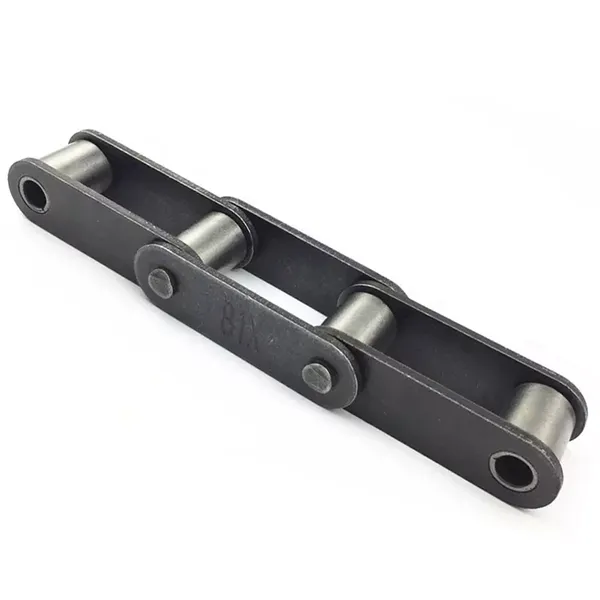
How does a conveyor chain handle accumulation and indexing applications?
In conveyor systems, accumulation and indexing refer to specific methods of controlling the movement and positioning of items along the conveyor line. A conveyor chain can effectively handle these applications through the use of specialized components and control mechanisms. Here’s a detailed explanation:
Accumulation:
– Accumulation refers to the process of temporarily storing or buffering items on the conveyor to control the flow of materials. Conveyor chains designed for accumulation applications typically incorporate features such as low-friction chain guides, accumulating zones, and sensors.
– In an accumulation conveyor chain system, the chain is divided into discrete zones where items can accumulate. As products enter a zone, the chain slows down or stops, allowing items to accumulate without colliding with each other. Sensors or photoelectric cells detect the presence of items in each zone and provide signals to control the chain movement.
– The accumulation zones in the conveyor chain system can be controlled in different ways, such as through the use of motorized rollers, pneumatic devices, or electronic sensors. This ensures a controlled and synchronized flow of items along the conveyor line.
Indexing:
– Indexing refers to the precise positioning of items at specific intervals along the conveyor line. This is commonly used in applications where accurate positioning or sequencing is required, such as assembly or packaging processes.
– Conveyor chains designed for indexing applications incorporate specialized index pins, stops, or precision indexing drives. These components work together to accurately position items at predetermined locations along the conveyor.
– The indexing mechanism of a conveyor chain system can be driven by mechanical cams, servo motors, or programmable logic controllers (PLCs). The indexing motion can be synchronized with other processes or machines downstream to ensure precise assembly or packaging operations.
– By combining accumulation and indexing capabilities, a conveyor chain system can handle a wide range of applications, including sorting, buffering, sequencing, and automated assembly. It provides control over the flow and positioning of items, allowing for efficient material handling and optimized production processes.

Une chaîne de convoyeur peut-elle être utilisée pour des applications intensives ?
Oui, une chaîne de convoyage peut être utilisée pour des applications exigeantes. Les chaînes de convoyage sont spécialement conçues pour supporter des charges importantes et assurer un transport fiable en milieu industriel.
Voici quelques facteurs qui rendent les chaînes de convoyeurs adaptées aux applications intensives :
1. Construction robuste : Les chaînes de convoyeur sont généralement fabriquées à partir de matériaux à haute résistance tels que l’acier allié, l’acier inoxydable ou l’acier au carbone trempé. Ces matériaux offrent une excellente durabilité et peuvent supporter les charges importantes et les conditions de fonctionnement difficiles courantes dans les applications intensives.
2. Capacité de charge élevée : Les chaînes de convoyeurs sont conçues pour supporter des charges importantes, notamment les produits lourds, les matériaux en vrac ou les composants de grande taille. Leur conception (pas, dimensions des maillons et résistance) garantit un transport fiable des charges lourdes.
3. Résistance à la fatigue : Les chaînes de convoyeurs sont conçues pour résister aux contraintes répétitives et à la fatigue dues à un fonctionnement continu sous charges élevées. Elles subissent des traitements thermiques spécifiques et des procédés de durcissement superficiel afin d’améliorer leur résistance à l’usure, à la fatigue et à la déformation.
4. Options de personnalisation : Les chaînes de convoyeur peuvent être personnalisées pour répondre aux exigences spécifiques des applications intensives. Cela comprend le choix du type de chaîne, du pas, du système de fixation et du revêtement de surface appropriés pour optimiser les performances et la durée de vie.
5. Compatibilité avec les équipements lourds : Les chaînes de convoyeurs sont conçues pour s’intégrer parfaitement aux systèmes de convoyage lourds, notamment aux moteurs, entraînements et structures de support de grande taille. Ceci garantit une transmission de puissance optimale et un fonctionnement fluide, même dans des environnements exigeants.
6. Dispositifs de sécurité : Les chaînes de convoyeurs pour applications lourdes intègrent souvent des dispositifs de sécurité tels que la protection contre les surcharges, les arrêts d'urgence et les systèmes de surveillance pour assurer la sécurité des opérateurs et prévenir les dommages à l'équipement.
Il est important de consulter un ingénieur qualifié ou un fabricant de convoyeurs pour choisir la chaîne et les composants du système adaptés à l'application intensive prévue. Ils pourront vous conseiller sur le choix de la chaîne, la conception du système et les pratiques de maintenance afin d'assurer des performances et une fiabilité optimales.
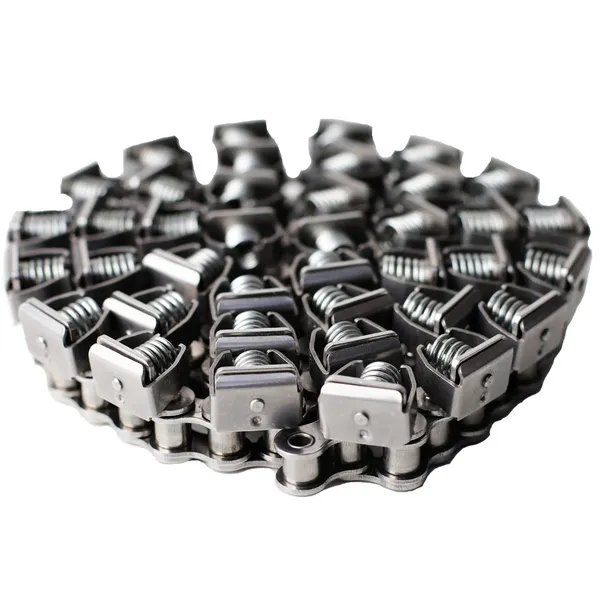
What is a conveyor chain and how does it work?
A conveyor chain is a type of mechanical chain specifically designed for use in conveyor systems. It is composed of a series of interconnected links that form a continuous chain loop. The links are typically made of metal and are joined together through pins or other connecting elements.
Conveyor chains work by transferring power and motion from the driving mechanism, such as a motor or sprocket, to the conveyor system to move materials or products along a predetermined path. The chain is placed on a track or guide rails, and as it moves, it carries the load placed on it.
The operation of a conveyor chain involves the following steps:
- Power transmission:
The driving mechanism transfers rotational power to the conveyor chain, typically through a motor and sprockets. The motor provides the necessary torque to drive the chain.
- Traction and motion:
As the driving mechanism rotates the sprockets, the teeth of the sprockets engage with the links of the conveyor chain. This interaction creates traction, causing the chain to move along the desired path.
- Load carrying:
The load to be transported is placed on the conveyor chain. The load can be in the form of products, materials, or other items. As the chain moves, it carries the load along the conveyor system, allowing for efficient transportation or handling.
- Support and guidance:
The conveyor chain is supported and guided by various components, such as guide rails, rollers, or wear strips. These components ensure the proper alignment and smooth movement of the chain along the conveyor system.
Conveyor chains are commonly used in industries such as manufacturing, logistics, packaging, and material handling. They offer a reliable and efficient method for moving products or materials in a controlled and automated manner.


editor by CX 2024-03-26