Produktbeskrivning
CZPT-rullar förbättrar rotationen på bussningen samtidigt som de minskar stötbelastningen på kedjehjulet under drift.
All components are heat treated to achieve maximum strength. All components are heat treated to achieve maximum strength.
Förbelastad under tillverkningsprocessen för att minimera initial förlängning.
Varmdoppad smörjning säkerställer 100%-smörjning av alla kedjekomponenter för att förlänga livslängden och minska underhållskostnaderna.
| CHC INGA. |
TONHÖJD | BUSKE BREDD |
ROLLER DIA |
STIFT | TALLRIK | MIN. STYRKA |
AVG. STYRKA |
MAX. STYRKA |
TRANS TONHÖJD |
|||
| d | L | LC | H | T | ||||||||
| mm | mm | mm | mm | mm | mm | mm | mm | kgf | kgf | kgf | mm | |
| C35-1 | 9.525 | 4.68 | 5.08 | 3.60 | 12.15 | 13.40 | 8.80 | 1.25 | 800 | 1,100 | 220 | NIL |
| C40-1 | 12.700 | 7.85 | 7.92 | 3.98 | 17.80 | 21.00 | 12.00 | 1.50 | 1,420 | 1,950 | 370 | NIL |
| C50-1 | 15.875 | 9.40 | 10.16 | 5.09 | 21.80 | 25.00 | 15.00 | 2.00 | 2,200 | 3,100 | 650 | NIL |
| C60-1 | 19.050 | 12.58 | 11.91 | 5.96 | 26.90 | 31.00 | 18.00 | 2.35 | 3,190 | 4,200 | 920 | NIL |
| C80-1 | 25.400 | 15.75 | 15.87 | 7.94 | 33.50 | 38.00 | 24.10 | 3.20 | 5,680 | 7,500 | 1,500 | NIL |
| C100-1 | 31.750 | 18.90 | 19.05 | 9.54 | 41.10 | 47.00 | 30.10 | 4.00 | 8,870 | 12,100 | 2,300 | NIL |
| C120-1 | 38.100 | 25.23 | 22.22 | 11.11 | 50.80 | 57.00 | 36.20 | 4.70 | 12,770 | 16,000 | 3,100 | NIL |
| C140-1 | 44.450 | 25.23 | 25.40 | 12.71 | 54.90 | 62.00 | 42.20 | 5.50 | 17,380 | 21,000 | 4,100 | NIL |
| C160-1 | 50.800 | 31.55 | 25.87 | 14.29 | 65.50 | 73.00 | 48.20 | 6.40 | 22,700 | 30,000 | 5,400 | NIL |
| C40-2 | 12.700 | 7.85 | 7.92 | 3.98 | 32.30 | 36.20 | 12.00 | 1.50 | 2,840 | 3,900 | 630 | 14.38 |
| C50-2 | 15.875 | 9.40 | 10.16 | 5.09 | 39.90 | 44.00 | 15.00 | 2.00 | 4,440 | 6,200 | 1,100 | 18.11 |
| C60-2 | 19.050 | 12.58 | 11.92 | 5.96 | 49.80 | 54.40 | 18.00 | 2.35 | 6,380 | 8,400 | 1,530 | 22.78 |
| C80-2 | 25.400 | 15.75 | 15.87 | 7.94 | 62.70 | 68.10 | 24.10 | 3.20 | 11,360 | 15,000 | 2,550 | 29.29 |
| C100-2 | 31.750 | 18.90 | 19.05 | 9.54 | 77.00 | 83.10 | 30.10 | 4.00 | 17,740 | 24,200 | 3,900 | 35.76 |
| C120-2 | 38.100 | 25.23 | 22.22 | 11.11 | 96.30 | 102.90 | 36.20 | 4.70 | 25,540 | 32,000 | 5,250 | 45.44 |
| C140-2 | 44.450 | 25.23 | 25.40 | 12.71 | 103.60 | 111.00 | 42.20 | 5.50 | 347,600 | 42,000 | 6,970 | 48.87 |
| C160-2 | 50.800 | 31.55 | 28.57 | 14.29 | 124.20 | 132.10 | 48.20 | 6.40 | 57,460 | 60,000 | 9,150 | 58.55 |
| Användande: | Transmission Chain, Conveyor Chain, Roller Chain |
|---|---|
| Material: | Legering/kolstål |
| Ytbehandling: | Putsning |
| Särdrag: | Värmebeständig |
| Kedjestorlek: | 3/8"*2" |
| Strukturera: | Rullkedja |
| Anpassning: |
Tillgänglig
| Anpassad förfrågan |
|---|
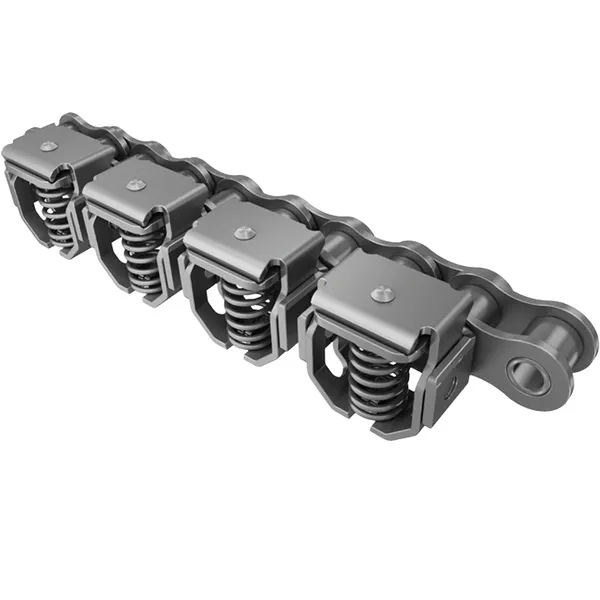
Vilka är fördelarna med att använda en självsmörjande transportkedja?
Självsmörjande transportörkedjor erbjuder flera fördelar jämfört med traditionella smorda kedjor. Här är några viktiga fördelar:
1. Minskat underhåll: Självsmörjande kedjor eliminerar behovet av regelbunden smörjning, vilket minskar tiden och ansträngningen som krävs för underhåll. Detta är särskilt fördelaktigt i applikationer där åtkomst till kedjan är svår eller tidskrävande.
2. Kostnadsbesparingar: Genom att eliminera behovet av extern smörjning kan självsmörjande kedjor bidra till att minska smörjkostnaderna under kedjans livslängd. Detta inkluderar kostnaden för smörjmedel, såväl som den arbetskraft och utrustning som krävs för smörjunderhåll.
3. Rena och miljövänliga: Självsmörjande kedjor kräver inga externa smörjmedel, vilket resulterar i en renare arbetsmiljö. Det finns ingen risk för spill av smörjmedel eller kontaminering av omgivningen, vilket gör dem idealiska för tillämpningar som kräver strikta renhetsstandarder, såsom livsmedels- eller läkemedelsindustrin.
4. Förlängd kedjelivslängd: Självsmörjande kedjor är konstruerade med inbyggda smörjsystem som ger en kontinuerlig och kontrollerad tillförsel av smörjmedel till kedjekomponenterna. Detta bidrar till att minska friktion, slitage och värmeutveckling, vilket resulterar i längre kedjelivslängd och förbättrad prestanda.
5. Förbättrad tillförlitlighet: Med konsekvent och pålitlig smörjning bibehåller självsmörjande kedjor optimal prestanda och minimerar risken för kedjefel eller haveri. De är mindre känsliga för för tidigt slitage, förlängning och korrosion, vilket säkerställer ett mer tillförlitligt och effektivt transportbandssystem.
Det är viktigt att notera att de specifika fördelarna med självsmörjande kedjor kan variera beroende på tillverkare och kedjans design. Det rekommenderas att rådgöra med kedjetillverkaren eller en branschexpert för att förstå lämpligheten och fördelarna med självsmörjande kedjor för en specifik tillämpning.
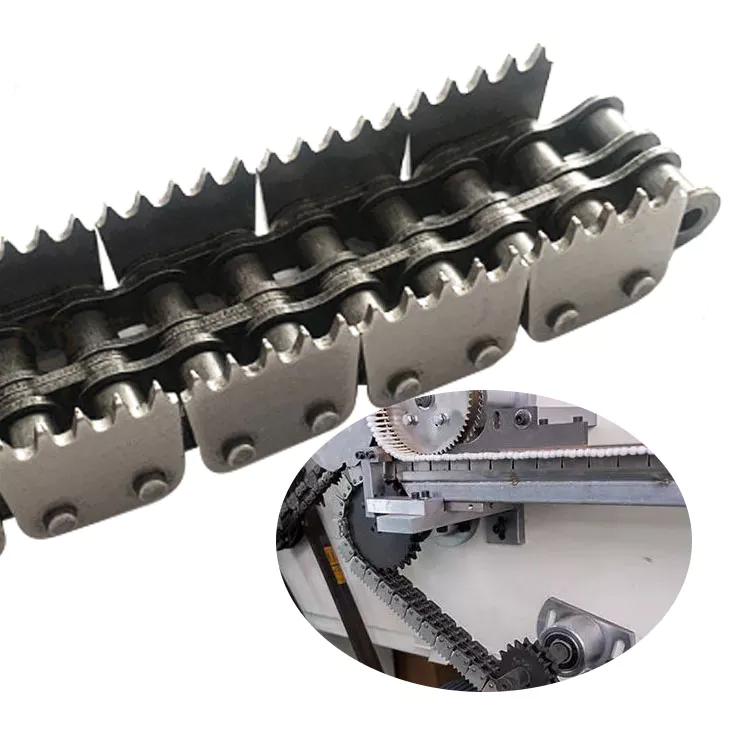
What are the different attachment options available for a conveyor chain?
Conveyor chains can be equipped with various types of attachments or accessories to accommodate specific material handling needs. Here are some common attachment options:
1. Cleats or Flights: Cleats or flights are raised sections attached to the conveyor chain to prevent materials from slipping or sliding off the chain. They are commonly used in incline or decline applications or when handling loose or bulk materials.
2. Side Plates or Side Guards: Side plates or side guards are installed along the edges of the conveyor chain to provide containment and prevent materials from spilling or falling off the sides. They are particularly useful when conveying small or irregularly shaped items.
3. Pusher Bars: Pusher bars are extensions mounted on the conveyor chain that can be pneumatically or mechanically actuated to push materials onto a different conveyor line or divert them to a specific location. They are often used for sorting or diverting applications.
4. Hold-Downs or Brackets: Hold-downs or brackets are devices attached to the conveyor chain to secure and stabilize the transported materials. They ensure that the materials remain in a fixed position during the conveying process, especially when encountering vibrations or changes in speed.
5. Guide Rails: Guide rails are installed alongside the conveyor chain to provide guidance and alignment for the materials being conveyed. They help maintain the desired path and prevent lateral movement or misalignment.
6. Magnetic Attachments: Magnetic attachments are used when handling ferrous materials. They allow the conveyor chain to attract and hold magnetic objects, ensuring effective transport and separation.
7. Tooling Plates: Tooling plates are platforms or mounting surfaces attached to the conveyor chain to accommodate specific equipment, such as fixtures, sensors, or robotic arms. They provide a convenient and customizable interface for integrating additional functionalities into the conveyor system.
8. Diverters or Transfer Units: Diverters or transfer units are specialized attachments that enable the seamless transfer of materials from one conveyor line to another, or between different processing stations. They ensure smooth transitions and precise material flow control.
These attachment options offer flexibility and versatility in conveyor chain applications, allowing customization based on the specific requirements of the material being transported or the production process. By selecting the appropriate attachments, conveyor chains can effectively handle a wide range of materials and optimize material flow within a conveyor system.
What are the noise levels associated with conveyor chains?
The noise levels associated with conveyor chains can vary depending on several factors:
1. Chain Type: Different types of conveyor chains produce varying noise levels. For example, roller chains tend to generate more noise compared to silent chains or plastic modular chains.
2. Speed: The speed at which the conveyor chain operates can influence the noise level. Higher speeds generally result in increased noise due to the impact and friction between the chain and other components.
3. Chain Condition: The condition of the conveyor chain plays a role in noise generation. Worn-out or improperly maintained chains can produce more noise due to increased friction and vibration.
4. Surrounding Environment: The noise levels can also be affected by the environment in which the conveyor system operates. Factors such as the presence of other machinery, acoustics of the facility, and noise insulation measures can impact the overall noise level.
5. Design and Components: The design of the conveyor system and the choice of components can influence noise levels. Factors such as the use of noise-reducing materials, proper alignment of components, and vibration dampening measures can help reduce noise.
It is important to note that excessive noise levels in the workplace can have adverse effects on the well-being of employees and may require noise control measures to comply with occupational health and safety regulations. Implementing noise reduction strategies like using noise-dampening materials, incorporating proper lubrication, maintaining chain tension, and applying vibration isolation techniques can help minimize the noise associated with conveyor chains.


editor by CX 2023-07-20